
Shop shelves are packed with them and social media is full of praise: collagen is said to smooth wrinkles, firm the skin and even save your joints. What sounds like an easy route to a miracle solution proves, on closer inspection, to rest on rather shaky hope. Much of the claimed benefit is difficult to substantiate scientifically – while many products come at a surprisingly high price.
What collagen actually does in the body
Collagen is not merely a fashionable buzzword; it is a genuinely vital protein in the body. Around one third of all proteins are made up of collagen. It gives bones stability, provides tendons and ligaments with tensile strength, and helps skin retain firmness and elasticity.
The body produces collagen itself from ordinary dietary protein. To do this, it breaks proteins down into amino acids. The most important include:
- Glycine
- Lysine
- Proline
The body then assembles these building blocks into new collagen fibres wherever they are required: in the skin, cartilage, bones or connective tissue.
Collagen production begins to decline from the mid-20s
There is, however, a catch: this process does not continue at full speed throughout life. From around the age of 25, the body gradually produces less collagen. Initially this is barely noticeable, but the consequences become clearer later on:
- the first fine lines on the face
- declining skin firmness and resilience
- wounds taking longer to heal
This is precisely where marketing claims begin. Many manufacturers say their collagen creams, powders or capsules can slow down, or even reverse, this natural development. The message is that choosing the right product allows you to outsmart ageing.
“The idea of simply ‘topping up’ collagen from the outside sounds logical – but biochemically, it scarcely works in the way advertising suggests.”
Collagen creams: large molecules, limited effect
With skincare products that apply collagen directly to the skin, the issue is obvious: the molecules are too large. The skin’s outermost layer acts like an extremely dense wall, which collagen fibres cannot simply pass through.
So what really happens? Collagen largely remains on the surface. At best, it can provide a mild, short-term conditioning effect by reducing water loss slightly, leaving the skin feeling smoother for a while. It virtually does not reach the deeper layers of skin where wrinkles actually form.
In many cases, then, someone using a collagen cream is paying more for a pleasant application experience than for a genuine anti-ageing result.
Drinking or taking collagen – does it work better?
Drinkable shots, powders and capsules are currently even more popular than creams. They are said to replenish collagen stores from within. Yet here too, it is worth taking a sober look at what happens inside the body.
When collagen supplements reach the gastrointestinal tract, the body digests them just as it would any other protein. In the end, individual amino acids enter the bloodstream. There, they compete with all the other protein building blocks supplied by the diet. The body uses them to form new tissue – but not specifically in the skin alone or solely in the knee joint.
“Whether an ingested collagen supplement really acts exactly where advertising says it is meant to ‘build up’ tissue remains largely unresolved scientifically.”
What studies have shown so far – and what they have not
A number of small studies indicate slight improvements in skin hydration or elasticity. However, many of these investigations have weaknesses:
- small participant numbers
- short study durations
- manufacturers often involved in funding
- subjective assessment of outcomes
Robust, independent, long-term studies with clearly measurable effects are largely lacking. Specialist sources and consumer experts therefore reach a fairly sober conclusion: a clear benefit cannot be demonstrated, while the absence of benefit is certainly plausible.
No general need for supplements – and potential side effects
Healthy adults do not have a special need for collagen under normal circumstances. Anyone eating a balanced diet provides the body with enough protein to make sufficient structural proteins itself.
Does that at least mean that “more collagen” cannot do any harm? It is not quite that simple. Several points should be considered:
- Some supplements can trigger allergic reactions.
- Certain products contain nicotinic acid, which may cause pronounced skin flushing and irritation.
- Contamination or an unclear origin of raw materials cannot be ruled out with cheap products.
German risk assessment guidance recommends consuming no more than five grams of collagen from food supplements each day. If a supplement substantially exceeds this amount, the risk of unwanted effects rises – without any added benefit having been proven.
The market is booming nevertheless: collagen powder compared
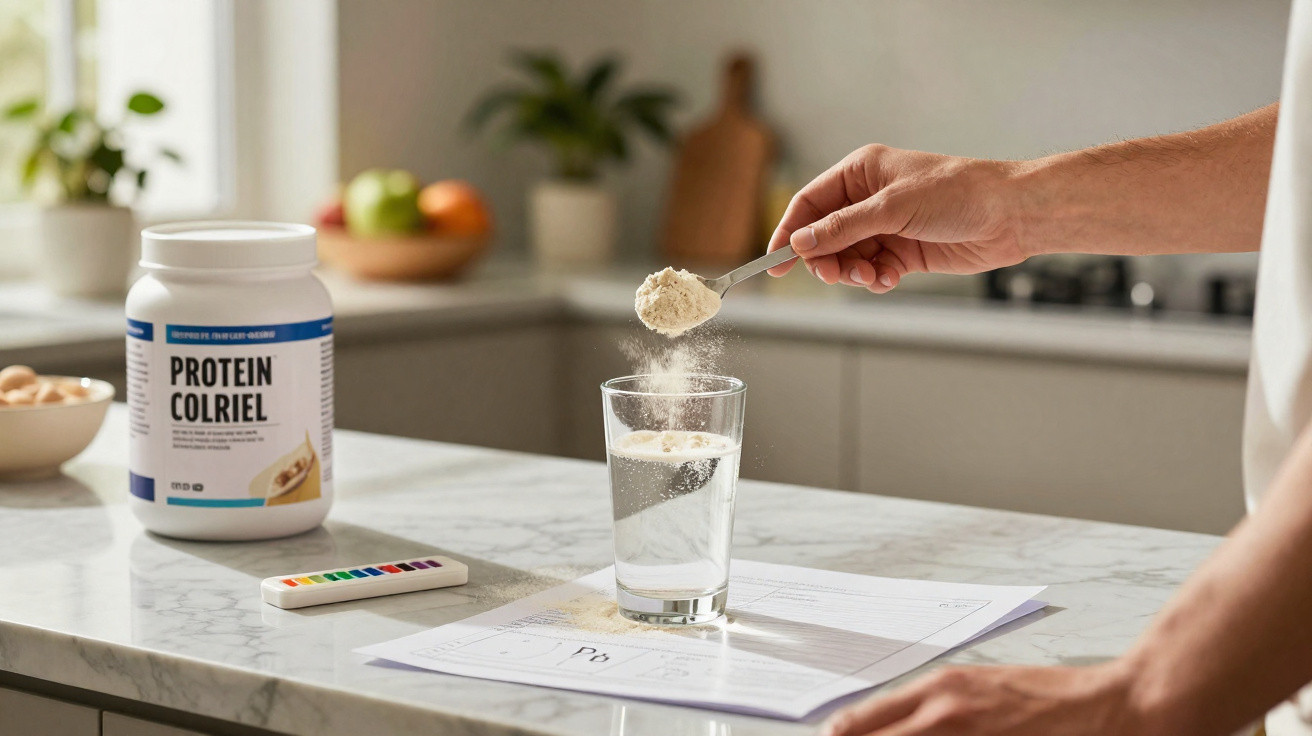
Despite the limited evidence, many people are buying enthusiastically. Collagen powders are selling at a remarkable rate online and in health and beauty retailers. A practical test of seven popular products illustrates how widely quality can vary.
| Criterion | Typical weakness |
|---|---|
| Collagen source | Origin is often stated only vaguely, for example “beef”, with no detail on animal husbandry |
| Collagen types | Information is frequently absent altogether, even though types I, II and III have different functions |
| Purity | Marketed as “high purity”, but with little transparent laboratory data or testing certificates |
| Transparency | Many unclear claims, including health promises that are sometimes impossible to verify |
| Price | A wide gap between cheap and very expensive products despite similar composition |
The message is clear: price says little about actual quality. And even the best product can only be worthwhile if it has a measurable benefit – which is exactly what is currently lacking.
What genuinely helps the skin
Anyone wishing to prevent wrinkles or keep their skin looking fresh for as long as possible does not need an expensive powder. Dermatologists repeatedly point to the same measures, which are supported by considerably better evidence:
- UV protection: Daily sunscreen with an adequate sun protection factor is considered the most effective anti-ageing measure.
- Not smoking: Smoking severely damages collagen fibres and makes skin age more quickly.
- Enough sleep: Repair processes that regenerate the skin take place overnight.
- A protein-rich, balanced diet: Fish, eggs, pulses, dairy products and nuts provide amino acids for the body’s own collagen.
- Gentle skincare: Moisturisers containing ingredients such as glycerine or hyaluronic acid support the skin barrier.
Anyone who also wants to target wrinkles specifically should instead seek advice about active ingredients with stronger evidence, such as retinoids or certain fruit acids – always matched to their individual skin type and ideally under dermatological supervision.
How to spot empty promises
The beauty and anti-ageing market thrives on grand promises. A few warning signs can help identify questionable offers more quickly:
- terms such as “miracle cure” or “instant lift” without precise data
- no study information, or only manufacturer-funded studies
- highly vague statements such as “supports cell renewal”
- medical-sounding terminology without a comprehensible explanation
When you then compare the price with the proven effect, it quickly becomes clear that many products primarily benefit manufacturers’ sales – rather than your own skin.
When collagen supplements may still be useful
There are a small number of situations in which collagen supplements may have a role, such as as part of medical treatment or in certain chronic illnesses. However, this concerns specially tested products, medical supervision and a clear diagnosis – not lifestyle powders promoted in influencer stories.
Anyone considering collagen as an additional supplement should seek medical advice first, particularly if they have allergies, existing medical conditions or are taking other food supplements at the same time. Combining different products in particular can mean recommended limits are exceeded without noticing.
Ultimately, the calculation is simple: rather than spending a great deal of money each month on collagen products with little supporting evidence, it is more worthwhile in the long term to invest in sound skincare, sun protection, diet and lifestyle. That may be less spectacular than an “anti-wrinkle drink” – but it works far more reliably in reality.















Comments
No comments yet. Be the first to comment!
Leave a Comment