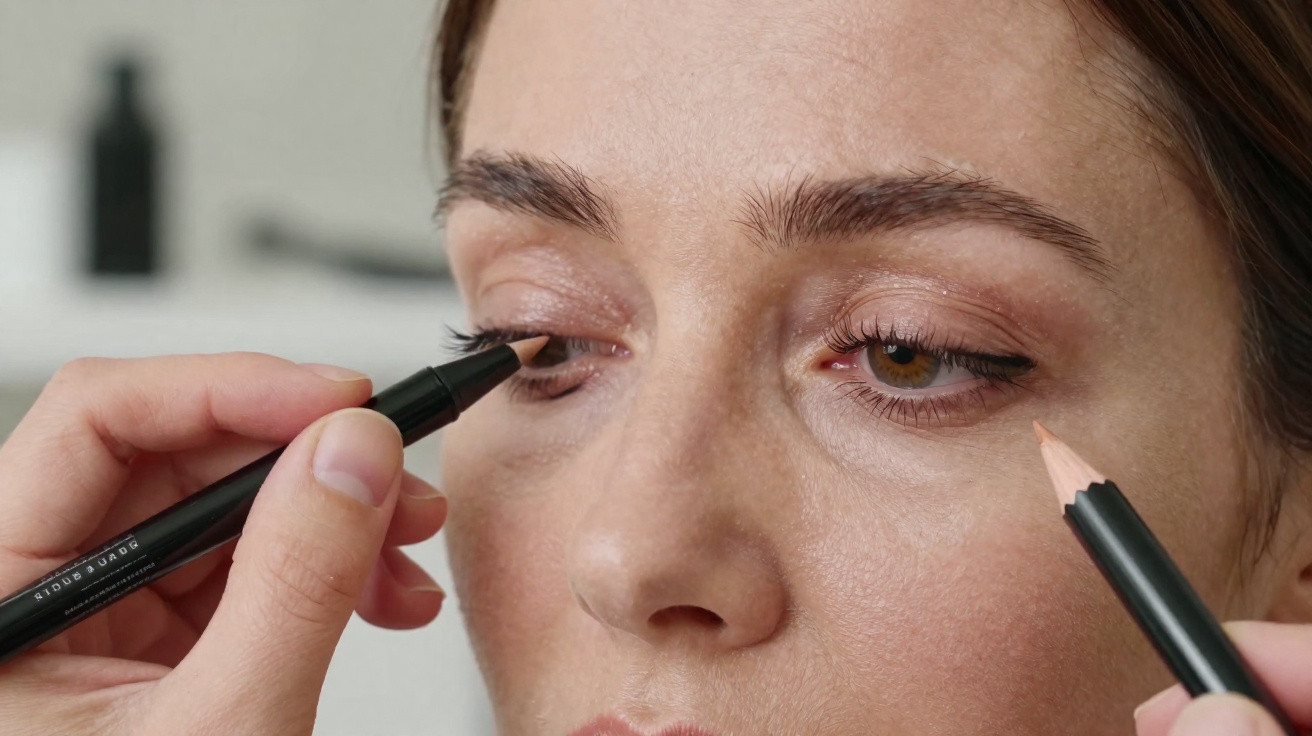
A black eyeliner pencil is a make-up bag staple for good reason: it can make lashes appear fuller and give the eyes instant definition. But a dark line on the lower waterline can sometimes make eyes look smaller, more enclosed or more tired - particularly if you have started to notice more natural shadow or texture around the eye area.
The simple alternative is a soft beige, nude or peach-toned pencil on the lower waterline. It can make the eyes look brighter without the obvious contrast of white liner. This is not an age rule, and black eyeliner is certainly not off limits after 50; it is simply a useful placement change to try.
The aim is not to look younger. It is to choose colour and placement that give your eyes the level of definition you like.
Why black on the lower waterline can look stronger
The waterline is the narrow, moist rim just inside the lower lashes. A black pencil applied here creates a clear dark border around the eye. That can look dramatic and intentional, especially for an evening look, but it can also reduce the visible white of the eye and make the shape seem more closed in.
This effect may become more noticeable over time. Eyelids can become less taut, the eye socket may appear more defined, and natural shadows can be more visible. A solid dark rim may draw attention to those changes rather than balancing them.
None of this means that black liner automatically makes a person look older. Eye shape, colouring, glasses, lighting and personal style all make a difference. If you enjoy a black-lined waterline, there is no reason to give it up. It is simply worth comparing it with a softer option in good daylight.
The lighter-pencil trick to try instead
A nude, beige or peach liner on the lower waterline can soften the appearance of redness and make the eyes seem more open. Unlike bright white, it tends to blend more naturally with the surrounding skin and looks less theatrical for daytime.
Choose a shade that sits comfortably with your complexion rather than reaching automatically for the palest pencil on the shelf.
- Fair to light complexions: soft ivory, muted pink-beige and pale beige can look natural.
- Medium complexions: warm nude, sand and peach-beige shades may blend more easily.
- Deep complexions: caramel, tan and richer peach tones usually look more harmonious than a very pale cream.
- If the eyes often look red: a warm nude or gentle peach can be preferable to a cool, chalky shade.
A white pencil can still be useful for a deliberately wide-eyed or more graphic look. For everyday make-up, however, nude liner is often the more forgiving choice.
Think of nude eyeliner as a quiet brightener, not a feature that needs to be noticed.
How to apply nude liner without an obvious stripe
The goal is a fresh, comfortable finish rather than a solid pale line inside the eye. Use clean hands and a pencil intended specifically for use around the eyes.
1. Prepare the eye area
Apply eye cream before make-up and allow it to settle properly. If you use concealer, keep the layer light beneath the eyes, as a heavy application can crease and make the whole area look drier.
Curl your lashes before mascara. For many people, this makes a greater visual difference than adding more liner.
2. Apply with a very light hand
Look upwards into a mirror and use short, gentle strokes along the lower waterline. Avoid pressing hard or repeatedly rubbing the pencil across the area. Build the colour gradually, stopping once the eye looks brighter to you.
Try not to pull the lower lid down firmly. The skin around the eye is delicate, and a lighter touch is more comfortable as well as easier to control.
3. Add definition at the upper lashes
If you still want depth, apply brown, charcoal or black pencil close to the upper lashes rather than around the whole eye. Press the colour into the lash roots from above, keeping the line fine.
This can create the impression of a fuller lash line without a heavy visible band. If your eyes are sensitive, avoid lining the upper waterline and keep the pencil on the outer lash line instead.
4. Finish with lifted lashes
Apply mascara from root to tip, concentrating slightly on the outer upper lashes. Comb through with a clean spoolie if needed to separate clumps.
Defined, lifted lashes help balance a brightened lower waterline and can make the eye make-up look finished without needing a thick line of eyeliner.
Keep black eyeliner - change the placement
There is no need to throw away a favourite black pencil. The adjustment is to avoid a hard, complete outline if that is the effect you find severe.
Try one of these approaches:
- Smudge a fine line along the upper lashes. Soften it promptly with a small angled brush or clean cotton bud before it sets.
- Line only the outer third of the upper lash line. Keep the line narrow and angle it gently upwards.
- Use black between upper lashes. This gives depth while leaving no obvious thick stripe.
- Swap black for deep brown, plum or charcoal. These shades can still define the eye with less contrast.
- Reserve a stronger black line for evening. It may feel more balanced alongside fuller lashes or a bolder overall look.
For hooded lids, map any flick while looking straight into the mirror, not with your eye closed. Keep it slim and short so it does not disappear into the crease or create a heavier shape.
Use eyeshadow to soften, not cover
You do not need a complicated eyeshadow routine to complement lighter liner. Thick layers of powder can settle into fine lines, particularly if the lids are dry.
A simple approach is usually enough:
- Sweep a soft-matte or satin neutral shade across the mobile lid.
- Blend a slightly deeper matte shade at the outer corner, taking it gently upwards rather than downwards.
- Add a small amount of a light, non-glittery shade to the inner corner if you like a brighter effect.
- Choose refined satin over chunky glitter, which can draw attention to texture.
Cream shadows can be useful too, provided they are applied in thin layers and allowed to set. If you have oily lids, test the formula on an ordinary day first, as some cream products crease more readily than powder.
Common mistakes that can make eye make-up feel heavy
It is rarely one product alone that makes an eye look overdone. More often, it is the combination of dark colour, thick lines and too much powder.
- Taking dark liner all the way around the eye: this can make the eye appear smaller or more enclosed.
- Drawing a thick, sharply edged black line: a narrow line worked into the lashes often looks softer.
- Choosing a nude pencil that is too pale: a stark cream shade can look more obvious than brightening.
- Skipping lash curl and mascara: a light waterline may look unbalanced if lashes point straight down.
- Over-powdering beneath the eyes: a dry finish can distract from otherwise well-placed make-up.
- Using old or poorly stored pencils: products used close to the eye need particular care.
Eye-area hygiene and comfort matter
Never share eyeliner pencils, even with family members. Keep caps on securely, sharpen wooden pencils before use where appropriate, and discard products that have changed smell, texture or colour, or are beyond the recommended period-after-opening symbol on the packaging.
If you wear contact lenses, follow the guidance from your optician and the lens manufacturer. Some people find it more comfortable to put lenses in before doing their make-up; others may need to avoid applying pencil directly to the waterline. If you have ongoing dry-eye symptoms, eyelid inflammation or a current eye infection, it is sensible to avoid waterline make-up and seek individual advice from an optician or pharmacist.
Stop using a product if it stings, causes persistent watering or leaves the eye red. If make-up gets into the eye, rinse gently with clean lukewarm water. Seek professional advice if discomfort does not settle, or if you have pain, light sensitivity or changes to your vision.
Never use craft glitter, loose pigments not labelled for the eye area, or products designed for lips or face on the waterline. Avoid applying eyeliner in a moving car, train or bus: one sudden jolt can scratch the eye.
A five-minute routine worth testing
For an easy everyday version, curl your lashes, add a wash of neutral shadow, apply a nude pencil lightly to the lower waterline and finish with mascara. For more definition, press brown or softened black pencil into the upper lash roots.
Compare the result with your usual black-lined waterline in window light, rather than relying on a magnifying mirror or harsh bathroom lighting. You may prefer one approach for work, another for dinner, or a mix of both. A small change in liner placement can refresh an established routine without asking you to abandon the make-up you enjoy.














Comments
No comments yet. Be the first to comment!
Leave a Comment