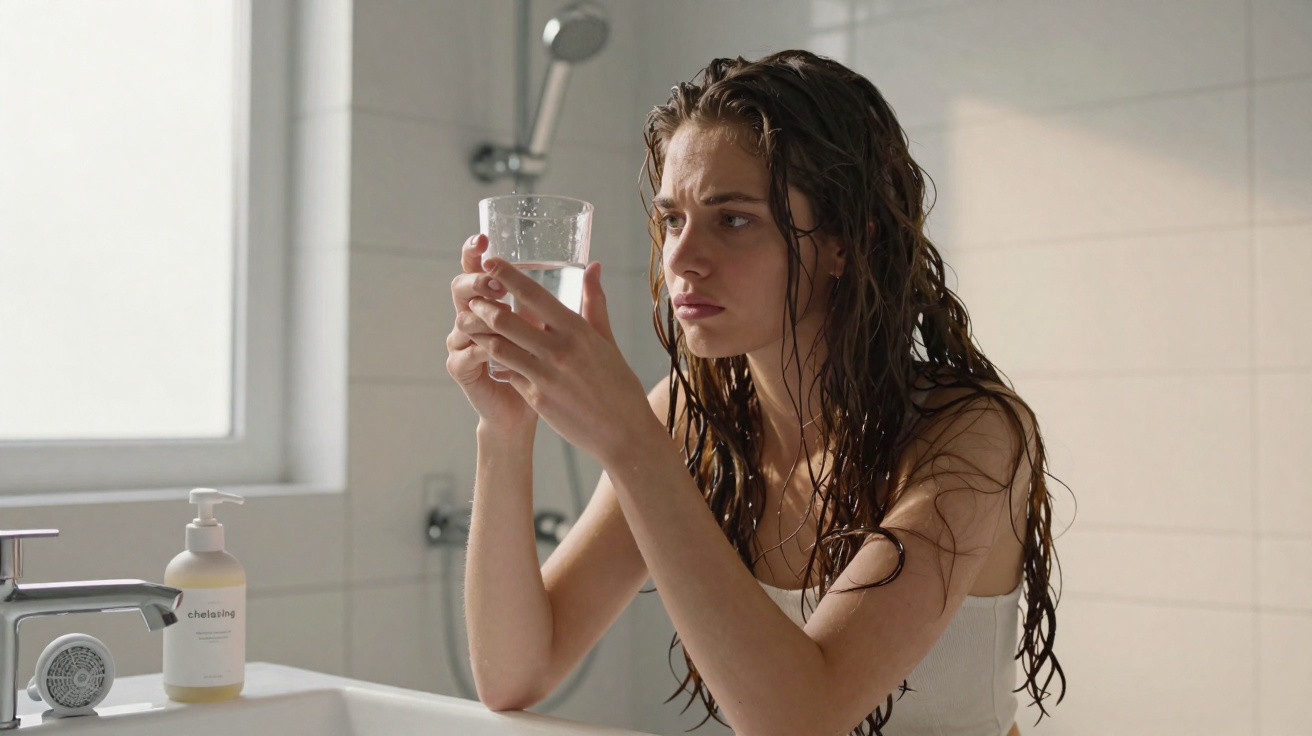
You run a comb through your hair expecting the light, swishing finish from shampoo adverts. Instead, your fingers snag on something unfamiliar. Your roots seem coated, the lengths feel weighed down, and although your hair appears clean, it somehow feels grimy too.
You point the finger at your conditioner, then your shampoo. You rinse once more, this time with hotter water and more vigorous scrubbing. Nothing changes: your hair remains waxy and nearly sticky, as if a stubborn film is clinging to every strand.
The surprising part is that this coating may not be hair product at all.
Why freshly washed hair can feel dirty within minutes
That peculiar waxy sensation at the roots and the heaviness that arrives as soon as you leave the shower may have little to do with your washing technique. In many households, the real issue is the water. Hard water, which contains high levels of calcium, magnesium and other minerals, can leave a delicate invisible residue on each hair.
On your scalp, these minerals combine with sebum and shampoo residue. Together, they act rather like a thin layer of soap scum. It may not look dramatic or obvious, but it is enough to make glossy hair feel limp and coated. You are not imagining it.
Picture a Tuesday morning in a small flat: a woman in her thirties looks in the mirror, completely fed up. In six months, she has tested her fourth “clarifying” shampoo. TikTok said product build-up was to blame. A hairstylist pointed to her conditioner. A friend insisted she was not rinsing for long enough. Every new bottle promised a transformation, but the waxy roots remained.
Then she moved to another city for work and noticed something unexpected. She used the same products and followed the same routine, yet her hair immediately seemed lighter and more buoyant. After showering, it felt almost silky before it had even dried. When she returned home for the holidays, the heavy coated sensation reappeared after only two washes. Nothing in her bathroom had altered, apart from the water coming out of the tap.
She eventually learnt that her parents lived in a hard water area, whereas her new city had softer water. The contrast was unmistakable: it was like night and day. This is a quiet fact of life in many places: in some countries, more than 80% of households have hard water, while most residents do not realise it is affecting their hair.
Hard water minerals adhere to hair like microscopic dust, creating small deposits that are not impressed by the price of your shampoo. These particles bind with styling-product residue and natural oils, reducing lift at the roots and leaving the lengths coated, particularly if your hair is fine or porous.
With time, the deposits may also make the cuticle, the outside layer of the hair shaft, feel rougher. Hair can then tangle more easily, look less glossy and absorb less moisture. You may apply additional conditioner, only for it to cling to the mineral coating and make the hair feel even heavier. It becomes a frustrating cycle that feels like “my hair is getting worse”, when in reality your water is stacking against you.
How to outsmart hard water and end the waxy-hair cycle
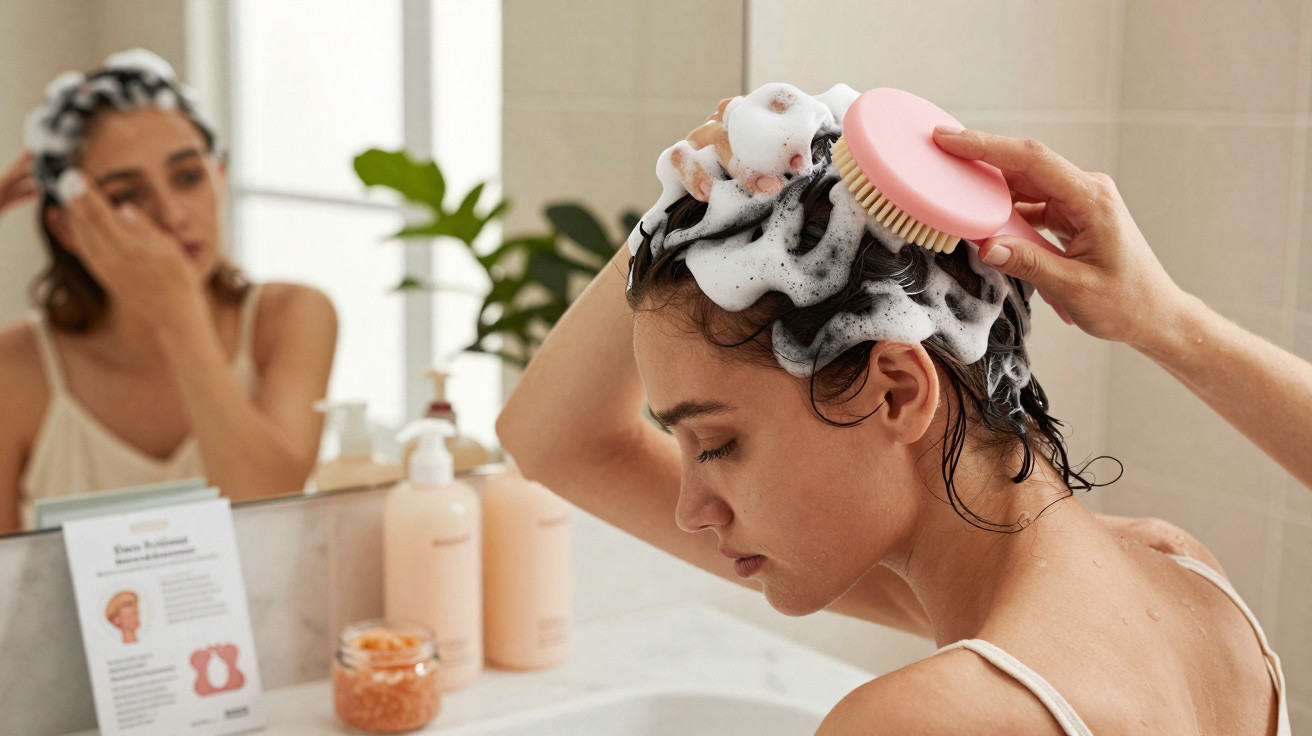
The first useful step is remarkably straightforward: view your final rinse as a treatment rather than an afterthought. A chelating product or acid-based rinse can help break down the mineral layer left behind by ordinary shampoo. Using a chelating shampoo once a week, and looking for EDTA or the word “chelating” on the label, can genuinely reset your strands.
On other wash days, a homemade rinse using diluted apple cider vinegar or citric acid may help. After shampooing, pour it through your hair, leave it for one minute and rinse it out thoroughly. Its gentle acidity can loosen minerals and smooth the cuticle without filling your bathroom with expensive products. There is no need to replace your whole routine overnight; you only need one sensible step that works in the same way as those minerals.
When hair feels waxy, many people react by adding extra lather, extra products or both. They shampoo twice, scrub more aggressively, purchase a “deep cleansing” shampoo and then use richer masks to make up for the dryness. That approach is harsh on the scalp and seldom addresses the underlying problem.
During a particularly bad hair week, it is easy to feel tempted to wash your hair twice daily simply to feel clean. That will usually make matters worse. Excessive washing can prompt the scalp to produce more oil, which attracts still more mineral deposits. Let’s be honest: nobody can realistically do that every day in a healthy or sustainable way. Instead, scale back the routine, make it lighter and use methods that work with your water rather than against it.
“Most people think their hair has suddenly ‘changed’ or their shampoo has stopped working,” explains a London-based stylist who works only with clients in hard water areas. “What’s actually changed is the build-up of minerals over time. Once you deal with that, their ‘old’ shampoo magically works again.”
A few modest changes can also be useful. A shower filter designed to target minerals will not transform your bathroom into a luxury spa, but it may noticeably improve the feel of the water. Adding a chelating shampoo to your routine, rather than using it daily, perhaps once every one or two weeks, can prevent hair reaching that sticky, waxy point.
- Check your water hardness online or use a basic test-strip kit.
- Include a chelating or clarifying treatment once every 1–2 weeks.
- Make an acid-based rinse, shop-bought or homemade, your final rinse.
- Choose a gentle everyday shampoo so your roots do not become irritated and over-stripped.
- Observe how your hair responds over an entire month rather than after one wash.
Rethinking “dirty” hair when your tap is the real issue
There is something strangely freeing about understanding that your hair is not “misbehaving”; it is responding to its surroundings. The dense, waxy feeling that appears straight after washing can feel like a personal shortcoming: the wrong shampoo, the wrong method or an inability to “do hair” properly. Often, it is simply geography and plumbing quietly winning the battle at your roots.
When you recognise hard water as part of the picture, the questions change. Rather than asking, “What’s wrong with my hair?”, you may ask, “What’s sticking to it every time I shower?” That small change in thinking can make you less critical of yourself and more interested in practical answers. It shifts a blame cycle into a small science experiment in your own bathroom.
It is the sort of subject friends discuss over coffee, trading stories of strange hair days and the little fixes that eventually helped. The next time your hair turns waxy only minutes after washing, you may not rush out to buy another bottle promising an instant miracle. You may look at your tap, your area’s water map and your final-rinse routine instead. That small perspective shift could be when your hair finally begins to feel truly clean again, rather than merely scented and wet.
| Key point | Detail | Why it matters to the reader |
|---|---|---|
| Hard water minerals | Calcium, magnesium and metals adhere to the hair and scalp | Explains why hair can feel waxy and heavy even immediately after washing |
| Chelating & acid rinses | They target and dissolve mineral deposits more effectively than standard shampoo | Offers a practical way to “reset” hair without changing everything |
| Routine tweaks, not overhaul | Weekly clarifying, gentle everyday care and a possible shower filter | Provides realistic measures that suit daily life and different budgets |











Comments
No comments yet. Be the first to comment!
Leave a Comment