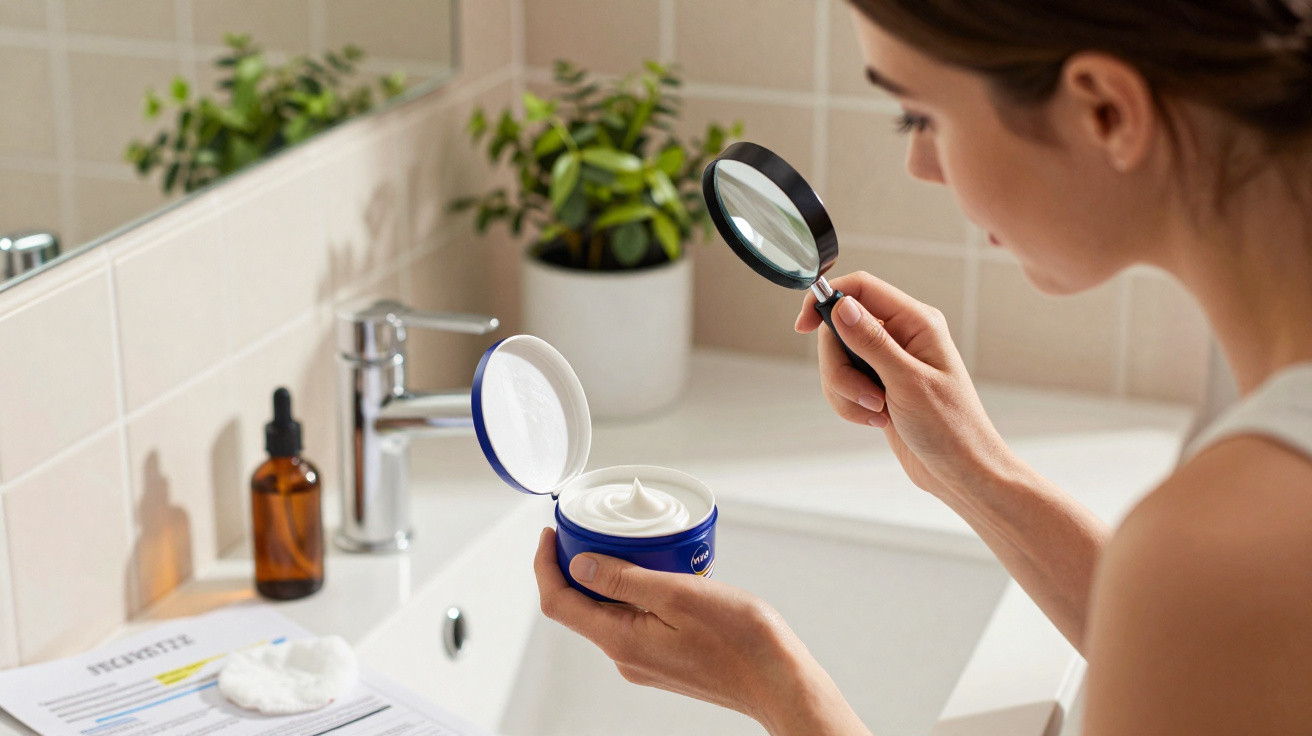
The woman at the pharmacy does not even glance up as she reaches for the famous blue tin.
Her hand seems to know exactly where it is. She drops a Nivea cream into her basket with the same familiar movement her mother may once have made. A few paces behind her, a teenager scrolls through her phone, eyes widening as she murmurs to her friend: “Wait… have you seen what’s actually in this?”
This is 2025: an era in which no product is beyond scrutiny, and the cream once associated with childhood has found itself at the centre of a storm.
Across social media, devoted Nivea users leave angry replies beneath ingredient analyses shared by “skinfluencers” and cosmetic chemists. Terms such as “mineral oil”, “paraffin”, “fragrance” and “potential hormone disruptors” are suddenly appearing everywhere.
One question, however, keeps surfacing.
What, precisely, have we been applying to our skin for all these years?
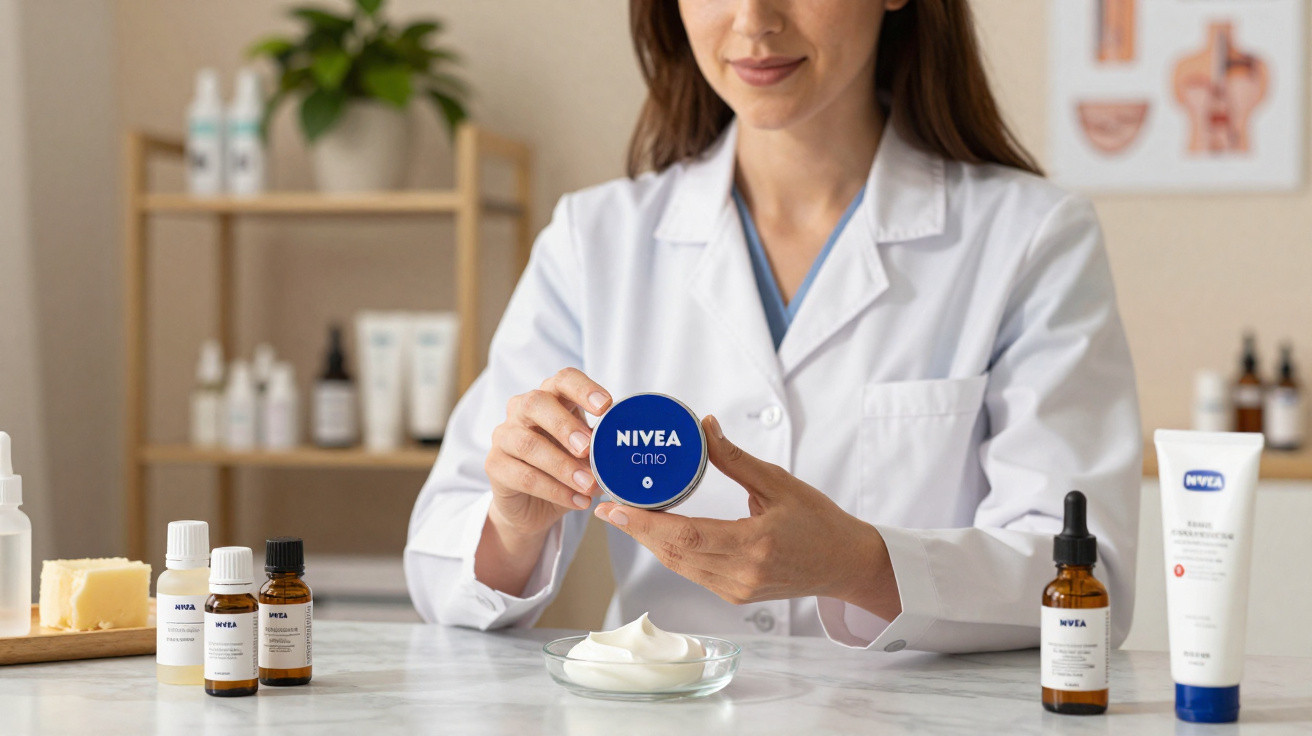
What experts say is really inside that iconic Nivea blue tin
Pick up a tin of Nivea Creme, turn it over and read the label aloud. For many loyal users, this was where the alarm began. The product they had always viewed as “the classic cream that works on everything” became a list of ingredients that sounded as though they belonged in a laboratory.
Cosmetic specialists began unpacking the list in TikTok clips and Instagram carousels: mineral oil, petrolatum, paraffinum liquidum, microcrystalline wax, synthetic fragrance, and preservatives that certain studies are now examining more closely.
The response came immediately. Hundreds of people who had grown up with the scent of Nivea on their faces began asking whether they had been “tricked”.
In a viral Reddit discussion, Nivea fans expressed the same blend of fondness and frustration. One user wrote: “My grandma used this every night. Now I’m told it’s basically perfume in petroleum. I feel betrayed.”
Another shared before-and-after photographs of her skin, saying that she had changed from Nivea to a minimalist, fragrance-free cream on a dermatologist’s recommendation. The redness on her cheeks had noticeably settled.
Others came to the brand’s defence, stressing that Nivea Creme has existed for more than a century and that millions of people appear to use it without difficulty. One comment captured that position: “If it was so toxic, wouldn’t we all be dead by now?”
The discussion soon extended beyond the familiar argument of “this product broke me out” versus “this product saved my skin”. It became about confidence, openness and what we actually mean when we describe a cream as “good”.
Dermatologists willing to discuss the formula frankly offered a more balanced view. They said that Nivea’s well-known consistency comes largely from mineral oil and petrolatum: petroleum-derived ingredients that form a dense, occlusive layer over the skin.
For skin that is dry or compromised, this layer can offer real benefits. The issue is not that these ingredients are automatically “evil”, but that plenty of customers believed they were purchasing a deeply nourishing cream rich in plants… when they were, in fact, mostly buying a carefully formulated mixture of low-cost occlusives and fragrance.
For many committed users, the “shocking truth” was not one poisonous ingredient. It was the discovery that the product did not entirely match what their memories – or its marketing – had encouraged them to expect.
How to understand Nivea’s ingredient list without panicking
The first practical move is to interpret the ingredient list calmly and systematically. There is no need for panic; focus on the facts. Begin at the top, because ingredients are listed by amount, meaning the first ones are those your skin encounters most.
Many classic Nivea creams list water first, followed by mineral oil (paraffinum liquidum), petrolatum, glycerin, and various waxes and emulsifiers. Put simply, this indicates a water-in-oil cream designed to remain on the skin and retain moisture.
Fragrance generally appears lower down the list, yet even small quantities may provoke sensitive or reactive skin. The important question is: does your skin genuinely tolerate it, or are you simply attached to the scent?
One useful approach is to photograph the label and enter the names into an online cosmetic-ingredient database. The aim is not to frighten yourself, but to find brief, neutral explanations for every component. The formula then becomes much less mysterious.
If you have used Nivea for years without any problems, reading all these ingredient analyses can easily feel like a personal attack. Terms such as “endocrine disruptor” or “occlusive” can make your confidence falter. On a human level, it can feel as if someone has told you that your family recipe is really junk food.
Let us be honest: nobody truly reads every label in the bathroom cabinet each day. We all depend on routine, familiar brands and the products passed on by our parents. That is why hearing experts say “you might want to rethink that blue tin” can strike a nerve.
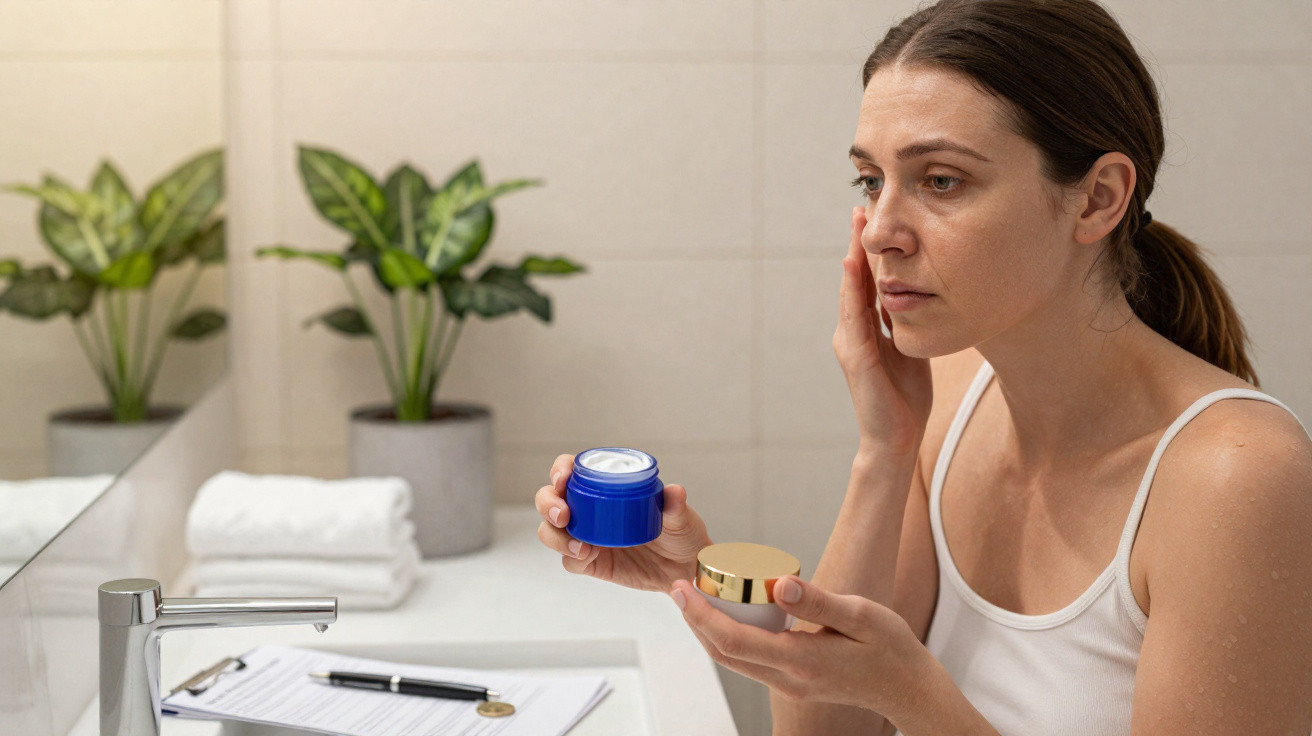
The more sensible reaction is neither to defend the cream without question nor to throw it away angrily. Instead, pay attention to your own skin. Have you experienced unexplained irritation on your cheeks that you blamed on stress? Areas that never fully heal? Or perhaps… no issue whatsoever.
Skin is individual. The frustration expressed by so many Nivea users online often conceals a more profound concern: the possibility that the way we care for ourselves has rested on half-truths.
One cosmetic chemist I spoke to put it bluntly:
“Nivea is not a villain. It’s just a basic petrolatum‑based cream from another era being judged by today’s standards of ‘clean’ and ‘transparent’ skincare.”
That observation is central to the debate. Safety is not the only issue; expectations matter too. Some shoppers now want short, easily understood formulas, an explicit position on endocrine disruptors, and fragrance-free choices as standard.
For anyone unsure what to do next, this brief decision guide may be useful:
- If your skin is sensitive or reactive, think about patch-testing Nivea on a small area over several days.
- If you are pregnant or want to take an especially cautious approach, opt for minimalist, fragrance-free formulas.
- If you enjoy using Nivea but feel uncertain, reserve it for your hands or body rather than your face.
- If your skin does well with it, make a note of that and monitor any changes if you move to another product.
This shifts you away from vague anxiety and towards practical decisions based on your own everyday experience, rather than viral outrage alone.
Where Nivea fans stand now
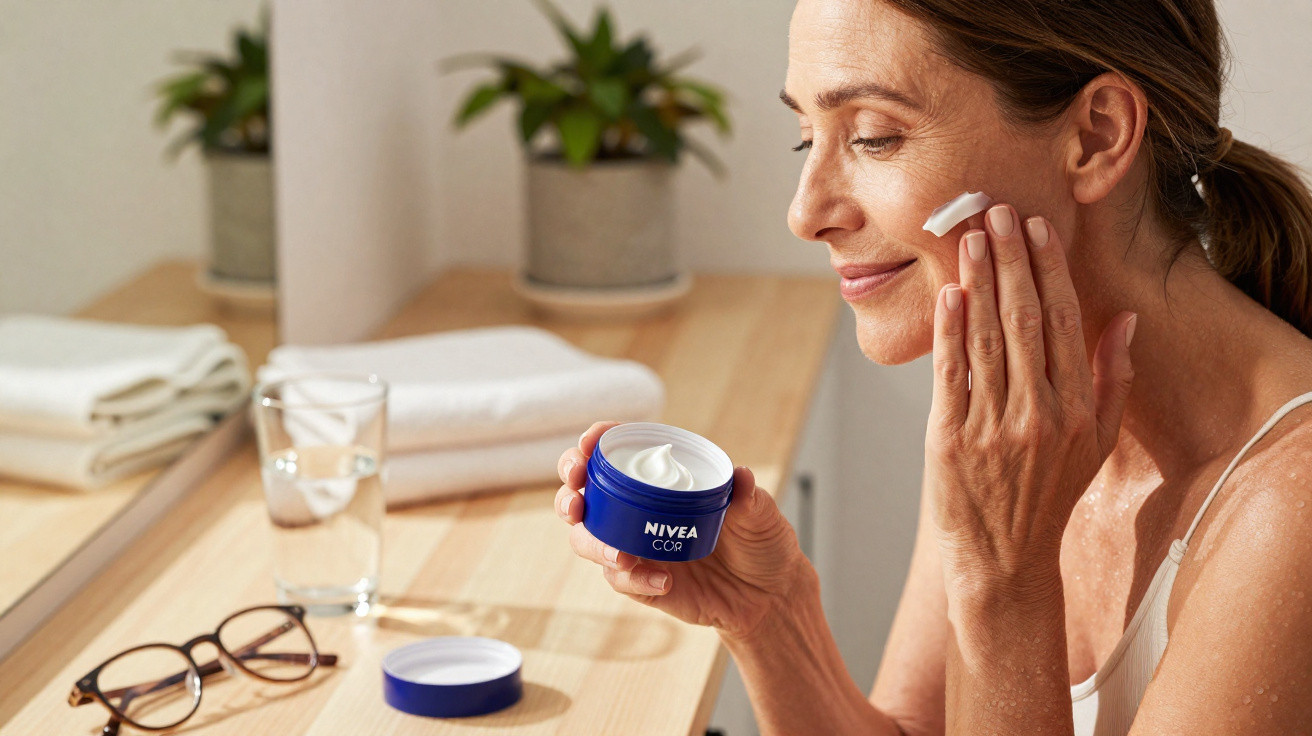
Step into almost any family bathroom and you may spot a partly used blue tin on a shelf, perhaps with a slightly dented lid. That small object holds memories of winter-dry cheeks, seaside holidays and mothers saying, “this will fix it”. Recent expert findings do not remove that emotional past; they make it more complicated.
Many Nivea fans now occupy an unusual middle ground. They may not want to reject the brand or discard every product, but they are more aware and less prepared to treat “classic” as another way of saying “good for me”.
Some are trying alternatives, including fragrance-free pharmacy creams, plain petrolatum jelly without perfume, and light moisturisers containing ceramides but no “mystery scent”. Others continue using their tin with greater awareness, perhaps keeping it away from the most sensitive areas of the face.
We have all experienced the moment when a favourite product looks different once we understand what it contains. Sometimes we stop using it; sometimes we decide it still suits us. The “truth” about Nivea’s ingredients does not prescribe one decision: it starts a discussion about how we want to approach the products we put on our skin.
| Key point | Detail | Why it matters to the reader |
|---|---|---|
| Nivea’s actual composition | Mainly water, mineral oils, petrolatum, wax and fragrance | Helps you understand what the skin is truly receiving beyond the marketing |
| The role of controversial ingredients | Occlusion, protection and a pleasant texture, but possible irritation for some people | Allows you to judge whether these ingredients suit your skin type |
| Alternatives and strategies | Minimalist fragrance-free creams, or targeted Nivea use for hands and body | Helps you adapt your routine without panic or guilt |





Comments
No comments yet. Be the first to comment!
Leave a Comment