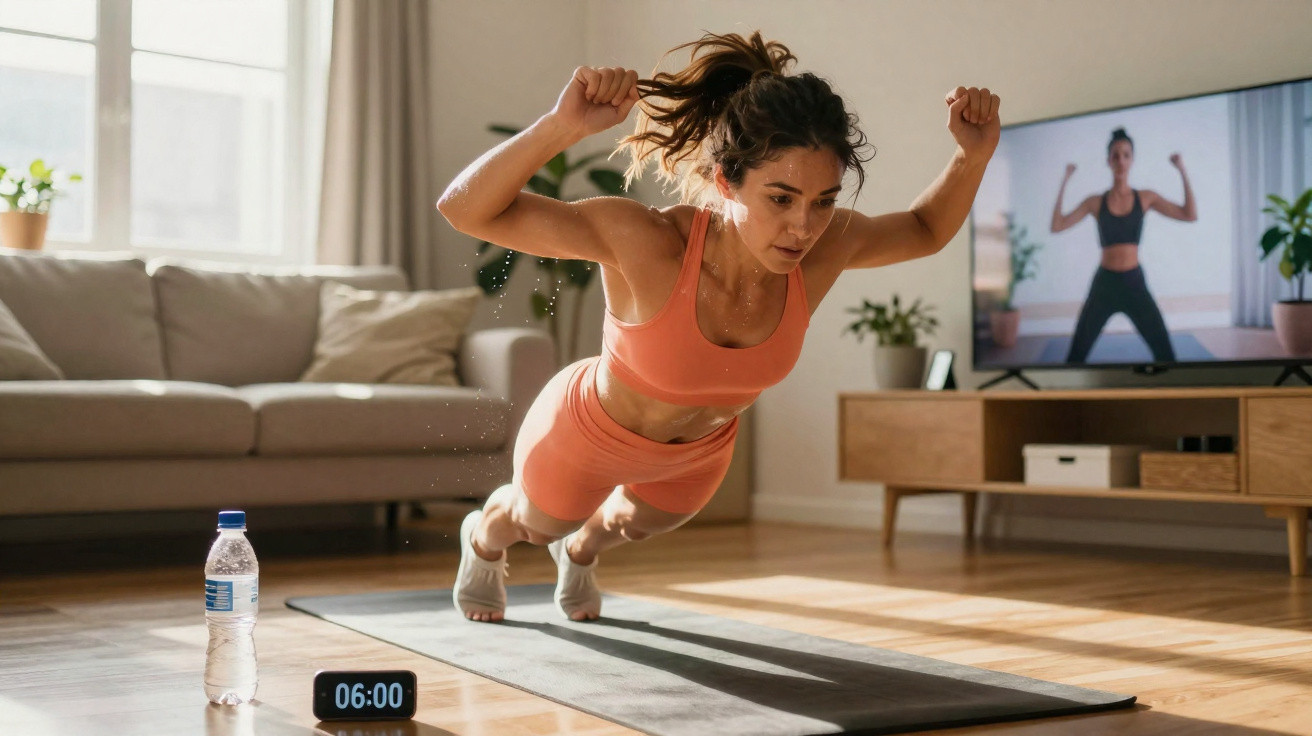
In front of the mirrors, people in brightly coloured performance gear line up shoulder to shoulder, all wearing the same focused expression: make the abs burn, shape the glutes, define the arms. To your left, a woman meticulously works through her crunches; two rows back, heavy kettlebells are being swung. Yet in the middle, something far less visible is happening – or rather, nothing is. Most people’s hips remain rigid, restricted, almost as if they were in plaster. No one seems to ask whether this central joint is involved at all.
The blind-spot problem in modern fitness culture
We constantly talk about core, six-packs and glutes. Look more closely, though, and many people mean only the muscles they can see, rather than the subtle stability deep around the pelvis. The hip works quietly in the background; it may occasionally click, pull or pinch, and is still ignored.
We all know the moment of getting up from a machine and briefly wondering: “Why does my lower back feel so old?” The explanation often sits one level lower, around the hip joint, glutes and deep core muscles. Yet hardly anyone talks about it.
A personal trainer told me about a Monday evening class packed with 25 participants. It was a typical “abs, legs and glutes” session. Every round involved squats, lunges and crunches. Plenty of sweat, plenty of determination. By the end of the month, five people had contacted him – all reporting the same issues: knee pain, a stiff back and a pulling sensation in the groin.
When he started filming their movements and reviewing them in slow motion, a pattern emerged: knees collapsed inwards, the pelvis tipped to one side and the upper body compensated. The hip was wobbling without control. Almost nobody had learned to guide the joint steadily before adding load. The technique looked good on Instagram, but in everyday life it was a risk.
Why does this happen? Many programmes are built around rapid progress and visible results. Muscles seen in the mirror sell better than joints that “simply do not hurt”. Training plans are often divided by muscle group: chest day, leg day, back day. As the connection point between them, the hip is easily overlooked.
There is also a misunderstanding at play: stability is often mistaken for stiffness. For many people, it means a “tight stomach”, rather than mobile, strong hips. In reality, stability means control throughout the full range of movement, not freezing in one position. Let’s be honest: hardly anyone does the unglamorous mini-exercises every day that would train exactly that.
How to finally put your hips at the centre of your training
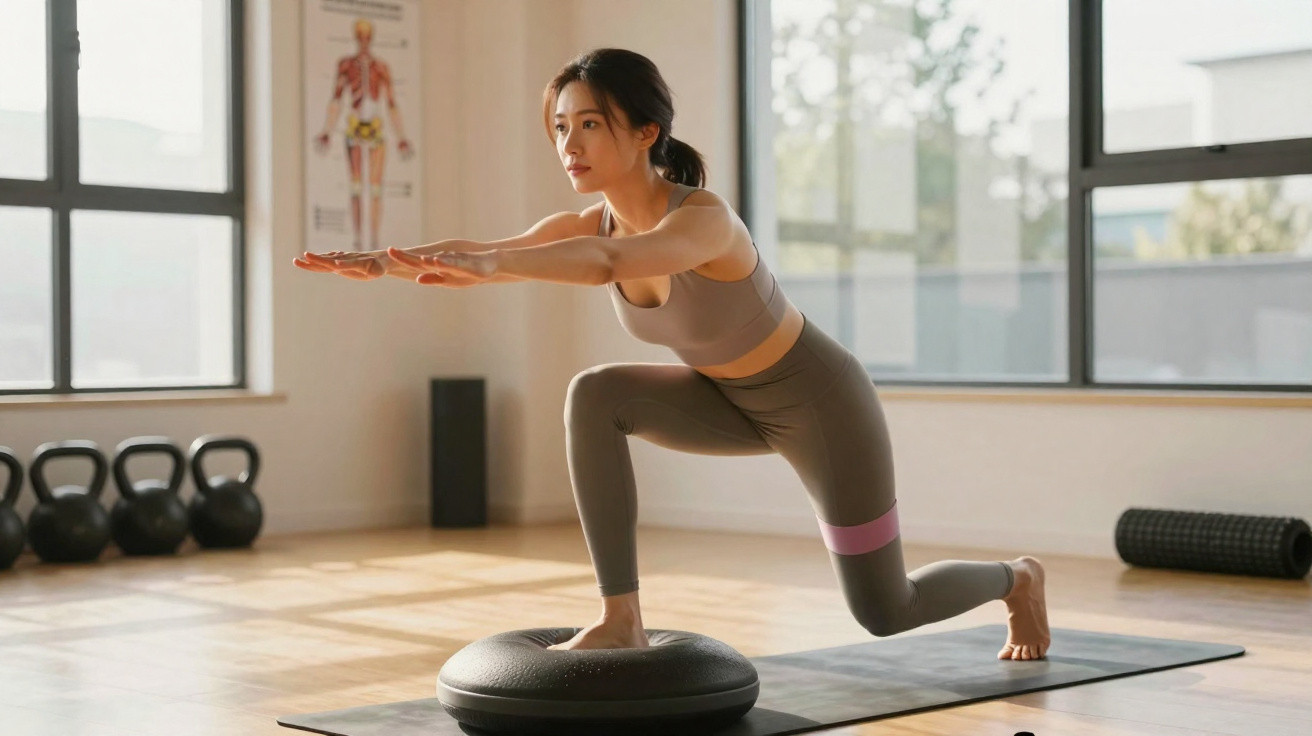
A straightforward self-test is a good place to begin: stand barefoot in front of a mirror, lift one leg and hold the position for ten seconds. No cheating and no leaning. If your pelvis shifts sideways, your shoulders rotate with it or your standing leg begins to shake, you have your answer. The hip is not weak in the traditional sense; it is poorly coordinated.
That test can become a small routine: 5 minutes of hip work before every workout. Try lateral monster walks with a mini band, single-leg glute bridges or controlled lunges with a brief pause at the bottom. Keep repetitions low, move slowly and focus on the sensation around the pelvis. It may not look impressive, but it acts like a warm-up for the nervous system.
Many people immediately throw themselves into heavy squats, hip thrusts loaded with several weight plates or dynamic jumping exercises. The body compensates as well as it can. Pain tends to appear only when the system reaches its limit. That is frustrating, because the person has “actually done everything right”.
The usual mistake is judging an exercise by its weight or difficulty, rather than by the quality of hip control. A small change in perspective helps: one clean, controlled squat with the lateral hip muscles consciously engaged is preferable to 20 repetitions with a tipping pelvis. Your gym pride will survive it, and your body will thank you later.
“The hip is like a quiet project manager: if it does not do its job, problems suddenly flare up at all sorts of sites – the knees, back, even the neck.”
To put this into practice, use a short checklist for every workout:
- Include a single-leg exercise, such as step-ups or Bulgarian split squats
- Add lateral movement, rather than moving only forwards and backwards
- Do at least one slow, controlled exercise instead of relying solely on explosive movements
- Spend 2 minutes on hip mobility after training rather than scrolling quickly on your phone
- Target the gluteus medius and deep hip rotators specifically once a week
Why hip stability has more to do with your life than you might like
You rarely notice your hips during training itself; everyday life is where they show up. On the stairs, when a knee drops slightly inwards. During long periods of sitting, when the lumbar spine starts to ache after a few hours. While jogging, when one leg eventually lands “differently” from the other. People often immediately blame running shoes, mattresses or some kind of insoles. The real issue usually sits a hand’s width below the waistband.
It becomes particularly interesting when you watch people who move well instinctively: dancers, climbers and surfers. Their hips almost “dance” with every movement. They combine stability with flexibility, and tension with ease. This ability does not appear by magic; it develops through repeated, conscious use of the joint in many directions. A conventional fitness programme made up of the same linear movements again and again barely reflects this.
Ignoring the hips usually does not cost you tomorrow, but it may cost you in a few years. At first, there is a vague pulling sensation that you brush off with a smile. Then comes the one run that suddenly feels unusually tough. Later, perhaps, a visit to the doctor where you first hear terms such as “overuse”, “restriction” or “a tendency towards osteoarthritis”. It sounds dramatic, and sometimes it is – yet much of it begins with tiny habits in training. One more set for appearance, one less set for stability.
The sober truth is this: anyone who never trains their hips consciously is always training out of step with the reality of everyday life. Few areas of the body determine so directly how we walk, stand, lift and carry. You see little of that on social media. In real life, you feel it with every step.
| Key point | Detail | Benefit for the reader |
|---|---|---|
| Hips as a blind spot | Focusing on visible muscles overlooks essential joint stability | Understands why conventional programmes can lead to pain despite consistent effort |
| Quality before load | Slow, single-leg and lateral exercises develop genuine hip control | Gains practical ways to adapt training usefully straight away |
| Everyday life as the test | Stairs, running and prolonged sitting reveal deficits in hip stability | Learns to interpret personal warning signs more effectively and take early action |





Comments
No comments yet. Be the first to comment!
Leave a Comment