Some people maintain that a coarse cotton flannel is the only way to feel truly clean. Others regard it as a bacteria-laden throwback that ought to have disappeared in the 80s. Where does medical science stand, then, and what do doctors recommend for a hygienic shower routine?
Hand washing in the shower: simple, direct and often safer
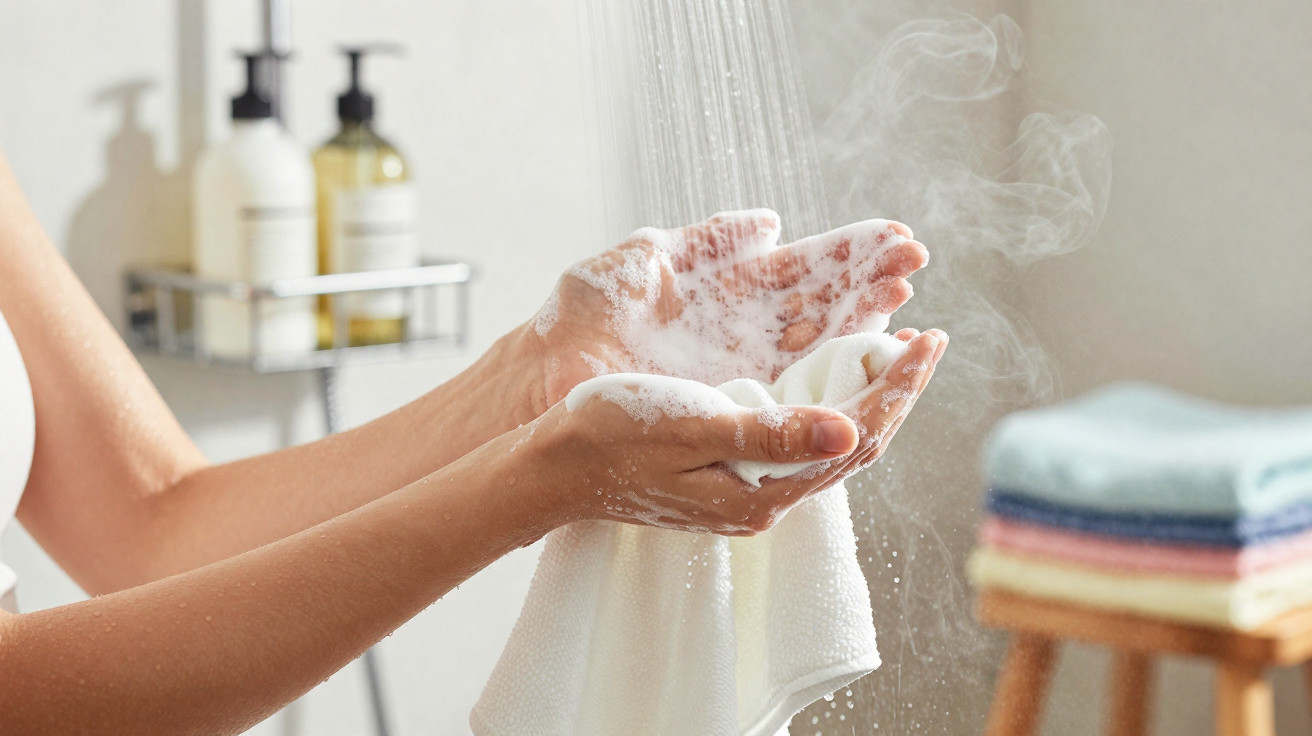
Medical guidance generally supports the most straightforward approach: washing with your hands. In an everyday shower, clean hands and a gentle cleanser will normally remove sweat, odour and visible grime effectively.
You can wash your hands before getting started, immediately clearing away most microbes present on them. Once clean, they offer a precise way to wash: you can feel your skin, notice irritation or lumps, and naturally regulate how much pressure you use.
Direct contact between clean hands, soap and skin is usually all that is needed for routine hygiene, as long as you rub for long enough.
How you wash matters more than which accessory you choose. Doctors commonly suggest the following simple routine:
- Wet your body using warm, rather than scalding, water
- Put a small amount of soap or shower gel onto your hands
- Rub all areas properly, paying particular attention to the armpits, groin, buttocks and feet
- Rinse thoroughly until your skin no longer has a slippery feel
Actively rubbing your skin for one to two minutes achieves most of the cleansing. The friction from your hands, together with the surfactants in soap, loosens sweat, sebum and many surface microbes.
There is a further, easily missed benefit: having fewer items in the shower means fewer damp surfaces on which fungi and bacteria can grow. Hands dry rapidly, whereas a flannel does not.
The flannel: helpful tool or bacterial sponge?
The familiar flannel can nevertheless be useful. It may help people with limited mobility wash their back or feet. It also provides mild exfoliation by lifting away dead skin cells that can make skin appear dull. For some, its “scrubbed” sensation is simply appealing.
The issue is what becomes of the cloth after the shower. A flannel left damp, folded up or kept in a humid bathroom provides an ideal setting for microbes, including bacteria, yeasts such as Candida and even moulds.
A damp flannel that never fully dries can turn from a cleansing tool into a delivery system for microbes straight onto your skin.
This does not make flannels forbidden. It does mean they need to be handled correctly. Hygiene specialists generally emphasise three essentials: changing them regularly, rinsing them thoroughly and drying them quickly.
How to use a flannel without turning it into a germ trap
If a flannel is your preference, or you need one for comfort or mobility, following a few firm routines can lower the contamination risk.
| Practice | Why it matters |
|---|---|
| Change every 2–3 days | Reduces the period in which bacteria and fungi can accumulate |
| Rinse well after each shower | Clears away soap, skin cells and sweat that nourish microbes |
| Wring and dry in a ventilated place | Microbes flourish in ongoing dampness; drying slows their growth |
| Machine-wash regularly at high temperature | Detergent and hot water lower the microbial load more effectively |
| Throw away at the first sign of odour or stains | An unpleasant smell or discolouration indicates established microbial colonies |
Microfibre flannels or mitts may be preferable to thick cotton versions. Because they usually dry more quickly and retain less water, they are marginally less hospitable to microbes. However, the same rotation and washing requirements still apply.
Which method is “cleaner”? What doctors actually prioritise
In considering this question, doctors tend to set aside sentimental attachment to flannels and focus on two points: whether the method removes sweat and dirt, and whether it limits the chance of irritation or infection.
For healthy adults with normal skin, washing with clean hands typically performs better on both measures. It involves fewer objects, creates less opportunity for bacterial overgrowth and is simpler to do consistently each day.
For most people, a straightforward shower with clean hands, mild soap and proper rubbing is both hygienic and sufficient.
A flannel may still be appropriate, particularly for:
- Older people or people with restricted mobility who find bending or twisting difficult
- Focused exfoliation once or twice weekly rather than every day, to prevent irritation
- Washing the back or feet where these areas are difficult to reach with the hands
For these situations, medical advice tends to favour a clean flannel that dries rapidly, alongside consistent laundering. The problem is not the tool itself, but trapped moisture.
Building a shower routine that protects your skin
The hand-versus-flannel discussion is not the only consideration: your washing habits affect the skin barrier. This outer layer, which contains lipids and beneficial microbes, helps retain moisture and protect against infection.
Overwashing, scrubbing harshly or using strong products can remove the skin's natural oils. The result may be tightness, itching and a greater tendency towards eczema or tiny cracks. This is why many doctors favour gentle cleansers, often marketed as “pH neutral” or made for sensitive skin.
A handful of simple changes can preserve the skin barrier while still keeping you fresh:
- Keep showers brief, normally below 10 minutes
- Choose warm rather than very hot water to avoid drying out the skin
- Soap the areas that sweat or smell most instead of lathering your entire body several times daily
- Gently pat your skin dry with a towel instead of rubbing it vigorously
- Use a simple moisturiser afterwards if your skin feels dry
People with particularly dry, delicate or eczema-prone skin often benefit from choosing hands over abrasive cloths. Direct contact makes it easier to use lighter pressure and recognise when the skin begins to react.
Different bodies, different needs: when routines should change
Shower requirements are not identical for everyone. A teenager training every day at a football academy faces different circumstances from an office worker who cycles gently to work.
Those who perspire heavily, do manual work or wear close-fitting synthetic clothes may need to pay more attention to areas where friction and dampness occur, including the groin, folds beneath the breasts and the feet. In these areas, sweat, heat and fabric together may encourage fungal infections. Careful hand washing, drying well and wearing breathable underwear are more important than using a flannel.
Conversely, a person with sensitive skin and a sedentary lifestyle may be best served by one thorough daily shower, using mainly their hands and an unperfumed cleanser, while keeping exfoliating cloths for occasional use.
Practical scenarios: what happens if habits slip?
Considering a few everyday examples makes the potential risks clearer. Imagine a shared student house where one flannel remains in the shower for weeks and is used by several people. It never dries completely, remains damp and gradually develops a slightly musty smell. In such a situation, a flatmate with athlete’s foot or a minor fungal rash could, in theory, help spread those organisms through shared fabric.
Consider also a busy parent who showers in a hurry and leaves the same face flannel hanging in a warm bathroom for a fortnight. Residual make-up, skin oils and persistent humidity create a favourable environment for facial bacteria and yeasts. This may not lead to illness, but it could worsen acne or cause local irritation.
Shower hygiene is less about perfection and more about cutting down the small, repeated opportunities for microbes to overgrow.
Using bare hands for most of the body, while keeping personal flannels clearly separate and laundering them regularly, limits these opportunities without making showering feel like a military operation.
Terms and details that often get misunderstood
Two terms are commonly seen on hygiene products: “antibacterial” and “pH neutral”. Antibacterial soaps include ingredients that kill bacteria actively rather than merely rinsing them away. They are seldom necessary for normal daily life and may disrupt the balance of the skin's usual flora. Doctors generally limit strong antibacterial products to particular medical circumstances, rather than recommending them for healthy people's everyday showers.
“pH neutral” usually refers to a level close to the natural acidity of human skin, which is approximately pH 5.5. Products within that range are often less irritating, particularly for anyone with sensitive or damaged skin. They will not make you “cleaner”, but can make frequent washing more comfortable and manageable in the long term.
With these fundamentals in mind, the flannel-versus-hand debate becomes much less dramatic. Clean hands, sensible products and some care over storing damp fabrics do the bulk of the work needed to keep a daily shower properly hygienic.







Comments
No comments yet. Be the first to comment!
Leave a Comment