My reflection in the café’s steamed-up window wore the same weary “effortless waves” I had spent three straight years scrolling past on Instagram. But across the table, a woman in a long charcoal coat shook out her hair, and it looked entirely different. It was neither beachy nor sleek: soft, atmospheric and almost cinematic.
Her lengths were not perfectly uniform, while the bends began lower down, as though her hair had slipped from a Victorian novel rather than a TikTok tutorial. A friend leaned in and murmured, “That’s what my stylist called Brontë waves. It’s the new winter thing.” The words hung in the air like coffee steam. Romantic, windblown and faintly dishevelled: hair that appears to have a story behind it.
That evening, I arrived home with freezing fingers and a single question: how can you achieve hair like that without living on a moor?
What are Brontë waves, and why does everyone suddenly want them?
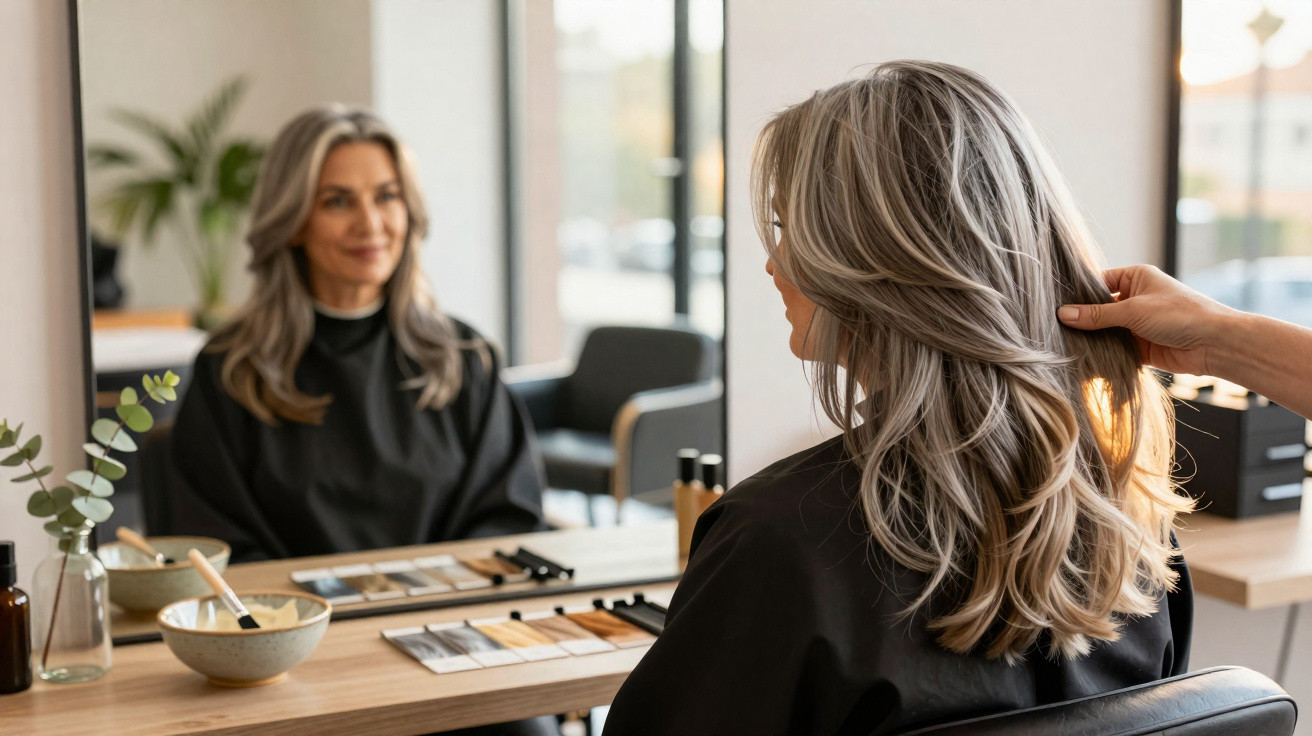
Brontë waves are a world away from the ultra-glossy influencer curl routine requiring 45 minutes and three separate irons. Picture gentle bends beginning around the cheekbones or jaw, before dissolving through the lengths with barely a defined “S” shape. The finish is soft, slightly windswept and a little uneven, as if your hair had chosen to narrate a gothic love story without any help.
This look is not about appearing expensive and immaculate. It is about seeming as though you have just come in from a long cold walk, with flushed cheeks, a half-loosened scarf and hair shaped by actual weather. More Jane Eyre on the cliff path, less model on a yacht. Brontë waves contour the face, soften angular features and make even a thick jumper with worn jeans feel considered.
At a London salon recognised for editorial styling, stylists say clients are specifically requesting “less blowout, more poem.” Since October, one colourist told me, screenshots of “glass hair” have quietly given way to requests for softer, brushed-through waves. TikTok videos carrying this moody aesthetic are gaining traction, not because they are flawless but because they feel plausible. During a season when daylight vanishes by 4 p.m., people want hair to suit the mood.
There is a wider weariness, too, with an “effortless” finish that actually requires so much work. When every wave looks identical, it becomes visually dull. Brontë waves embrace small flaws: one side can be marginally fuller, there may be an additional bend at the collar, or a front strand may lie flatter. This unevenness gives hair a sense of life. It also photographs beautifully in dim light, beneath street lamps or in the late-night glow of a laptop during Zoom. It is winter hair that makes no attempt to pose as summer hair.
How to create Brontë waves at home without a glam squad
Begin with dry hair that is not freshly washed to perfection. Second- or even third-day hair tends to hold this sort of texture more effectively, as it has natural grip. Brush it all through until it initially seems almost too smooth, then mist on a light heat protectant and apply a small amount of dry texture spray through the mid-lengths. Aim for movement rather than rigidity.
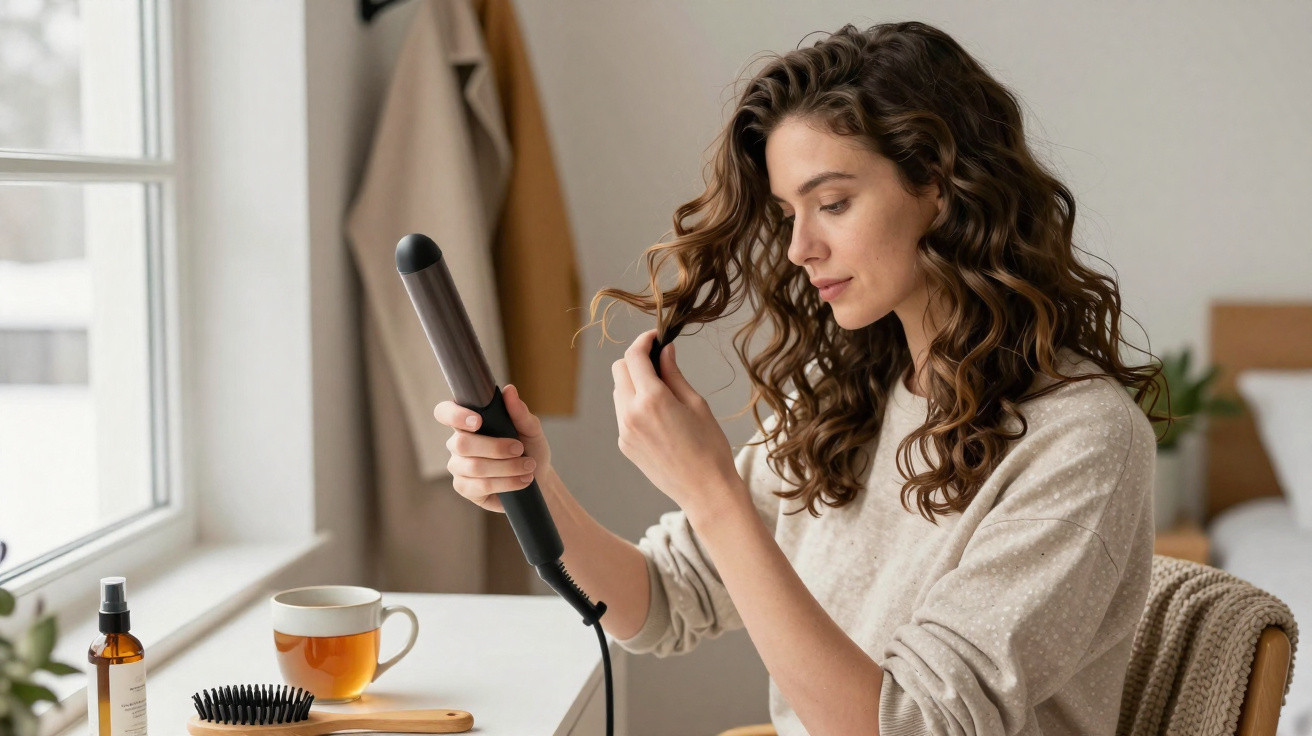
Take a large curling iron or wand (28–32 mm) and work with loose sections. The crucial point is to leave the final 3–5 cm free, curling only from around cheekbone or eye level downwards. Wind each section around the barrel for a few seconds, ease it off, then use your fingers to gently pull the curl straight while it remains warm. You are not aiming to form curls; you are blurring their outline. Allow the hair to cool without overhandling it. Patience at this stage makes all the difference.
Let’s be honest: nobody genuinely does this every day. On hurried mornings, there is a shortcut. Lightly dampen the mid-lengths, make a loose low plait and leave the ends out. Warm the plait with a hairdryer for a few minutes, leave it to cool while you apply make-up or read the news, then undo it and brush it through. It creates the same lived-in bend, particularly if your hair already conceals some natural wave.
One grey Tuesday in December, I watched a Paris stylist turn a client’s “I slept in a bun” hair into a full Brontë look in under 15 minutes. She did not use three separate tools. Instead, she made the parting slightly off-centre, lifted sections around the face and used a flat iron to form the most delicate bends, tapping it in and out as if sketching rather than drawing a line. The client, who worked in finance and wore a navy suit, left looking as though she had stepped down from a mist-covered cliff.
The same shift is being quietly recorded on social media. One creator shared a side-by-side: classic glossy waves with crisp definition on the left, and brushed-out bends with a mildly frizzy halo beneath a beanie on the right. The second photograph attracted a flood of saves and comments including “This feels more like me” and “This is how my hair actually looks after a day out.” That is the appeal of a trend that does not insist on perfection.
A recent UK beauty survey found that nearly 60% of women feel “tired of high-maintenance styling” in winter, with weather, time and sheer low energy among the reasons cited. Brontë waves occupy the ideal middle ground between natural and styled. They withstand scarves, can be reshaped with your fingers and still appear deliberate after a damp commute. Rough them up with a glove or tousle them after a nap, and they somehow improve.
This is almost a subtle rebellion against the uniformity and predictability of standard wavy hair. Rather than pursuing symmetry, Brontë waves acknowledge that real hair moves as you do. By creating bends only through the mid-lengths, all the “drama” falls around the face and collarbones-exactly where attention lands when you are wearing winter coats and high necklines.
There is also a technical reason for their softer effect. Keeping the ends straighter makes the overall shape lighter and more elongated, avoiding a bulky, heavily styled finish at the bottom. It lengthens the neck line and makes ponytails or low buns appear fuller without looking overly “done”. On fine hair, the shape creates an impression of greater density. For thicker hair, it takes weight away from the ends while retaining romance through the lengths.
Then there is the cultural association. The name “Brontë waves” immediately evokes windswept moors, long coats, intense eye contact and pages turning by candlelight. Hair that appears to belong in that world draws on something emotional: a softness that has been absent amid sharp bobs and slick ponytails. It is not quite nostalgia, but rather a small fantasy you can wear.
Brontë waves: styling tips, pitfalls to avoid and all-day hold
Your parting is the place to start. Move it a finger-width away from the centre; that slight imbalance gives the waves a literary, brooding quality. Use vertical sections about two fingers wide, switching the direction each time: twist one section away from the face, then gently turn the next towards it. Add bends only from cheekbone level downwards and keep the crown smoother, so the effect does not become “full glam”.
After lightly waving all of the hair, leave it to cool completely. Only then should you take a soft brush or wide-tooth comb and carefully brush out the form. This is the moment when the magic happens: defined curls soften into hazy, Brontë-like ripples. Finish by spraying a light flexible hairspray into the air and walking through it, rather than applying it straight to the hair. The aim is barely-there hold, never helmet hair.
Using too much product at the outset is one of the main errors. Dense creams and heavy oils will pull the waves down, particularly around the front where you want romantic lift. Choose an exceptionally light mousse or airy foam at the roots if volume is needed, followed by dry texture spray on the mid-lengths. Another common problem is over-curling. Should your hair spring into ringlets, do not worry-simply clamp the ends in a flat iron for two seconds to loosen them.
In practical terms, winter dryness brings frizz. Rather than battling it with excessive serum, welcome a slight halo; it genuinely complements the Brontë mood. Rub a pea-sized amount of styling cream between your palms, then pinch only the very ends. That provides sufficient polish. On the second or third day, refresh the shape by twisting two sizeable front sections, briefly warming them with a tool and brushing them out again. It is less a “full reset” and more a “soft edit”.
One London stylist I spoke to put it perfectly:
“Brontë waves aren’t about being perfect; they’re about looking like your hair has lived a little.”
For a clear, practical reminder on the next cold morning, here is a quick Brontë-wave cheat sheet:
- Begin with slightly lived-in hair – freshly washed hair works, but a little natural oil provides stronger grip.
- Curl from the cheekbones down and keep the ends straighter – this is what gives the style its elongated, poetic silhouette.
- Brush it all out once it has cooled – this is when “curls” turn into “Brontë waves”.
- Choose light, flexible products – think mist, foam and texture spray rather than weighty serums.
- Allow a little frizz and asymmetry – that is the entire appeal of the look.
Why Brontë waves feel right this winter
We are entering another cold season in which people are exhausted, budgets are under greater pressure and an hour of bathroom glamour feels disconnected from reality. There is reassurance in a hairstyle that does not punish you for sleeping awkwardly on it or cramming it beneath a beanie on the bus. Brontë waves fit around your real life rather than requiring a life arranged around touch-ups.
There is also something quietly stabilising about embracing softness when everything else seems harsh. These waves exist between romance and practicality. Wear them to work, on a date or in the supermarket queue at 8 p.m., when you suddenly realise there is no milk left. On a difficult day, they lend your reflection a hint of storybook drama. On a good day, they simply suit a scarf and headphones.
We have all caught our reflection in a train window, barely recognising ourselves beneath unflattering light and flattened hair. This trend does not claim it will transform your life. It merely gives your hair a kinder script to follow. That may explain why it is resonating so quickly: it permits you to look slightly undone, somewhat windblown and more like the main character in your own winter chapter than an extra in somebody else’s feed.
If you are tired of the same “beach waves” that do not fit the season, allow your hair to respond to the weather. Bend, brush and soften. Take the longer route home on a cold evening, and notice how your Brontë waves catch the streetlight in a shop window. You may not live on a wild moor, but your hair can borrow some of that wildness for a while.
| Key point | Detail | Benefit for the reader |
|---|---|---|
| Brontë waves vs. classic waves | Softer bends that begin at the mid-lengths, straighter ends and a brushed finish | Quickly understand the difference in order to adapt your routine |
| Core technique | Curl sections loosely, alternate directions and always brush out after cooling | Makes it possible to recreate the trend at home without a hairdresser |
| A look compatible with real life | Withstands beanies, scarves, light rain and second-day hair | Offers a realistic winter style that takes less time and is more forgiving |










Comments
No comments yet. Be the first to comment!
Leave a Comment