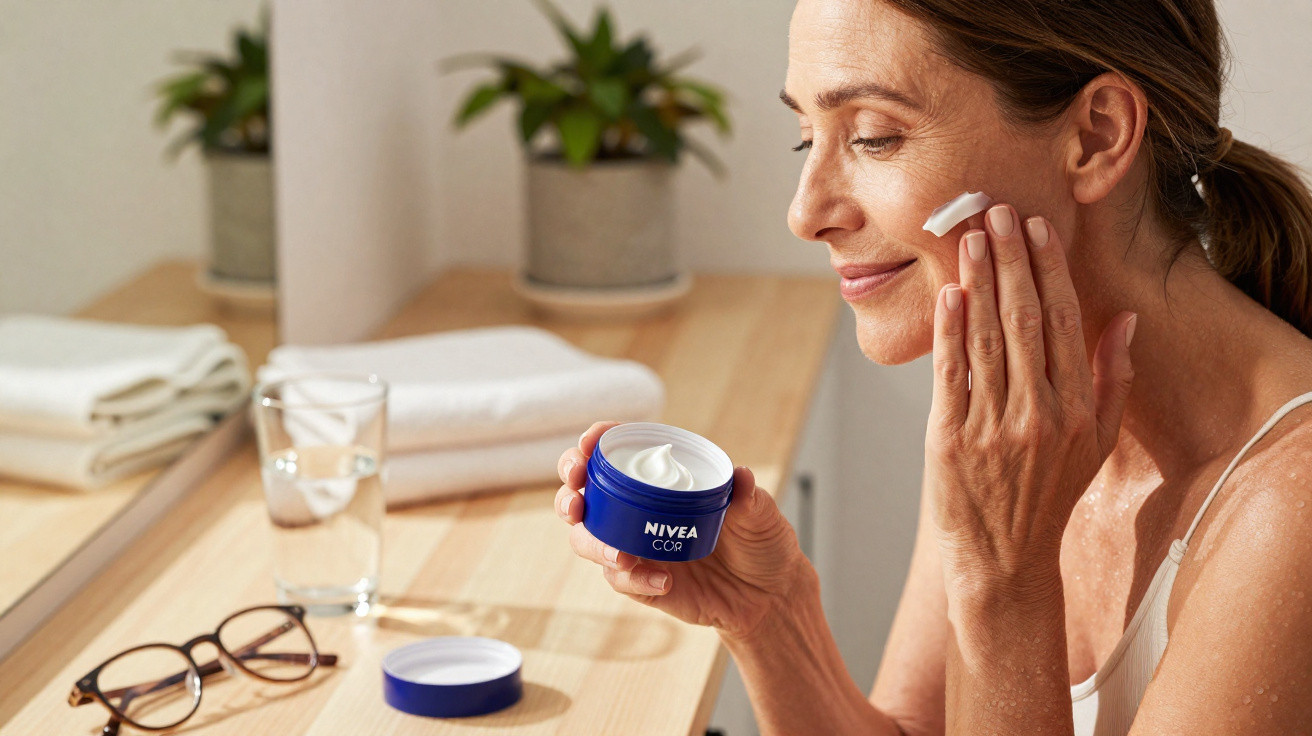
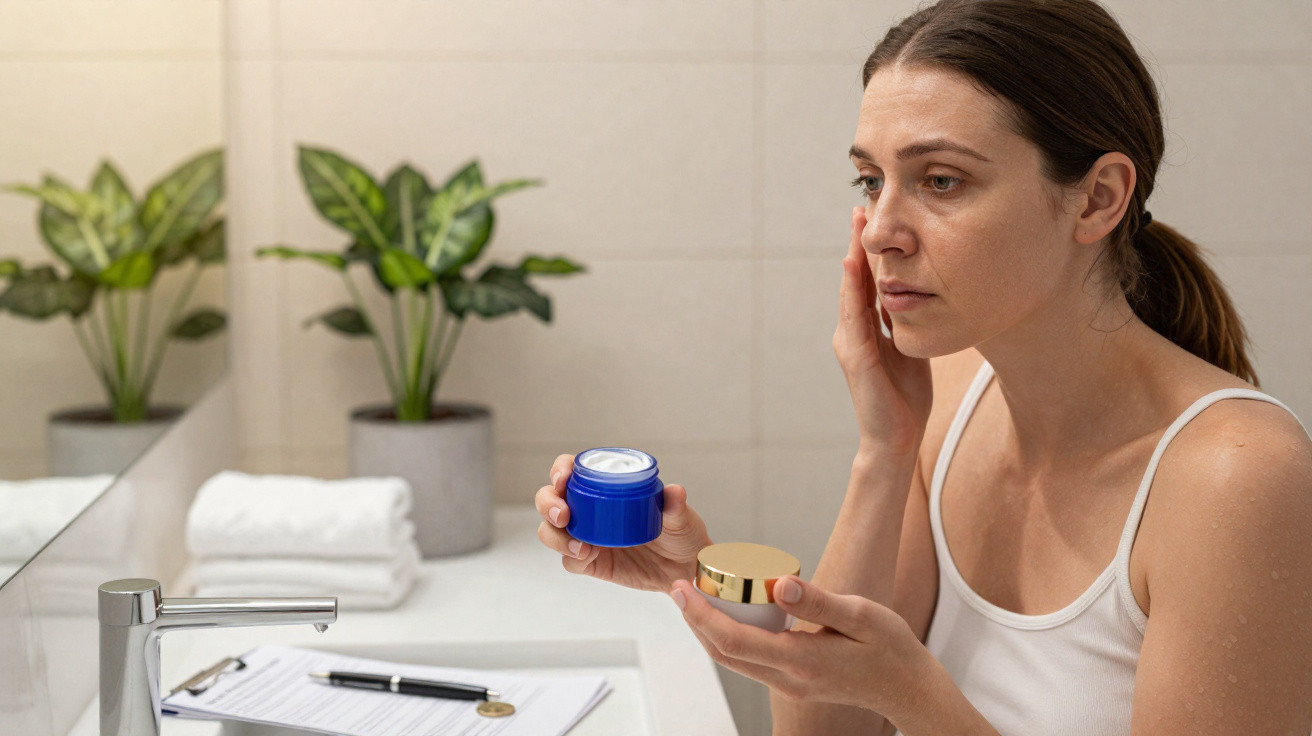
Many people associate classic Nivea cream with childhood memories, the scent of their grandparents or the smell of winter at home. A claim now circulating on social media suggests that the cult cream can virtually make wrinkles disappear after the age of 50. Is that true, or simply nostalgia packaged in a blue metal tin?
Why skin needs very different care after 50
From around the age of 50, the skin changes noticeably. Its natural moisture levels decline and its protective barrier becomes thinner. For many people, this shows up as tightness, fine dehydration lines and an overall more tired-looking complexion.
- Skin loses water more quickly.
- The skin barrier becomes more vulnerable and is more easily irritated.
- Lines that used to appear only in the evening can suddenly remain visible all day.
- Make-up is more likely to settle into lines and pores.
A large proportion of wrinkles at this stage are known as dehydration lines. Rather than being caused primarily by a lack of collagen, they occur mainly because the skin cannot retain enough moisture. This is precisely where the classic cream in the blue tin has a particular strength.
What blue Nivea cream really changes about wrinkles
The cream's formulation has remained largely unchanged for decades: rich oils, wax-like ingredients and straightforward moisturising agents. There is no high-tech approach or fashionable active ingredient involved. Even so, it can have an effect that makes a considerable visual difference to mature skin.
“The cult cream acts like a protective coat, keeping water in the skin and smoothing dehydration lines – at least temporarily.”
When the cream is applied to dry, tight skin, many people notice within minutes that:
- skin feels softer and more supple;
- tightness eases and the face looks more relaxed;
- fine lines, particularly on the cheeks and forehead, appear smoother.
The explanation is simple: the oily phase of the cream forms a film across the skin's surface. Less water can then evaporate, the natural protective barrier is stabilised and the skin surface appears more even. This disguises dehydration lines, but does not genuinely halt their underlying cause: the ageing of the connective tissue.
The blue cream is therefore not an anti-ageing miracle, but it can be a powerful ally when the aim is to soothe the skin visually and make it look smoother.
More than nostalgia: why many mature skin types love this cult cream
Especially after turning 50, many people want skincare that is simple and dependable again. No 20-step routine and no complicated serum combinations. This is where the cream's uncomplicated formula comes into its own.
“The cream works like a Swiss Army knife in the bathroom cabinet – simple, robust and useful almost everywhere in everyday life.”
Typical uses for mature skin
- Night-time care for severe dryness: Particularly in winter, many people use the cream as a rich overnight mask. Applied in the evening, it can leave the face looking more relaxed by morning.
- A protective layer against wind and cold: Its oily film can shield sensitive skin from cold weather and centrally heated air, especially on the cheeks and chin.
- Care for the neck and décolletage: These areas are often overlooked, yet they show fine lines quickly. The cream provides noticeably greater comfort there.
- Relief for rough patches: Elbows, knees and shins – areas that look dry and flaky usually respond well to the rich texture.
Older users who know their skin well often say: when nothing else works, the blue tin does. That is less about secret anti-wrinkle ingredients and more about extreme dryness often being the real reason behind a “crumpled” appearance.
What the cream cannot do – and its limitations
As popular as this cult cream is, it cannot replace modern anti-ageing skincare. Deep wrinkles, loss of elasticity and pigmentation marks can result from UV radiation, collagen breakdown and hormonal changes, among other causes. Different strategies are needed to address these factors.
The classic cream offers:
| Effect | What is realistic |
|---|---|
| Wrinkle smoothing | Fine dehydration lines may look less visible for a short time. |
| Skin rejuvenation | Skin can look fresher and better cared for, but it does not become “younger”. |
| Collagen production | No specific effect; other ingredients, such as retinol or peptides, are needed for this. |
| Protective function | The oily film temporarily reinforces the barrier and reduces moisture loss. |
Anyone wishing to target deeper expression lines or marked tissue sagging will find it difficult to avoid specialised anti-ageing products. The blue tin can complement that skincare routine, for example by adding protection during the colder months.
Who is blue Nivea cream suitable for on the face – and who should avoid it?
Its rich formulation is not right for every skin type. Mature skin that is dry, or even very dry, benefits particularly well. Combination or oily skin, on the other hand, may quickly become over-moisturised by the heavy oily film.
The cream is especially suitable for
- dry to very dry facial skin;
- tight, reddened winter skin;
- sensitive skin that reacts strongly to cold conditions;
- mature skin that feels “thin” and brittle.
Use it with caution if you have
- a tendency towards blemishes or blocked pores;
- a very oily T-zone;
- hot flushes that already make the skin oilier;
- a known sensitivity to fragrance.
If in doubt, test the cream first on limited areas, such as the cheeks or neck. If the skin tolerates the film well and feels calmer, use can be gradually extended.
How mature skin gets the most from blue Nivea cream
How it is used makes a major difference to how much mature skin gains from this cult cream. Applying it straight after harsh cleansing, onto dry and irritated skin, is rarely a good idea. A simple, multi-step approach works better.
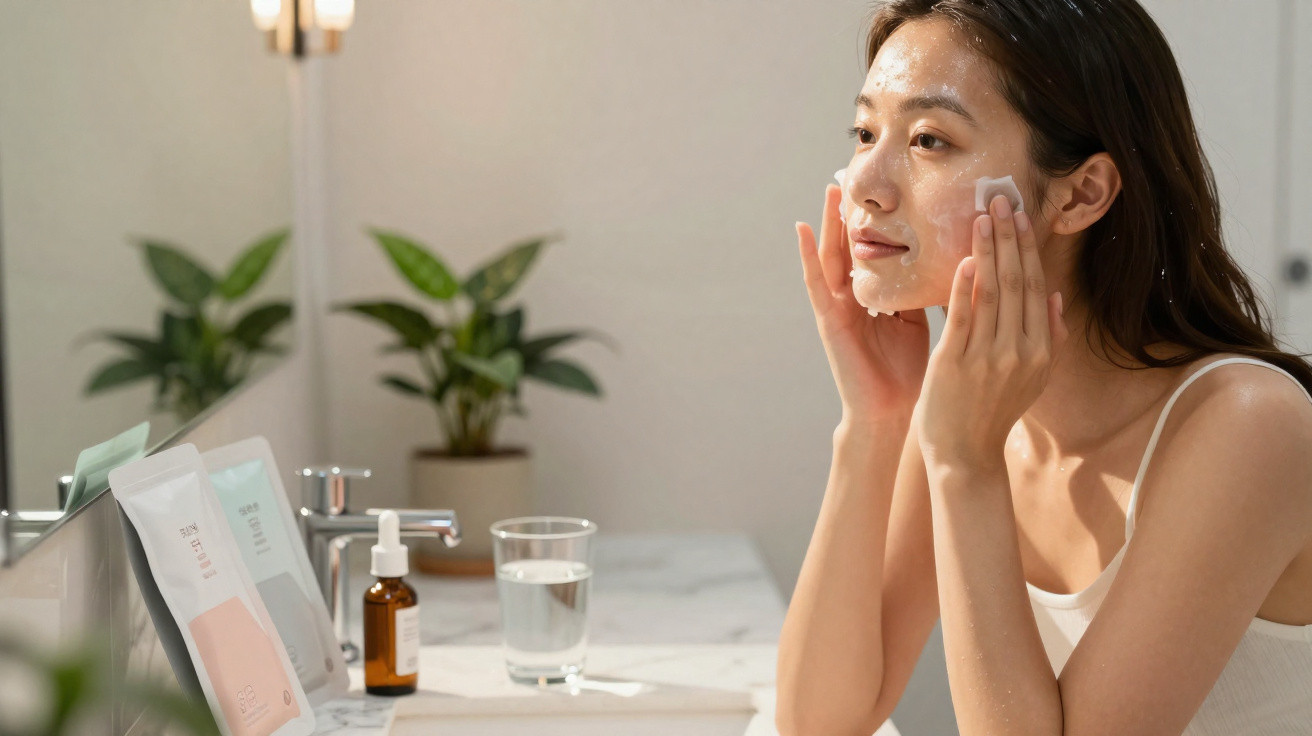
- Cleanse gently: Use a mild cleansing milk or cleansing oil, avoiding vigorous rubbing and harsh exfoliation.
- Add lightweight moisture: Apply a hydrating serum or facial toner, ideally containing hyaluronic acid or glycerine.
- Use the blue cream as the “seal”: Warm a small amount between your hands, then massage it in gently, concentrating on areas where dehydration lines are visible.
In this way, the cream acts as a final protective seal that helps retain the moisture applied beforehand within the tissue. Many people report that their skin looks plumper and less “crumpled” as a result, even where wrinkle depth does not objectively decrease.
What modern ingredients can add – and how to combine them
Those seeking more than temporarily smoother-looking skin can combine the cult cream with modern active ingredients. One common approach is to choose lighter anti-ageing products during the day, then use the rich blue tin at night when needed.
Popular options include:
- Retinol: A vitamin A derivative that can stimulate collagen production over time. It is usually applied as a serum or lightweight cream.
- Peptides: Short chains of amino acids that can send signals to the skin and support firmness.
- Hyaluronic acid: A moisture-binding ingredient that holds water like a sponge, adding volume to the upper layer of the skin.
- Antioxidants such as vitamin C: These protect against free radicals and may brighten the complexion.
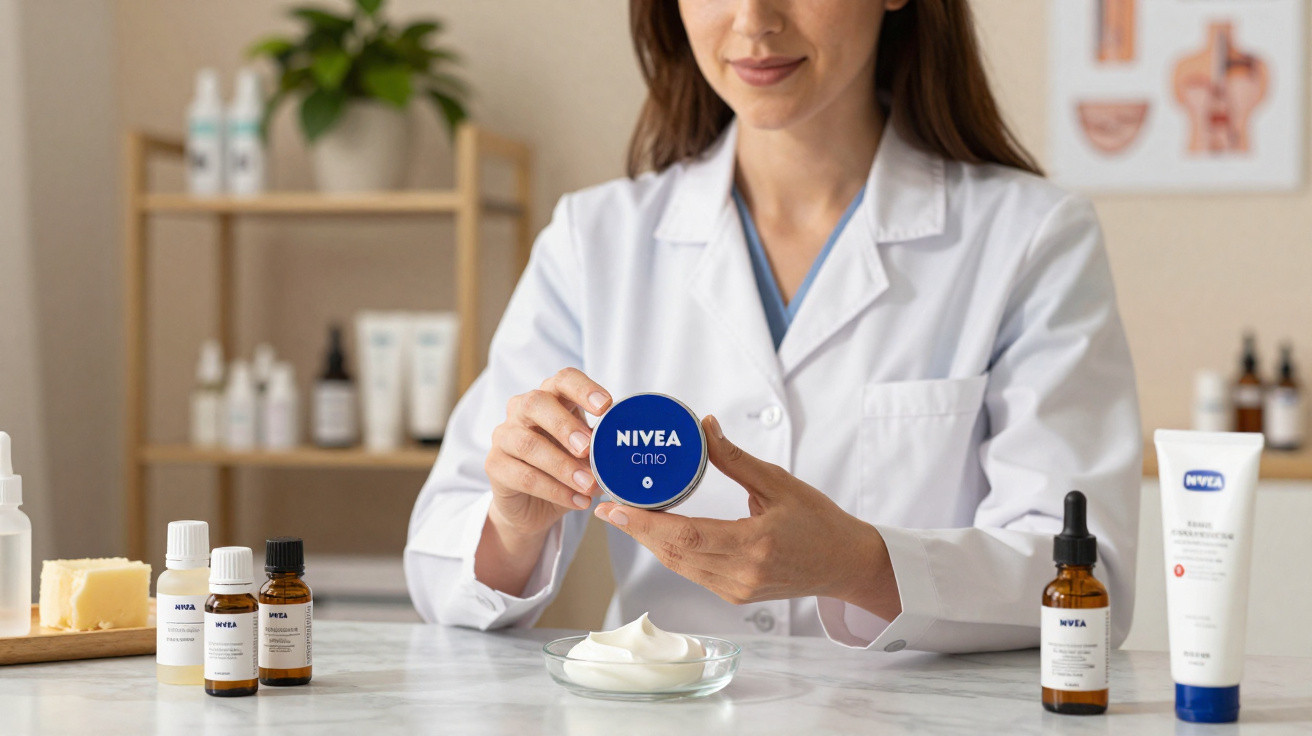
Many dermatologists recommend applying a targeted serum first and allowing it to absorb properly, before adding a thin layer of the classic cream if required. This keeps the active ingredients close to the skin while the oily film serves as a protective layer.
Common misunderstandings about the blue tin
Several myths surround this cult cream, particularly on social media. Three appear especially often:
- “It causes dependency”: Skin becomes accustomed to a comfortable level of care, but it does not become dependent in a medical sense. Without the cream, it may simply feel dry again.
- “It blocks everyone’s pores”: That is not strictly true. It can be too heavy for oily or acne-prone skin, but dry, mature skin can often use it without difficulty.
- “It replaces all anti-ageing skincare”: The cream can soften dehydration lines, but it cannot substitute products containing high concentrations of proven anti-ageing ingredients.
Ultimately, the blue tin remains what it has been for decades: a simple, dependable skincare classic. For mature, dry skin after 50, it can be a surprisingly strong ally against dehydration lines – not because it turns back time, but because it provides what skin at this age often lacks most: stable, long-lasting moisture and a protective coat that prevents it from drying out.








Comments
No comments yet. Be the first to comment!
Leave a Comment