
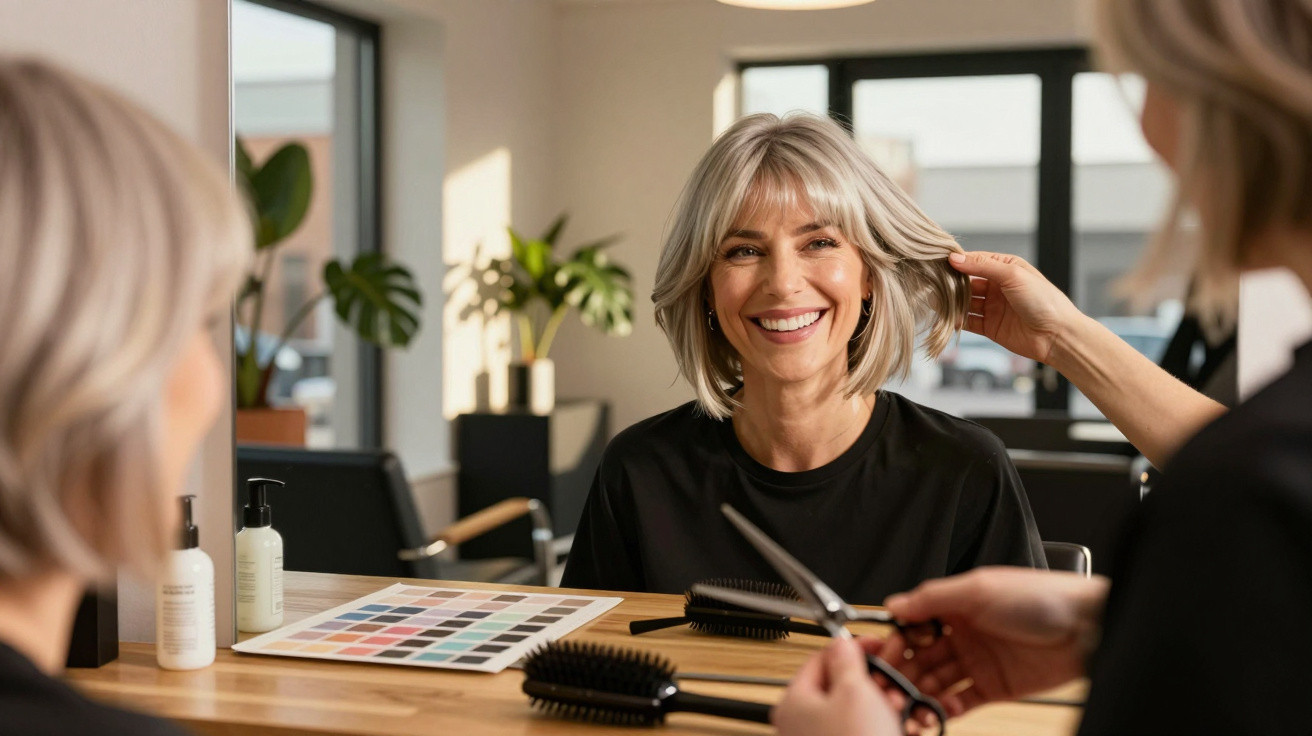
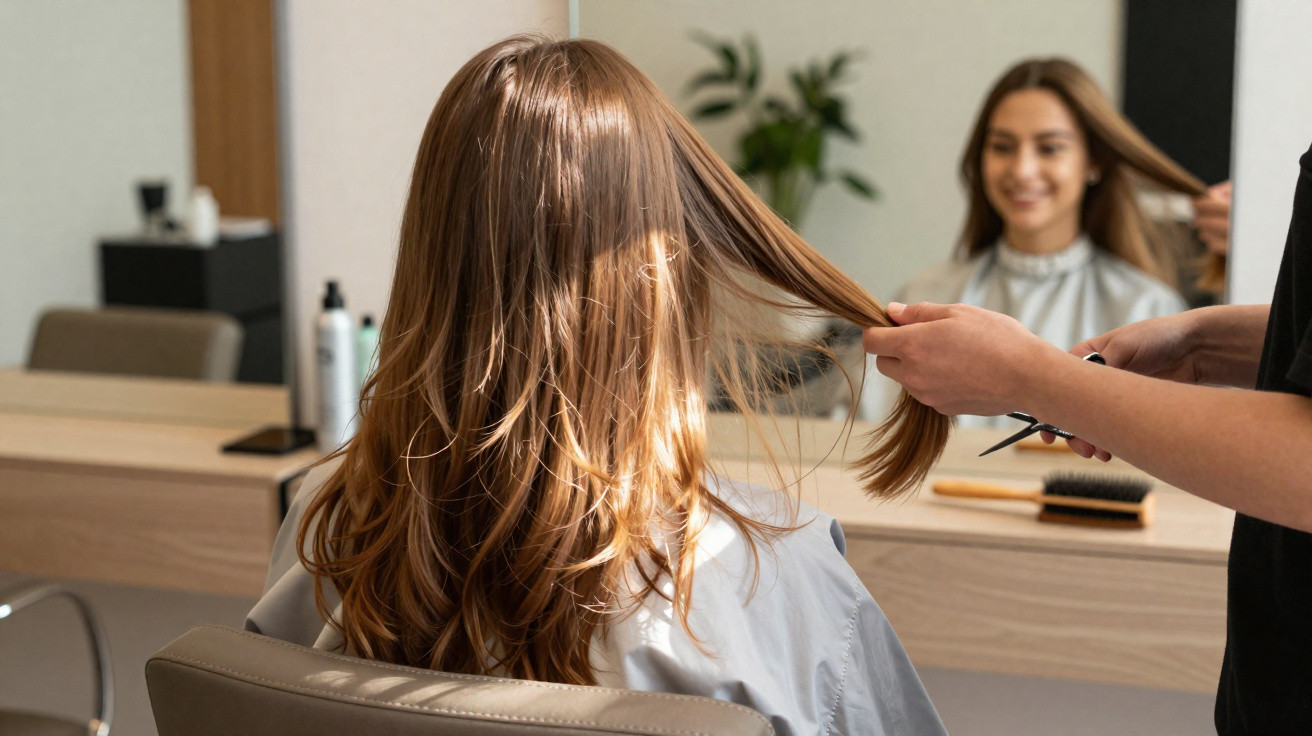
The hairdresser picks up a section, allows it to settle onto the cape, then gives a quiet sigh: “You want volume, but you don’t want layers.” You agree, caught in that well-known blend of optimism and apprehension. At 25, you could enter almost any salon, choose a photo at random, and it would somehow suit you. By 50, your hair has developed ideas of its own. It becomes finer, lies flat at the crown, and develops that odd flick at the ends. You are after movement rather than wispy strands, and definition rather than a helmet-like shape.
The mirror shows a face that has experienced life, laughter, worry and love - alongside hair that has not always followed suit. The stylist studies your features with their head slightly tilted, before breaking into a smile.
“There’s one length I’d bet on for you.”
The shoulder-length cut that creates fullness without the “shag” effect
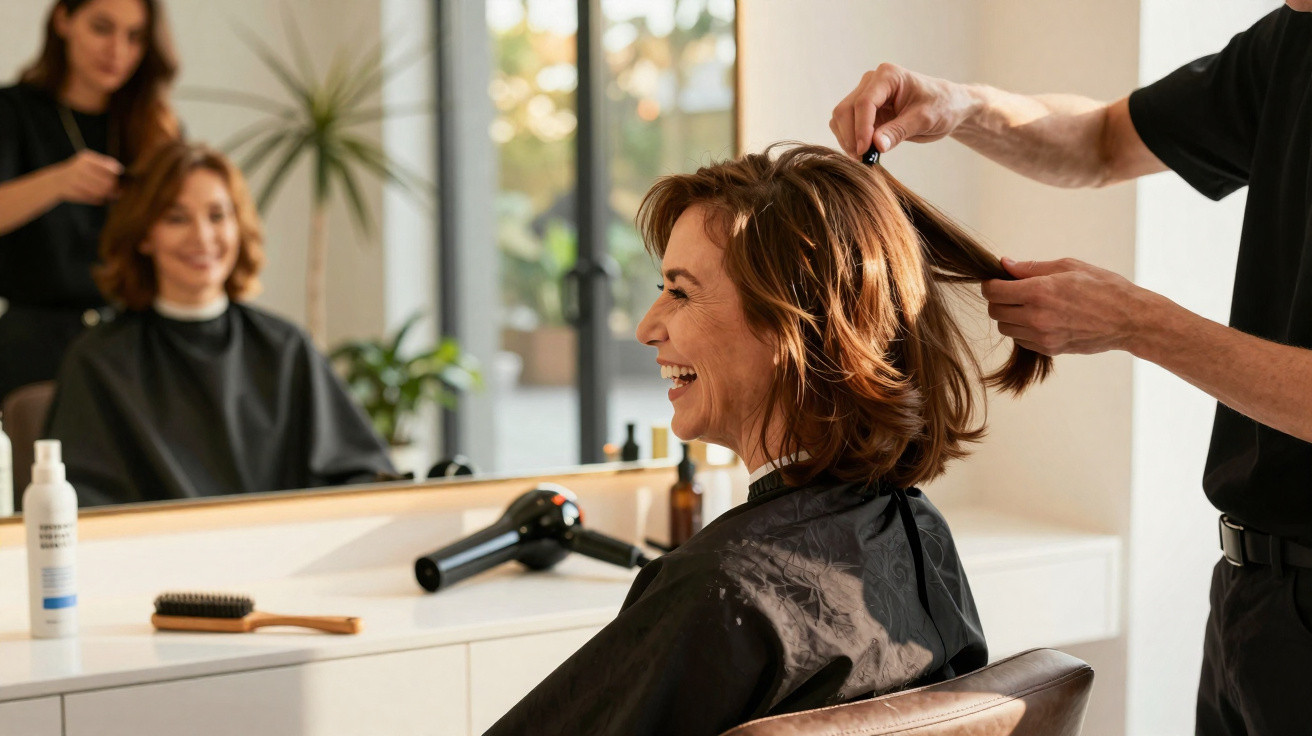
The ideal point is directly at the collarbone. It is neither a bob that finishes at the jaw nor long hair that pulls the overall look downwards. A shoulder-length cut that skims the collarbone gives the ends sufficient weight to prevent fluffiness, while remaining short enough to raise the entire silhouette. Done properly, the hair appears to lift subtly at the roots, as though invisible support has been placed underneath it.
The crucial element is gentle contouring around the face and within the final centimetres, with virtually no obvious layers at the back. The outline remains substantial and almost “solid”, which is precisely why thinning hair appears fuller at first sight.
Imagine Fran, 56, arriving at the salon with weary shoulder-length hair that had gradually taken on a triangular shape. It was weighty at the ends and flat at the roots. Her natural response was to request plenty of layers “for volume”. Instead, her stylist advised against it and recommended a collarbone cut with a blunt baseline and only the faintest internal texture.
Once it had been cut, the change initially seemed unusual: the length was unchanged, yet the silhouette looked instantly cleaner and lighter. Her hair rested against her shoulders in a smooth, soft line. There were no jagged sections or shredded ends. At her following appointment, Fran revealed that colleagues had asked whether she had coloured her hair or lost weight. In reality, she had simply changed her cut.
The reasoning behind the result is straightforward. As hair begins thinning after 50, every removed layer takes another line of density away from the silhouette. Excessive layering cuts gaps into the shape, particularly at the ends, so the haircut becomes see-through. A collarbone cut with a largely blunt perimeter allows the lengths to work as one. The eye sees a “block of hair” rather than separate “pieces of hair”. That impression of solidity is what delivers fullness without a difficult styling routine.
How to request and maintain this cut when you’re over 50
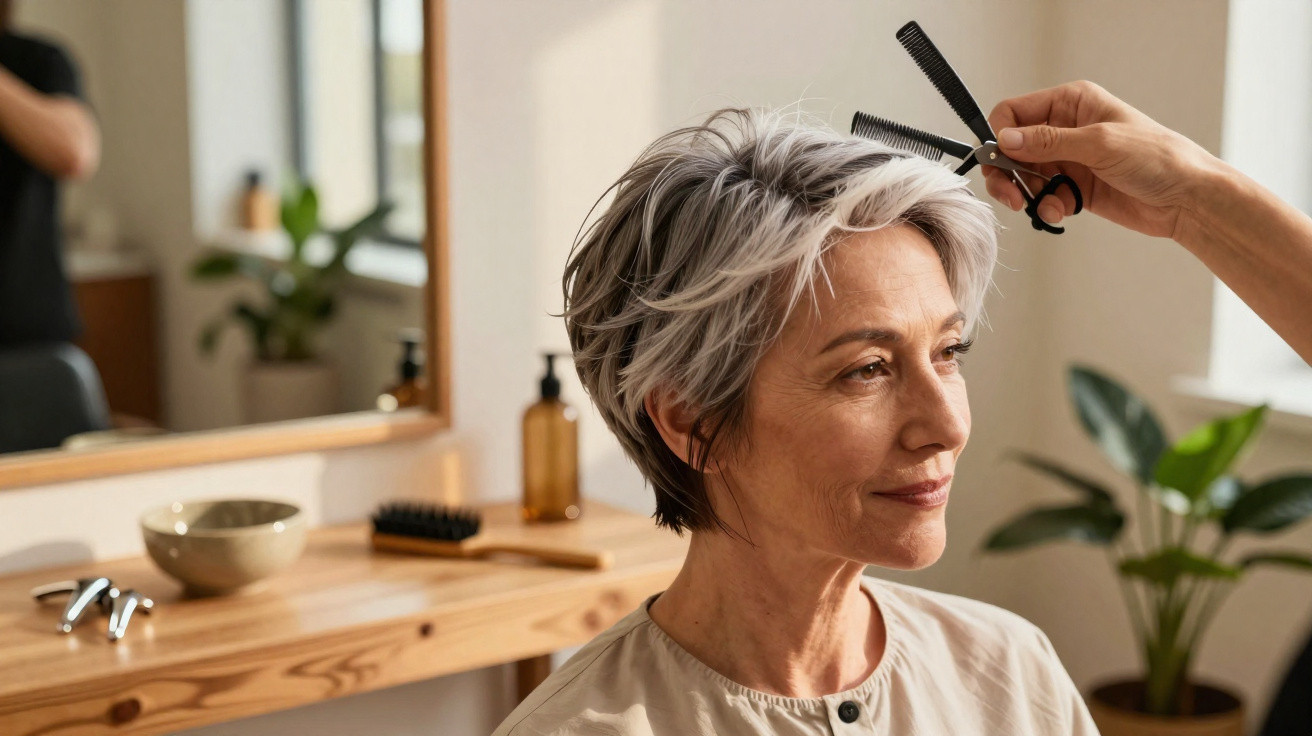
The main description to give your stylist is: a shoulder-length, collarbone-grazing cut that is blunt or softly rounded along the bottom, with extremely light internal shaping. It should not be layered; it should be shaped. Ask them to retain the weight line, softening only the final 3–4 cm so the ends do not resemble a broom. Soft, longer face-framing sections can begin roughly between the cheekbone and chin.
A practical approach is to indicate your collarbone in the mirror and say, “I want it to sit right here when it’s dry and styled naturally.” Hair springs upwards as it dries, and that clear gesture gives your stylist a practical reference point.
Many women over 50 make the same mistake: they bring in a picture of a heavily layered, tousled style worn by a 25-year-old with thick hair and a professional blow-dry. They then go home with ends that look sparse and require two products, a brush and 15 minutes of work each morning. In truth, nobody genuinely keeps that up every day.
Being gentle with yourself means selecting a cut that continues to look good when you do… almost nothing. The shoulder-length, low-layer style works well with slightly frizzy, wavy or straight hair. It does not depend on perfectly curled ends or a round-brush routine. You can roughly dry it with your hands and still have a shape that has not fallen flat by lunchtime.
“Women tell me they’re ‘too old’ for long hair, then show me old photos of themselves with thick, swinging lengths,” says London stylist Marisa K. “This collarbone cut is my compromise. It keeps that feeling of hair you can toss, but the shape is much kinder to finer textures.”
For this cut to work in everyday life, three modest habits are more important than buying another new product:
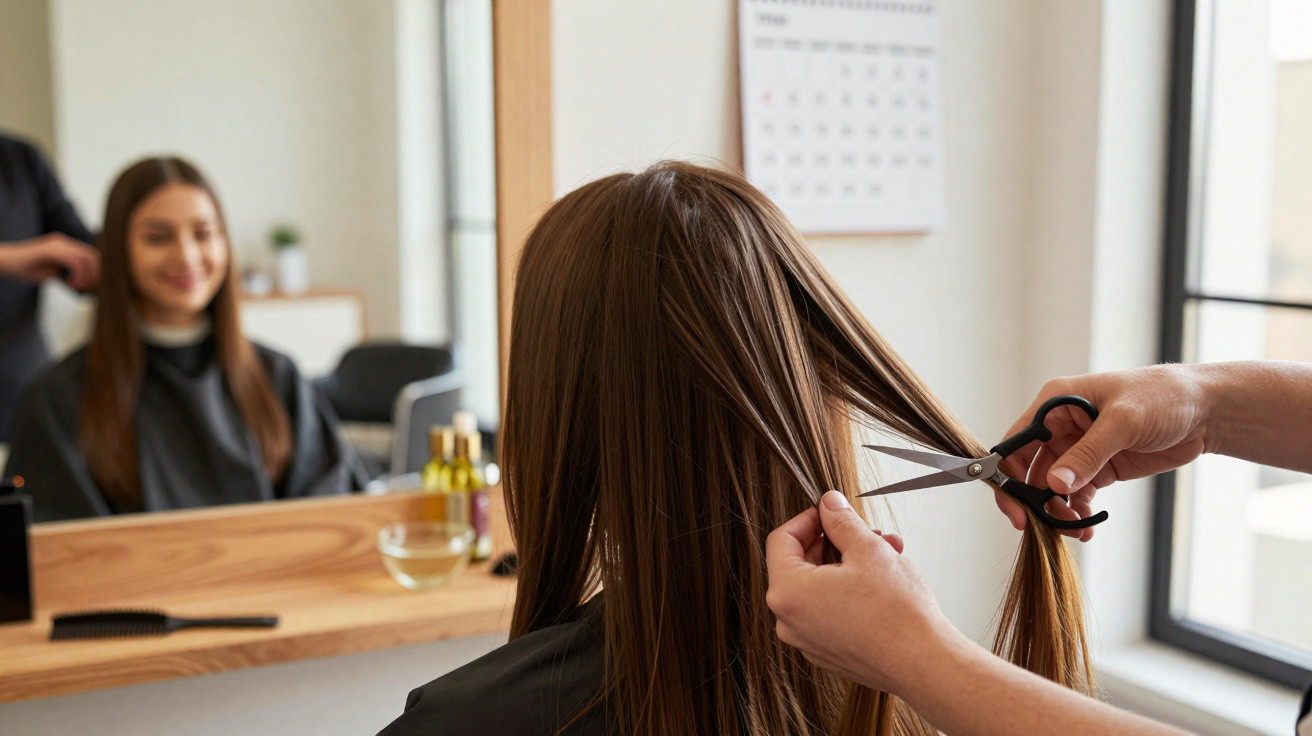
- Have light dusting trims every 8–10 weeks to maintain a neat, full outline.
- Apply a lightweight volumising spray only at the roots, without weighing down the mid-lengths.
- Use one easy styling technique: blow-dry or air-dry with a slightly off-centre parting for immediate lift.
Living with this haircut: confidence, routine and ageing on your own terms
A few days after having this style cut, a subtle sense of relief often arrives. Mornings stop feeling quite so much like a discussion with your reflection. You may tie your hair up less often and spend less time adjusting clips and pins, because the length sits where it belongs, framing the jawline and neck rather than concealing them. For many women over 50, this is the true benefit: it is not only about volume, but about having a haircut that works with their face rather than fighting against time.
We have all had that moment of catching our reflection in a shop window and thinking, “The hair is dragging me down.” The shoulder-length silhouette breaks up that effect. It exposes the neckline, frees the shoulders and provides enough movement to feel fresh without looking as though you are “trying too hard”.
You may discover that you try more variations: a slightly more pronounced side part one week, a soft blowout for dinner the next, then your natural texture on a quiet Sunday. This cut does not require a different personality. It simply adapts to the one you already have. That understated, adaptable confidence often shows up elsewhere too.
| Key point | Detail | Value for the reader |
|---|---|---|
| Ideal length | Collarbone-grazing, brushing the shoulders without extending beyond the upper chest | Enhances the appearance of fullness while remaining simple to style at home |
| Cut structure | A blunt or softly rounded base, with very gentle shaping only at the ends and around the face | Maintains density in thinning hair without creating a flat, overly blocky finish |
| Maintenance & styling | Trims every 8–10 weeks, light root volume and room for natural texture | Creates a flattering look without demanding extensive daily effort or professional salon skills |












Comments
No comments yet. Be the first to comment!
Leave a Comment