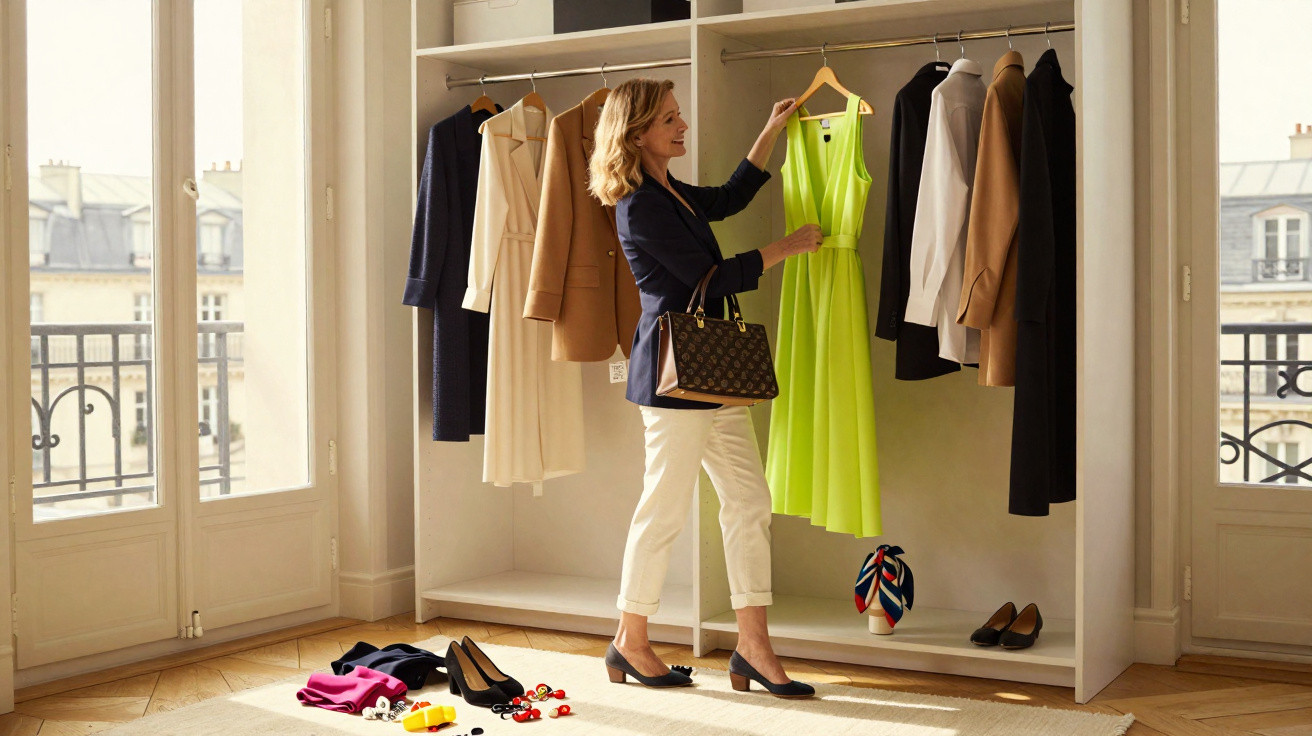
The first time I looked inside the wardrobe of a French woman in her fifties, I was convinced part of it had been left out.
There was no crammed clothes rail, no heap of sale-shopping mistakes, and no forlorn sequinned tops being kept for “a special occasion” that never arrives. Instead, there was room to breathe and garments that plainly saw regular use. When I asked where everything else was, she simply shrugged: “This is the rest.”
Since then, I have discreetly looked into the wardrobes of a fair few French women, from compact Parisian flats to peaceful homes in Provence. The same pattern appears again and again. It is less about what they possess than what they decline to bring home. That quiet act of selection is where the magic lies. Once you spot what is absent, their distinctive form of confidence begins to make sense.
1. Trend-led clothes kept for a future weight loss
We have all unearthed a dress that once fitted and promised ourselves we will wear it again next year. French women over 50 tend to be unsparing with that idea. If an item does not fit now, it does not remain. There are no “inspiration jeans” or dresses two sizes too small staring down from a hanger like a reminder to join the gym.
They understand that bodies change with life – children, separations, menopause, evenings of cheese and wine – and that a wardrobe needs to change too. This is not about surrendering; it is about not using clothing as a punishment. Items are either worn regularly or leave the house, often given to a daughter, niece or the local charity shop. There is kindness in that choice, alongside real firmness: they dress for the life they are living, rather than an imagined version of it.
2. Flimsy, cheap fast fashion that wears out within a season
Step into the wardrobe of a 55-year-old French woman and one detail stands out: most of the pieces have substance. Buttons are properly attached, seams are not straining, and fabrics lack that dubious polyester sheen. This is not because every item costs a fortune, but because there is a quiet refusal to buy clothes that appear worn out after three washes.
They remember the frustration of a bargain jumper that immediately bobbled, or a dress whose colour disappeared before summer was over. Watching your money effectively flake away from your body brings a particular irritation. So they wait, purchase fewer things and wear them repeatedly. The navy blazer comes out again; so do the well-cut trousers. The pleasure is in the long view – opening the wardrobe five years later and still wanting to put on the same jacket.
3. Crowded shoe racks of heels that are only nearly right
Their shoe collection is unlikely to contain twenty pairs of heels that are impossible to walk in. More often, there is a small group of much-loved staples: loafers, ankle boots and perhaps two pairs of heels suitable for crossing a cobbled street without clinging to somebody’s arm. Comfort is no longer a guilty indulgence; it is essential.
There is something tactile about French shoes at this stage of life. The leather has softened and the soles show precisely how much of Paris has been walked. Those attractive but agonising stilettos that appeared sensible in their thirties? They are gone – sold, given away or quietly discarded. They have reached the stage where enjoying dinner matters more than spending the evening thinking about their feet.
4. Logo-covered bags that announce themselves across the street
It is unusual to see a French woman in her fifties carrying a handbag that resembles a billboard. That belonged to younger years: the excitement of a logo and the sense of having arrived because a shoulder strap said so. As they get older, many lose patience with being a walking advertisement.
Their bags become more understated as their presence becomes stronger. Think buttery leather, handles softened by use and a shape that holds precisely what they need. A designer label may be tucked inside, but it is for their own satisfaction rather than Instagram. After all, no one needs a handbag to proclaim “success” once they have raised teenagers, paid Paris rents and worked out who they are.
5. Glossy “nude” tights in an unflattering shade
Few things can disappoint quite like a bad pair of tights. They may be too orange, too shiny or catch the light in every possible wrong way. French women over 50 have endured enough uncomfortable office photographs and unkind reflections in shop windows to know that some items are best never bought again.
They will choose genuinely matte black tights, sheer styles that properly match their skin tone, or no tights at all. The aim is for legs to look like legs, rather than plastic mannequin limbs. They pay attention to details others may not consciously register but which subtly alter the entire silhouette. It is the difference between feeling faintly “costumed” and feeling like yourself.
6. Fussy, overcomplicated dresses they cannot sit down in
You are unlikely to find many dresses that need another person to fasten them, a particular bra, specialised shapewear and a carefully planned seating arrangement. They have worn such outfits to weddings and regretted every hour of it. At some point around 50, most French women appear to decide: if I cannot breathe, bend, eat and dance in it, I am not buying it.
That does not mean choosing bland clothes. It means choosing ease. A wrap dress, a simple shift or something that moves as they walk and does not cling awkwardly when they sit. They have learned that elegance depends more on freedom of movement than on how tightly fitted a dress is. Clothes should support life, rather than life serving clothes.
7. Wardrobes of “good” clothes that are never worn
There is a British tendency to reserve “good” clothes for a better day: the lovely coat for special occasions or the scarf considered too nice for the school run. French women over 50 seem to avoid that ritual. The silk scarf is worn to collect bread from the bakery, the best coat is used for school pick-up, and the pretty blouse goes to the supermarket queue.
They have seen enough time pass to recognise that waiting for the ideal moment is a risky approach. Their wardrobes therefore do not split into “real life” and “fantasy life”. It is all simply life. That is why pristine unworn items, tags still attached and lurking at the back of the cupboard, are so rare. Clothes are intended to be lived in – with wine, crumbs, laughter and everything else.
8. Slogans and novelty patterns that feel like fancy dress
By 50, most French women no longer need a T-shirt to make a joke for them. There is no “Wine O’Clock”, no pretend band logo and no random English slogan that sounded appealing at the till but feels awkward everywhere else. They would prefer people to hear what they say rather than read it across their chest.
The same principle applies to novelty prints. A small, restrained motif that whispers can work, while cartoon cherries or enormous lips covering a blouse generally do not. Plain fabric has a quiet authority: a white shirt or navy knit does not compete with the face. They have lived long enough to know that their jumper should not be the most interesting thing in the room.
9. Jewellery piles that leave their neck green
In their twenties, buying earrings at street markets for less than the price of a sandwich could be fun. By 50, most French women have had enough of it. Skin becomes more sensitive, patience becomes shorter and the faint scent of cheap metal left on the fingers is simply not worth it.
The small, genuine pieces
What tends to appear in their jewellery boxes is restraint. There may be a gold chain inherited from a grandmother, a simple ring never removed, or hoops worn with virtually everything. Perhaps there is one striking, slightly eccentric piece found in a small gallery while on holiday. Nothing jangling, and nothing that stains the skin or marks the collar of a white shirt.
10. Exercise clothes masquerading as everyday wear
Leggings are certainly worn on French streets, but it is uncommon to see a woman over 50 permanently dressed in gym kit. She may put it on for yoga or a brisk riverside morning walk, but it does not take over her entire wardrobe. There is a subtle dividing line between “I’m going to Pilates” and “I gave up on real clothes”.
Partly, this is cultural: they grew up seeing their mothers “get dressed” even for straightforward errands. It is also a form of self-preservation. They know that wearing stretchy clothing every day can make it more difficult to notice when they no longer feel comfortable in their own skin. Proper trousers and a shirt make a small daily statement: I still show up for myself.
11. Bright colours they do not truly love
French women over 50 are not opposed to colour; they are opposed to colours that overpower them. An impulsively bought electric-blue blazer, chosen because a television stylist called it “the colour of the season”, rarely lasts until the next wardrobe clear-out. Such pieces can feel exciting under shop lights, then oddly wrong beneath your own bathroom lamp.
Establishing their personal palette
By this age, they know their colours as well as they know their preferred wine. It may be gentle neutrals with a single deep-red lipstick, or navy and camel with one emerald jumper. There is no anxiety about what is “in” because, over decades, they have quietly gathered evidence of what makes them look awake, rested and alive. Anything that clashes with their skin tone or makes them feel as though they are playing dress-up does not make the cut.
12. “Someday” items that do not suit their real life
The central secret behind all this is that their wardrobes mirror their lives rather than their fantasies. You will not find rows of formal suits if they freelance from home, or towering heels if they live on a village hill of cobbles and steps. They may imagine being the woman who attends galas, but they will not buy the gown until an invitation truly arrives.
That honesty is what makes their wardrobes streamlined and unexpectedly touching. Inside, you can see school runs, office days, art classes, café mornings and weekend markets. You see the life they have made, not the life they believe they ought to want. Once you view your own wardrobe through that lens, you may begin quietly removing things, until what remains feels suddenly and startlingly like you.















Comments
No comments yet. Be the first to comment!
Leave a Comment