
Radiators hum, scarves chafe, and before long your hair can feel coarse, static-charged and oddly lacking in life as winter takes hold.
When the temperature falls, both your scalp and hair face a largely unseen assault: parched indoor air, friction from hats and coats, and more regular washing. Combined, these factors can leave hair brittle and worn down. One remedy now quietly returning from traditional beauty practices, with support from contemporary hair science, is the hot oil overnight treatment.
Why winter quietly wrecks your hair
Hair is not separate from its surroundings. Every strand consists of a protective cuticle of small overlapping scales, a strength-giving keratin-rich cortex, and a fine lipid coating that maintains smoothness and flexibility. Winter puts pressure on each of these layers.
Heated indoor spaces can fall below 30% humidity, whereas hair is generally more stable at around 40–60%. This lack of moisture draws water from the fibre, increasing static and causing the cuticle scales to lift a little. Once raised, the scales snag against one another, creating tangles and knots that can ultimately cause breakage when you brush.
Cold outdoor conditions make hair stiffer. Combine this with continual contact from wool scarves, coats and beanies, and tiny cracks can form along the shaft. In winter, many people shampoo more often because their roots become sweaty or greasy beneath hats. Every wash removes a little more of the natural lipid layer that shields hair from water and friction.
Researchers also refer to “hygral fatigue”. A hot shower makes hair expand, while dry conditions and heat styling cause it to contract. Repeated swelling and shrinking weakens the cuticle, and eventually the fibre starts to perform like an overused elastic band. Hair does not snap merely because it is “damaged” in a vague sense; it has been put through these stresses too repeatedly.
Winter damage is less about one big mistake and more about a slow accumulation of tiny daily stresses on the hair fibre.
How a hot oil overnight treatment really works
Hot oil treatments may sound dated, yet their benefits are better documented than you might expect. Oils do not all perform in the same way, and understanding those differences matters if you want genuine benefits rather than marketing promises.
The two main actions: penetration and protection
Certain oils, including coconut, can partly move into the hair shaft. Their smaller fatty acids are attracted to hair proteins, allowing them to pass between the keratin chains within the cortex. Cosmetic science studies have found that coconut oil applied before shampooing can reduce protein loss during washing.
Oils such as olive and argan, by contrast, largely remain on the hair’s exterior. They form a delicate coating over the cuticle, flattening lifted scales and improving the glide between individual hairs. Your brush can then move through more easily, reducing mechanical breakage whenever you detangle.
Hot oil does not “heal” broken hair; it engineers better slip, less friction and more controlled swelling, so hair breaks less in future.
All oils offer one central advantage: they slow moisture loss from the fibre. A strand with a light oil coating does not dehydrate as rapidly, so it remains more supple and is less likely to snap when twisted or bent.
Why warmth and overnight timing matter
Gently warming oil alters how it applies. It becomes more fluid, spreads across strands more evenly and may aid slight, shallow penetration around the cuticle. The aim is not to “open” the hair dramatically, but to make the process more comfortable and easier to manage.
Leaving oil on overnight gives it additional time to work. For several hours, hair stays lubricated, covered and protected from shifting humidity. During this period, cuticle scales can settle flatter and moisture within the fibre can redistribute more evenly. The difference is often felt more clearly in the way a comb travels through the hair than seen in the mirror: there are fewer catches and less drag.
Which oil should you pick this winter?
Each oil behaves differently on hair. Selecting one based solely on what is fashionable can be disappointing, so it is worth matching the choice to your needs.
- Coconut oil (virgin): A good option for very dry, damaged or highly porous hair. It can help reduce protein loss, though fine hair may find it too heavy.
- Argan oil: Lightweight and effective for shine. It works well for mid-to-fine hair needing smoothness and slip without a greasy coating.
- Jojoba: In technical terms, this is a liquid wax that closely resembles scalp sebum. It can soothe itchy or dry scalps while leaving the lengths with a light finish.
- Olive, sesame or sunflower: Affordable oils that protect the surface, lowering roughness and friction. Olive has the richest feel.
- Mineral oils and silicones: These do not enter the hair shaft, but they are highly effective at adding slip and sealing in moisture. They can be useful for detangling despite not carrying a “natural” label.
If your scalp is easily irritated, strongly fragranced blends may trigger a reaction. Unblended cold-pressed oils provide more natural antioxidants, although their chief value still lies in lubrication, protective film formation and lower friction, rather than any mystical form of repair.
The at-home hot oil protocol, step by step
1. Warm, don’t overheat
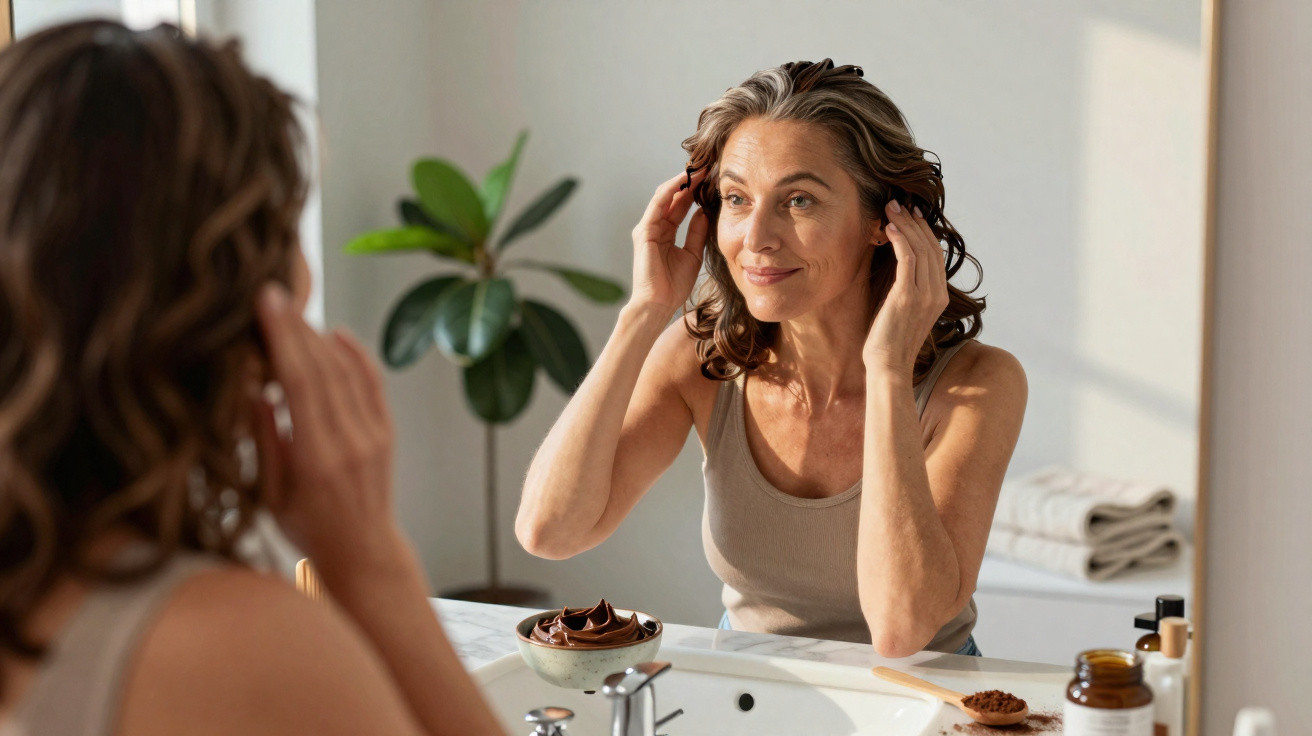
Put one to two tablespoons of oil into a small bowl, then sit it inside a larger bowl containing hot water for several minutes. Check a drop on your wrist first. It should be comfortably warm rather than hot. You are aiming for a more fluid texture, not a scalp sauna.
2. Work in sections, from mid-lengths to ends
Begin with dry hair that has been gently detangled. Divide it into four to six sections. Concentrate the warmed oil on the mid-lengths and ends, where damage is most common. If your scalp is dry or feels tight, use a very small amount at the roots and massage it in. If your scalp is oily or prone to flakes, avoid the skin and apply only through the lengths.
3. Massage briefly, then wrap
Massage with your fingertips for two to three minutes. This straightforward step promotes microcirculation, eases facial tension and distributes the oil more thoroughly. Next, cover your hair with a shower cap or cotton scarf. Wearing a soft beanie over this can maintain gentle, consistent warmth around the head.
4. Sleep on it, without soaking the pillow
There is no need to saturate your hair. A thin, even layer is more effective than heavy, dripping application that will not rinse out fully. Use a pillowcase that you are happy to stain, or place a small towel over your pillow. Overnight, the hair fibre has time to adapt while the cuticle scales sit flatter beneath this lipid “bandage”.
5. Emulsify first, shampoo second
The following morning, dampen your hair lightly using warm water. Apply shampoo straight to the oiled sections before adding further water, which lets the surfactants bind to the oil. Massage carefully, then rinse. If you chose a richer oil, a second, faster shampoo may be necessary. Apply conditioner to the lengths afterwards if they still feel dry. When drying, press your hair with a microfibre towel rather than rubbing it.
Tailoring the hot oil ritual to different hair types
| Hair type | Best oils | Quantity & frequency | Where to apply |
|---|---|---|---|
| Fine, easily greasy | Argan, jojoba | About 1 tsp, once or twice a week | Mid-lengths to ends only |
| Curly, thick or textured | Coconut, olive base; argan to finish | More generous, up to 1–2 tbsp, one or two times weekly | Lengths, ends, and scalp if dry |
| Coloured or highlighted | Coconut, argan, light sunflower | Weekly in winter | Focus on bleached or highlighted areas |
| Sensitive scalp | Plain jojoba, light sunflower | Small amounts, spaced out | Mainly lengths; test patch behind ear first |
People with blonde hair should be aware that deeply coloured oils may slightly tint very pale hair when used continually. Trying the product first on a concealed section can prevent unwanted surprises.
What research and hair pros are seeing
Laboratory research into hair and lipids points to a consistent pattern. Saturated medium-chain oils, such as coconut, generally enter the fibre more effectively, while unsaturated oils including argan and olive perform particularly well as surface conditioners. Mechanical testing indicates that oiled strands require less force to comb, and this reduced friction is directly associated with fewer broken hairs over time.
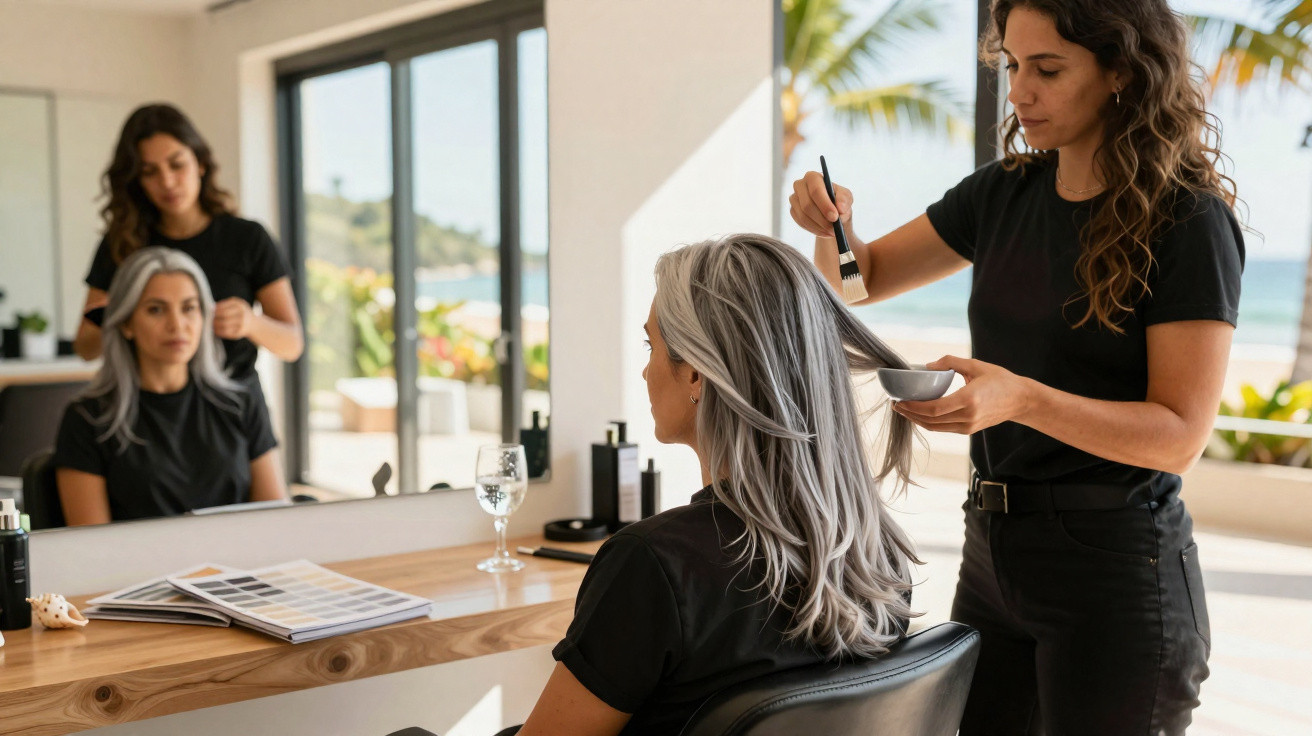
Colourists have also observed a practical effect: if hair has a light lipid coating before a colouring appointment, porous ends absorb less pigment. This may help colour remain more uniform from roots to ends. None of this changes biology. A broken keratin bond cannot simply reconnect. Hot oil temporarily smooths damage, fills gaps and limits further breakage.
Think of hot oil not as a miracle cure, but as a regular maintenance job that stops minor wear turning into major splits.
Risks, limits and when to be cautious
As with any at-home treatment, a few sensible precautions make the routine safer. If oil feels overly hot on your wrist, it will be too hot for your scalp. Reheat it briefly if needed rather than raising the temperature too far.
People with seborrheic dermatitis, eczema or highly reactive skin may not tolerate every oil. Stop using it and consult a dermatologist or trichologist if itching, redness or flaking worsens following treatment. Hair can also become weighed down or dull when oil and styling products accumulate in layers. Using a clarifying shampoo every two or three weeks can refresh it without the need to strip it daily.
Natural is not automatically better. Modern conditioning ingredients, including newer silicones, can provide excellent friction and heat protection. Many stylists combine both methods: a weekly winter hot oil treatment to help keep the fibre resilient, alongside a leave-in product or heat-protective serum on styling days.
A cultural ritual with economic and ethical angles
Hot oiling is far from a new practice. Indian champi head massage, Moroccan argan oil care and Mediterranean olive oil traditions all rest on the same idea: soften the fibre, soothe the scalp and defend hair against demanding climates. The setting, however, has changed. As salon costs increase, a home treatment made with cupboard oils can be especially appealing.
Two spoonfuls of olive or sunflower oil cost only a small proportion of an in-salon deep-conditioning treatment. For households already keeping a close eye on energy and food spending, moving part of a care routine towards simple ingredients with several uses can make sense. Some shoppers also consider the environmental aspect: fewer plastic containers, shorter ingredient lists and, for argan or olive oil, possible support for local or fair-trade supply chains.
What to expect after a single night of oil
The earliest difference is normally noticeable by touch. Hair often becomes more pliable and less “crispy”. A brush catches less, particularly at the ends. Shine is likely to appear softer and more natural than the glass-like finish produced by heavy serums.
After one to two weeks of consistent use, many people notice fewer broken hairs in the shower and less hair left on scarves and jumpers. Hair’s overall movement can change too: strands sit more smoothly beneath hats, catch less on coat collars and zips, and need less time to detangle in the morning.
How to build a simple winter routine around hot oil
One overnight oil session cannot counteract everyday damage from harsh shampoos and overheated styling tools. It is most effective within a simple, reliable winter routine. This could involve conditioning with every wash during colder weather, smoothing a lightweight serum through the ends before blow-drying, and using the dryer at a moderate temperature instead of its highest setting.
For people who move around during sleep, silk or satin pillowcases can reduce friction. Softer accessories, such as claw clips and fabric-covered hair ties, are preferable to metal fastenings and tight elastics that press into the fibre. Drinking enough fluids and eating a balanced diet rich in protein supports hair during growth, although genetics still determine its baseline thickness and growth rate.
For anyone interested in the science behind these suggestions, the key principle is managing mechanical stress. Every brush pass, tight ponytail and fast wet-to-dry cycle takes the fibre a little closer to failure. Hot oil improves the balance slightly by preserving a smoother surface and putting less strain on the core. Alongside smaller day-to-day changes, that limited advantage can leave winter hair feeling markedly calmer and more manageable.






Comments
No comments yet. Be the first to comment!
Leave a Comment