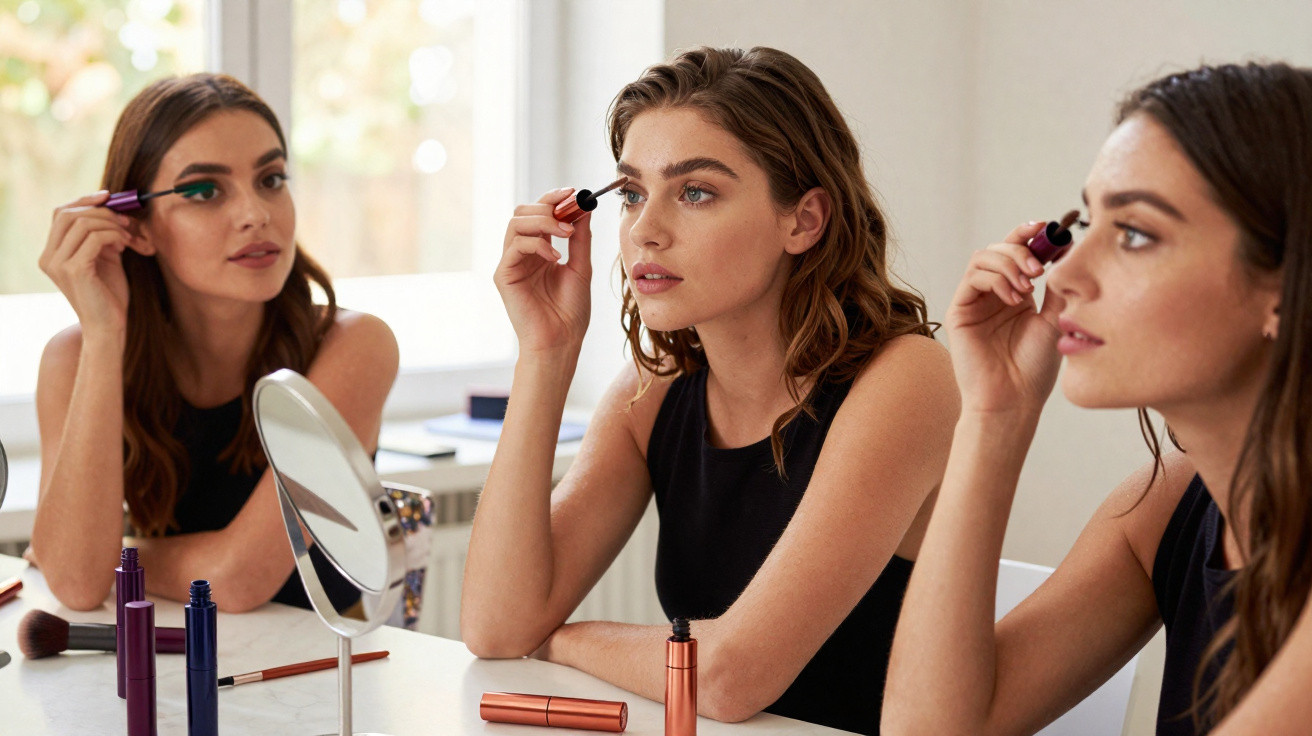
Many women automatically reach for black mascara in the morning – and in doing so miss out on the full potential of their eyes.
Depending on your eye colour, a particular mascara shade can make your gaze appear softer, more awake or more intense. If you deliberately play up your eye colour, you often need less eyeshadow while still looking professionally made up. The key is to use contrasting and harmonious tones cleverly.
Why mascara colour matters more than you think
Black mascara is seen as the default, almost an essential purchase. It works reliably for many people, but on light eyes and very fair skin it can quickly look harsh or obviously “made up”, even when it is the only product you are wearing. Tinted mascaras, by contrast, create an effect that is not always immediately obvious: your eyes suddenly look clearer, the whites brighter and the iris more vivid.
The right mascara colour works for you – it brings out the intensity of your eyes without anyone seeing the “trick”.
Make-up artists generally work with two principles:
- Contrast: Colours positioned opposite one another on the colour wheel make each other appear more vibrant.
- Tone on tone: Similar colour families look more natural and softer, making them ideal for everyday wear.
Brown and dark eyes: almost every colour works
Those with brown or very dark eyes have a real advantage when it comes to colour. These iris shades can carry both classic and bolder tones without looking overdone too quickly.
Subtle options for the office and everyday wear
For daily wear, many people with brown eyes instinctively choose black. It works, but it is far from the only choice. Particularly interesting options include:
- Dark brown: Softer than black, particularly on fair skin. Ideal when you want to look made up without anyone immediately noticing the mascara.
- Chocolate brown with a subtle red undertone: Brings out the warm depth of brown eyes more strongly.
- Dark charcoal: Nearly black but slightly more smoky, making it ideal for business looks.
These shades add density to the lash line, define without overpowering, and work with every outfit. If you have little time for make-up but want a polished appearance, a good brown mascara is often a better choice than deep-black XXL lashes.
Bold contrasts for evenings and special occasions
Brown or black eyes let you experiment more confidently. Especially striking choices are:
- Electric blue: Creates a clear contrast with a dark iris and makes the whites of the eyes look fresher.
- Deep green: Harmonises with warm brown while adding a modern twist.
- Burgundy or plum: Looks elegant and slightly mysterious, and is extremely flattering in photographs.
A professional trick for keeping the result colourful without looking like fancy dress:
First apply a layer of black or dark brown mascara at the roots, then highlight only the tips with coloured mascara.
This keeps the lash line dense and defined, while the colour becomes visible when you blink – subtle but effective.
Blue eyes: colours that add depth rather than harshness
Blue eyes are naturally striking. The wrong shades can quickly make them look glassy or harsh. The aim is an intense yet soft gaze.
Plum, purple and copper: secret weapons for blue eyes
On the colour wheel, violet sits opposite blue. That is precisely why the following shades are particularly suitable:
- Plum: Strengthens the contrast with a blue iris without becoming too dramatic.
- Purple or aubergine shades: Make the eyes look awake and modern, and are ideal with nude lipstick.
- Soft brown or bronze: Perfect for anyone who finds black too harsh but does not want to wear colour every day.
Black can quickly feel “too much” on very light blue eyes and fair skin. If you are unsure, begin with a dark brown or a mascara with only a subtle violet shimmer.
When blue on blue works – and when it does not
Blue mascara with blue eyes may sound logical at first, but it can be tricky. Light blue on light blue eyes can sometimes make the gaze look expressionless. Better options are:
- Dark navy blue: Builds up the lash line like black but looks a little softer.
- Blue only on the lower lashes: Keep the top lashes classic and add colour underneath – ideal for evenings or festivals.
If you need to look professional at work, brown, charcoal or navy are usually the best daytime choices, with brighter coloured options reserved for after work.
Green eyes: the perfect setting for plum and bronze
Green eyes are relatively rare, which makes them especially exciting for experimenting with colour. Many people underestimate how much the right mascara shade can intensify gold and emerald reflections.
Why plum nearly always wins with green eyes
For green eyes, make-up professionals instinctively reach for plum mascara. Its slightly reddish undertone creates a strong counterpoint to the green in the iris. The result:
Green eyes suddenly look more intense, warmer and almost “luminous” with plum mascara – without anyone knowing exactly why.
For a subtler effect, start with:
- Dark brown: Gentle and suitable for everyday use, particularly beautiful on golden-green eyes.
- Bronze or copper: Picks up tiny golden reflections in the iris and gives the eyes a soft, radiant look.
How green and blue shades work with green eyes
Many people think green mascara with green eyes is too much. That is only partly true. A rich forest green or very dark emerald can make the eyes look extremely seductive, especially in the evening. The important thing is to keep the rest of the make-up understated: subtle lips, a touch of highlighter, and you are done.
Deep blue is similarly interesting. Dark navy or petrol creates an elegant contrast without overwhelming the iris. Neon and turquoise versions are more suited to party or festival looks.
Wearing colour without getting it wrong: simple practical tips
Many customers are wary of coloured mascara because they fear looking too colourful or “1980s”. A few techniques make it easy to soften the effect:
- Apply colour only to the tips: Start with one coat of black or brown, then coat just the tips in your chosen shade.
- Emphasise only the lower lashes: Keep the upper lashes classic and add colour below – this brings life to the eyes while remaining wearable.
- Choose shimmer rather than full colour: Mascara with a coloured sheen looks far more subtle for everyday wear than an opaque, bright shade.
The occasion also matters:
| Situation | Recommended mascara colours |
|---|---|
| Work, interview, meeting | Dark brown, black, navy, charcoal |
| Everyday wear, university, café | Brown, bronze, plum, navy |
| Dinner, date | Plum, burgundy, deep green, intense navy |
| Party, festival | Electric blue, neon green, coloured tips |
What else to consider when buying mascara
Colour is only part of the equation. Important points to consider when shopping include:
- Finish: Matte looks calmer and more sophisticated, while glossy or shimmering textures draw more attention to the lashes.
- Formula: Sensitive eyes often tolerate fragrance-free options better. Contact lens wearers should look for relevant product guidance.
- Brush shape: Dense and large for volume; slim and curved for length and lift.
With coloured mascaras in particular, it is worth looking at wear photos: some shades seem bold in the tube but look much more subtle on lashes – or the other way round.
How to test your perfect colour without making a bad purchase
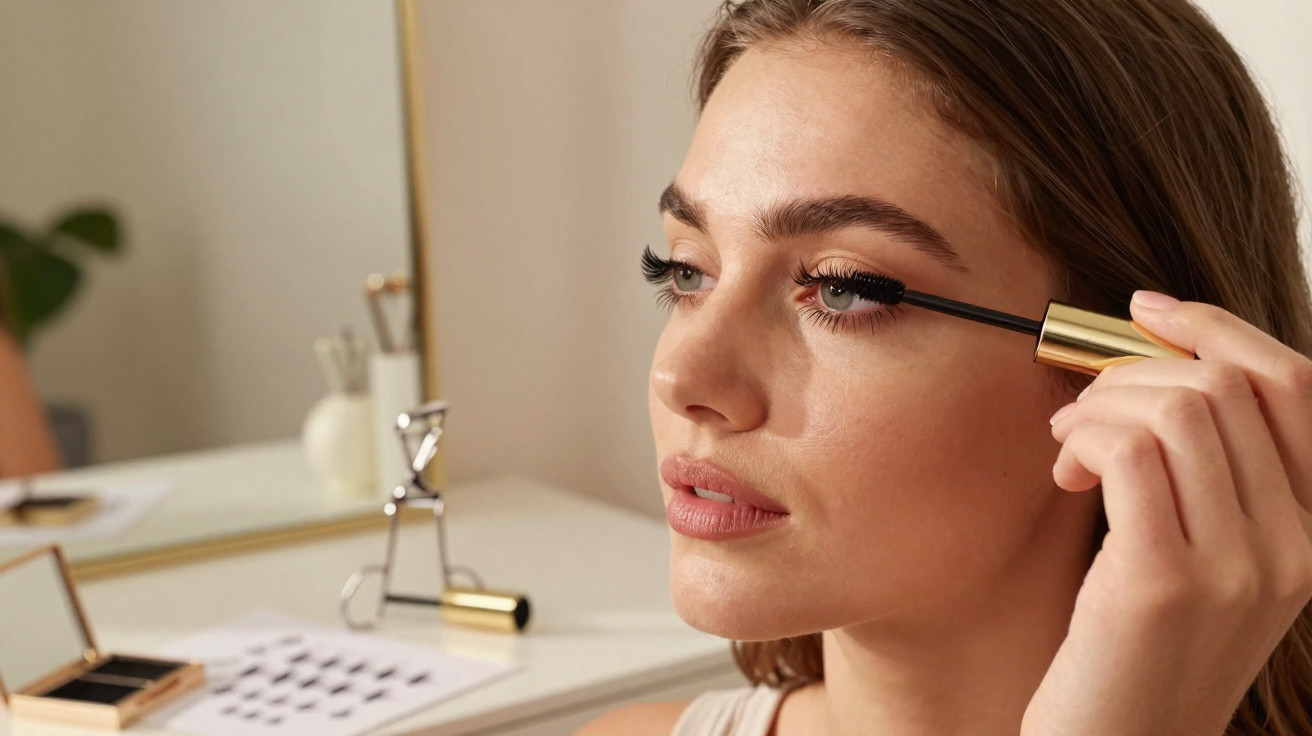
If you are uncertain, it is best to start with a shade that differs only slightly from your usual choice: blue instead of black for brown eyes, plum instead of brown for green eyes, or bronze instead of black for blue eyes. One tip: make up one eye with your standard shade and the other with the new one. You will see the difference immediately in the mirror.
Using this method, many people realise for the first time just how much mascara colour changes the entire expression of the face. Often, changing just one product is enough to look fresher in the morning, more expressive in the evening and more noticeable in photographs – all without a complicated make-up routine.














Comments
No comments yet. Be the first to comment!
Leave a Comment