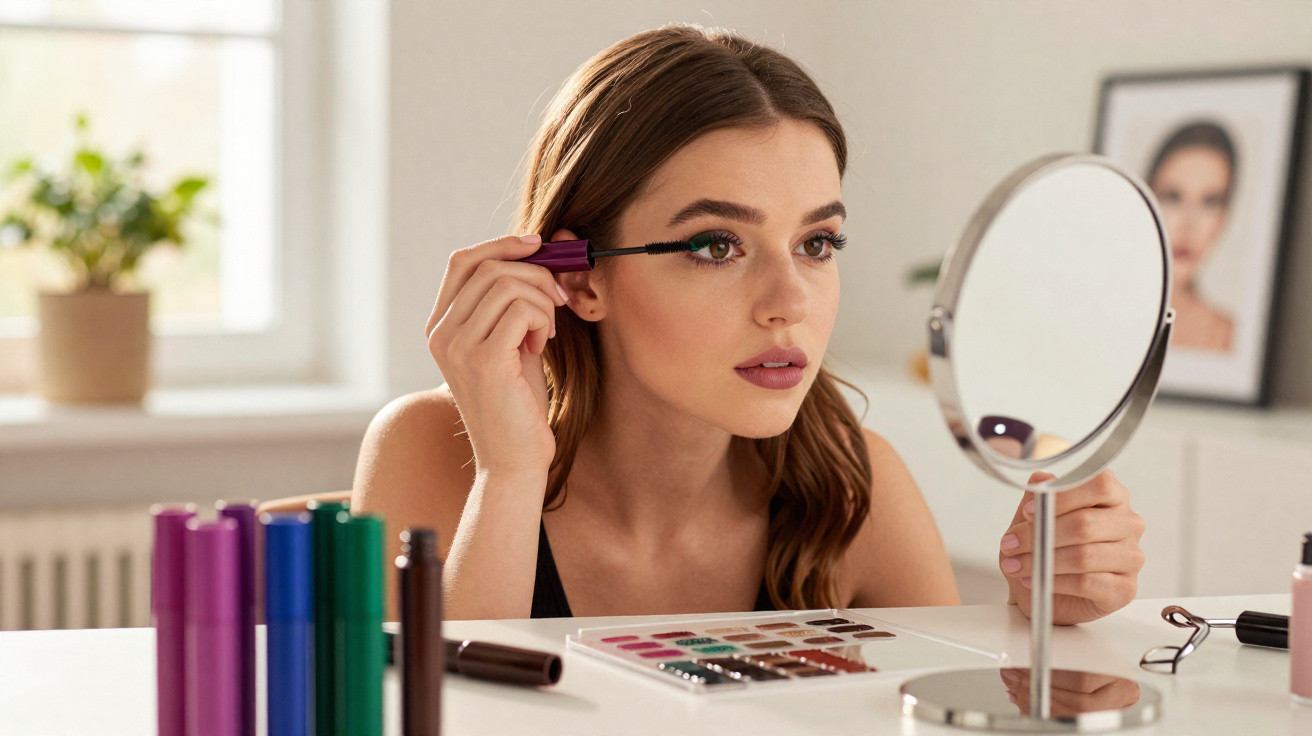
Most people automatically reach for black mascara, either out of habit or because colour feels risky. Yet a different shade from the chemist or beauty counter can transform the whole expression - provided it suits your eye colour. Knowing a few simple colour principles can save money and frustration, while making you look more awake without using any extra product.
Why mascara colour makes such a difference
The principle is straightforward: colour always works in relation to something else - here, the iris. Mascara can create contrast or pick up and intensify tones already present. The result can make the eyes appear softer, more mysterious or more dramatic.
“The perfect mascara colour makes the eyes more noticeable - without anyone being able to tell exactly why.”
For this reason, make-up artists rarely choose shades at random. They use the colour wheel: tones positioned opposite one another make each other appear more vibrant. Colours that sit close together create a calm, natural-looking effect.
Brown and almost-black eyes: the widest choice
Those with brown or very dark eyes can wear almost anything. These iris colours absorb plenty of light, so they can carry stronger mascara shades without looking overdone too quickly.
Subtle options for every day
- Black: the classic choice for maximum depth, ideal for the office and crisp definition.
- Dark brown: softer than black, perfect for fair skin or natural daytime make-up.
- Deep charcoal or navy: more defined than brown, yet gentler than true black.
For business meetings or job interviews, many make-up artists favour brown over pure black, as it makes the eyes look more open and less severe.
Be bold with colour on dark eyes
For a more noticeable effect, brown eyes can handle considerably bolder shades:
- Vivid blue: makes the warmth in brown eyes glow and creates a fresh, awake appearance.
- Forest green or khaki: looks refined and works especially well with olive or tanned skin.
- Burgundy or plum: lends dark eyes a more mysterious feel and highlights golden flecks.
A professional trick for anyone easing into colour:
“First apply a coat of black mascara close to the lash line, then highlight only the tips with a coloured mascara shade.”
This keeps the definition intact, while the colour shows only when you blink or catch the light.
Blue eyes: soft depth rather than harsh contrast
Blue eyes respond strongly to dark shades. Pure, highly intense black can soon look severe, particularly on fair skin with delicate facial features.
The best mascara shades for blue eyes
- Plum and violet: positioned opposite blue on the colour wheel, these shades immediately make the iris look more intense.
- Dark brown: adds definition without “swallowing” the eyes.
- Deep navy blue: enhances the eye colour and feels more modern than classic black.
A popular evening combination is softly smoky grey-brown eyeshadow with plum mascara. It gives the eyes more intensity without veering into party make-up.
What fair types should consider
If your eyelashes and brows are very fair, softer shades tend to work better. Deep, glossy black can look mask-like in this case. Brown shades with a slight red undertone or dark violet are often more flattering, especially on freckled skin.
Green eyes: plum is the insider choice
Green eyes are rarer - and that is exactly what makes them so exciting for coloured mascara. Many professionals swear by one particular shade here.
“Mascara in plum or wine red almost always brings out the maximum in green eyes.”
These tones emphasise golden and olive pigments in the iris, making it appear more intense. The effect is particularly striking in daylight.
Subtle everyday alternatives
For a more understated look, opt for:
- Dark brown: natural, soft and suitable for almost every occasion.
- Bronze or copper: brings out warm pigments in green eyes and complements reddish hair beautifully.
For evening looks, dark green or deep blue are worth trying, although muted versions work best. This keeps the effect elegant rather than overly colourful.
How to use coloured mascara properly
Many people are wary of coloured mascara wands because they do not want to look too bright. A few techniques make it easy to control the effect.
Four ways to start wearing colour
- Lower lashes only: keep black or brown on the upper lashes and add a touch of colour underneath - modern, but still restrained.
- Coloured tips: apply a neutral coat first, then add colour only to the lash tips.
- Layering: place a micro-layer of colour between two coats of black mascara - visible only on closer inspection.
- Black base with colour reflects: specialist products with a subtle coloured sheen are ideal for beginners.
It is important to balance the rest of your make-up: a bold lip plus striking mascara can quickly look overloaded. Quieter lip colours allow the eyes to take centre stage.
Which mascara colour suits which occasion?
| Occasion | Recommended mascara shades |
|---|---|
| Work, university, everyday wear | Dark brown, black, navy, subtle plum |
| Date or dinner out | Plum, burgundy, bronze, dark green |
| Party, festival | Vivid blue, forest green, metallic shades |
| Formal appointments | Black or brown, no neon colours |
How skin tone and hair colour also matter
Eye colour is the most important factor, but it is not the only one. Complexion and hair also influence how a mascara shade appears.
- Very fair skin, blonde hair: begin with brown, plum or navy instead of harsh black.
- Medium skin tone, brown hair: highly versatile; almost anything works, from black to coloured shades.
- Dark skin, dark hair: strong colours such as cobalt blue or intense green stand out particularly well.
People who wear glasses can choose slightly stronger shades so their lashes do not disappear behind the frames. Deep black mascara also pairs well with black frames, while coloured frames can be complemented with subtle accents from the same colour family.
Common mistakes and how to avoid them
One frequent mistake is applying too much product to very fair lashes while using an extremely dark mascara. The result can quickly look too harsh. Two thin coats of a slightly softer shade work better.
Another error is matching mascara directly to eyeshadow. An entirely blue look around blue eyes can make them seem paler. Contrast works better: pair cool eyeshadow with a warmer mascara shade, or the other way around.
If you are still unsure, test the true intensity of a shade on the back of your hand in the chemist. Swatches beside the wrist make it easier to see whether a colour feels wearable for daytime or is better suited to evening.
How to find the right mascara shade in store
Brand names are often imaginative but give little indication of the effect. It is more helpful to start with broad colour groups: brown, blue, green and violet. Then decide whether you want a cooler shade, with a grey cast or bluish undertone, or a warmer one, with red or golden undertones.
“Cool types with bluish undertones in their skin often look more harmonious in cool mascara colours, while warm types with golden pigments suit warm shades.”
Conveniently, many brands offer limited-edition mini sizes. They make it possible to test a new colour group without committing for the long term. Once you have seen how dramatically the right mascara colour can change your eyes, you will choose far more consciously from the shelf - rather than leaving it to chance.









Comments
No comments yet. Be the first to comment!
Leave a Comment