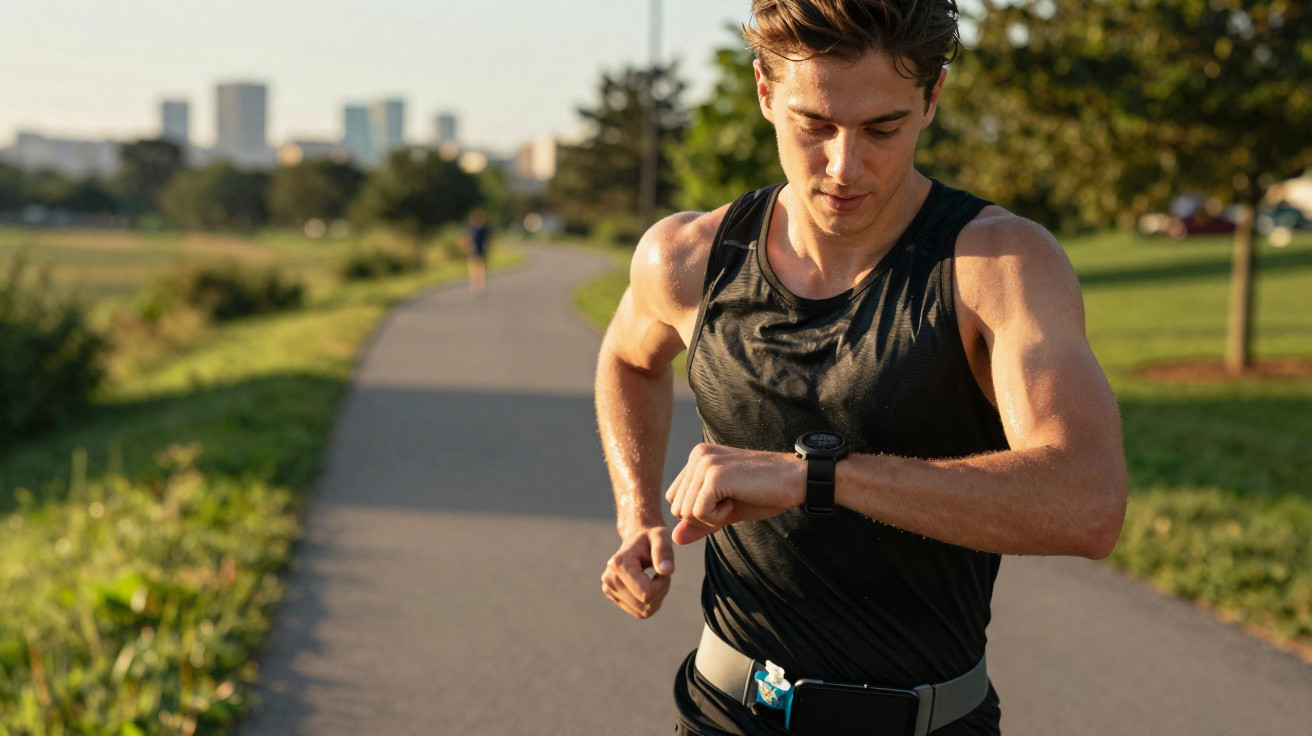
Many recreational runners want a straightforward yet dependable running watch – and a proven Garmin model has now seen a surprisingly substantial price drop.
The Garmin Forerunner 55 is one of the entry-level devices in the brand’s extensive sports-watch range, yet includes features more commonly found at higher price points. A noticeable reduction at Cdiscount currently puts the white GPS watch well below €160, making it an appealing option for budget-conscious runners and fitness enthusiasts.
Garmin Forerunner 55: what the deal includes
The Forerunner 55 is aimed squarely at people who run regularly, or are just starting out, and want to bring more structure to their training routine. According to the listing, the white version currently costs €159.99 at Cdiscount. That is an attractive price for a GPS sports watch offering wrist-based heart-rate monitoring, training suggestions and health tracking.
The Forerunner 55 combines GPS tracking, running-coach features and health analysis at a price far below that of many high-end watches.
With this offer, Garmin is particularly targeting runners who do not want to spend several hundred euros on a sports watch but still expect more than a smartwatch that simply counts steps. The watch records the key metrics that matter for running, while adding useful everyday convenience features.
Keeping track of health: more than heart rate and pace
Garmin presents the Forerunner 55 as more than a running watch: it is designed to be an everyday companion for fitness and wellbeing. It continuously monitors heart rate at the wrist, records breathing and analyses sleep. Bringing daytime and overnight data together can be particularly useful for gaining a better understanding of your body.
Typical metrics the watch can provide include:
- Heart rate throughout the day and during workouts
- Breathing rate and stress indicators
- Sleep duration and sleep stages
- An estimate of “biological”, or physiological, age
These details can be viewed on the watch itself or assessed in greater depth through the accompanying smartphone app. Anyone who checks them regularly can soon spot patterns, such as nights with too little deep sleep or days when stress levels remain high.
Combining sleep tracking, stress readings and heart-rate data helps users balance training and recovery more effectively.
Recreational athletes in particular can tend to focus only on pace and distance. The watch offers a gentle reminder that recovery and sleep are just as important for improving performance as demanding sessions.
Garmin Forerunner 55 running features: train with more structure and plan with clarity
Running remains its central focus. The Forerunner 55 is designed to guide beginners while giving more experienced runners clear direction. Its key features include personalised workout recommendations, which are based on activity history and fitness level.
Maintain pace with a cadence alert
During a run, the watch records cadence. Once a target range has been set, it notifies the wearer if their cadence moves significantly above or below the desired zone. This may support more efficient running and help prevent overuse, as exceptionally long or short strides can indicate inefficient technique.
This is especially useful for runners looking to refine their style: a steady cadence suited to a runner’s height is regarded as an important factor in smooth movement patterns.
Keep an eye on arrival time: how long until the finish?
Another practical tool is the projected arrival time. Using the distance already covered and the current pace, the watch calculates when the runner is likely to reach the finish. This provides useful clarity during long runs or races:
- Anyone seeing a forecast well beyond their target time can increase their pace early enough.
- Those moving faster than planned can judge whether that pace is realistic to sustain.
As a result, many recreational runners learn to manage their energy more effectively, rather than starting too quickly and fading towards the end.
Battery life: up to two weeks without charging
Battery life is one of the more overlooked aspects of sports watches. Garmin states that the Forerunner 55 can last for up to two weeks in typical smartwatch mode. That is enough for commuting, office life and several running sessions without needing to think constantly about charging.
Up to around two weeks of use removes much of the everyday hassle of owning a sports watch, as frequent charging is unnecessary.
Battery life is naturally shorter for longer workouts with GPS enabled, but remains in line with what can be expected from a relatively compact running watch in this price category. People who mainly use it for jogging, walking or gym sessions should generally find its endurance more than sufficient.
Who is the Garmin Forerunner 55 suitable for?
The watch is primarily intended for three types of user:
- Running beginners buying their first “proper” GPS watch.
- Recreational runners who want to plan and record their sessions in a more structured way.
- Fitness-focused users who value sleep and health information but do not need a complex high-end model.
Anyone chasing marathon times and expecting advanced insights such as running-power data, detailed navigation features or multisport profiles for triathlon would be better served by a higher series. For everyday use, 5 km to 10 km runs, community races or building a basic fitness foundation, the Forerunner 55’s feature set will be entirely adequate in most cases.
What buyers should consider before purchasing
The Cdiscount offer makes the watch competitively priced. Even so, it is worth checking a few points before buying:
- Size and comfort: The case is fairly compact, which can be an advantage for slimmer wrists. People with particularly broad forearms should check whether the display seems large enough for them.
- English-language menus: Garmin generally provides a wide range of languages, and the system language can normally be changed in the settings menu.
- Smartwatch functions: Smartphone notifications are supported, but sport is clearly the main priority. It is not the right choice for anyone expecting extensive app ecosystems like those available on some conventional smartwatches.
Potential price changes are another factor. Retailers often point out that promotional prices are time-limited and can change at any time. Waiting too long could mean losing the saving or finding that certain colour options have sold out.
Why training analysis is useful for recreational athletes
Runners who train mainly by instinct can benefit greatly from structured data. A watch such as the Forerunner 55 makes it easy to see how pace, heart rate and sleep habits affect personal performance. Someone whose heart rate stays high at an easy pace may decide to schedule more rest. Someone sleeping poorly at night may reduce their training load on those days.
Over time, this approach can help prevent injuries and keep motivation consistent. Rather than continually going “full throttle”, users learn to alternate demanding workouts with easier sessions and listen to their bodies, supported by objective figures on their wrist.
Key terms explained: GPS watch, training suggestions and physiological age
A GPS watch uses satellite systems to determine distance and pace accurately. Unlike basic step counters, this data is considerably more precise, especially on changing routes or during interval sessions.
Training suggestions are algorithm-based recommendations that identify patterns from previous workouts, intensity and recovery. On some days, the watch may recommend an easy steady run; on others, it may suggest speed work or rest.
Physiological age estimates, using fitness measures, resilience and sometimes heart-rate variability, whether the body appears younger or older than a person’s actual age. It is not a medical assessment, but an indicator that can offer clues about an individual’s lifestyle.
By keeping an eye on these metrics regularly, users can take a more conscious approach to their health. This is exactly where the Garmin Forerunner 55 fits in: as an affordable running watch that does more than simply log kilometres.
















Comments
No comments yet. Be the first to comment!
Leave a Comment