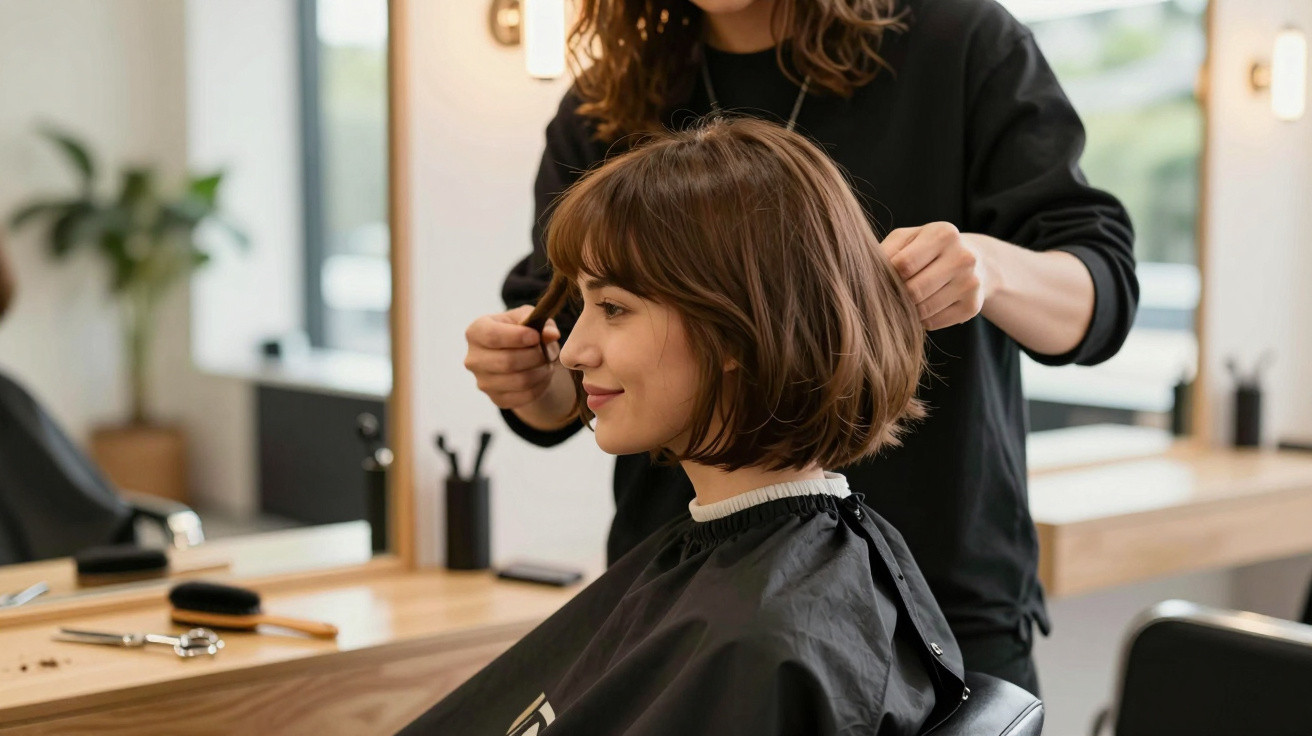
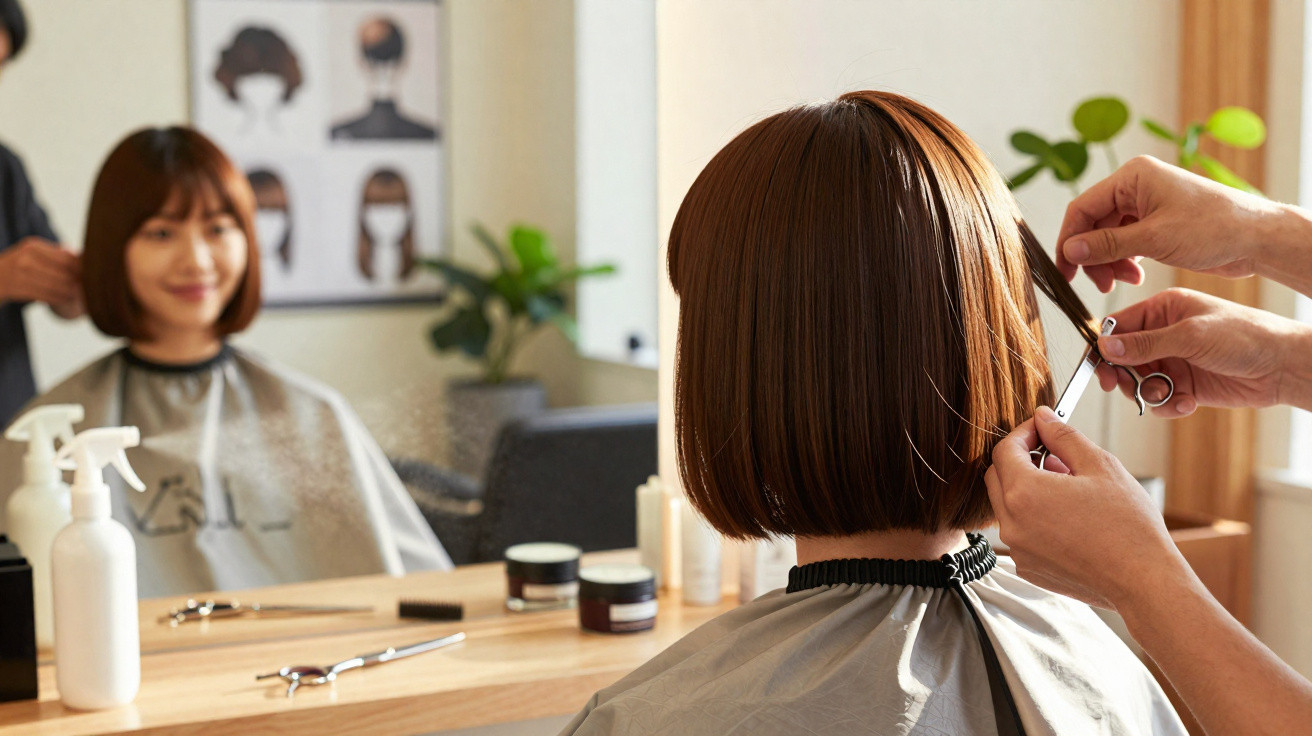
The hairdresser briefly puts down the comb, steps back and studies the reflection. Five minutes ago, there was still a long, tired-looking ponytail hanging there, swallowing up every movement. Now a short, angular bob frames the face – and suddenly the hair looks as though it has gained confidence overnight. More body, more definition, more of an “Here I am” feeling. The client cautiously runs her fingers through the ends, lets out a surprised laugh and asks: “Is that really my hair?” For a moment, the salon falls quiet and every eye turns to that one cut. The change is so striking that the thought comes automatically: why didn’t I do this sooner?
The bob that makes fine hair look fuller – visibly so
Anyone with fine hair knows the daily negotiation with the mirror. A little root-lifting spray here, a quick upside-down blow-dry there – yet after two hours, everything has gone flat again, like a house of cards in a gust of wind. One particular bob cut disrupts that pattern. All at once, there is a line, a shape and an edge that gives the hair support. No wispy pieces sliding sadly downwards. Instead, there is a compact silhouette that works visually like a volume booster. The key is understanding that it is not simply a matter of “shorter hair = more fullness”, but a highly targeted trick involving length and edge.
A stylist from Berlin recently told me about her “fine-hair consultation”. One afternoon each week is reserved for clients with thin strands who are desperately looking for more volume. Her observation is clear: most arrive with shoulder-length hair or longer, often with layers that were originally intended to create a “more dynamic look”. In reality, those layers hang down like tired threads. When she reaches for the so-called Blunt Bob – a bob cut bluntly, without layers, usually from chin to a maximum of collarbone length – the same thing happens time after time. Her clients immediately appear more present, their jawline becomes more defined, their neck looks longer and their hair seems denser. The statistics in her appointment diary are unmistakable: once people wear this cut, they almost always stick with it.
The reasoning is less magic than physics. Fine hair is often lighter and collapses into itself more quickly. When it becomes too long, the weight alone pulls the strands down and the roots lose their lift. A blunt bob removes unnecessary length and gathers the ends into a clean, straight edge. This makes the hair overlap visually instead of disappearing into separate strands. The line looks fuller because the eye sees a solid surface rather than ends that drift apart. The brain reads “denser”, although there is not a single additional hair follicle on the scalp. It is an illusion – and that is precisely where the understated brilliance of this cut lies.
What the “dense” bob actually looks like – and what you need to do
The bob that genuinely makes fine hair appear denser follows several clear rules. It sits between the chin and collarbone, never noticeably lower. The outline is straight and almost graphic, with no feathered ends. At the front, it may be slightly longer than at the back to frame the face and visually lift the nape. If there are any layers at all, they should be extremely subtle and placed internally, never visible along the outer line. The nape remains compact, while the ends look “weighty” rather than thinned out. Anyone feeling bold can opt for a softly A-line bob: fractionally shorter at the back and just a touch longer at the front. This encourages the hair to fall forwards and gather naturally over the shoulders rather than catching on them.
The biggest trap appears before you even visit the hairdresser: wanting it “a little longer, just in case”. Fear of cutting off too much often means the length stays just above the shoulders. That is exactly where fine hair tends to turn – it hits the shoulder, bends and loses its line. Let’s be honest: nobody meticulously blow-dries against that bend with a round brush every day. If you genuinely want to create the impression of volume, the cut needs to take a clear position. A bob that ends visibly above the shoulder makes a statement. It also frees you from that awkward “not long, not short” middle ground in which fine hair almost always comes off worse.
A hairdresser who works extensively with fine hair summed it up for me like this:
“With fine hair, volume is not a product problem; it is a cutting problem. When the cut is right, your hands and a hairdryer are often enough. When the cut is wrong, you can use the best mousse in the world – and two hours later, it is flat again.”
It helps to prepare a small personal brief before your appointment. For example, keep a mini checklist in mind:
- What length feels practical for my everyday life (ponytail: yes or no)?
- How much styling time do I realistically have in the morning – three, five or ten minutes?
- Do I like a precise, “sharp” outline, or something softer that is still compact?
- Do I usually wear my parting in the same place, or do I like changing it to create more lift?
- Am I willing to have it trimmed every six to eight weeks to maintain the line?
Why this one Blunt Bob cut is about more than appearance
Anyone who has experienced how much easier daily life can feel with a good cut suddenly talks about “problem hair” differently. It stops being about fighting your natural texture and becomes about using it intelligently. A blunt bob gives fine hair a shape that works in its favour: shorter lengths, a clean edge and less friction against shoulders and scarves. It also often changes the way you stand in front of the mirror. When hair looks denser, we frequently feel more decisive too. That may sound superficial, but it is not. We all know that moment when a glance in the mirror quietly influences our mood.
It is also interesting to see how this cut prompts social reactions. Many people say they suddenly receive more compliments – not necessarily about the hairstyle itself, but about their “overall look”. Colleagues ask: “Something is different – you look fresher somehow.” Friends assume you have lost weight, even though only the outline around your face has changed. A hair frame that looks denser brings out the eyes, highlights the cheeks and removes heaviness from limp lengths. On particularly candid days, hairdressers even say: “Long, thin hair makes you look more tired than you are.” It sounds harsh, yet it often contains a sober truth.
This cut works best when it is treated not as a rigid ideal, but as a starting point. Those with curls or waves can use the Blunt Bob as a foundation, then let it come alive with texture sprays and air-drying. Those with very straight, slippery hair can adopt light styling habits: for example, allowing the hair at the nape to dry slightly while damp so that it gently turns inwards. One sentence comes up repeatedly in conversations: “Since having this bob, I care far less about my hair type – I simply live with it instead of fighting it.” That may be the real benefit: less drama and more routines that hold up.
| Key point | Detail | Benefit for the reader |
|---|---|---|
| Blunt Bob instead of layers | A blunt-cut, compact edge with no visible layering | Hair appears denser because the ends form a solid surface |
| Length above the shoulder | Chin to a maximum of collarbone length, rather than ending at shoulder level | No “bending” at the ends, so the cut retains its clean shape |
| Cut as a volume booster | Regular trims every 6–8 weeks instead of product overload | Long-lasting fullness without constant, frustrating styling |













Comments
No comments yet. Be the first to comment!
Leave a Comment