An old colouring classic is making a powerful return.
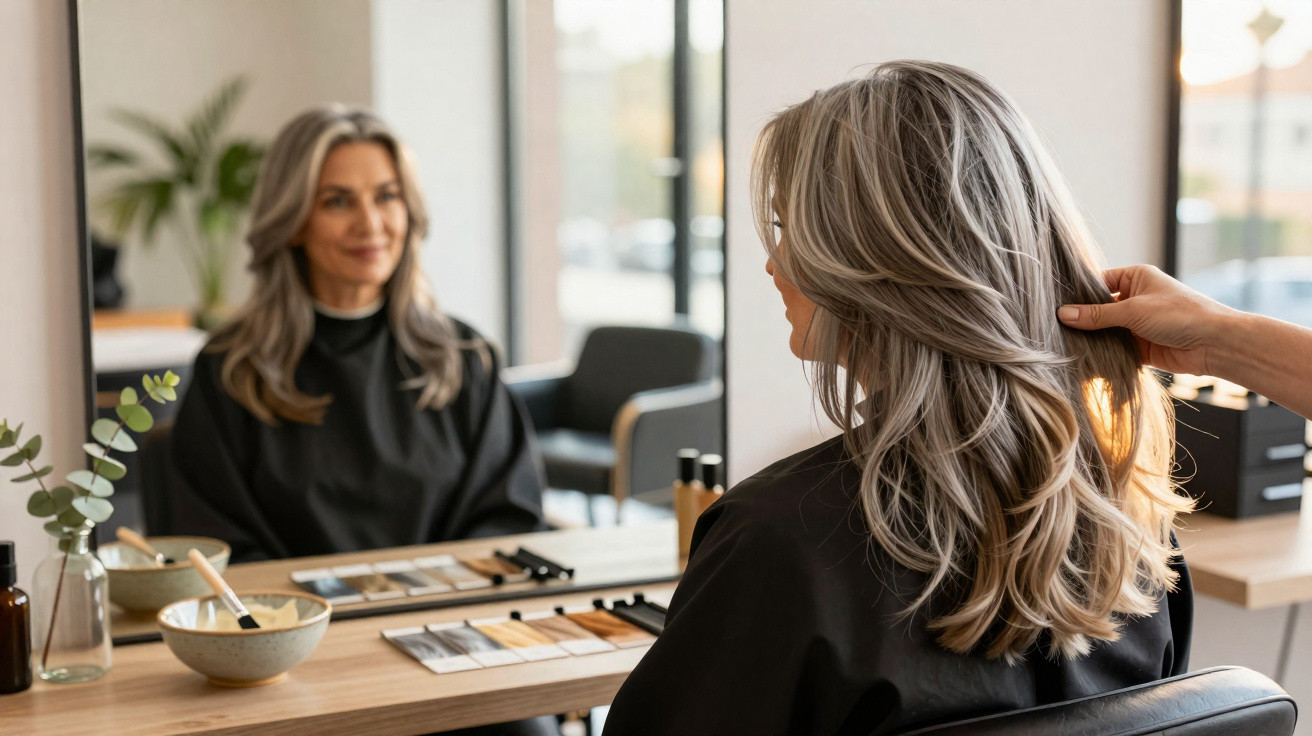
Anyone who has visited a hairdresser in recent years will know the routine: a few face-framing pieces here, highlights there, all intended to look as naturally “sun-kissed” as possible. Yet this long-running look will face serious competition in spring 2026. Salon professionals are reporting a clear shift towards an even, defined hair colour that looks surprisingly contemporary.
The new star: all-over single-colour hair
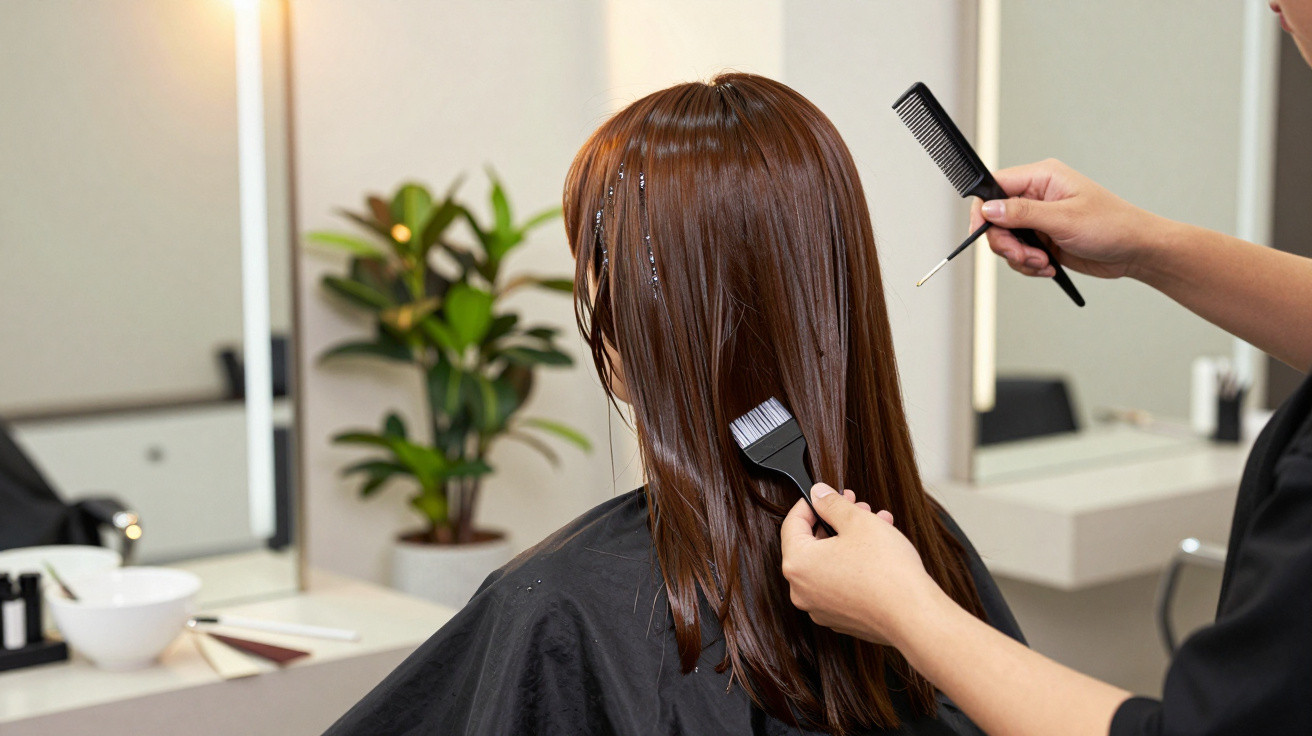
The trend has a straightforward name but makes a strong impact: a single-process colour from roots to ends. No decorative touches, no contrasts and no highlights placed here and there. The principle is one continuous shade, making the whole head of hair appear like a sleek block of colour.
“Instead of elaborate colour gradients, clear, rich shades are moving into focus – and that is what feels incredibly fresh right now.”
Whereas balayage relies heavily on light-catching reflections and soft transitions, the new all-over colour is about precision and calm. It is deliberately meant to look coloured rather than entirely natural. These colour directions, in particular, are currently appearing repeatedly in salons and across social media:
- Bright but not harsh light blonde
- Rich chocolate brown without lighter highlights
- Deep black with mirror-like shine
- Warm copper or cinnamon red as a statement
The shade itself now carries the look, rather than an intricate mix of tonal variations. Many hairdressers therefore describe it as a kind of return to the fundamentals of colouring.
Why solid hair colour looks so current
Fashion and beauty often move in cycles. After years of effects-driven, “Instagram hairstyles”, there is a growing desire for something more defined. All-over single-colour hair meets exactly that need. It conveys structure and calm, while also bringing a certain sharpness that can quickly look very premium.
This finish also works exceptionally well with minimalist fashion: blazers, clean lines and simple cuts. Those who dress this way often no longer want an overly busy hair colour, instead choosing a shade that frames the face as neatly as a frame surrounds a picture.
Even colour means more shine
One significant benefit is fairly simple in physical terms: when the surface is coloured evenly, it reflects light more effectively. Rather than a mixture of light and dark, there is one unbroken surface. As a result, hair appears:
- shinier
- better cared for
- “polished”
This explains the number of TikTok and Instagram clips featuring the classic “hair flip”, where hair falls like a glossy curtain. A single-process colour particularly supports this effect.
Hair that looks thicker: why the effect works
Many people want their hair to look fuller. Alongside layered cuts or volumising mousse, colour plays a greater part than many realise. Sections in different shades can make the texture appear more lively, but they often reduce the visual density of hair because individual strands become more noticeable.
“One continuous shade makes hair look like a solid mass from a distance – which automatically creates the impression of more fullness.”
Especially on fine hair, an even shade that is slightly darker can make a remarkable difference. Light is distributed more evenly, the roots look richer and the ends less transparent. Even medium-length bobs can consequently look fuller and less wispy.
| Multi-tonal colouring | Single-colour colouring |
|---|---|
| Looks lively, but often busy | Looks calm, clear and structured |
| Can emphasise finer hair | Makes hair appear visually denser |
| More dependent on styling | Quickly looks “finished” even day to day |
Less hassle: maintenance is much easier
Another reason why many people are suddenly switching to clear, uniform shades is that upkeep is generally far more relaxed than with elaborate highlighting techniques. Balayage depends on subtle transitions; once these fade, the colour can soon look patchy and require further work.
With one even shade, everything depends on a clean base colour. As roots grow out, a stark contrast does not appear immediately, particularly when the colour is close to the natural base shade. For many people, this means:
- fewer hair appointments each year
- lower costs over time
- less stress because the roots are not constantly noticeable
This approach suits everyday life particularly well in spring and summer, when people are out and about more often and do not want to spend so much time in the salon. Once the hair has been coloured properly, a gloss or light refresh after a few weeks is often enough.
The single-colour hair shades currently in demand
A look at current salon trends reveals several recurring favourites. Single-colour colouring is not one uniform formula; it depends on subtle variations within a particular colour family.
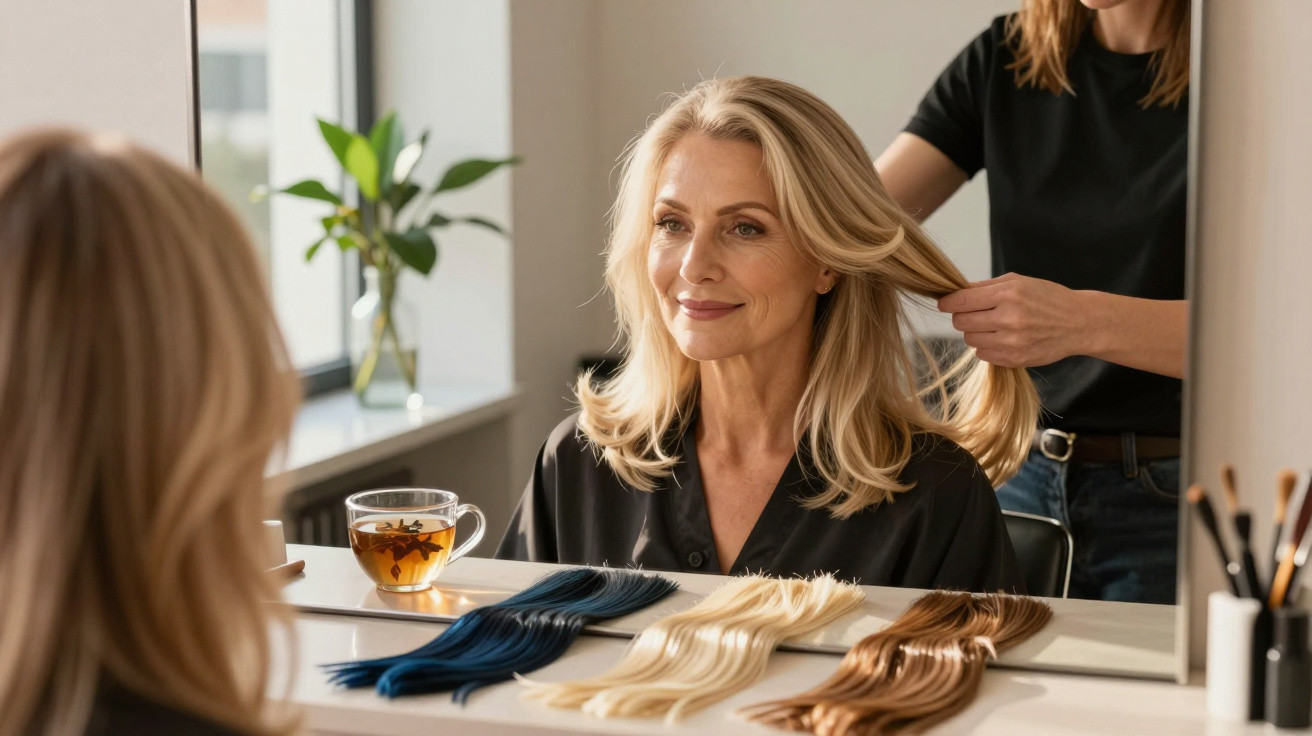
Cool blonde instead of beachy highlights
Rather than classic “beach blonde” packed with highlights, many hairdressers are opting for cool, even blonde tones. The roots are only marginally darker than the lengths, leaving the overall result like a soft filter across the hair. It works well with fair skin, defined brows and modern make-up with clean lines.
Chocolate brown with mirror shine
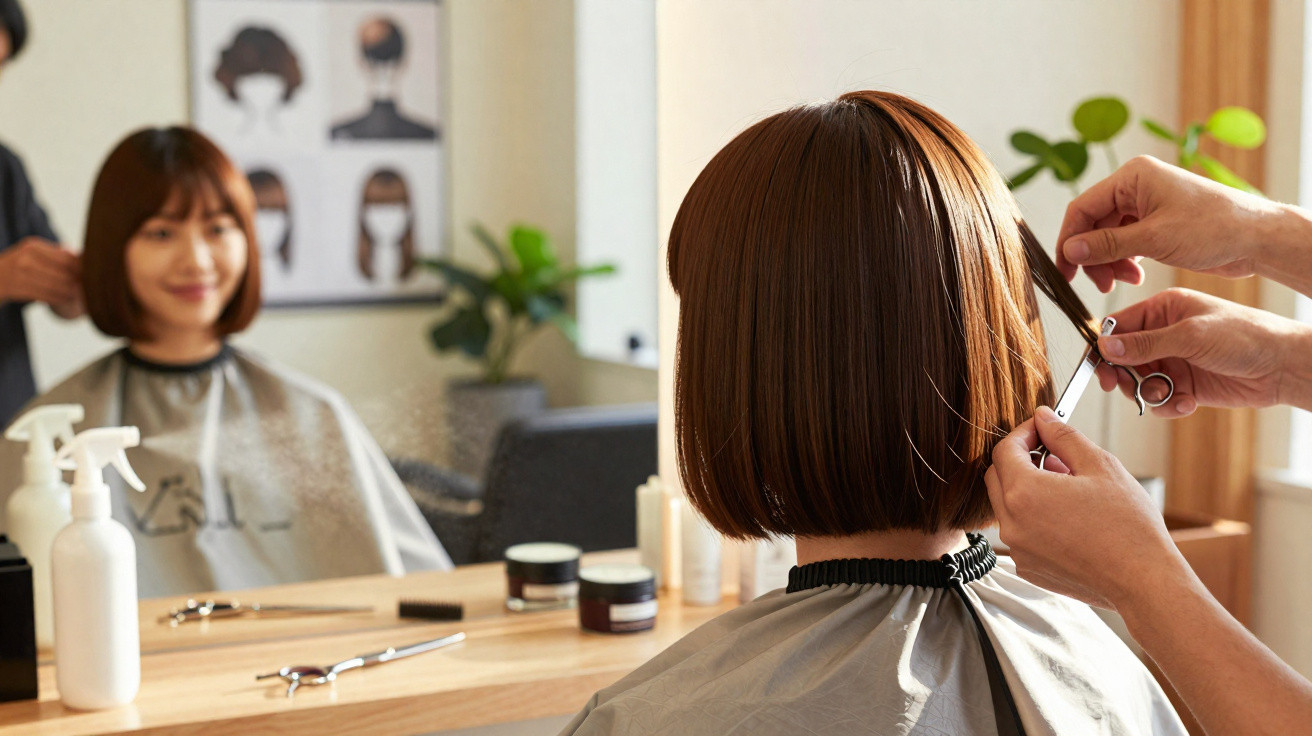
For anyone tired of “bronde” and blended shades, a rich brown is an appealing choice. Without lighter reflections, this colour immediately looks more luxurious. Shine sprays or oil can intensify the result even further. Longer hair benefits especially, because every movement reveals more depth.
Red tones as a deliberate statement
Red and copper are enjoying a comeback in any case. In a single-colour version, such a shade works almost like a fashion accessory. Anyone willing to embrace a bold copper tone will automatically draw attention, without needing elaborate styling every morning. The colour does the work.
Risks and what to consider at the salon
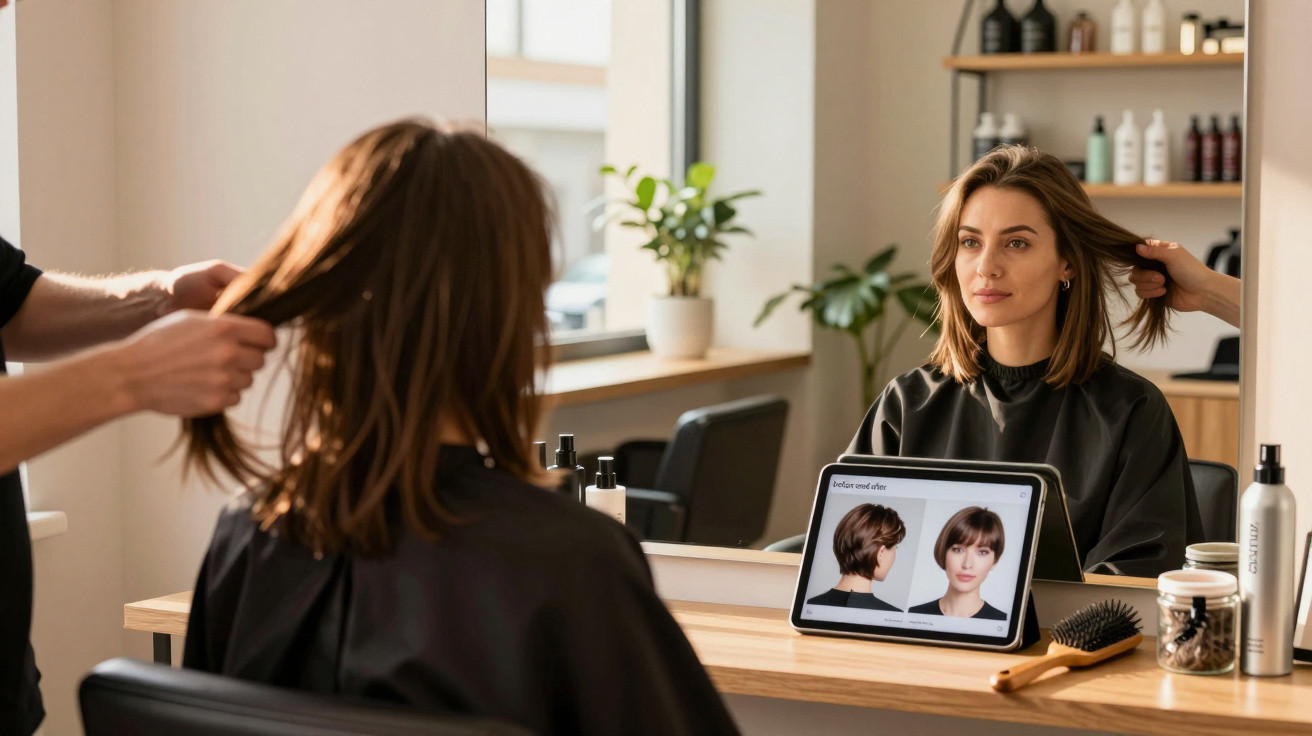
Although the idea sounds simple, a skilled professional is essential. A single-colour application is less forgiving of mistakes because uneven transitions cannot disguise them. Patchy application is immediately visible. Anyone starting with heavily lightened hair should also expect several appointments to build up a rich, long-lasting colour.
Clients should clarify a few points in advance:
- Is the desired shade realistic with the current base colour?
- How much pre-treatment or lightening will the hair need?
- What at-home care is required to retain the shine?
- How will the shade change after several washes?
Very dark shades or intense black can look striking, but may create difficulties if the hair is to be lightened later. Those who do not want a long-term commitment are often safer choosing medium brown or soft blonde shades.
How to make the trend work for everyday life
Single-colour hair does not have to look harsh or severe. Anyone wishing to ease into it can first try small adjustments, such as gently intensifying their natural shade or choosing a semi-permanent colour that gradually washes out. This makes it easier to see whether the clean look feels right.
Styling matters too. Straight hair emphasises the uninterrupted colour surface particularly strongly, while soft waves break it up slightly without ruining the effect. Those with a fringe can add another point of interest, as one single shade places even more emphasis on the frame around the face.
It is also interesting to combine the colour with shine-enhancing treatments, such as keratin treatments or specialist glosses. Paired with an even shade, they create precisely the “Healthy Hair” look currently so visible in social feeds: simple, glossy and deliberately not playful – which is exactly why it feels so contemporary.




Comments
No comments yet. Be the first to comment!
Leave a Comment