
Choosing to stop colouring your hair as you get older is about far more than a styling choice. This step often reflects a whole combination of inner strength, composure and clarity about one’s own life. Grey or silver strands are no longer viewed as a flaw, but as visible evidence of a life lived – and that is precisely what makes many of these people so remarkable.
Ageing with ease: why giving up hair colour says so much
Many people battle intensely against their first grey hair: salon appointments, costly products and constant checks in the mirror. Anyone who deliberately lets this go sends a clear message: I accept my age and my story. It is not surrender, but an active choice to be authentic.
Grey hair is often less a sign of decline than a sign of a life lived – and of people who have found a sense of inner peace.
Psychologists often regard choices like this as signs of a secure identity: people who know who they are need less external validation. This mindset is especially apparent in those who wear their natural hair colour confidently as they age.
1. Leading by example: they encourage others to remain true to themselves
People who visibly wear grey or white hair and feel comfortable doing so can seem liberating to those around them. Friends, colleagues and family members may suddenly realise that they do not have to follow every trend to be respected or attractive.
- The pressure to look younger begins to lose its hold.
- Open conversations about ageing and change become easier.
- Younger people see that authenticity can be just as appealing as youthfulness.
At work, within families and among friends, people with grey hair and a confident presence quietly yet lastingly challenge conventional beauty ideals. They demonstrate that dignity and charisma do not depend on a bottle of hair dye.
2. A clear focus: they save time and money for what matters more
Regular colouring appointments demand considerable resources: money, time and emotional energy. People who leave them behind are often making a very deliberate decision about priorities. Their energy shifts away from continual self-improvement and towards the things that genuinely sustain them.
Common effects that many people report include:
- More free weekends because salon appointments are no longer needed
- A calmer daily routine without worrying about “visible roots”
- Money to spend on travel, hobbies or preventive healthcare
This change in priorities points to a strong inner compass: what will benefit me in the long term? What will enrich my life – rather than merely my reflection?
3. Authenticity: they show who they really are
Those who allow their grey hair to appear often communicate a clear message without even intending to: “This is what I look like. This is who I am. And that is all right.” This honesty can make a surprisingly refreshing impression on many people, especially because it has become rare in an image-driven world of heavy filters and editing.
Grey strands tell stories of trials, turning points, successes and setbacks – of real life rather than a perfect surface.
In relationships, at work and in everyday life, people who no longer disguise themselves outwardly are also less likely to put on a false front inwardly. Conversations become more direct and decisions clearer. Rather than adapting to every trend, they accept their own imperfections and distinctive qualities.
4. Growth: they see ageing as the next stage of development
The first grey hair can come as a shock. Many people describe that exact moment in front of the mirror: a brief pang, perhaps even sadness. Yet those who still choose not to reach for the dye have often taken an important step – away from fighting ageing and towards a form of inner cooperation with their own life story.
Instead of thinking, “Oh no, I’m getting old”, they are more likely to ask: “This is who I am now. What do I want to make of this phase?” This outlook shows:
- a strong willingness to accept change
- reflection on one’s own life story
- the courage to embrace new roles in life, such as mentor, adviser or a calming presence
Each additional silver hair is then seen less as a loss and more as a marker on a map: here, you were strong. Here, you grew.
5. Confidence: their presence comes from within
People who do not apologise for their natural hair often project a particular calm. They no longer need to prove to anyone that they can “keep up”. Their confidence comes from experience, not from the shade on their head.
Inner stability is more attractive than any tint – it shows in posture, eye contact and a clear manner.
At work, such people are often the ones who do not become frantic during a crisis. In their private lives, they are frequently the ones who comfort others without needing many words. Their choice not to conceal themselves constantly reflects their whole manner: open, clear and dependable.
6. Managing their energy: they use their strength more consciously
Not colouring hair also means less stress around one’s outward image. No more discreetly checking the roots during a meeting, and no panic about holidays without a nearby hairdresser. This inner relaxation frees up capacity.
Many put this new freedom to practical use, for example through:
- exercise or walks
- creative projects that have been left unfinished for too long
- education, courses or voluntary work
People who no longer invest their strength in continually adjusting their appearance have more reserves for physical and mental health – and often seem more energetic than people desperately trying to look youthful.
7. Self-respect: they treat themselves with respect
The choice to keep one’s natural colour is often closely linked to self-care. Not because colouring hair is inherently “wrong”, but because a person recognises: I do not have to twist myself into someone else to be accepted.
This is often underpinned by beliefs such as:
- “My worth is not determined by my age.”
- “I am allowed to have wrinkles, grey hair and weaknesses.”
- “I decide how I want to look – not social norms alone.”
Grey hair can be a visible stop sign in response to outside expectations – and a quiet yes to oneself.
These people are also more likely to set healthy boundaries. They are more inclined to say no to toxic jobs, unhealthy relationships or role expectations that do not serve them. Accepting their reflection becomes part of a broader attitude of respect for their body and their history.
8. Maturity: they wear experience and calmness visibly
Many people instinctively associate grey hair with wisdom. That is not entirely wrong, because this appearance often represents a great deal of everyday life already lived: raising children, enduring crises, coping with losses and daring to make fresh starts.
People who do not hide these signs send a quiet message: “I know difficult times – and I am still here.” This can be particularly reassuring for younger people. They sense that they are sitting with someone who speaks not only from books, but from genuine experience.
Conversations with such people often reveal qualities including:
- patience, even when others become nervous
- realistic assessments rather than empty promises
- a willingness to listen instead of judging immediately
A closer look at common misconceptions about grey hair
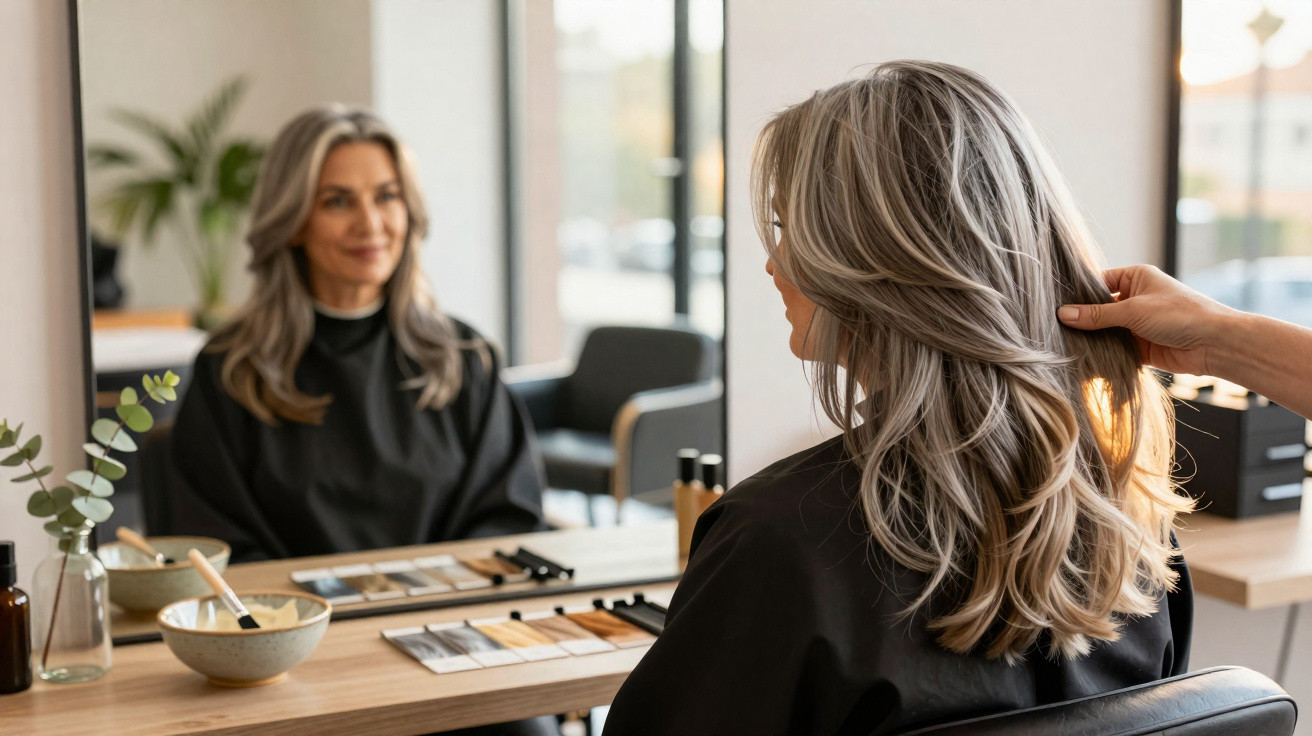
Some myths remain persistent: that grey automatically means “old”, “unattractive” or “unkempt”. Many people who have dared to return to their natural hair colour report the exact opposite – provided the cut and care are right.
Those who style their grey hair with intention present a different image: modern, clear and full of character. A good haircut, high-quality care products and a considered clothing colour palette can enhance this effect. This has little to do with vanity and more with treating one’s own appearance respectfully.
In practice: how this attitude appears in everyday life
Whether someone is inwardly ready for this step is often apparent in small moments:
- In the chemist, they pause in front of the hair dyes – then consciously walk on.
- At the hairdresser, they say for the first time: “Let’s grow it out; just give it a good cut.”
- When faced with comments such as “You would look much younger with colour”, they respond calmly rather than feeling hurt.
These moments show someone moving beyond the role of perpetual self-improvement and into one where life experience matters – both to themselves and to others.
Why this choice is more than just a trend
Choosing to let grey hair show forms part of a broader movement away from Photoshop filters and towards more realistic body images. Many people are discovering how liberating it can be when everything no longer has to look “perfect”. For mental health, this can be an important protective factor.
Of course, colouring hair remains a valid choice, and nobody is “worse” for using dye. What is more interesting is what becomes visible when people stop colouring: inner calm, self-acceptance, maturity and clarity. By showing their natural hair age, people often reveal remarkable strength – and it is these eight qualities that make grey heads so noteworthy in everyday life.










Comments
No comments yet. Be the first to comment!
Leave a Comment