
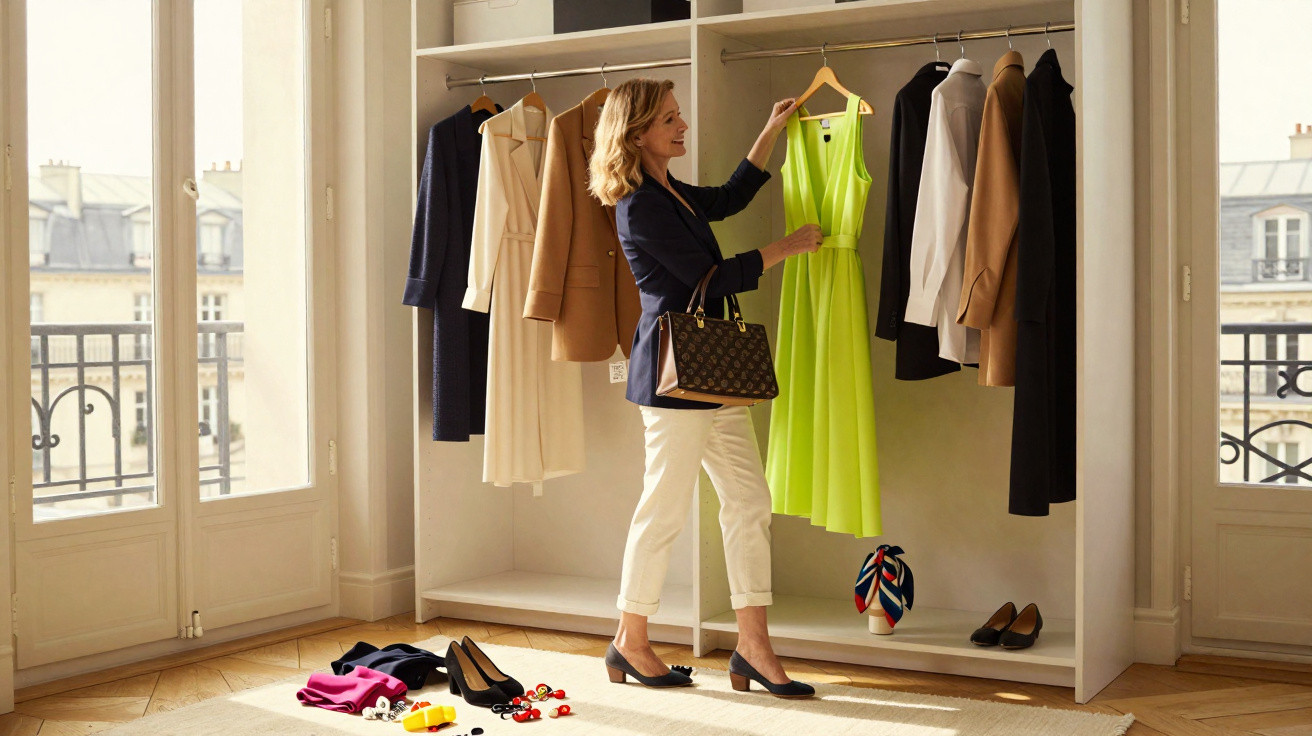
On a wet Sunday, you pull open your wardrobe door and get that small, sharp stab of guilt. The clothes are crammed in so closely that the hangers catch against one another, but you still reach for the same three outfits again and again. In one corner, a dress with its tag still attached seems to stare back like a wordless reproach. A blazer you promised yourself you would wear to “important meetings” remains rigid and unworn, as though it is waiting for a version of your life that never arrived.
For a moment, you simply stand there, puzzled by how a wardrobe this full can feel so oddly bare.
Then someone tells you about a strange little hanger trick.
Suddenly, the entire wardrobe issue seems… almost embarrassingly easy.
The backward-hanger trick that quietly exposes the truth
Choose one day each year and turn every hanger in your wardrobe backwards. Place the hooks over the rail in the opposite direction, making them slightly awkward to remove. At first, it looks peculiar, as though your wardrobe has been reset as part of a game.
After that date, whenever you wear something and put it away again, return its hanger in the usual direction. It is one effortless movement and one unmistakable marker. There is no need for an app or spreadsheet: plastic and metal simply reveal what you genuinely wear.
Imagine it is 1 January and your wardrobe has just been “flipped”. Every hanger faces backwards, so in theory every item starts equal.
By March, your favourite jeans and everyday jumpers have already been returned the right way round, creating an obvious, reassuring group of “real-life clothes”. By June, your regular work shirts and reliable dresses have joined them. Then there are the remaining pieces: the silky sale top bought “for nights out”, the blazer from a former job, and the trousers that are now too tight and belong more to an imagined future than your present body. Their hangers stay resolutely backwards, month after month. They are silent evidence.
The method is both harsh and compassionate. Unworn clothes can no longer hide behind excuses. If a hanger never turns, that outfit doesn’t belong to your real life right now.
This straightforward approach avoids wishful thinking and unreliable memory. You do not need to recall the last time you wore something or defend your reasons for keeping it. The hangers show the answer without judgement. That detachment matters: instead of asking, “Do I like this?”, you ask “Did this actually earn its space this year?”
How to set it up once and let the hangers do the talking
Begin with a proper reset: set aside one afternoon, choose a playlist and make a coffee - or two. Take a moment, go through every garment on the rail, and turn each hanger so its hook points the other way. Backwards is now your baseline: a clear dividing line.
From then on, every item you have worn and washed should go back into the wardrobe on a conventionally positioned hanger. There is no fuss or formal ritual involved, only a brief turn of the wrist. Over time, a discreet pattern takes shape. The normally facing hangers hold your MVPs; the backwards-facing ones hold the substitutes.
Nearly everyone encounters the same problem the first time: “rescue-wearing”. In October, you spot a backwards hanger, worry about it, and wear the dress once purely to prevent it joining the “give away” pile. It feels unnatural, and the garment soon returns to gathering dust.
In reality, nobody monitors their wardrobe every day like a project manager. Occasionally, you will forget to turn a hanger around. That does not matter. The broad picture at the end of the year is what counts, not flawless record-keeping. Use the method as a mirror rather than a test to manipulate. The aim is understanding, not performance.
“If a piece only survives your closet because you feel guilty, it’s not clothing anymore, it’s emotional clutter.”
- Set a fixed date for the flip
Choose your birthday, 1 January or the first day of spring. Making it a ritual gives you a date that is easier to remember. - Group by season after several months
Once patterns become clear, move the items you wear most often to the front. Your wardrobe will gradually reorganise itself around your genuine habits. - Make a ‘maybe’ zone
Put backwards-hanging items you are uncertain about into a box for 3–6 months. If you do not miss them, they can leave your life without drama. - Respect your “cost per wear”
An expensive coat worn five times each winter may offer more value than ten inexpensive tops you never wear. - Keep one wildcard item
Give yourself permission to retain one impractical piece that exists solely for joy, even if its hanger remains backwards. Not everything has to be optimized to be worth keeping.
What your backward hangers say about your real life
The backward-hanger method usually reveals more than unused clothes. It can also quietly expose gaps between your life and the wardrobe you have been imagining: the corporate version of you, the nightlife version of you, the sporty version of you. Yet the person dressing at 7:30 a.m. on a Tuesday may simply need comfortable trousers that do not pinch and a shirt suitable for Zoom.
When the year is over, the hangers make that reality visible at a glance. A full row of untouched work dresses may show that your role, daily routine or personal style has changed more than you had noticed. That is not a failure; it is information.
| Key point | Detail | Value for the reader |
|---|---|---|
| Backward hangers reveal unworn clothes | Hangers turned around once a year show which garments were never returned to their normal position | A simple visual method for deciding what to donate or sell |
| The system reflects your real habits | Only garments you actually wear have their hangers turned around | Helps create a wardrobe suited to your current life rather than a fantasy |
| It lowers guilt and decision fatigue | The objective position of a hanger replaces emotional guesswork | Makes decluttering quicker, calmer and more sustainable |
















Comments
No comments yet. Be the first to comment!
Leave a Comment