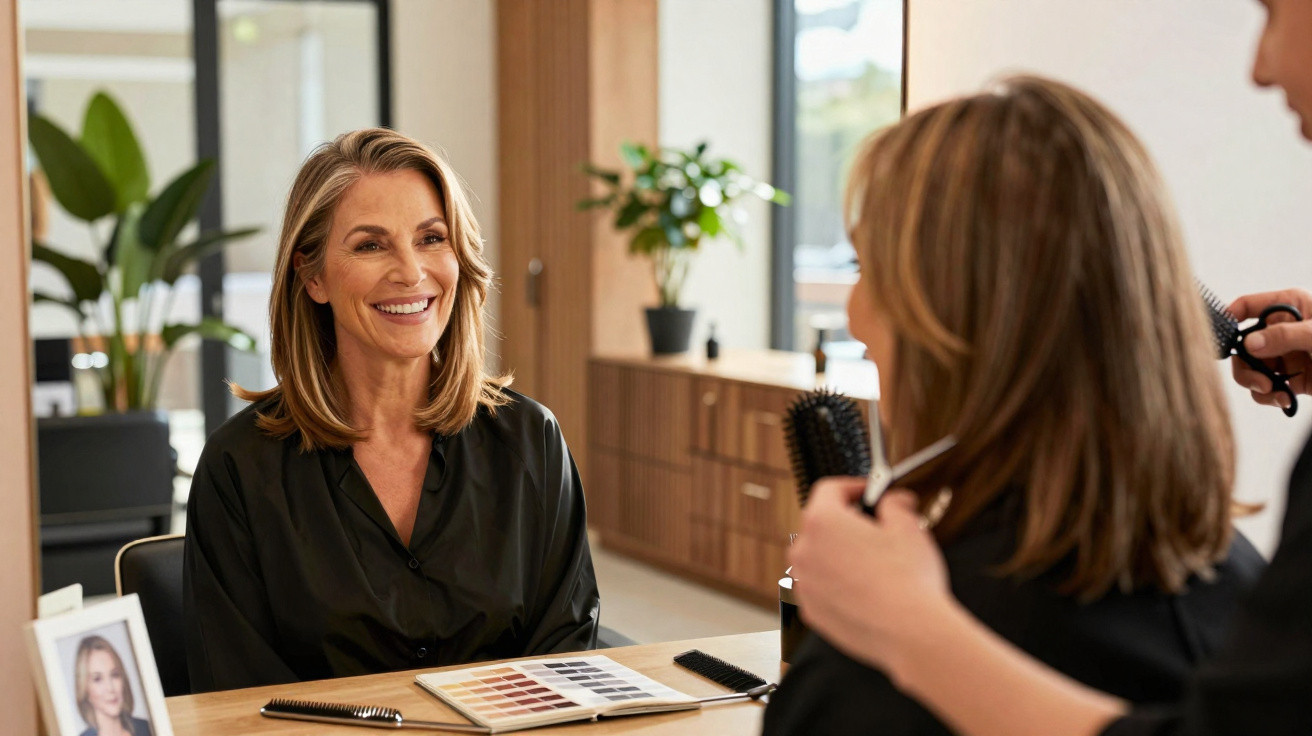
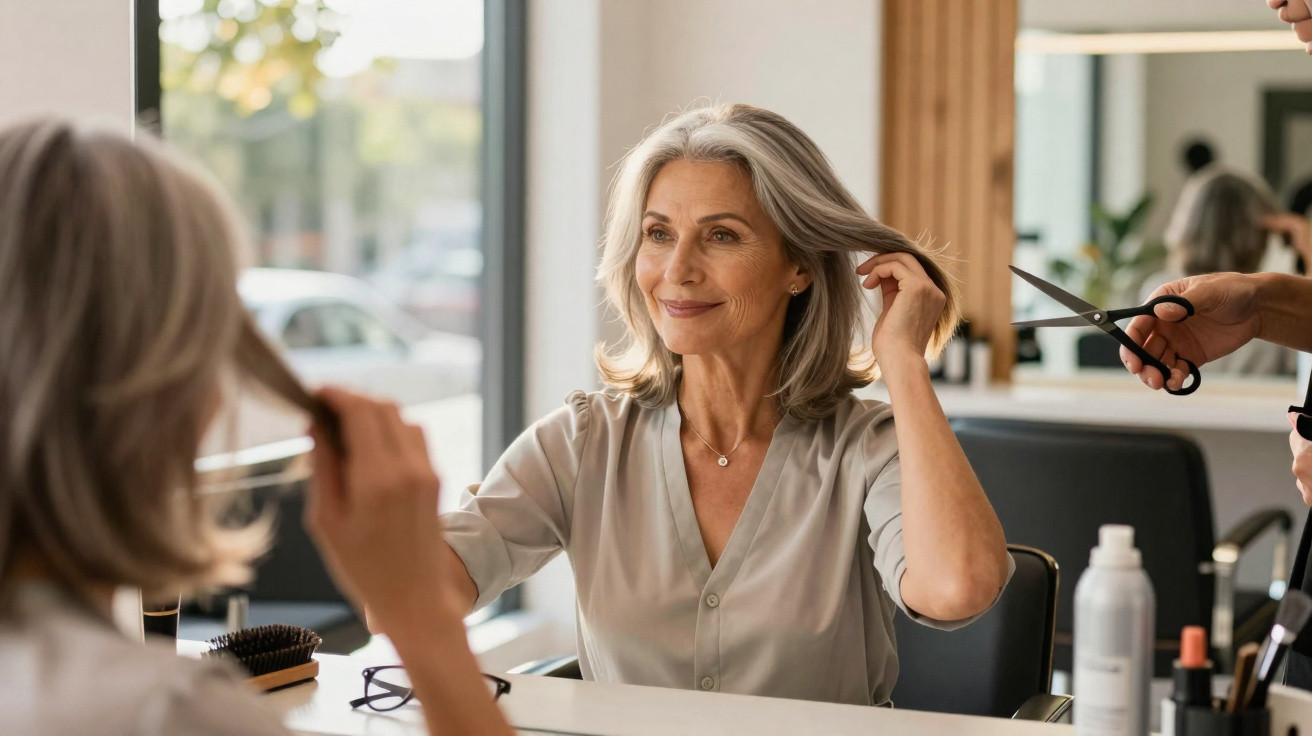
The hairdresser stopped, scissors poised, and inclined her head. “You know,” she said softly, “if you walked in here and told me you were 42, I’d believe you.”
The woman in the chair laughed out loud. She was 66, with grey roots on show and a neck that was a little less firm than it once was - yet the mirror revealed a change. The old, weighty bob that had been pulling her features down had disappeared. In its place was a light, layered style that shifted with every smile.
People passing her in the street had no idea how old she was. They simply saw a woman whose hair seemed to say: I’m still here, and I’m not done yet.
That is the understated power of a well-chosen haircut.
10 hairstyles that instantly rewind the clock after 60
Visit any salon on a Tuesday morning and you are likely to see it: women over 60 sitting slightly tensely in the chair, holding up a photograph on their phone and quietly asking for “Something that makes me look fresher… not trying-too-hard young, just… me, but better.”
The reality is that hair behaves differently after 60 than it did at 40. It may become finer, drier or more wiry, and the routines that once worked can suddenly fail. The dense, blunt bob you adored at 45, for instance, may now weigh down your jawline and make your features seem harder.
The answer is not to pursue the haircut you used to have. It is to find one suited to the person you are today.
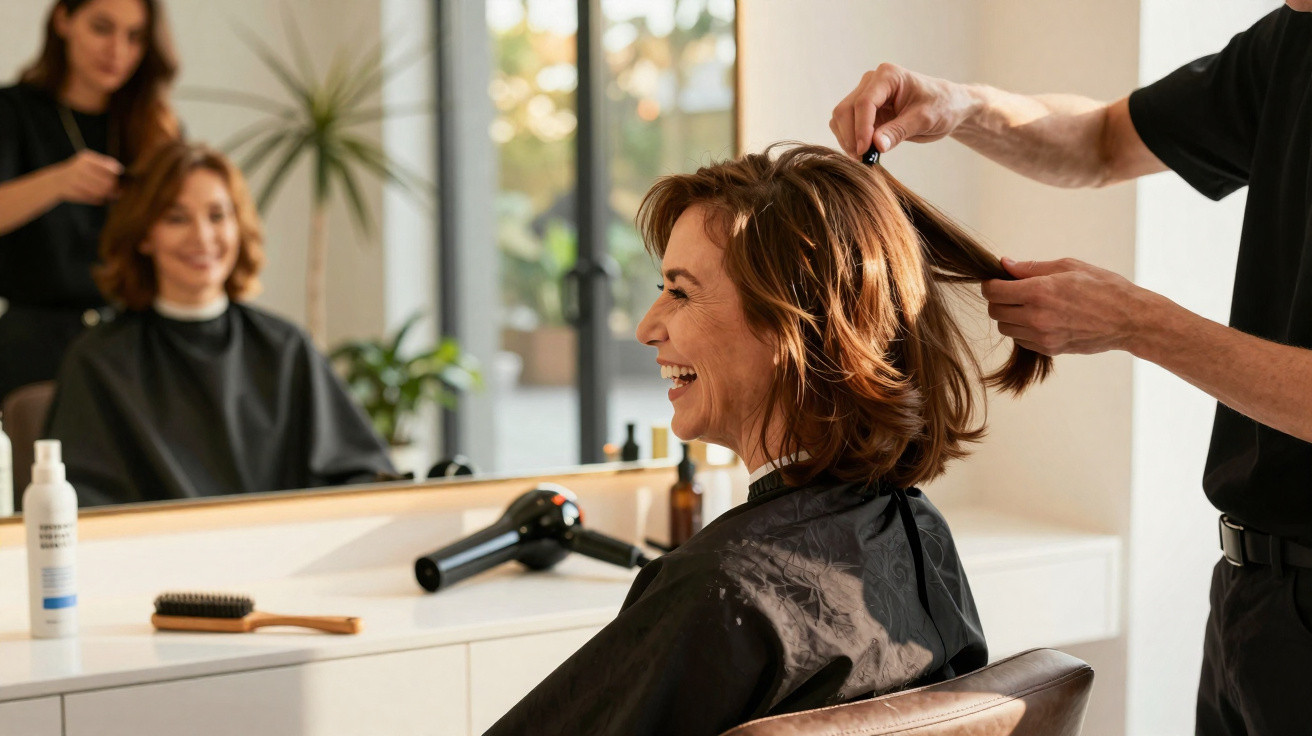
Consider a traditional layered bob. This is not the rigid, helmet-like version from the 1990s, but a soft, lightly undone bob falling at the chin or just beneath it. On a 64-year-old face, it can work wonders: it reveals the neck, enhances the cheekbones and adds motion to hair that previously just hung there.
I saw Marianne, a retired teacher, trade her long, thinning ponytail for a chin-length layered bob with side-swept bangs. When she rose from the chair, she did not merely appear younger - she looked refreshed. “I feel like I’ve just come back from a month’s holiday,” she said, running her fingers over the ends as though they belonged to somebody else.
Her 32-year-old daughter pulled out her phone to take pictures. “You look my age from the back,” she joked, and, in a way, she was right.
There is straightforward reasoning behind this. The lines and silhouettes in a hairstyle can mirror those of the face. Lengthy, heavy sheets of hair pull everything downwards, particularly when the skin has softened. Severe, blunt cuts may also make facial lines seem more pronounced and deeper.
By contrast, airy layers, movement near the eyes and styles that reveal some of the neck usually create an uplifting effect. They lead the eye to notice greater energy, brightness and openness. This is why stylists speak of “softening” rather than concealing age.
A 60-year-old woman with a contemporary pixie cut or textured bob does not look as though she is attempting to be 30. She looks like a 60-year-old with the energy of someone around 40. That is the ideal balance.
How to choose a “40-at-60” cut without hating it tomorrow
Begin with the features that frame your face rather than whatever is currently popular on Instagram. The most rejuvenating hairstyles for women over 60 tend to have three things in common: lightness through the ends, softness around the face and some texture. This could mean a shaggy lob, a cropped pixie, a curly mid-length style or a shoulder-length wolf cut with soft layers.
Ask your stylist to build movement into the cut, particularly around the cheekbones and jawline. A gentle side fringe can soften forehead lines, while longer face-framing sections at the front can make the face appear more lifted. Neck-revealing styles, including a short bob or pixie, can also give the impression of fresher posture without any effort from you.
Do not overlook the back, either. A softly stacked nape may create the illusion of a longer neck and straighter back, immediately giving a more youthful feel.
The greatest mistake? Requesting the haircut you had twenty years ago. Hair texture alters over time, and hair that was full and manageable at 38 may become limp and resistant at 62. You leave the salon with a flawless blow-dry, only to find yourself battling with it in the bathroom two days later.
We have all experienced that moment of looking in the mirror and thinking, “This looked great on Pinterest, why not on me?” The reason is that the most youthful styles work with your natural hair rather than against it. Fine hair responds well to soft layers and root volume. Curly hair needs shape and moisture, not harsh thinning.
Be realistic: nobody genuinely keeps up an elaborate routine every day. If a haircut requires 40 minutes of styling before it looks good, it is not a rejuvenating cut. It is a part-time job.
“I turned 70 and chopped my hair into a messy pixie,” says Rosa, a former nurse from Madrid. “People kept asking if I’d had work done. No. I just finally stopped hiding behind my hair.”
- Soft layered bob (chin or collarbone length) – Creates bounce, frames the face and removes 10 years from heavy, flat-looking hair.
- Side-swept curtain bangs – Direct focus to the eyes, soften forehead lines and reduce the appearance of deeper wrinkles.
- Modern pixie with texture – Highlights cheekbones, lifts the face and looks chic with grey or white hair.
- Long, layered lob – Ideal for anyone not ready to go short; it retains length while making the overall shape lighter.
- Curly shag or layered cut – Makes the most of natural curls, prevents the “triangle” effect and delivers cool, effortless energy.
- Short crop with longer top – Particularly good for fine hair, adding height and making the face look slimmer.
- Grey blending with a fresh cut – Reduces stark root lines and makes silver hair appear deliberate rather than “overdue.”
- Soft fringe or wispy bangs – Kind to mature foreheads, without the severe straight line that screams “schoolgirl.”
- Asymmetrical bob – Adds a subtle edge that feels contemporary rather than conservative.
- Shoulder-length layers with flipped ends – Reveals the neckline and restores that light, 40-ish movement.
Why these “younger” cuts actually feel more like you
There is something almost symbolic about having your hair cut after 60. It is not solely about age; it can also mean letting go of the version of yourself that tried to meet everybody else’s expectations. Children have been raised, career phases have ended or changed, and your body is evolving whether you welcome it or not.
The right hairstyle does not remove that history. It highlights its strongest parts. A skilfully cut shag or bob can communicate “creative”, “curious”, “still moving forward” before you say a word. And when you glimpse yourself in a shop window without immediately scrutinising your wrinkles, the feel of the whole day can change.
That is the subtle everyday benefit of a good haircut. People do not praise the technical details. They simply say, “You look… good. What did you do?”
| Key point | Detail | Value for the reader |
|---|---|---|
| Choose movement over length | Light layers, texture and an exposed neck lift the face more effectively than long, heavy hair | Helps you appear around 10–20 years fresher without dramatic changes |
| Work with your natural texture | Choose cuts that suit how your hair naturally falls: fine, curly, wavy or thick | Reduces the pressure of daily styling and keeps hair looking healthy rather than overworked |
| Think face-framing, not hiding | Soft fringes, side partings and face-framing pieces draw attention to eyes and cheekbones | Focuses attention on your best features instead of pursuing a “perfect” face |








Comments
No comments yet. Be the first to comment!
Leave a Comment