
If you want to lose your lengths without regretting it a few weeks later, one cut keeps coming up: the Blunt Bob. This precise, bluntly cut bob is appearing on celebrities, models and street-style trendsetters alike, and is already considered a defining short hairstyle for spring 2026.
Why the Blunt Bob is suddenly everywhere
Essentially, the Blunt Bob is a bob with no layers, no fringed ends and no unnecessary extras. Hair is cut to one uniform length, creating a crisp, graphic outline. It is precisely this minimalist quality that makes the style feel so contemporary – and so photogenic.
“A precise, straight cut that sharpens facial features while remaining exceptionally versatile: that is the principle behind the Blunt Bob.”
International fashion magazines are already describing the cut as the season’s “statement hairstyle”. Actresses such as Julianne Moore have sacrificed their long hair for it, while supermodels including Gigi Hadid and stars such as Charlize Theron have worn versions of the look for years. The message behind it is clear: hair cut this way immediately suggests someone who knows the trends and makes deliberate choices.
What makes it especially interesting is that, despite its strict appearance, the Blunt Bob can be worn surprisingly casually. It works just as well on straight hair as it does with soft waves, and can be styled either impeccably sleek or intentionally “undone”. It also flatters far more people than might first be expected.
What makes the Blunt Bob so distinctive?
Professional hairdressers define the cut as “one length around the head, without layers, with a pronounced, clean line”. This compact shape delivers several effects at once:
- Volume effect: Particularly on fine hair, it instantly makes the hair look fuller.
- Facial definition: The cut frames the face and draws attention to stronger features.
- Minimal styling effort: Air-dry it, run a comb through it and you are done – provided the cut sits properly.
- Flexible length: Anything from a chin-length bob to a shoulder-skimming version works.
Many hairdressers are currently enthusiastic about this minimalism, which pairs perfectly with 1990s-inspired fashion and make-up: sharp silhouettes, few layers and strong shapes instead. The Blunt Bob fits seamlessly into that aesthetic.
Six variations to suit different face shapes
For the cut to have its full effect, face shape plays a central role. The good news is that there is a suitable version for almost every shape. Here are the six salon-recommended options that are easy to show using photos on your phone:
1. A sleek, mid-neck bob for round faces
Round faces benefit from a crisp, straight line finishing slightly below the chin – around the middle of the neck. This length visually elongates the face, while the edges create a subtle frame that makes contours appear narrower.
“Rule of thumb: for round faces, never finish exactly at chin level; go one or two centimetres lower instead.”
2. A shoulder-length bob for square or broad faces
Anyone with a pronounced jawline or a broader face is well suited to a shoulder-length Blunt Bob. The slightly longer line softens the angularity of the jaw, gives the overall look a gentler appearance and still retains that sharp, modern finish.
3. A chin-length micro bob for oval faces
Oval faces can wear almost any shape, making them ideal for a very short, highly graphic Blunt Bob. The hair finishes precisely at the chin and the outline is razor-sharp. The result recalls actresses such as Carey Mulligan: cool, fashionable and slightly arty.
4. A wavy bob with side volume for long faces
On long, narrow faces, a sleek and very straight bob can quickly look too severe. Soft waves that create volume at the sides are a better option. While the base line remains straight, the texture loosens the overall effect and visually reduces some of the face’s length.
5. Softly turned-in ends and a side parting for heart-shaped faces
Heart-shaped faces – wider at the forehead and narrower at the chin – work well with a bob whose ends curve gently inwards. Combined with a deep side parting, it creates an elegant, slightly nostalgic look already seen on 2026 runways.
6. A softly textured “Tousled Bob” for almost everyone
Those who do not want to commit to a specific version should opt for a slightly tousled bob with a straight base line. The ends retain a defined edge, but the lengths are given relaxed texture, perhaps with a little salt spray or styling cream. This look recalls actresses such as Saoirse Ronan – modern, but not overly polished.
How to get the perfect Blunt Bob at the salon
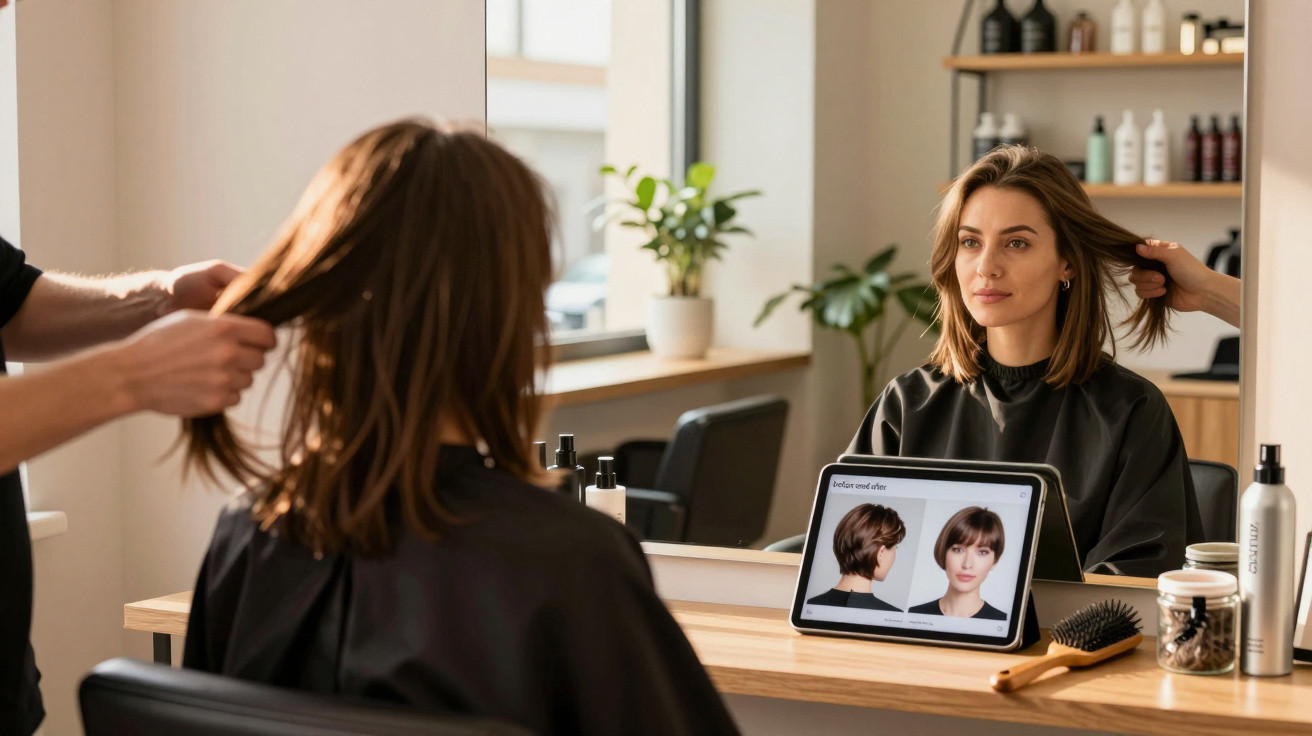
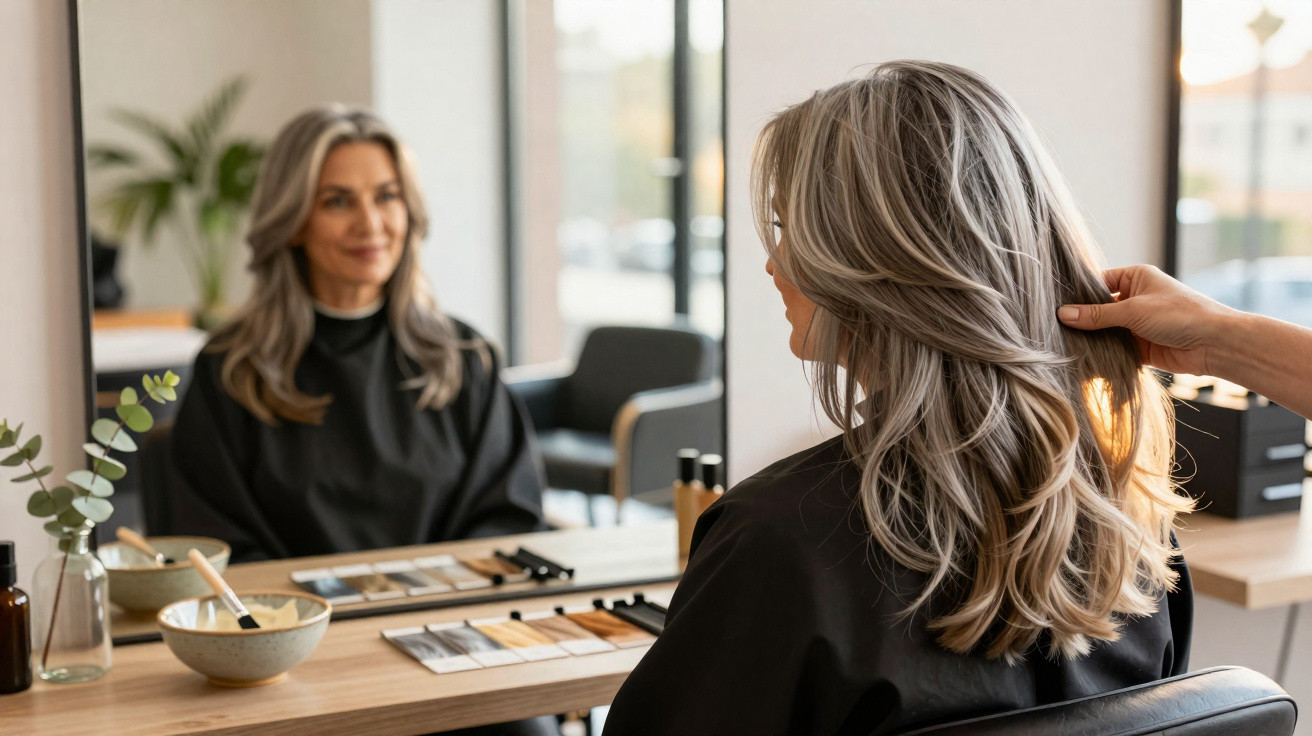
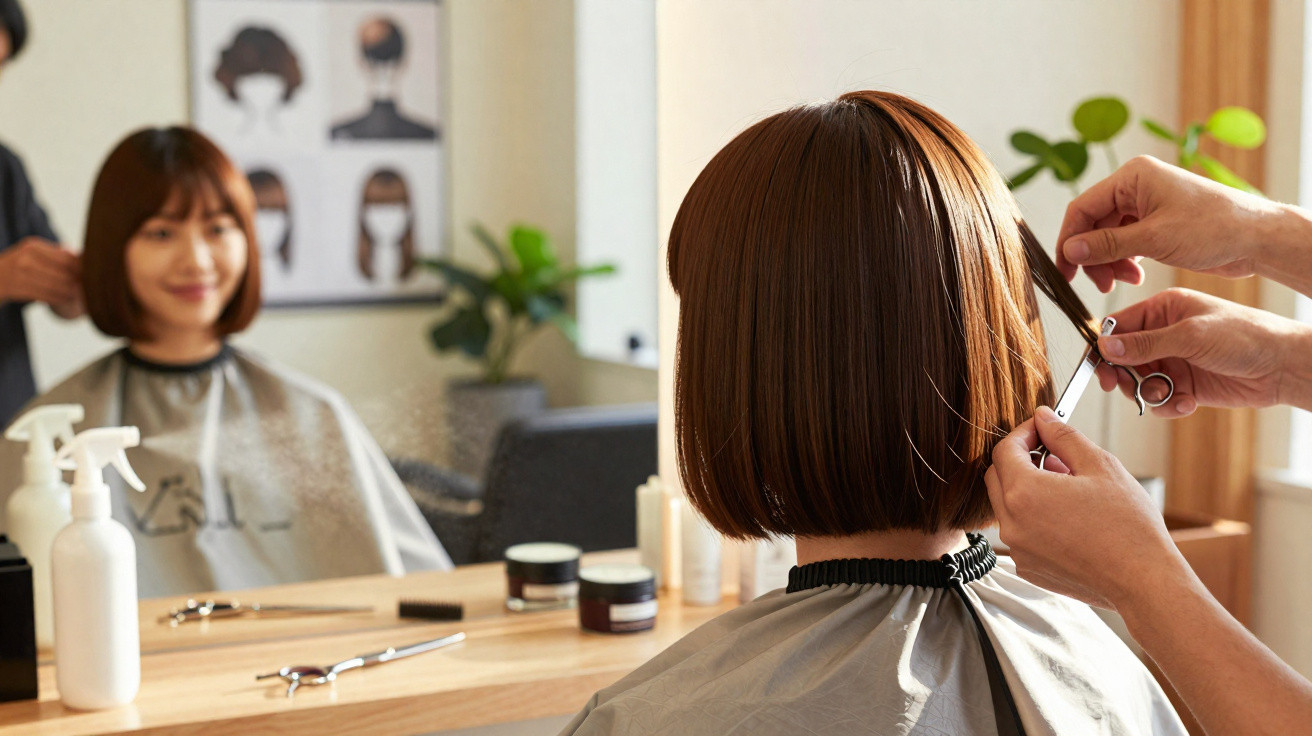
The most important stage does not happen with the scissors, but during the consultation. Professionals recommend arriving with specific reference photos: one showing the desired length and another showing the texture, whether straight, softly wavy or strongly wavy.
| Discuss before your appointment | Benefit |
|---|---|
| Identify your face shape | Makes choosing the length easier |
| Assess your hair texture | Determines the styling effort required |
| Discuss everyday life and styling time | Prevents overly high-maintenance cuts |
| Show specific reference photos | Avoids misunderstandings about the shape |
If you have little time in the morning, tell your hairdresser clearly that the cut should ideally work when air-dried. The line can then be subtly adapted to the hair’s natural fall – a crucial difference from extremely strict salon photographs.
Styling tips: from “Air Dry” to Glass Hair
For the Blunt Bob, stylists favour two extremes: completely natural or deliberately high-shine.
Air-drying with natural texture
Many hairdressers love allowing this cut to dry naturally. A lightweight leave-in conditioner, perhaps with a touch of styling cream worked into the ends, is often all that is needed. The hair’s natural movement remains visible, while the clean line defines the look.
S-waves instead of beach waves
If you want waves, avoid the classic “beach waves” look. Too many bends disrupt the cut’s straight edge. Soft S-waves are a better choice: use straighteners to gently shape each section into a flowing S, without creating harsh kinks.
Glass Hair for a high-fashion effect
For an ultra-smooth, reflective finish – often called “Glass Hair” – professionals use heat protection, a smoothing blow-dry lotion and high-quality straighteners. The key is to choose products that do not add too much volume, otherwise the bob can quickly look blocky rather than elegant.
Care, trims and everyday wearability
To keep the Blunt Bob’s line sharp, hairdressers advise having it trimmed every six to eight weeks. A brief appointment is usually enough to restore the contours precisely.
Day-to-day care is manageable: use a mild shampoo, a conditioner that is not too heavy, and occasionally apply a shine serum to the ends. If you like, tuck one side behind the ear – a small trick that instantly changes the way the face appears without requiring a complete restyle.
Who benefits most from this cut
The Blunt Bob is particularly appealing to three groups:
- People with fine hair: It makes hair appear fuller without requiring vast amounts of styling products.
- Anyone tired of long hair: It is a bold change, but not as short as a pixie cut.
- Styling minimalists: Those without much time in the morning can still achieve a finished look with a good cut.
Naturally, there are risks: a cut that is too short on very curly hair can appear more “blunt”, while the wrong length may emphasise facial features you would rather soften. For that reason, the consultation matters almost more than the haircut itself.
If you are still unsure, begin with a slightly longer version just above the shoulders. If you like the result, the length can gradually move upwards. In this way, you can quite literally grow into the trend – while giving yourself the chance to find the version that suits your face, lifestyle and personal style.





Comments
No comments yet. Be the first to comment!
Leave a Comment