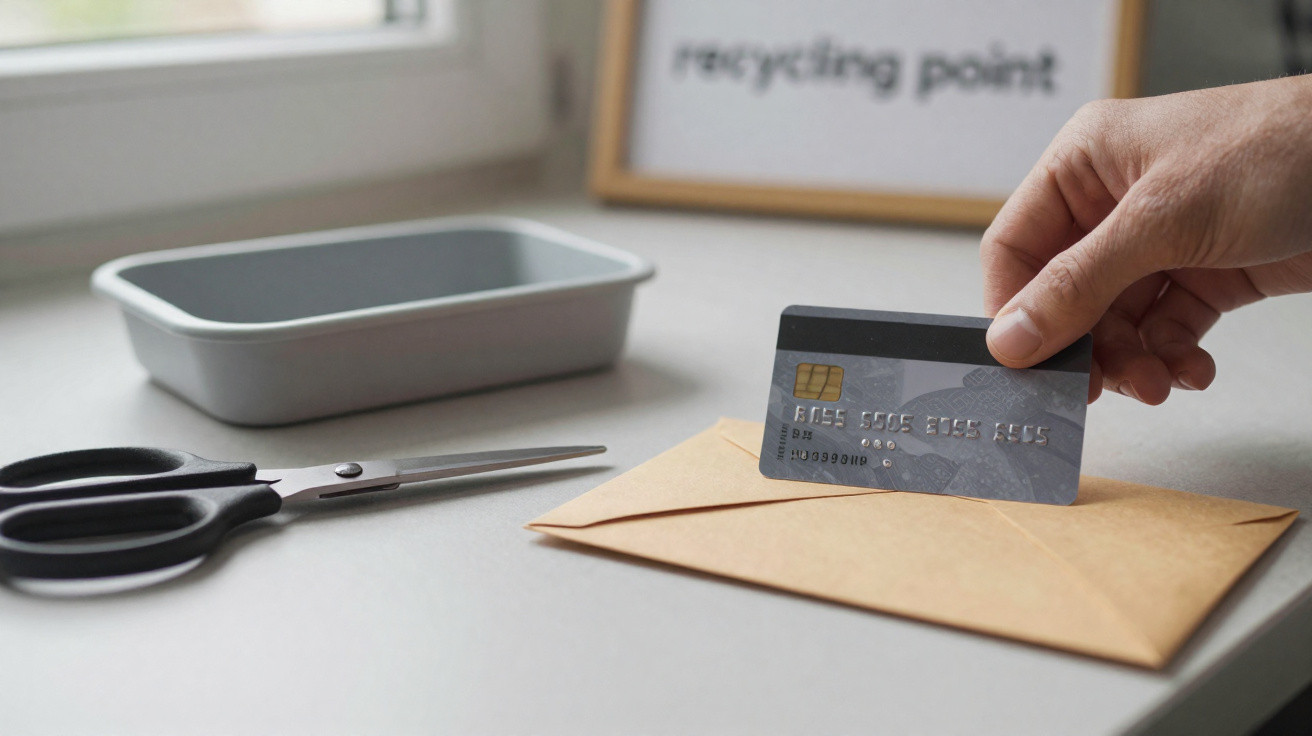
An expired card is easy to overlook: it arrives with a replacement, gets pushed into a drawer, then is headed for the bin with a few quick snips from the scissors. For an ordinary plastic card, destroying it may still be the advice from its issuer. But it is no longer a safe assumption for every card.
The important distinction is whether the card contains electronics. A card with a display, button or changing security code may contain a small battery. Do not cut, pierce, crush or bend that type of card. Check with the card provider first, then use its return process or an appropriate electrical-waste route.
The safest approach is not to treat every old payment card in exactly the same way.
Check whether your card has electronic features
Most expired debit and credit cards in the UK are conventional plastic cards with a chip, contactless antenna and printed details. These are different from the small number of cards that include extra electronic components.
Do not cut the card if it has any of the following:
- a small display showing a changing security code;
- a button, illuminated panel or electronic screen;
- wording referring to a dynamic CVV or dynamic security code;
- an unusually thick, rigid or layered design that you cannot identify.
Cards with a display can contain circuitry and a tiny battery. Damaging a battery may, in rare cases, cause it to leak, overheat or produce smoke. Keep the card intact and seek disposal advice from the issuer.
If you are unsure, assume it should not be cut until the provider tells you otherwise.
Why cutting is not a universal answer
Cutting up an old card was long seen as a sensible way to make it harder for somebody to use information found in the rubbish. Separating the chip, card number, magnetic stripe and security code can reduce the chance of a complete card being recovered.
That remains relevant for a standard card if your bank or credit card provider specifically tells you to destroy it. However, scissors are not suitable for a card that may contain a battery or electronics.
There is an environmental consideration too. Cards with electronic parts should not usually go into general household waste or kerbside recycling. Electrical items and batteries need separate handling so that they can be dealt with safely.
If a card has a display or changing code, leave it intact unless its issuer gives you clear instructions to do otherwise.
Expired does not mean you can ignore privacy
An expired card should no longer be accepted for new card payments once its expiry date has passed. It is still worth disposing of it thoughtfully, as it may display personal and account-related information, including:
- your name;
- the card number;
- the expiry date;
- the security code;
- a signature strip;
- the name of the issuing bank or card provider.
Those details alone would not normally allow someone to use an expired or cancelled physical card. Even so, leaving a whole card in an accessible bin is unnecessary exposure of your personal information.
Keep the old card somewhere secure while you decide what to do with it. A drawer, wallet or locked document box is better than a kitchen worktop, car glovebox or bag that could be lost.
Start with your card provider
Your issuer is the best first point of contact because it can tell you whether your particular card should be returned, retained until a replacement is active, or destroyed.
1. Use an official contact route
Check the provider’s app, official website or the telephone number printed on your current card. Ask how it wants expired cards to be handled, especially if yours has a display or other electronic feature.
Do not use an address or telephone number supplied in an unexpected text, email or social-media message. Fraudsters may use card-expiry reminders to persuade people to reveal security details.
2. Ask about returning the card
Some providers may offer a return-by-post service or be able to advise on options at a branch. Do not post a card unless the provider has given you the correct method and address.
If a branch confirms it can accept old cards, hand it directly to a member of staff. Services can vary between locations, so check before making a special journey.
3. Use the right route for an electronic card
For a card with a battery, display or other electronic feature, ask the issuer whether it has a specialist return route. If it does not, your local council may be able to advise on small electricals or battery-containing items.
Council collection rules differ across the UK. Do not put an electronic card in your kerbside recycling box unless your council explicitly says that it accepts this type of item.
If you are told to destroy a standard card
If the issuer confirms that your card is a conventional, non-electronic card and advises you to destroy it, follow that guidance carefully.
1. Make sure it has no display or battery
Do not cut any card that has a screen, button, changing code or unfamiliar construction. If the card seems unusually thick or hard to cut, stop rather than forcing the scissors through it.
2. Separate key information
For a standard card, make several cuts so that the chip, card number, security code and magnetic stripe are not left together. Use sturdy household scissors and take care around the sharp blades.
3. Dispose of fragments as instructed
Payment cards are not paper or cardboard, so they do not belong in paper-and-card recycling. If your issuer has advised that a standard card can be destroyed and binned, do not leave all pieces together in an easily accessible place.
Avoid burning cards. Heated plastic and electronic materials can release unpleasant or harmful fumes, and burning household waste is not a safe disposal method.
Update payments with care
A replacement card can affect recurring payments, although some merchants may receive updated card details through their payment arrangements. It is still wise to review important subscriptions and services yourself.
Check regular payments such as:
- streaming and app subscriptions;
- gym memberships;
- online shopping accounts;
- travel accounts;
- mobile-phone or broadband payments.
Update details only through the merchant’s official website or app. Never give full card details, PINs or banking passcodes to somebody who contacts you unexpectedly about a renewal.
Common mistakes to avoid
These habits can create avoidable privacy, safety or fraud risks:
- Cutting every old card automatically. Electronic cards should remain intact.
- Putting a whole card straight into the bin. It can expose visible personal details.
- Trying to prise apart the layers. Do not attempt to remove a chip or battery yourself.
- Using kerbside recycling as the default. Mixed card materials are not accepted in many household collections.
- Burning a card or using heat to destroy it. This can create fumes and fire risk.
- Following an unsolicited expiry message. Contact the issuer independently through a trusted route.
- Posting a card without instructions. Only use a return method supplied by the provider.
If the card is swollen, hot or damaged
A bulge, split casing, heat, unusual smell or visible leakage could indicate damage to an electronic component or battery. Do not cut, bend, charge, puncture or put the card in water.
Place it carefully on a non-flammable surface, away from paper, aerosols, children and pets. Contact the issuer or your local council for advice on safe disposal. If there is smoke, fire or an immediate risk, move away if it is safe to do so and call 999.
Make an old-card routine part of replacing it
When a replacement arrives, activate it using your provider’s official process. Review essential recurring payments, store the old card securely, and check what the issuer recommends before disposing of it.
For a basic plastic card, cutting it up may still be appropriate if the provider says so. For a card with a display, battery or other electronics, the safer choice is to leave it whole and arrange a suitable return or recycling route. A brief check can protect your information and avoid damaging an item that should not go in the bin.
















Comments
No comments yet. Be the first to comment!
Leave a Comment