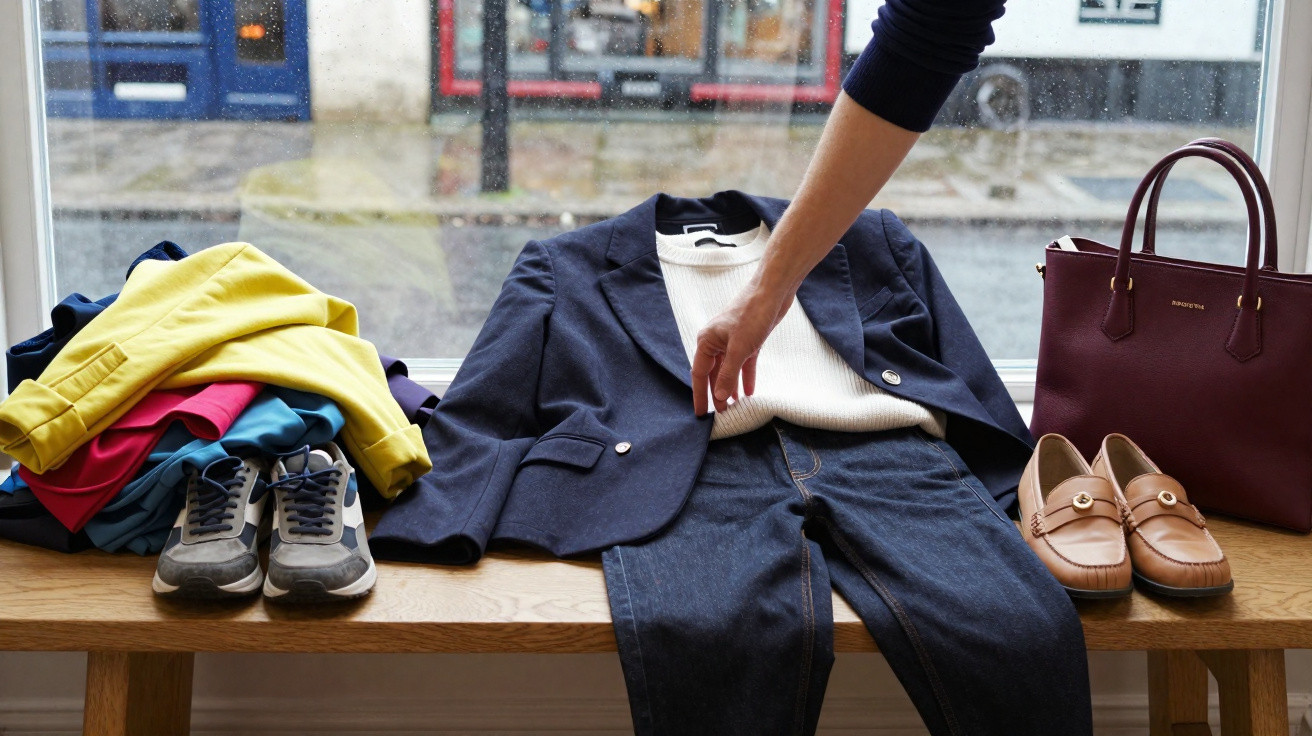
A polished outfit can feel oddly difficult on a grey Monday morning, especially when your wardrobe is full but nothing seems to work together. The useful trick is not to buy a new personality in clothes: it is to rely on a few well-fitting staples, keep the palette simple and add just one detail that feels personal.
French-inspired dressing is less about berets or red lipstick than clean lines, good proportions and clothes that look chosen rather than thrown on. Build from practical pieces that suit your commute, budget and the British weather, then repeat combinations that make getting dressed easier.
Start with polish, not costume
It is easy to turn a French-inspired look into fancy dress by wearing every recognisable reference at once. A striped top, neck scarf, beret and bold lip can each work well, but together they may feel more themed than effortless.
Instead, think in terms of a small working uniform:
- a blazer or collarless jacket that fits properly
- straight-leg jeans or tailored trousers
- a fine-knit jumper, T-shirt or crisp shirt
- a simple midi, knee-length or ankle-skimming dress
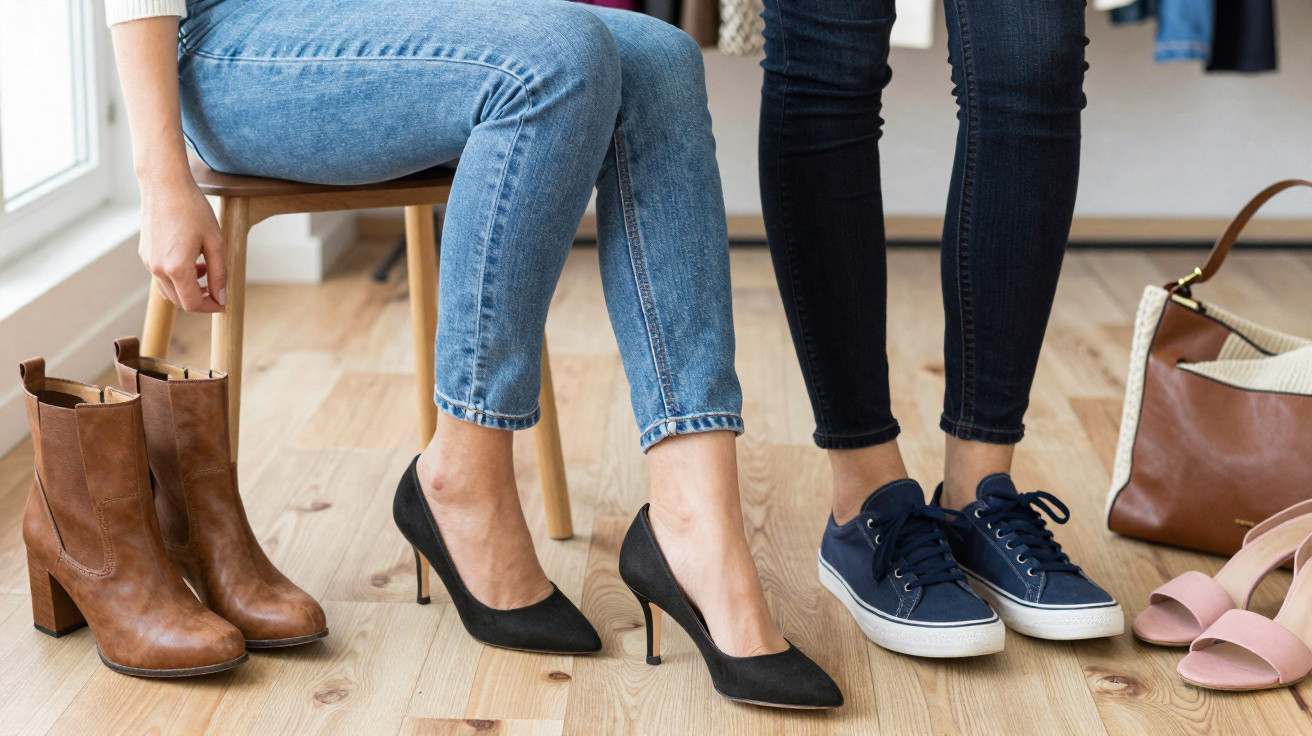
- loafers, ankle boots, clean trainers or low heels
- one useful bag and a small amount of jewellery
The aim is not to look as though you have not made an effort. It is to make the effort look uncomplicated.
A polished outfit usually comes from fewer, better decisions rather than more accessories.
Build a reliable British foundation
Changeable weather makes layers genuinely useful in the UK. A coat that works in drizzle, knitwear that can be removed indoors and shoes you can walk in will do more for your wardrobe than a collection of occasion-only pieces.
1. Choose a jacket with a useful shape
A blazer adds structure to jeans, dresses and trousers. Look for one that sits smoothly at the shoulders, lets you move your arms and fastens without pulling. Navy, charcoal, black, cream, camel and subtle checks are usually easier to rewear than a very bold colour or print.
A tweed-style jacket can be especially useful in autumn and winter. Keep the rest of the outfit straightforward: straight jeans, a plain knit and leather loafers are enough. Avoid adding several competing details, such as a busy scarf, statement bag and ornate jewellery all at once.
2. Pick trousers that skim, rather than cling
Straight-leg, slim-straight and softly wide-leg trousers create a neat line without relying on a restrictive fit. A pressed crease can make even affordable trousers look smarter.
For jeans, dark indigo, black, ecru and clean mid-blue washes are versatile choices. Heavily distressed denim can be harder to dress up. Check the hem, too: fabric bunching around the ankle can make an otherwise considered outfit look untidy.
3. Keep knitwear practical
A crew neck, V-neck or lightweight roll neck works under a jacket and over a shirt. Fine merino, cotton or cotton-blend knits are often easier to layer in a centrally heated office or on public transport than very chunky jumpers. Always follow the care label, particularly with wool.
Use a restrained colour palette
Limiting the number of colours helps separate items look intentional. That does not mean wearing only black; it simply gives the eye somewhere calm to rest.
Try combinations such as:
- navy trousers, an ivory knit and tan loafers
- black jeans, a white shirt and camel coat
- mid-blue denim, a grey blazer and burgundy bag
- cream trousers, a navy jumper and black flats
- a charcoal dress with opaque tights and ankle boots
One accent is often enough. A berry-coloured bag, coloured earrings, silk scarf or lipstick can lift neutrals without overwhelming them.
In flat winter light, cream, soft blue, burgundy and deep green may feel brighter near the face than head-to-toe black. In warmer months, white cotton, pale denim and navy can look crisp without feeling overly formal.
Let fit do the hard work
A simple garment in the right fit will usually look more considered than an expensive one in the wrong size. If you have a piece you genuinely love, an alteration to the sleeve, hem or waist may make it far more wearable.
When trying on clothes, check that:
- shoulder seams sit close to the natural shoulder edge
- shirt buttons do not pull across the bust or torso
- waistbands remain comfortable when you sit down
- jacket sleeves do not cover your hands
- skirts and dresses allow an easy stride
- shoes are comfortable enough for the whole journey, not only the mirror
When buying online, use garment measurements as well as the size label, as sizing differs between retailers. If possible, try new shoes indoors on a clean surface before committing to a full day in them.
The most useful clothes are the ones that make next week’s morning easier as well as today’s.
Add personality through one focal point
A streamlined outfit should still feel like your own. Choose one or two details that give it character, rather than several pieces competing for attention.
You might wear a plain black dress with a vintage brooch, or a navy suit with a patterned scarf. A striped top beneath a blazer is a classic option, but let it be the main print instead of adding another bold pattern.
Jewellery need not be expensive to look neat. Small hoops, a watch, a chain necklace or one substantial ring can be enough. If you wear several pieces, a broadly consistent finish - mainly gold-tone or mainly silver-tone - often looks more deliberate.
Choose a bag for the things you actually carry. A structured cross-body, tote or top-handle bag in black, brown, burgundy or navy can work across many outfits and seasons.
Choose shoes for real life and real weather
Looking polished does not require painful heels. Loafers, ballet flats, low block heels, neat ankle boots and clean leather trainers can all give an outfit a refined finish.
For wet weather, save suede for dry days where possible. Use a protector suitable for the material before wearing new shoes, and allow damp footwear to dry naturally, away from direct heat such as radiators. Heat can dry out leather and affect adhesives.
Opaque tights can make skirts and dresses more practical through autumn and winter. Keep a spare pair in your bag for a long day if you find tights prone to snagging. A spare pair of flats for the commute can also be a far better choice than shoes that leave you hobbling home.
Common mistakes that make the look feel forced
The appeal of this style is ease. These habits can get in the way:
- Buying a whole new ‘French’ wardrobe. Start by combining pieces you already own, then identify genuine gaps.
- Wearing every classic at once. A trench, stripes, beret, scarf and red lip may look more costume-like than personal.
- Ignoring the forecast. Bare ankles and delicate shoes are not always practical in October rain or on a windy platform.
- Keeping clothes that need constant adjustment. If a blouse gapes, trousers pinch or a jacket slides off your shoulders, you are unlikely to feel relaxed.
- Over-accessorising a strong outfit. If tailoring, a print or a bright lip is the focal point, let everything else stay quieter.
- Neglecting maintenance. Creases, bobbles and scuffed shoes can undermine even the best colour combination.
Care for the pieces that work hardest
A polished wardrobe is as much about upkeep as shopping. Hang jackets on shaped hangers, brush coats occasionally and deal with marks promptly according to the care label. A fabric shaver can refresh knitwear, but use it gently and carefully to avoid catching delicate fibres.
Steam or press clothes before wearing them, using the setting recommended on the label. Test an inconspicuous area first if you are unsure, especially with silk, wool or synthetic fabrics. Never use bleach on coloured garments unless the product label specifically says it is suitable, and never mix bleach with acids, ammonia or other cleaning products.
Use cleaners and conditioners intended for leather shoes or bags, and patch-test where practical, particularly on dyed leather or suede. For valuable, delicate or badly stained items, a professional cleaner or repair service is often the safer option.
A five-minute formula for busy mornings
When time is short, use a repeatable formula: tailored outer layer, simple top, straight-leg bottom, practical shoe and one personal detail.
For example, wear dark jeans with a white T-shirt or fine knit, a navy blazer, black loafers and small gold-tone earrings. In colder weather, add a wool coat and scarf. For a smarter setting, swap the jeans for tailored trousers or a midi skirt.
Take a quick photograph when an outfit feels comfortable and capable. Keeping a small album on your phone gives you dependable ideas on rushed mornings and shows which pieces earn their place. The point is not to copy somebody else’s wardrobe: it is to create a polished version that works for your life.










Comments
No comments yet. Be the first to comment!
Leave a Comment