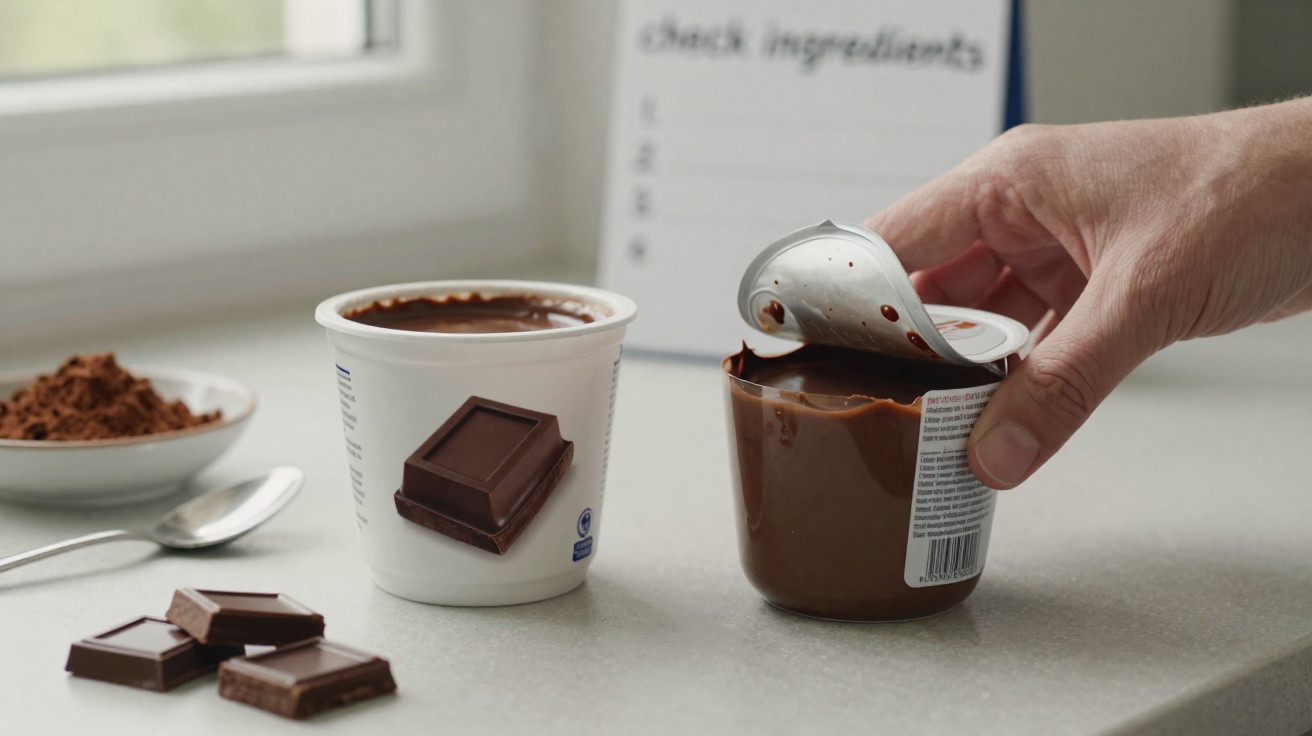
A chocolate pudding is the sort of supermarket treat many of us pick up without a second thought. A picture of chocolate squares, a rich brown colour and the word ‘chocolate’ on the lid can all suggest one thing. The useful habit is simple: turn the pot around and check the ingredients before it goes into the trolley.
That does not mean a pudding made with cocoa powder is automatically poor quality, unsafe or dishonest. It may taste perfectly chocolatey. The question is whether the name, pictures and ingredient list give shoppers a clear and fair idea of what they are buying.
A chocolate-flavoured dessert, a cocoa dessert and a dessert containing chocolate can be very different things.
Why this pudding has attracted criticism
A German consumer organisation, Verbraucherzentrale, raised concerns about the presentation of a Landliebe cream pudding sold as a chocolate variety through its Lebensmittelklarheit food-labelling service.
The organisation said the pot and lid showed pieces of chocolate, while the ingredient list referred to low-fat cocoa powder and a chocolate powder made with sugar and cocoa. It argued that shoppers could reasonably expect chocolate itself from the product name and imagery.
The complaint is about presentation rather than a food-safety issue. Cocoa powder is a legitimate ingredient and can provide a deep colour and familiar flavour. However, it is not identical to chocolate, which has its own composition and usually includes cocoa butter as well as cocoa solids.
For shoppers in the UK, the case is a useful reminder that packaging pictures are only part of the story. The ingredients list is where you can see what has actually been used.
Cocoa powder, chocolate powder and chocolate explained
The terms are related, but they should not be treated as interchangeable.
- Cocoa powder is made from cocoa solids after much of the cocoa butter has been removed. It is widely used for colour and cocoa flavour in cakes, drinks and desserts.
- Chocolate powder does not necessarily mean a chocolate bar has been ground up. It can be a blend of sugar, cocoa powder and other permitted ingredients.
- Chocolate is generally made from cocoa ingredients including cocoa mass and/or cocoa butter, with sugar and, in milk chocolate, milk ingredients.
- Flavouring can create or boost a chocolate-like taste. Its presence alone does not reveal how much cocoa or chocolate is in the product.
A dessert can contain cocoa powder and still be described in a way that consumers understand as chocolate-flavoured. The potential difficulty comes when a product’s overall appearance implies pieces, shavings or a particular type of chocolate that is not present.
Why the picture on the pot matters
Food packaging is designed to be scanned quickly. That is particularly true in the chilled aisle, where shoppers may be buying lunchbox extras, family desserts or a quick Friday-night treat.
Under UK food-information rules, labels must not mislead consumers about a food’s characteristics, composition or ingredients. The front of the pack cannot be viewed in isolation: the name, imagery, claims and ingredients list all contribute to the impression a shopper receives.
That does not mean every illustration of a strawberry guarantees whole strawberry pieces, or that a brown dessert must contain chocolate chunks. Context matters. A small image of cocoa beans beside wording such as ‘chocolate flavour’ gives a different impression from prominent images of broken chocolate squares beside a simple ‘chocolate pudding’ label.
The front of the pack catches your eye; the ingredients list tells you what is in the pot.
How to check a chocolate dessert
1. Read the product description
Look beyond the largest word on the lid. The fuller name of the food is often on the side or back and may say something more specific, such as ‘cocoa dairy dessert’ or ‘chocolate-flavour pudding’.
A reference to flavour is worth noticing, but it is not a verdict on quality. It simply tells you to look more closely at the recipe.
2. Scan the ingredients in order
Ingredients are normally listed in descending order by weight at the point they are added. Look for terms including:
- chocolate
- cocoa mass
- cocoa butter
- cocoa powder or reduced-fat cocoa powder
- chocolate powder
- flavouring
If chocolate, cocoa, hazelnuts or another ingredient is emphasised in the name or with a picture, the label may also need to give its percentage. You might see wording such as ‘cocoa powder (2%)’. There are exceptions, so the absence of a percentage does not by itself prove that a label is wrong.
3. Compare the words with the image
A generic swirl of brown pudding is not as specific as a picture of chocolate chunks or shavings. Consider whether the visual claim matches the ingredient list and description.
If the combination leaves you uncertain, choose another product or ask the retailer or manufacturer what the image is intended to represent.
4. Compare like for like
Similar-looking puddings can have very different recipes. One may use cocoa powder alone; another may contain chocolate, cocoa butter or a higher proportion of cocoa ingredients.
This comparison is useful if you are looking for a particular flavour, buying an ingredient for baking or deciding whether a premium-looking product is worth the extra cost.
What UK rules mean by chocolate
In Great Britain, specific compositional rules apply to foods sold using reserved chocolate descriptions, alongside broader rules requiring food information to be accurate and not misleading.
For example, standard chocolate has minimum requirements for total dry cocoa solids, cocoa butter and fat-free cocoa solids. Milk chocolate and white chocolate have different requirements. White chocolate contains cocoa butter but does not contain the cocoa solids that give ordinary chocolate its brown colour.
The position is more nuanced when chocolate is an ingredient in another food, such as a biscuit, ice cream or pudding. A pudding is not necessarily required to meet the composition rules for a chocolate bar simply because it is chocolate-flavoured. What matters is whether its labelling and overall presentation give a misleading impression.
You do not need to work out the legal fine print yourself before querying a pack. A clear question to the business is often the most practical first step.
Common mistakes when reading food labels
Avoid these easy traps when choosing a chocolate dessert:
- Assuming brown means chocolate. Cocoa, caramel and flavourings can all affect colour.
- Treating cocoa and chocolate as the same thing. They come from the same source but are different ingredients.
- Only reading the front. The most prominent wording is designed for speed; the full detail is usually elsewhere.
- Assuming a short ingredient list is automatically better. It may suit your preferences, but it does not guarantee more cocoa, chocolate or value.
- Ignoring allergen information. Dairy desserts commonly contain milk and may also contain soya or nuts. Check the allergens highlighted in the ingredients list every time, especially if the product is for someone with an allergy.
- Relying on an old online listing. Recipes, suppliers and packaging can change. The pot in your hand is the label that counts.
If you think a label is misleading
Take clear photographs of the front, lid, ingredient list, use-by date and batch or lot code. Keep the receipt if possible. Then contact the retailer or manufacturer with a short factual question, asking what ingredient a particular image or claim refers to.
If you remain concerned, shoppers in England, Wales and Northern Ireland can contact the Citizens Advice consumer service, which may refer suitable cases to local authority Trading Standards. In Scotland, Consumer Advice Scotland is a helpful starting point. The Food Standards Agency and Food Standards Scotland also provide food-labelling information.
Do not rely on an unclear label where an allergy is involved. If you cannot confidently identify an ingredient, do not eat the product and contact the manufacturer before serving it.
A more confident way to shop the pudding aisle
There is no need to turn every supermarket visit into a legal investigation. For foods where the ingredient matters to you, take a few extra seconds with the back label.
Check for the specific ingredient you expect, look for any stated percentage and compare the wording with the picture. A pudding made with cocoa powder rather than chocolate may be exactly what you want - provided the packaging makes that distinction clear enough for you to choose knowingly.
















Comments
No comments yet. Be the first to comment!
Leave a Comment