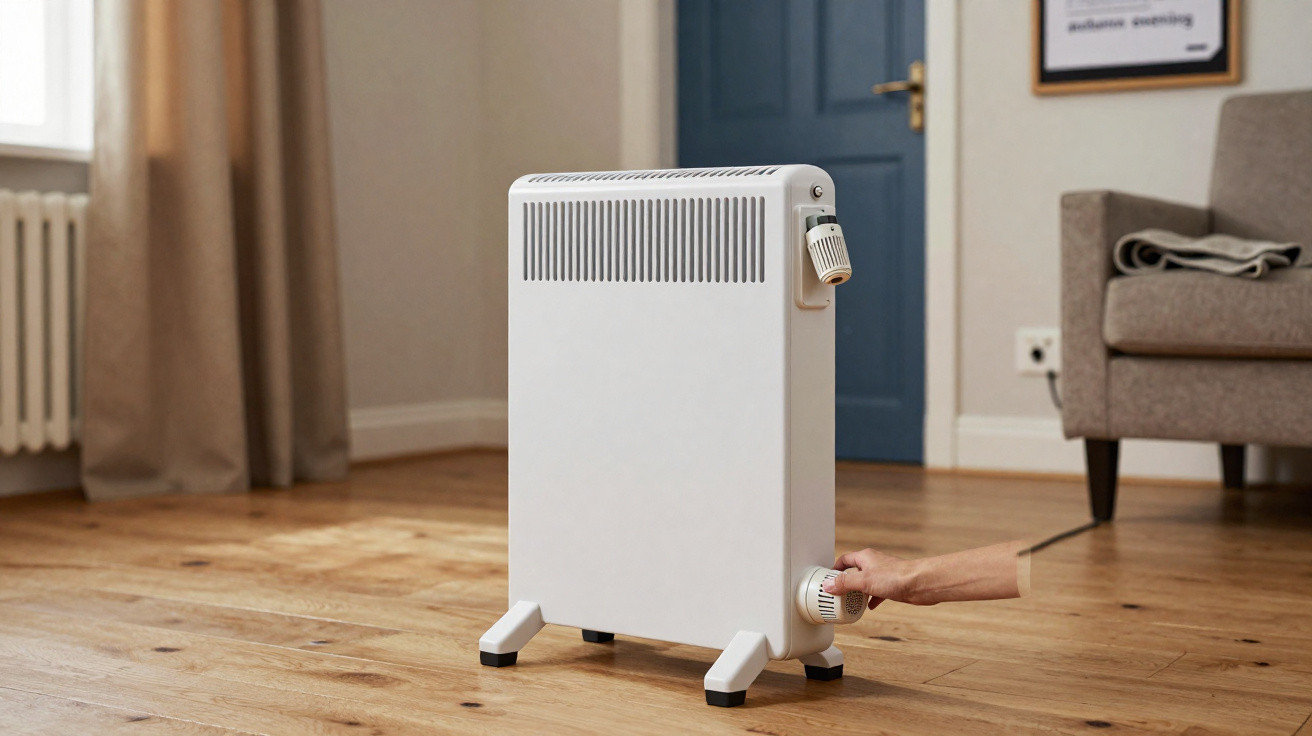
When one room feels chilly but heating the entire home seems unnecessary, a portable electric heater can be a useful short-term option. A £19.99 2kW convector heater may look like an inexpensive fix, but the purchase price is only part of the picture: the wattage and your electricity tariff determine what it costs to run.
The practical trick is to heat the occupied room carefully, reduce draughts first and use the lowest comfortable setting. A portable heater can take the edge off a bedroom, home office or seating area, but it is not usually a cheap substitute for central heating throughout the house.
A small heater can be useful for targeted warmth, but every electric heater’s running cost comes down to its power rating and the time it is switched on.
What a 2kW convector heater is designed to do
A freestanding convector heater draws in cooler air, warms it with an internal electric element and releases the warmer air back into the room. A 2kW model is generally intended for indoor, short-term use in a closed room rather than a large, open-plan or particularly draughty space.
Retail listings for low-cost convector heaters commonly mention features such as:
- More than one heat setting
- An adjustable thermostat
- Carry handles
- Overheat protection
- A freestanding design
- A maximum output of 2,000 watts, or 2kW
Check the product listing, packaging and instruction booklet before buying, as the exact settings and safety features can differ between models. Seasonal stock, prices and availability can also change quickly once colder weather arrives.
A lower setting may be useful for maintaining comfort once a room has warmed up. However, do not assume that a cheaper heater is automatically cheaper to run: compare its wattage, how long it will be used and the electricity rate you actually pay.
Work out the likely running cost
The calculation is straightforward. Electricity is billed in kilowatt-hours, usually shortened to kWh. One kilowatt-hour means using one kilowatt of power for one hour.
1. Convert watts into kilowatts
- 750W = 0.75kW
- 1,000W = 1kW
- 2,000W = 2kW
2. Find your unit price
Look at a recent bill, supplier app or smart-meter display for the price per kWh. Electricity tariffs vary, so a headline claim about an hourly cost will not necessarily match your household’s rate.
For example, if electricity costs 27p per kWh:
- A 750W heater costs about 20p per hour if it runs continuously
- A 2kW heater costs about 54p per hour if it runs continuously
3. Multiply by the time you expect to use it
At the same 27p unit rate, a 750W setting could cost approximately:
- One hour: 20p
- Three hours: 61p
- Five hours: just over £1
At 2kW, five continuous hours would be around £2.70.
If the heater’s thermostat cycles the element on and off after the room reaches the chosen temperature, actual use may be lower than these examples. In a cold, poorly insulated or draughty room, though, the heater may run for longer than expected.
Make the room easier to warm first
A portable heater works more effectively when it is not constantly losing warmth through an open door, a draughty window or thin clothing. A few simple changes can make a noticeable difference to comfort.
- Close internal doors to keep warmth in the room being used.
- Draw curtains at dusk, especially over older windows.
- Move a chair, desk or sofa away from obvious draughts.
- Wear warm layers, socks or slippers before turning the heater up.
- Start on the lower setting and allow time for the room to respond.
- Use the thermostat if the model has one, rather than leaving it on maximum by default.
For someone working at a desk for a couple of hours, warming the occupied room and dressing for the season can be more sensible than turning up the heating for the whole property.
Close the door, start low and reassess after 15 to 20 minutes. Maximum power is not always necessary for a room to feel more comfortable.
Choosing between heater types
Convector heaters are one of several portable electric options. The best choice depends on where you will sit, how long you need warmth for and whether the room can retain heat.
Convector heater
A convector heater can warm the air in a room relatively quickly. It is often light enough to move between rooms, although it will be less effective in a large space with open doors or persistent draughts.
Oil-filled radiator
An oil-filled electric radiator usually takes longer to warm up, but its surface may continue giving off heat for a short time after it is switched off. Some people prefer this steadier feel for a small room or desk area used for longer stretches.
Fan heater or personal heater
Fan heaters can give a quicker blast of warmth, while small personal heaters are designed for close-range use. They should not be relied on to heat a whole room unless the manufacturer specifically says they are suitable for that purpose.
For comparable power ratings, electric resistance heaters broadly use similar amounts of electricity to produce heat. The important differences are how quickly they feel warm, how they distribute heat, their controls and whether the design suits the space.
Essential electrical and fire-safety checks
Portable heaters need room around them and should be used exactly as their instructions specify. Before use, inspect the cable, plug and casing for damage.
Follow these safety basics:
- Plug the heater directly into a wall socket rather than an extension lead or multi-way adaptor.
- Keep it on a firm, level floor; never place it on a bed, sofa, table or other unstable surface.
- Leave the clearance specified in the instruction booklet around the appliance.
- Keep curtains, bedding, washing, paper, clothes and furniture well away.
- Never cover a heater or use it to dry laundry.
- Keep it away from water, including bathrooms and wet kitchen areas, unless the manufacturer states that it is suitable there.
- Do not leave it switched on when you are asleep, out of the house or unable to keep an eye on it.
- Keep children and pets away from hot surfaces and trailing cables.
- Switch it off and allow it to cool before moving it.
Overheat protection is a useful back-up feature, not a reason to take risks. Stop using the heater if there is a burning smell, visible damage, repeated cut-outs or unusual heat from the plug or socket. If you are concerned about a socket or fixed wiring, seek help from a qualified electrician.
Common mistakes that push up the cost
The larger cost often comes from everyday habits rather than the price on the shelf.
- Heating an empty room: Turn it on when you are using the room, not hours beforehand.
- Using maximum power as the default: Begin with the lowest comfortable setting.
- Leaving doors open: The heater may end up trying to warm a hallway and neighbouring rooms.
- Ignoring your tariff: Your unit rate may be higher or lower than a retailer’s example.
- Running it as background heat all day: Small hourly costs add up quickly over a week.
- Buying for the wrong space: A compact heater will struggle in a large, open or badly insulated room.
- Blocking airflow: Placing a heater behind furniture or close to curtains creates both poor performance and a safety risk.
Check the full cost before buying
Before ordering a heater online or making a special journey to a shop, check the current details rather than relying on an older price mention.
Look at:
- The current shelf or online price
- The stated wattage and available heat settings
- Delivery charges and estimated delivery date
- Local branch availability, if relevant
- The retailer’s returns policy for electrical goods
- The instruction booklet and safety guidance
If you have a smart meter, a short, supervised trial can help you understand how the heater affects your household’s electricity use. It will not replace the wattage calculation, but it can make the cost feel more tangible.
A sensible way to use one this autumn
For a chilly evening, close the door, draw the curtains and use the heater only while the room is occupied. Start on the lowest setting, give it time to work and increase the heat only if needed. Once the room is comfortable, turn it down or switch it off.
A £19.99 convector heater could be a useful seasonal back-up for one room, provided the model is suitable for the space and is used safely. Check the current price, calculate the cost using your own tariff and treat targeted electric heat as a controlled, short-term comfort measure rather than an all-day solution.












Comments
No comments yet. Be the first to comment!
Leave a Comment