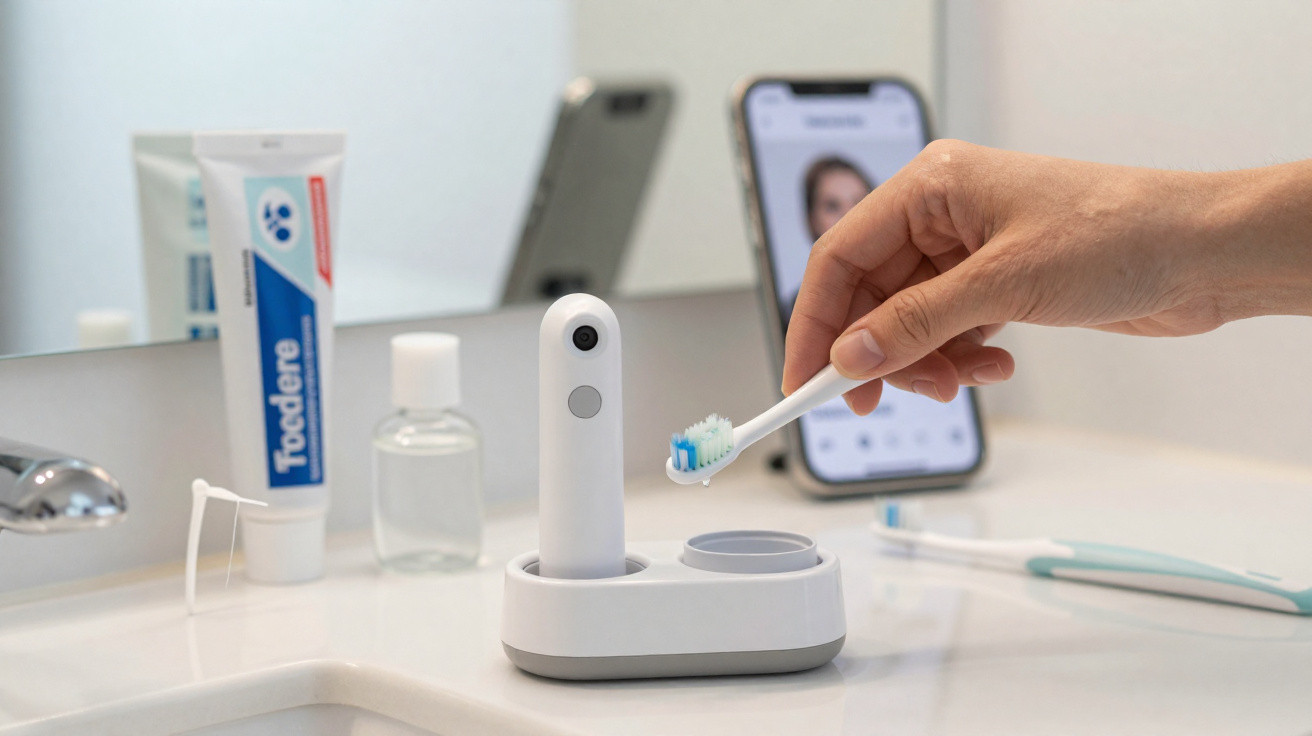
Brushing twice a day is familiar, but cleaning between teeth is where many routines fall apart. Floss can feel fiddly, interdental brushes need the right fit and water flossers take up space. A camera-equipped toothbrush promises to make those hard-to-see areas more obvious while combining several steps in one routine.
That could be useful for people who regularly miss parts of their mouth - but the camera is not the important bit on its own. The real test is whether the device helps you clean gently and consistently, without replacing the methods your dentist or hygienist has recommended.
What a camera toothbrush can - and cannot - do
A camera toothbrush generally combines powered brushing with a small lens near the brush head. Some designs may also use a jet of water or mouthrinse aimed between teeth. The live view is usually shown through a companion app on a phone.
In theory, this could help you notice food debris, plaque build-up or areas you routinely rush over. It may also encourage a more methodical clean if you are someone who responds well to visual prompts.
However, a camera cannot diagnose gum disease, decay, cracked fillings or infection. It also cannot tell whether an interdental space needs floss, a particular size of interdental brush or another approach.
A clearer view of your teeth may improve awareness, but good technique and a consistent routine still matter most.
Why cleaning between teeth still matters
A toothbrush cleans the front, back and chewing surfaces of teeth, but bristles do not always reach properly between neighbouring teeth. These spaces can trap food and plaque, particularly around the back teeth and near the gumline.
Dentists and hygienists commonly advise cleaning between teeth once a day. The most suitable tool depends on the shape of your teeth, the size of the gaps and any dental work you have.
Common options include:
- Interdental brushes, which can work well where there is enough room between teeth;
- Floss or dental tape, often helpful for tighter contacts;
- Water flossers, which some people find easier to use, especially around braces or certain dental work;
- Specialist tools, recommended by a dental professional for bridges, implants or orthodontic appliances.
A jet of liquid may feel thorough, but it should not automatically be assumed to do the same job as a correctly sized interdental brush or floss. If you have bleeding gums, implants, braces, a bridge, loose teeth or ongoing treatment, ask your dental team what is appropriate for you.
The practical appeal of a built-in camera
The strongest case for a camera toothbrush is behavioural rather than clinical. If it makes you slow down, follow the same route around your mouth and stop skipping awkward areas, it may support better everyday habits.
It may suit people who:
- enjoy guided routines and app-based reminders;
- struggle to see their back teeth clearly in a mirror;
- often brush too quickly;
- want a single device rather than several separate tools;
- are motivated by visual feedback.
It may be less appealing if you prefer a simple, screen-free routine. A live camera view can be distracting, particularly if it makes you chase the “perfect” image instead of cleaning calmly and systematically.
There is also a privacy point. If an app records images or brushing data, check what is stored, whether it is uploaded and how you can delete it. Read the privacy settings before connecting any oral-care device to your phone.
A sensible way to use one
1. Begin with the basics
Use a fluoride toothpaste and brush for the time stated in the device instructions. For most adults in the UK, toothpaste containing 1,350 to 1,500 parts per million fluoride is a typical choice, unless a dentist has advised something different.
Hold the brush gently at the gumline. Let the powered bristles work; pressing harder does not create a better clean and can irritate gums.
2. Follow the same route every time
Start in one place and work around the mouth in a fixed order:
- outer surfaces of the lower teeth;
- inner surfaces of the lower teeth;
- chewing surfaces;
- repeat on the upper teeth.
Use the camera, if your device has one, to check that you have not missed an area - not as a reason to keep moving the brush around at random.
3. Keep interdental cleaning in your routine
Clean between teeth at a time that works for you. Many people find it easiest to do before brushing, so fluoride toothpaste remains on the teeth afterwards.
If you use mouthwash, do not use it immediately after brushing unless your dental professional has advised otherwise. Rinsing straight away can wash away fluoride left by the toothpaste.
Choosing toothpaste and mouthrinse carefully
Some camera-based systems may recommend a low-foaming or SLS-free toothpaste to help keep the lens clearer. Sodium lauryl sulphate, often shortened to SLS, is a foaming ingredient found in many toothpastes.
There is nothing inherently wrong with SLS-free toothpaste, but it is not automatically better for everyone. The priority is choosing a toothpaste with suitable fluoride content and one that you are comfortable using twice daily.
If a toothbrush uses a refillable liquid reservoir:
- use only liquids approved in its instructions;
- do not add essential oils, homemade mixtures or concentrated products;
- do not dilute products unless the manufacturer specifically says to;
- check whether the rinse contains fluoride, alcohol or other ingredients that may not suit you;
- speak to a dentist, pharmacist or hygienist if you are unsure.
Do not change a prescription toothpaste or a dentist-recommended routine purely to accommodate a gadget.
Cost, refills and bathroom reality
Before buying any premium toothbrush, look beyond the headline price. A connected device can involve replacement heads, liquid refills, charging accessories and potentially a subscription or app account.
Check these practical details first:
- the cost and availability of replacement brush heads;
- whether refills are proprietary and how often they are needed;
- the size of the handle, charging dock and storage case;
- whether it can travel easily;
- cleaning requirements for the nozzle, reservoir and dock;
- warranty terms and return options;
- whether the app works with your phone and receives security updates.
Verify the current price, compatibility and ongoing costs directly with the retailer or manufacturer before committing. A good electric toothbrush combined with appropriately sized interdental brushes may be a much simpler and less expensive option for many households.
Common mistakes to avoid
Even advanced equipment can be undermined by ordinary errors.
- Pressing too hard. A powered toothbrush needs light pressure.
- Treating a liquid jet as a guaranteed replacement for floss or interdental brushes. Your mouth may need a different approach.
- Skipping fluoride toothpaste. A clear camera lens is not more important than fluoride protection.
- Using the camera as a diagnosis tool. Images cannot replace dental examinations.
- Ignoring worn brush heads. Replace them according to the manufacturer’s guidance, or sooner if bristles are splayed.
- Putting unsuitable liquids into a reservoir. This can damage the device and may irritate your mouth.
- Neglecting cleaning. Damp docks, reservoirs and brush heads need regular care as directed.
Safety and hygiene in a shared bathroom
Never share brush heads. Rinse and store the brush as instructed, and do not insert pins, wire or other sharp objects into a camera opening or water nozzle.
Keep chargers, plugs and cables dry and away from the bath or a full basin. Do not use a device while it is charging unless its instructions explicitly say this is safe. Replace damaged cables or chargers rather than trying to repair them yourself.
See a dentist if your gums bleed regularly, your teeth feel loose, you have persistent bad breath, pain, swelling or a sore that does not heal. A camera may show an area that looks different, but only a dental professional can assess what is causing the problem.
The best oral-care tool is the one you can use gently, thoroughly and every day.
Is it worth trying?
A camera toothbrush could make brushing feel more focused for someone who likes technology and needs help building a better routine. Its value lies in supporting regular, careful cleaning - not in turning your phone into a dental surgery.
If you are considering one, think first about your existing habits. If you already brush well and use the right interdental tool daily, a camera may add little. If you regularly skip the spaces between your teeth, it could be a useful prompt, provided it fits your budget and your dentist agrees it suits your needs. Keep the basics in place: fluoride toothpaste, gentle brushing, daily interdental cleaning and regular dental check-ups.











Comments
No comments yet. Be the first to comment!
Leave a Comment