
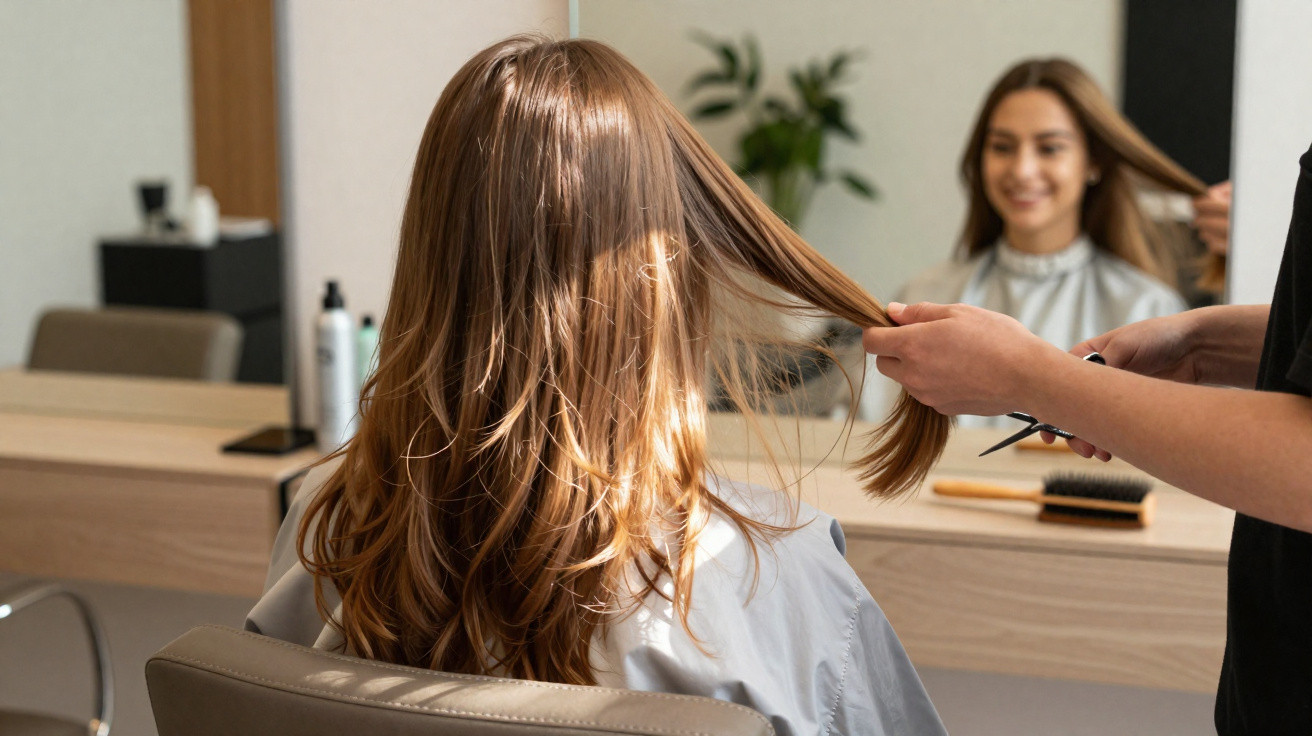
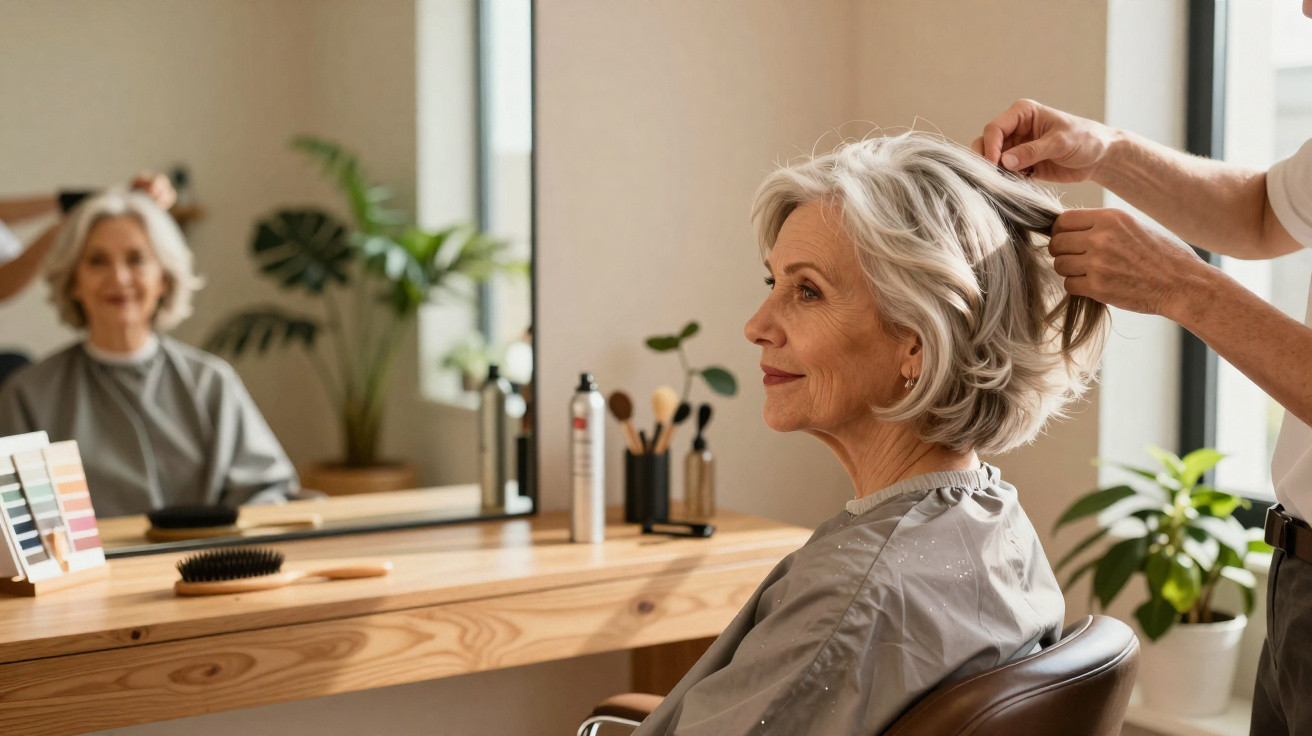
They stood before the salon mirror, rolling a silver strand between their fingers. “I don’t get it,” they said to the hairdresser. “I like my grey. But why does it look so… tired?”
The stylist moved closer, drew a comb through their hair and smiled. “You’re not old,” she said softly. “Your shampoo routine is.”
Grey hair has an unusual superpower. On one day, it can appear crystalline, almost illuminated from within. The next, it seems flat, slightly yellow and strangely coarse to the touch.
In most bathrooms, though, age and genetics are not to blame. The offender is sitting on the shower shelf in a small, perfectly innocent-looking bottle.
One everyday washing habit is quietly draining its shine.
The sneaky mistake that makes grey hair look dull
When people are asked why their grey hair has lost its life, the replies tend to be familiar: “I’m getting older”, “My hair’s just not the same”, “It’s probably hormones”.
Hardly anyone looks at what happens in the shower, even though that is often where the damage starts.
Because grey hair contains less pigment, it reveals everything: pollution, minerals in the water, leftover residue and harsh formulas.
Still, many people wash their silver hair with precisely the same shampoo they used on their dark hair at 25.
The same formula, the same frequency, the same hurried scrub before rushing out of the house.
The usual error is washing grey hair too frequently with a powerful clarifying or “deep clean” shampoo, while leaving out the products that genuinely nourish and protect it.
It is stripped day after day, covered in sulphates and intense fragrances.
Then people wonder why it becomes frizzy, dull and faintly beige rather than luminous.
One Tuesday morning in London, a 52-year-old communications consultant shared her experience as we waited for our coffees.
After lockdown, she had chosen to “go grey” and felt proud of the silver streak at her temple.
Yet whenever she saw herself on Zoom, her hair appeared flat and exhausted.
So she became even more determined to get it “clean”.
She purchased a powerful detox shampoo, washed daily, avoided conditioner “to avoid weighing it down”, and rubbed her towel over her hair as though polishing a car.
Three months later, her stylist gently told her: “Your grey isn’t the problem. Your routine is burning the shine out of it.”
Her story is far from unusual. A small 2023 consumer survey by a UK haircare brand found that more than 60% of people with natural grey hair wash it more often than they once did, frequently using the harshest formulas.
The reasoning seems straightforward: if hair looks dull, it must be dirty. So they scrub more vigorously.
But the outcome is the reverse of what they hope for: the cuticle lifts, the surface grows rougher and light can no longer bounce back.
Scientifically speaking, grey hair is not “dead hair”. It is simply hair with reduced melanin, often with a changed texture too.
Melanin once provided a natural layer of protection, helping to disguise minor flaws and subtle yellow tones.
When it disappears, product build-up, hard-water mineral deposits and sebum imbalance all remain visible on the surface, like dust on glass.
Strong shampoos containing sulphates remove oils aggressively, prompting the scalp to produce extra sebum in return.
Roots therefore feel greasy more quickly, people wash more often and the cycle repeats.
Meanwhile, the lengths become dry, porous and fragile, causing grey strands to lose their crisp, reflective sheen and take on a cloudy appearance.
This “too clean, too often” approach is what can make grey hair seem older than you are.
Not the colour. Not the number of candles on your cake.
Simply the wrong sort of foam.
The wash routine that makes grey glow again
The answer is not hidden in a miracle mask or a £40 serum. It begins with changing how you wash your hair.
Think less “scouring pad” and more “gentle rinse for a silk scarf”.
The first change is easy: replace harsh daily cleansing with a milder routine, spaced further apart.
Most experts recommend washing grey hair every 2 to 4 days, using a gentle sulphate-free shampoo only on the scalp.
Allow the lather to run down the lengths rather than scrubbing them aggressively.
Once or twice each month, introduce a targeted step: use a gentle violet or blue shampoo to counter yellow tones, leaving it on for only a couple of minutes.
Always follow this with a lightweight hydrating conditioner from the mid-lengths to the ends.
Grey hair needs moisture and slip to reflect light; it does not need to feel squeaky-clean and stripped.
Let’s be honest: nobody really does this perfectly every day.
Most people get into the shower, scrub their scalp for 30 seconds, rinse in a rush and move on to the next task.
That is how dullness quietly takes hold.
Common grey-hair washing mistakes can sound harmless.
For instance, using very hot water because it “feels more cleansing” can open the cuticle and promote frizz.
Or there is skipping conditioner “to keep volume”, only to attack the hair with a rough towel and an overly hot hairdryer.
There is also the issue of “over-toning”.
Purple shampoos can be useful, but using one at every wash may dry the hair and leave a strange, dull lavender tint.
At the other extreme, family-size shampoos packed with heavy silicones can create a plastic-like layer that builds up, leaving grey hair waxy instead of bright.
The most effective routine may look unexciting on paper, but it can be transformative in everyday life.
Use lukewarm water, massage gently at the roots, then take a moment to detangle beneath conditioner with your fingers or a wide-tooth comb.
Afterwards, reach for a soft microfibre towel rather than that old, coarse bath sheet from 2008.
We’ve all lived that moment when we catch our reflection in a shop window and think: “Wow, my hair looks… tired”.
That is rarely the day you suddenly “got older overnight”.
It is usually the day your routine finally became visible on camera.
“Grey hair is like a white T‑shirt,” says Paris-based colourist Anaïs M. “Treat it harshly and it will yellow, pill and lose its shape. Treat it gently and it stays crisp, bright and effortlessly chic.”
In practical daily terms, that means making small, useful choices.
Nothing showy, just habits that quietly add up.
- Wash with lukewarm water, then finish with a brief cool rinse for added shine.
- Massage the scalp with your fingertips rather than your nails for 30–60 seconds.
- Put conditioner on the lengths only, leave it for 2–3 minutes and rinse thoroughly.
- Gently blot hair with a soft towel or cotton T-shirt instead of rubbing it.
- Set heat tools to medium and apply a heat-protectant spray.
One considered wash will not transform everything.
However, after two weeks of this gentler approach, people are often heard saying, half-surprised: “My grey actually looks… expensive now.”
That is the understated benefit of not assaulting your own hair.
Grey hair as a statement, not a sentence
Grey hair is more than a change in colour. It can be a social signal, a personal story and a choice to appear without camouflage.
Some describe it as “giving up”. Others regard it as the boldest kind of style: turning up exactly as you are.
That is why this washing mistake can have such an emotional impact.
When grey hair looks dull and weary, it is easy to turn the blame inwards.
“Maybe I really do look old. Maybe I can’t pull this off.”
In truth, the cause is almost insultingly ordinary.
Too much cleansing and not enough conditioning.
Too many products marketed through fear of ageing, and too few honest discussions about what grey hair truly requires.
Adjusting your wash routine can feel surprisingly personal, almost like renegotiating your relationship with your reflection.
You stop forcing the hair into submission and start working with its texture.
You move away from trying to erase the grey, towards making it cleaner, brighter and more deliberate.
Hairdressers frequently see a change in attitude before they see a change in shine.
Three weeks after changing shampoo, clients return with comments such as, “I feel less scruffy on camera,” or “People keep asking if I’ve done something new to my hair.”
There is nothing dramatic about it. It is simply grey hair finally catching the light as it was always meant to.
The shower mistake creates the myth seen in the mirror: that grey is naturally dull, and that it must be fought, coloured or concealed.
Letting go of that one harsh habit makes space for something gentler.
Not only better hair, but also a quieter kind of confidence.
The next time you notice someone whose silver hair appears to glow, remember: you are not admiring their age.
You are probably admiring their routine.
And unlike your date of birth, that is entirely in your hands.
| Key point | Detail | Benefit for the reader |
|---|---|---|
| Washing too often with harsh shampoo | Removes natural oils, roughens the cuticle and leaves grey hair flat and frizzy | Helps explain why hair can look dull even when it is “very clean” |
| Gentle, spaced-out washing routine | Sulphate-free shampoo, 2–4-day intervals and conditioner on lengths only | Provides a clear routine for restoring shine and softness |
| Small daily habits | Lukewarm water, a soft towel, limited heat and occasional violet shampoo | Straightforward changes to begin tonight without replacing everything in your bathroom |













Comments
No comments yet. Be the first to comment!
Leave a Comment