
Many people appear to choose a hairstyle based on trends, face shape or convenience. Energy coaches and some hair professionals put forward a bolder idea: hair does not merely shape your appearance, but can also reflect your inner world. According to this view, particular cuts and styling choices are closely linked to psychological patterns, ranging from control to vulnerability.
Hair as a “psychological mirror”: why your cut says more than you think
Hair has held great significance in myths and religions for centuries, from Samson to the belief that hair stores life force. Modern symbolic interpretation builds on these ideas, presenting a hairstyle as a kind of “visible map” of inner tensions.
“People who arrange their hair are often trying to arrange their inner world too – consciously or unconsciously.”
An energy specialist and an experienced master hairdresser have identified five hairstyle types that are thought to point particularly clearly to emotional themes. These are not diagnoses, of course, but possible clues: the way you wear your hair may reveal where you protect yourself, where you allow yourself to be seen and where you seek balance.
1. An open forehead: the urge to present yourself clearly
With swept-back hair and an uncovered forehead – whether in a ponytail, bun or a firmly gelled-back style – the face takes centre stage without protection. The forehead, one of the most expressive facial areas, is completely exposed.
People who choose this hairstyle often send a clear message: “I stand by who I am.” It is frequently linked to:
- a strong determination to tackle challenges directly
- little fear of being judged by others
- a need for transparency and clarity in life
- a sharp focus on achievement and control
However, an exposed forehead can also function as a type of armour. Someone who appears especially decisive on the outside may sometimes be concealing deep insecurity underneath. In that case, the “power look” creates order and conveys an inner steadiness that is not yet fully in place.
When this hairstyle becomes a warning sign
It may become problematic if you feel “naked” or insufficiently present without tightly pulled-back hair. The look may then indicate a rigid life in constant functioning mode: having to be strong, pushing through and showing no weakness. It is worth asking: can my face look soft sometimes – and am I still OK then?
2. A centre parting: the search for inner balance
In symbolic terms, a centre parting is seen as a line between two poles: inner and outer life, logic and emotion, quiet withdrawal and decisive action. Those who wear this hairstyle often express a strong desire for balance.
Typical underlying emotional themes include:
- a need for harmony and discomfort with conflict
- an attempt to be equally “fair” in rational and emotional terms
- sensitivity to imbalances at work, in relationships and in everyday life
It becomes particularly interesting when the parting is not precisely central but slightly off-centre. In this interpretation, it may suggest that one inner side is more dominant or suppressed.
Side parting: what the left and right sides may symbolise
In many psychological and spiritual models:
| Side | What it often represents | Possible message of an off-centre parting |
|---|---|---|
| Left side of the head | Emotion, intuition, softer qualities | More pronounced: rationality is favoured at the expense of emotion |
| Right side of the head | Structure, achievement, goal orientation | More pronounced: inner softness and calm are given too little space |
Anyone who constantly works at achieving the perfect parting with a comb may be struggling with more than styling; they may also be striving to feel internally “complete” and in control.
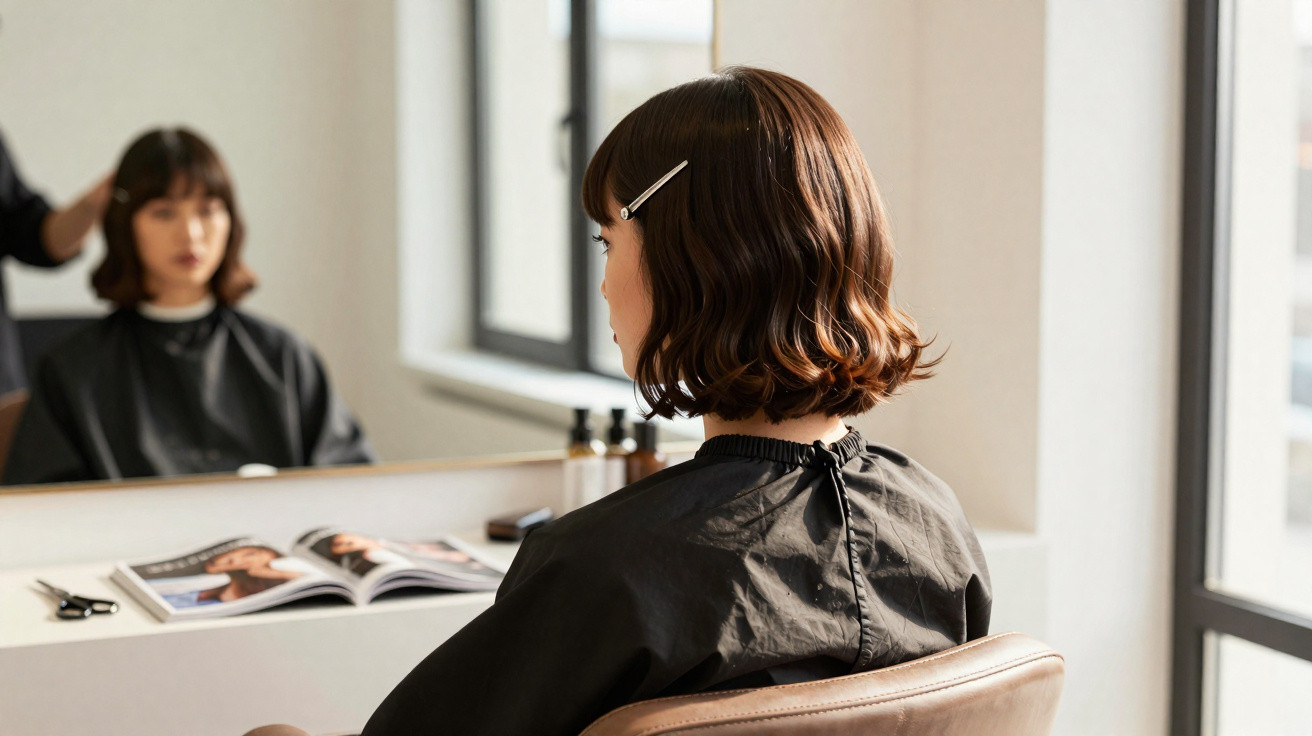
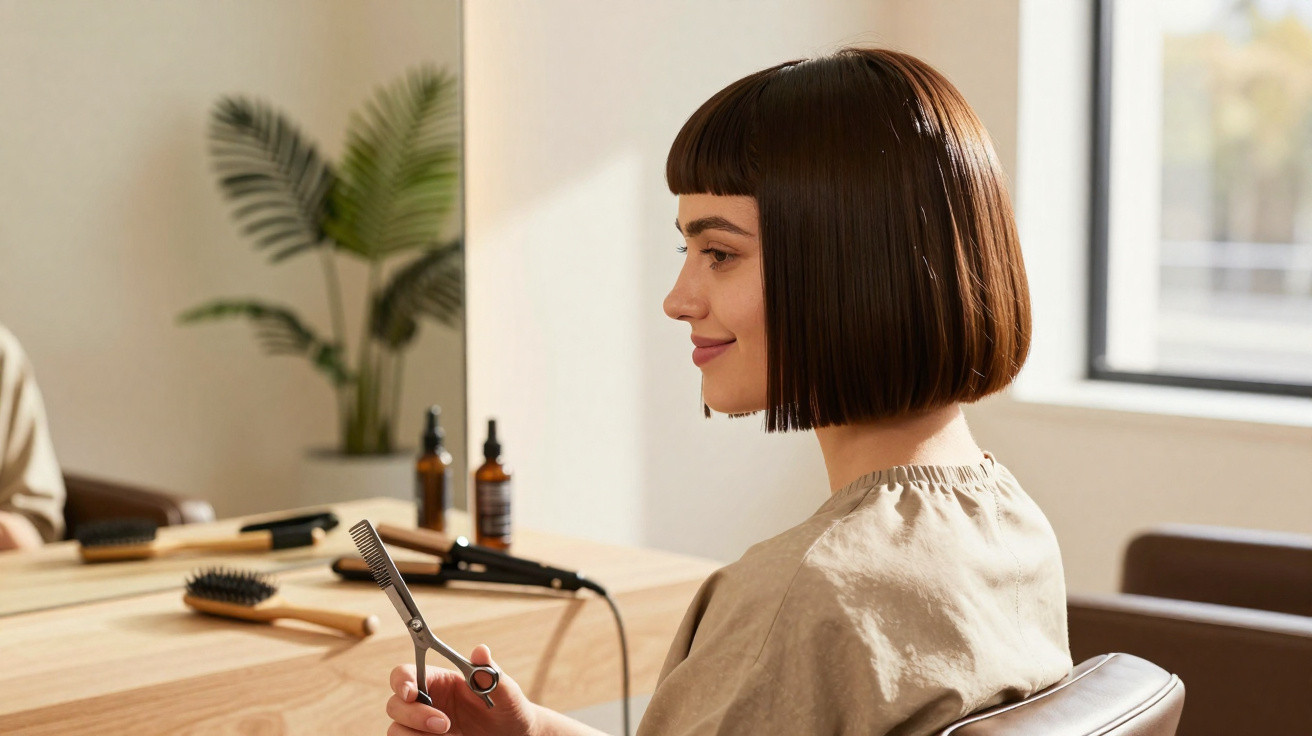
3. A fringe: a soft shield from the outside world
A fringe – whether long, short, thick or wispy – falls across the forehead like a small curtain. Symbolically, it creates a protective barrier between you and other people’s gaze.
This choice is often connected with themes such as:
- fear of revealing too much of yourself
- awkwardness around direct eye contact
- a need for protection after vulnerable periods or break-ups
- a desire for playful, childlike lightness away from the harsh demands of adult life
“A fringe acts like a filter: you see the world – but no longer in such an unfiltered, direct way.”
Long versus light fringe: how strong is your inner protection?
The thicker and longer the fringe, the stronger the protective motif appears to be. Someone who almost disappears behind a curtain of hair may be trying to guard against excessive sensory overload or the judgement of others.
A relaxed, lightly thinned-out fringe, by contrast, suggests people who remain cautious but are gradually stepping out of cover. They may not want to be completely “on display”, yet they accept that their emotions can be visible.
4. An exposed nape: the wish to show your true self
In many body-reading concepts, the nape is regarded as a highly sensitive area. It represents vulnerability and authenticity – the place where we either “have our back covered or we do not”.
A short hairstyle or cut that reveals the nape may signal:
- a willingness to show yourself more honestly in relationships
- a feeling that your inner self and outward role are becoming more aligned
- a wish to free yourself from old patterns or social roles
After major life changes – a separation, career move or house move – many people deliberately opt for a cut that exposes the nape. The change then also marks something outwardly: “I am starting again, without camouflage.”
When the nape remains covered
Long hair falling low over the nape, scarves and high collars can point to a different inner state: a person may prefer to keep their deepest self covered, present a capable exterior to the world and protect their vulnerable back at the same time.
An intriguing question is: when do you feel freer – with your hair pinned up or worn loose over your nape? Your immediate answer often says a great deal about trust and your need for closeness.
5. Exposed temples: how much closeness do you allow?
The temples sit at the sides of the head, where impressions from the surrounding environment seem to reach us sideways. In symbolic interpretation, uncovered temples suggest that a person is ready to turn towards the outside world.
Those who wear the sides shorter or deliberately tuck their hair behind their ears often signal:
- an interest in exchange, dialogue and discussion
- a willingness to engage with other perspectives
- greater openness in contact, both professionally and privately
When long strands fall over the sides instead, they create a kind of side “curtain”. This hairstyle may indicate people who listen more closely to their inner world, are cautious and open up only gradually.
“Side strands work like two small curtains – they keep people at a distance before anyone can truly get close to you.”
Playing with the sides: a simple self-test
If you are unsure how strongly this theme applies to you, try a simple test: comb all your hair away from your face, uncover your temples and observe your body. If discomfort arises, or even the feeling of being “too exposed”, there is often more behind it than a mere styling habit.
Hair as a daily seismograph of your mood
Hairstyles are never permanent. People often change their cut when their lives shift: a new relationship, a new job, the birth of a child or saying goodbye to an old role. At precisely such times, the urge to finally see an inner feeling reflected in the mirror can become stronger.
Many people say that, after a dramatic cut, they suddenly act more confidently, say no more clearly or sense their boundaries more effectively. Others find that a softer, more playful look makes them feel less pressure to perform and more connected to their sensitive side.
How to interpret and use your own hairstyle consciously
Anyone wishing to apply this knowledge in practice can use a few guiding questions:
- Which parts of my face do I like to cover – my forehead, temples or nape?
- Do I feel safer with strict styling than with loose, natural waves?
- When in my life did I make a major change to my hairstyle – and what was happening in the background at that time?
- Would I dare to wear a more open or honest version of my hair for a week?
The point is not to pathologise every fringe or ponytail. The symbolism only becomes interesting when it fits your everyday reality: for instance, do you feel permanently watched while also choosing a very exposed, “loud” look? Or do you want to remain invisible, yet bury your face entirely beneath your hair?
If you want to, you can start a conversation with a hairdresser who is open to these subjects. Many professionals have long sensed intuitively that there is usually more behind the words “I need something new” than boredom with the mirror.
Ultimately, hair grows back, attitudes change and identities do too. Your current hairstyle is not a judgement, but rather a snapshot – a quiet indication of where you are internally right now and how much of it you wish to show the world.










Comments
No comments yet. Be the first to comment!
Leave a Comment