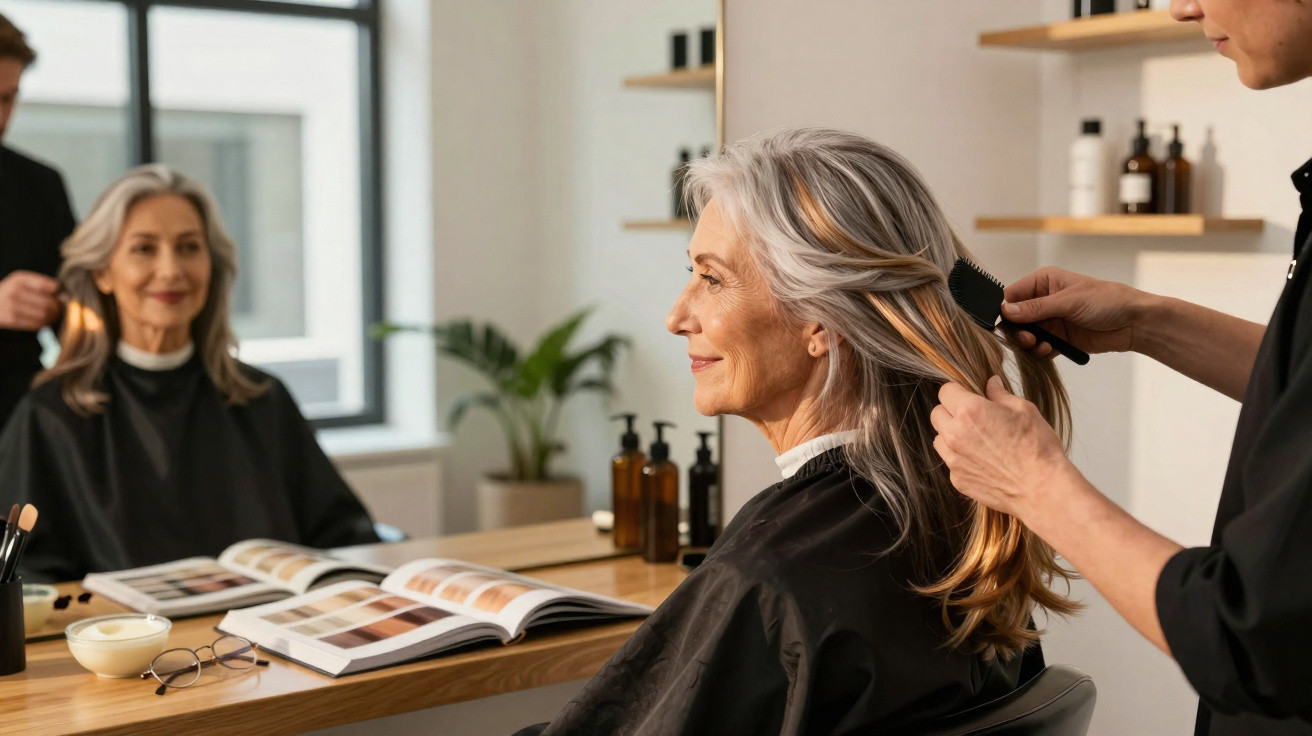
Some women try to conceal their grey hair after their 60th birthday, only to end up with a shade that unintentionally makes them look harsher and older.
The right hair colour can soften the appearance of fine lines, make the complexion look fresher and give the face a subtle visual lift. The wrong shade, on the other hand, accentuates every line, leaves the skin looking dull and creates precisely the “granny effect” nobody wants. An experienced hairdresser explains which three colouring choices are particularly deceptive – and which alternatives can genuinely create a more youthful look.
Jet black and very dark brown: harsh edges rather than soft contours
The first classic trap from around the age of 60 is an extremely dark shade. Many women choose deep black or very dark brown to cover grey strands completely. It can look elegant and glamorous in the photograph on the colour-pack instructions, but everyday results are often the opposite.
As skin ages, it tends to lose some of its radiance. A stark, near-black frame around the face intensifies that effect. Wrinkles, lines around the mouth and nose, and shadows beneath the eyes all become far more noticeable.
“Very dark colours highlight every unevenness in the face and, figuratively speaking, add ten years.”
There is another consideration: at-home hair colours have a tendency to develop darker than expected. Many users leave the product on for too long or immediately select the deeper shade because they are worried the result will be too light. The outcome is hair that resembles a helmet and has little to do with the wearer’s natural radiance.
What works better instead:
- Choose a shade one or two levels lighter than the intended colour
- Favour warm, slightly translucent brown shades rather than black
- Add fine highlights to retain depth and movement
- Refresh the roots regularly, but do not recolour the lengths completely every time
Anyone who has coloured their hair very dark for years will usually need patience. A good salon can gradually lift the colour using gentle lightening, glossing treatments and highlights, so that the result does not become patchy or develop red undertones.
Extreme blonde shades: from yellow tones to a Snow White complexion
The second hair-colour pitfall is overly dramatic blonde. Many women want to look “light and fresh”, but fall into one of two traps: a yellow cast or an icy finish. Both can be very unflattering, especially once skin texture has begun to change.
Blonde that is too yellow can easily make hair look damaged and uncared for. Alongside it, the complexion can quickly appear tired. Extremely pale, cool platinum shades are even more problematic. They can make facial skin look greyer, remove warmth from the face and resemble artificial hair rather than a high-quality colour treatment.
“A blonde that is too far removed from the natural colour can wash out the face and drain all colour from the cheeks.”
For this reason, professionals advise staying close to the original base colour. Those with naturally dark blonde or light brown hair tend to suit soft golden or honey-toned accents much better than a drastic polar blonde.
How blonde can look more modern after the 60th birthday
Rather than an “all-over blonde from a box”, graduated levels of lightness look much softer. Carefully placed highlights around the face add freshness without overwhelming the complexion. In a salon, these effects can be achieved with techniques such as:
- Balayage for soft, seamless transitions
- Face-framing highlights, meaning lighter strands placed only around the face
- Glossing treatments, which subtly adjust the tone and add shine
A practical rule of thumb is to go no more than one or two shades lighter than your natural hair colour. If significantly more make-up is needed to avoid looking “pale”, the chosen shade is usually not the right one.
Solid all-over colour: flat, severe and dated
The third classic choice that immediately signals “old-fashioned” is one uniform colour from roots to ends – with no reflection, depth or play of light. These full-colour treatments may look stylish on a colour swatch, but in real life they can quickly resemble a rigid block of colour.
Especially on more mature hair, a completely even shade visually takes volume away from the hairstyle. Individual strands merge into one surface, the head can appear smaller and the hairline becomes harsher. Wrinkles stand out more because the face lacks a soft frame.
“Colours without tonal variation and reflections make every hairstyle appear flatter – and can make even a perfect haircut look boring.”
That is why professionals deliberately work with different tones, even when the overall effect appears to be “one colour” at first glance. Even slight variations of half a tone, distributed skilfully, can create movement and vitality.
Why reflections and contrasts have such a rejuvenating effect
The human eye is drawn to contrast. Small light-and-dark variations in hair create an impression of fullness, dynamism and freshness. Anything that recalls naturally lightened summer strands automatically appears more youthful – without the need for drastic colour experiments.
Typical face-flattering salon techniques include:
- Balayage: A freehand technique in which lighter sections are blended in softly
- Ombré: The lengths and ends are lighter than the roots, while the transition remains soft
- Hair contouring: Lighter and darker sections are placed to visually sculpt the face
Many hairdressers also advise women over 60 not to colour away their natural grey completely. Silver grey refined in either a cool or warm tone, with shine, can look far more modern than an overly dense, uninspiring tint.
Which hair colours after 60 are truly flattering
The trend shade seen on social media is not what matters; the key is the individual combination of skin undertone, eye colour and starting hair colour. In general, the following directions are especially harmonious:
| Starting hair colour | Recommended direction |
|---|---|
| Dark brown | Soft, warm chocolate-brown tones, caramel highlights |
| Medium brown | Hazelnut and mocha shades, with golden reflections around the face |
| Dark blonde | Honey, caramel or beige blonde, with soft balayage |
| Light blonde | Golden or champagne blonde, not extreme icy blonde |
| Heavily grey hair | Refined silver grey, delicate taupe or pearl tones |
A good colourist considers the face as a whole, rather than looking only at the hair colour. Red veins, pigmentation marks and dark circles can all be visually softened with the right shade. Those who often wear beige or rose-toned clothing generally also benefit from warmer reflections in their hair.
Care, texture and risk factors: what mature hair needs in addition
Age changes not only hair colour but also its texture. Many people notice dry ends, limp lengths and increased frizz. Any colour treatment, particularly dramatic lightening, can intensify these concerns.
To prevent breakage and dull lengths, it is worth following a care routine:
- Shampoos and conditioners for coloured hair, to help pigments last longer
- Weekly masks or intensive treatments for dryness
- Heat protection before blow-drying or using straighteners
- Regular trims every six to eight weeks
Anyone taking medication more frequently or experiencing health changes should arrange a consultation at a salon before making a major colour change. Some medicines can affect how hair reacts to colour, cause it to break more easily or make the result uneven.
Allergy risk is another important issue. Someone who coloured their hair without problems in the past may still become sensitive later on. An allergy test before trying a new hair colour can prevent unpleasant surprises on the scalp.
Embracing grey – when natural colour suddenly becomes a trend
More and more women are consciously choosing not to keep recolouring their hair and are allowing their grey to grow out. With the right tint or a glossing treatment, it can become an elegant silver shade that looks anything but “old”. Slightly cool, glossy grey tones look very modern, particularly when paired with a precise haircut.
To make the transition from coloured hair to natural grey more comfortable, many salons use fine highlights around the roots. This makes the contrast less obvious. Purple or blue-toned care products can neutralise yellow tones in grey hair and leave it looking fresher.
Ultimately, it is worth taking an honest look in the mirror: which colour makes the complexion look lively, adds brightness to the eyes and brings compliments from those around you? Usually, it is not the most radical option, but the most nuanced one – far removed from jet black, extreme blonde and rigid all-over colour.








Comments
No comments yet. Be the first to comment!
Leave a Comment