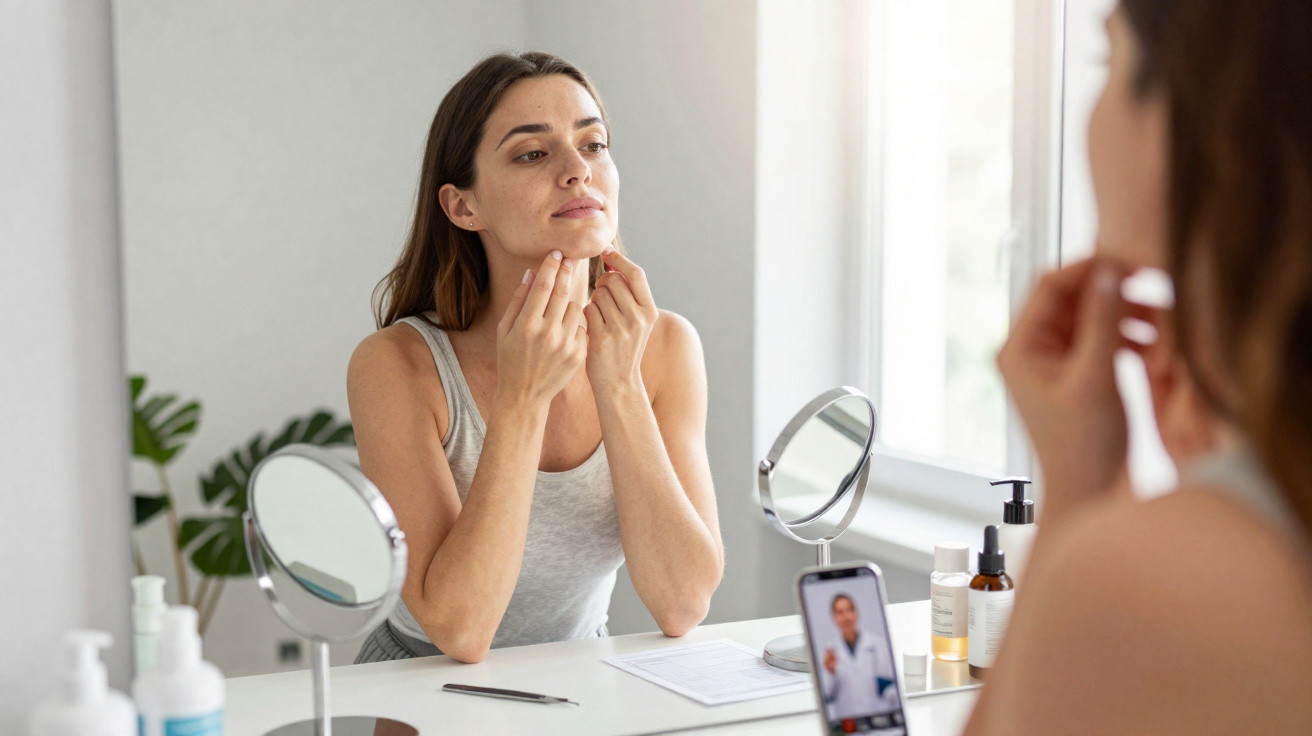
A few darker hairs on the chin are often seen as embarrassing, and many women discreetly pluck them in the bathroom. Influencers are now sharing their epilation sessions on social media, helping to challenge the taboo. At the same time, many people wonder: is this still normal, or could it indicate a hormonal problem? An experienced gynaecologist explains where the boundaries lie and which signs should be taken seriously.
Fine down or noticeable bristles: what is still normal?
All women have facial hair, including on the chin. In most cases, it is so fine and light that it is barely visible. Clinicians refer to this as physiological down. Pressure tends to arise only when the hairs become thicker, darker and more numerous: women may feel “unfeminine” and start trying to hide or cover them.
The extent of facial hair is heavily influenced by genetics. Slightly more pronounced facial hair is more common in some families. Ethnic background can also play a part: on average, women of Mediterranean or Middle Eastern heritage have more numerous and coarser hairs, without this automatically being a medical problem.
“For many women, a little facial hair is simply genetic – it only becomes noticeable when it suddenly gets heavier or appears more masculine.”
As a broad rule of thumb, isolated darker hairs growing sporadically on the chin will often still fall within the normal range. However, rapidly increasing, dense growth that is almost beard-like should be assessed medically.
When hormones play a role: why the chin can suddenly change
Hormones are often behind increased hair growth. Male hormones, particularly androgens such as testosterone, have a key role even in the female body. Women produce smaller amounts in the ovaries and adrenal glands. If this balance is disrupted, hair follicles can respond very sensitively.
The turning point around the menopause
The hormonal balance changes significantly around the menopause. Levels of female hormones, especially oestrogen, decline. As a result, male hormones have a stronger relative effect, even if the absolute amount of testosterone remains unchanged.
For many women, this means less body hair on the legs and arms, while thicker hairs suddenly appear on the chin, upper lip or sideburn area. Often there are only a few hairs, but they are highly visible.
- It typically begins several years before the final menstrual period.
- Hot flushes, sleep disturbance or mood swings often occur at the same time.
- Skin may seem drier, thinner and more sensitive.
Provided the chin is mainly affected and there are no other signs of “masculinisation”, this process is usually harmless. It becomes more concerning if further symptoms develop, such as a deeper voice, noticeable muscle gain, hair loss on the scalp or menstrual irregularities while periods have not yet stopped completely. A doctor should then check for rare disorders of the adrenal glands or ovaries.
Young women and pronounced hair growth: a sign of a syndrome?
When women under 40 suddenly develop substantially more dark, thick hair – not only on the chin but also on the upper lip, chest, abdomen or back – specialists quickly consider a common hormonal syndrome: polycystic ovary syndrome, or PCOS.
This syndrome is among the most common hormonal disorders in younger women. It is generally linked with an excess of male hormones, which can present in several ways:
| Criterion | Typical signs |
|---|---|
| Irregular periods | Very long cycles, infrequent bleeding or periods stopping entirely |
| Androgen excess | Increased body hair, acne, oily skin and, in some cases, scalp hair loss |
| Changed ovaries | Numerous small follicles (“microcysts”) visible on an ultrasound scan |
If two of these three criteria apply, PCOS is highly likely. For those affected, this can initially be distressing, as questions about fertility and having children may suddenly arise. At the same time, many symptoms can now be managed effectively – and the earlier this happens, the better.
“PCOS is far more than a cosmetic issue: it raises the risk of blood sugar problems, later diabetes, overweight and disorders of fat metabolism.”
A full hormone assessment, an ultrasound scan of the ovaries, and discussions about periods and lifestyle can help clarify the situation. Even if chin shadow is the main concern, experts advise keeping the wider health risks in view.
When it makes sense to see a doctor
Many women put off addressing the issue for years, either through embarrassment or because they regard it as purely a “beauty problem”. However, clear signs can indicate that it is time to make an appointment at a gynaecology or endocrinology clinic:
- Rapid onset of noticeable dark hair on the face or body
- Other signs such as a deepening voice, acne, irregular periods or scalp hair loss
- Significant psychological distress caused by the hair growth, including withdrawing from social situations
- A family history of hormonal disorders, diabetes or severe menstrual problems
The assessment often includes a consultation, physical examination, blood tests to measure hormone levels and, depending on the circumstances, an ultrasound scan. Based on the findings, targeted treatments may then be started, including hormonal treatment, dietary changes or medication to lower androgen levels.
From tweezers to laser: what really helps with chin hair
Once serious causes have been ruled out or can be treated, the practical question follows: how can unwanted hairs be removed without damaging the skin?
Quick everyday options
For a few isolated hairs, most people reach for tweezers. It is quick, although it needs to be repeated regularly. Those dealing with a larger area often choose waxing or threading. Both methods remove hair from the root and can leave the skin smoother for several weeks.
Dermatologists tend not to recommend shaving the face. The skin on the chin is sensitive, so minor cuts, redness and razor burn can occur easily. Regrowing stubble also often feels coarser, increasing subjective distress, even though the hair does not objectively become thicker.
Longer-lasting methods with medical support
Anyone troubled by dense hair growth may soon consider more permanent approaches. The most widely used options include:
- Laser hair removal: A targeted light pulse destroys the hair root; several sessions are required, and it works best on fair skin with dark hair.
- Electrolysis: A fine probe destroys each individual hair root using an electrical current. It is highly precise but time-consuming, and is often used for small areas such as the chin or upper lip.
Both approaches should be carried out by a doctor or dermatologist, particularly where an underlying hormonal disorder is involved. Specialists will first review medication and hormone status; otherwise, new hairs may grow back quickly while existing hairs are being removed, creating a frustrating cycle.
“Cosmetic treatments work best when hormone levels remain stable. Otherwise, only the symptoms are being tackled, not the cause.”
The psychological impact – and what can genuinely ease it
Facial hair in women is still viewed by society as a flaw. Many affected women feel “disfigured” and avoid daylight or social contact without make-up. Studies show, however, that simply speaking openly to someone they trust can significantly reduce the pressure.
Helping to break the taboo can also make a difference: women share their routines, treatments and setbacks in forums and on social media. Realising, “I am not alone”, can make them judge their own hair growth less harshly. Psychological support may be appropriate when self-esteem and relationships are severely affected.
Key terms and background explained
The medical term “hirsutism” describes increased, male-pattern hair growth in women at typical sites such as the chin, upper lip, chest, abdomen or back. At first, it says nothing about the cause; it only describes the visible growth pattern.
Androgens is the collective term for male sex hormones. Among other things, they influence beard growth, muscle development and the skin’s sebum production. Women need them too, but in small quantities. Too much relative to female hormones produces the typical “masculinisation” of body hair.
It is precisely the combination of genetics, hormonal status and lifestyle that makes this issue so individual. Anyone severely affected by chin hair should discuss these factors with specialists. A combination of medical treatment, adapted skincare and selected aesthetic procedures can often produce a much better feeling about their skin and body.












Comments
No comments yet. Be the first to comment!
Leave a Comment