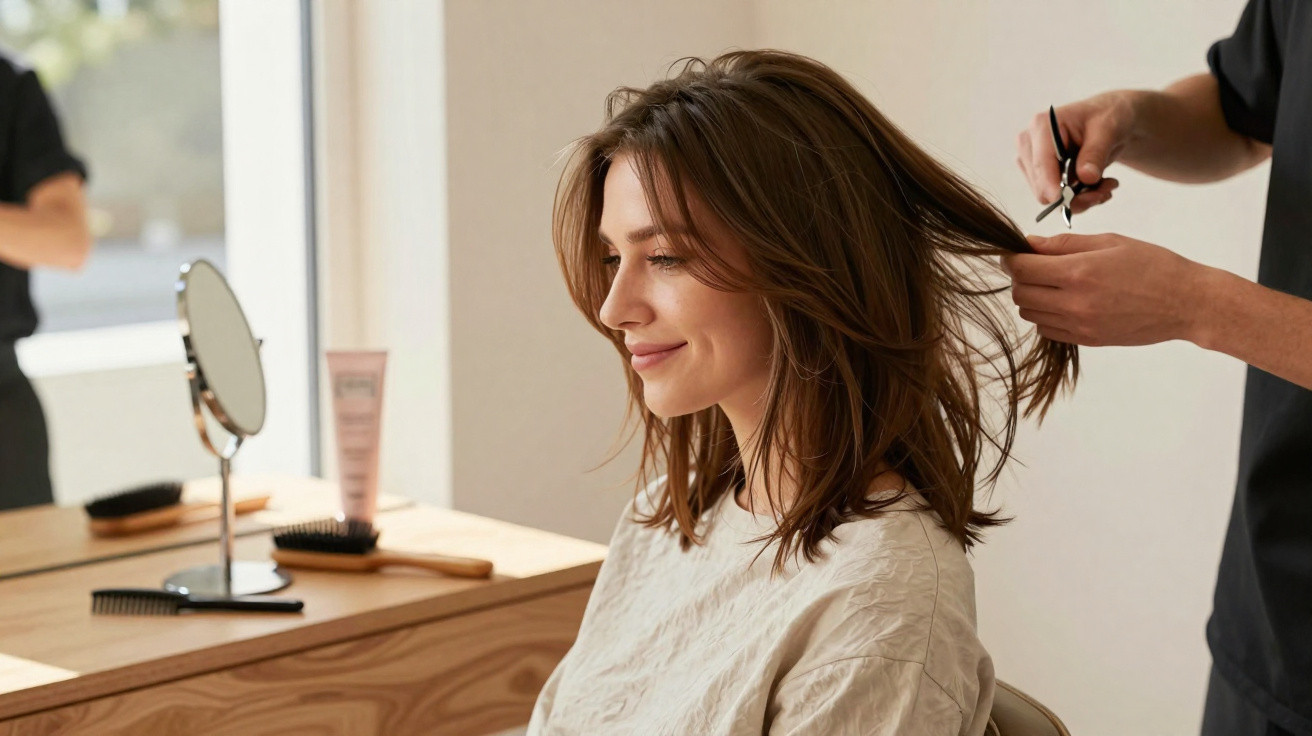
We all know that moment when a plait looks too prim, yet your mane feels too heavy. In the salon, the scissors hum, a few sections fall away, and suddenly everything moves as though someone has fitted a hidden spring. The outline still feels familiar, your face appears more open, and the ends rest lightly on your shoulders. You do not look overly styled, just more awake. That is the magic of a layered cut at medium length. And yes, there are good reasons for the hype.
Lasting movement: why shoulder-length layers work so well
Medium-length hair hits the sweet spot: long enough to have swing, yet short enough to feel light. Layers create space between the strands, remove weight in the right places and add volume without requiring a constant battle with a round brush. Around the chin and collarbone in particular, they produce a natural flow that can soften facial features. You can see the movement before you feel it. A well-cut layered style does not shout; it simply whispers: “I can do more when you want me to.”
The other day on the bus, there was a woman with a shoulder-length cut: a soft front layer beginning at the cheekbones and lightly thinned hair at the back. She took off her scarf, ran her fingers through her hair once, and it settled into shape by itself. No hairspray, no drama. This is precisely the aha moment many people describe after a salon appointment. The style grows out gracefully, and the transition stays soft even three weeks later. A good layered cut is like a built-in wind tunnel for your hair. Nothing exaggerated, just enough to catch the light.
Why is this especially suited to medium length? Long hair carries its own weight, while short hair often needs more styling to avoid looking rigid. At shoulder level, layers can shift volume upwards without leaving the ends sparse. The proportions work: chin, neck and collarbone create a visual line with the layers. This can make the neck look longer and the profile more defined. Medium length is the stage on which layers can truly perform. For fine hair, that means the appearance of density. For thick hair, it means controlled liveliness without that helmet-like feeling.
Choosing the right layers for your medium-length hair
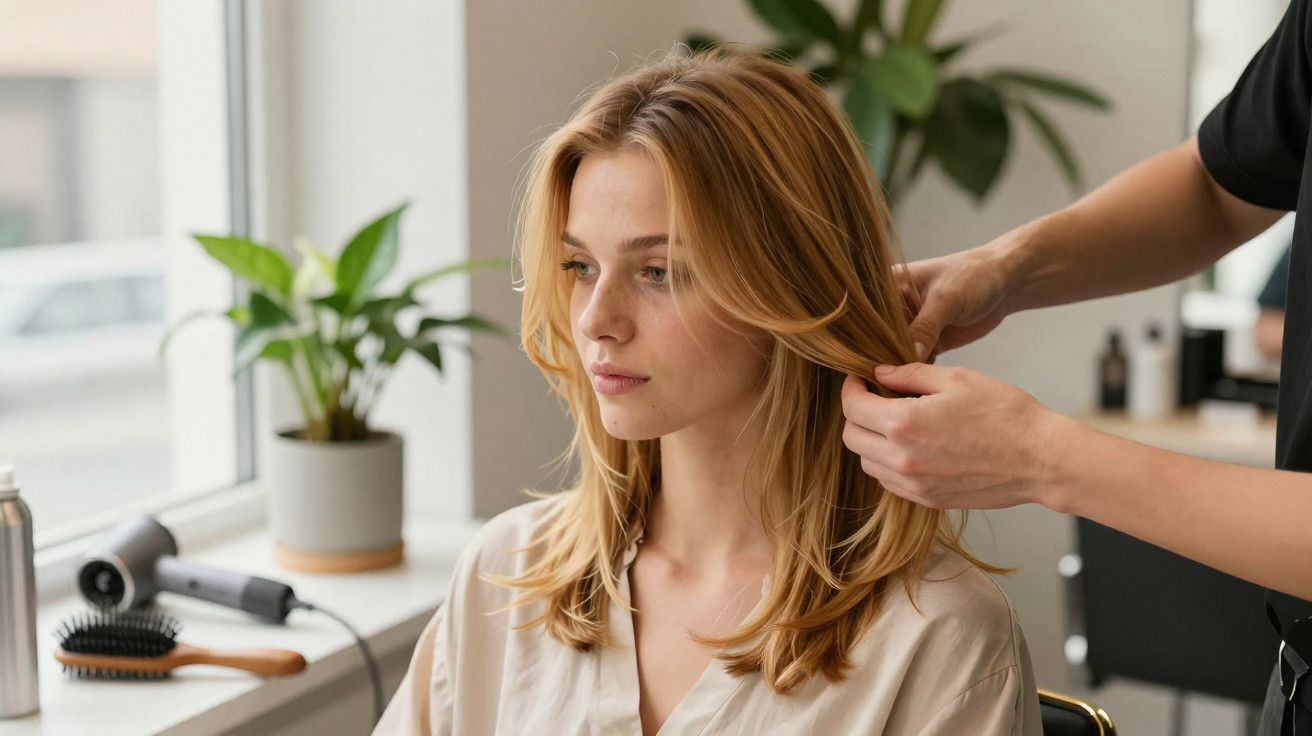
Being precise about what you want helps in the salon. Explain where you would like the first layer to begin: at the chin for framing, at the corners of the mouth for more air through the top layer, or at the collarbone for especially soft transitions. Ask for “long, flowing layers” rather than short top layers if you want volume without frizz. Useful terms your stylist will understand include: “point cutting for softness”, “slide cutting for movement”, and “subtle internal invisible layers rather than thinning shears”. Afterwards, blow-dry using medium heat and a large round brush, turning sections outwards rather than inwards. That keeps the bounce relaxed instead of overly neat.
Common pitfalls may sound minor, but they make a real difference. A top layer that is too short can reveal gaps in fine hair, while waves in curly hair may spring away unevenly. Too many layers can make the ends look thin, especially on colour-treated hair. If you have a strong crown whorl, the upper layer needs more length or your parting will keep shifting. Choose products that build texture instead of weighing hair down: a lightweight leave-in conditioner, sea salt spray through the lengths, and a touch of dry shampoo at the roots. Let us be honest: hardly anyone does all of that every day. That is why the cut itself provides half the style.
A layered cut retells the story of your face shape. Soft face-framing layers can elongate round faces, gentle chin-length layers balance a pronounced jawline, and long internal layers remove bulk from dense lengths. If you are unsure, ask for a “test layer” at the front only – the rest can follow later.
“Layers are not a pattern, but a dynamic,” says Nora, a hairstylist for 18 years. “They suit medium length like a good chorus: familiar, but never boring.”
- Quick mirror check: where does your hair naturally sit? Notice where the strands fall by themselves – that is where the first layer should start.
- Fine hair: choose longer, softer layers and almost no thinning. Texture should come from styling, not scissors.
- Thick hair: internal layers create lightness; keep the edges clean so they do not look wispy.
- Waves/curls: have the layers shaped while wet, then adjusted once dry.
- Time-saving styling: air-dry to 80%, then use a large round brush on the front sections only.
A trend that works in everyday life
The reason a layered cut at medium length endures is that it adapts to real life. Bad hair day? Wear a low ponytail and let two strands fall softly at the front – done. Meeting? Blow-dry the roots and give the ends a slight bend with straighteners. Workout? Use a high clip, then give it a quick shake afterwards. The layers set the direction; you only need to give them a small nudge. Trends pass, everyday life remains - and that is exactly where the layered cut wins. It is not demanding; it is simply ready when you are. It also grows out in a way that means you do not need a trim every month.
| Key point | Detail | Benefit for the reader |
|---|---|---|
| Effortless movement | Long, soft layers beginning at the chin/collarbone | More volume and shape without daily styling |
| Face framing | Place front layers around the cheekbones or jawline | A fresher profile and softer contours |
| Everyday wearability | Grows out evenly and can be worn in different ways | Longer wear between cuts and quick looks with minimal effort |














Comments
No comments yet. Be the first to comment!
Leave a Comment