
Grey strands are beginning to show, your natural shade is losing intensity, and using a box dye can suddenly seem like far too great a commitment.
The years around 50 can change how you feel about your hair: white strands become more noticeable, pigment diminishes, and your colour may appear patchy instead of polished. Rather than battling every grey hair, increasing numbers of women want to know how to make it appear purposeful. This is where “salt and pepper” balayage comes in.
What “salt and pepper” really means after 50
Grey hair rarely appears all at once. A handful of white hairs tend to arrive first, before whole areas begin to lose melanin. This can produce an uneven effect, with almost-white sections, remaining dark areas and mid-lengths that look faded.
This combination is known as “salt and pepper”: the white is the “salt”, while the darker hair is the “pepper”. For some people, it looks naturally beautiful. For others, the contrast may make facial features appear harder or the complexion look older.
The challenge is not the grey itself, but the sharp contrast between grey strands and the old base colour.
Conventional solutions tend to involve complete coverage: permanent colour applied every four to six weeks, root touch-ups and long periods in the salon chair. For many women in their 50s and 60s, this routine no longer suits their lifestyle, budget or patience.
Why stylists are backing “salt and pepper” balayage
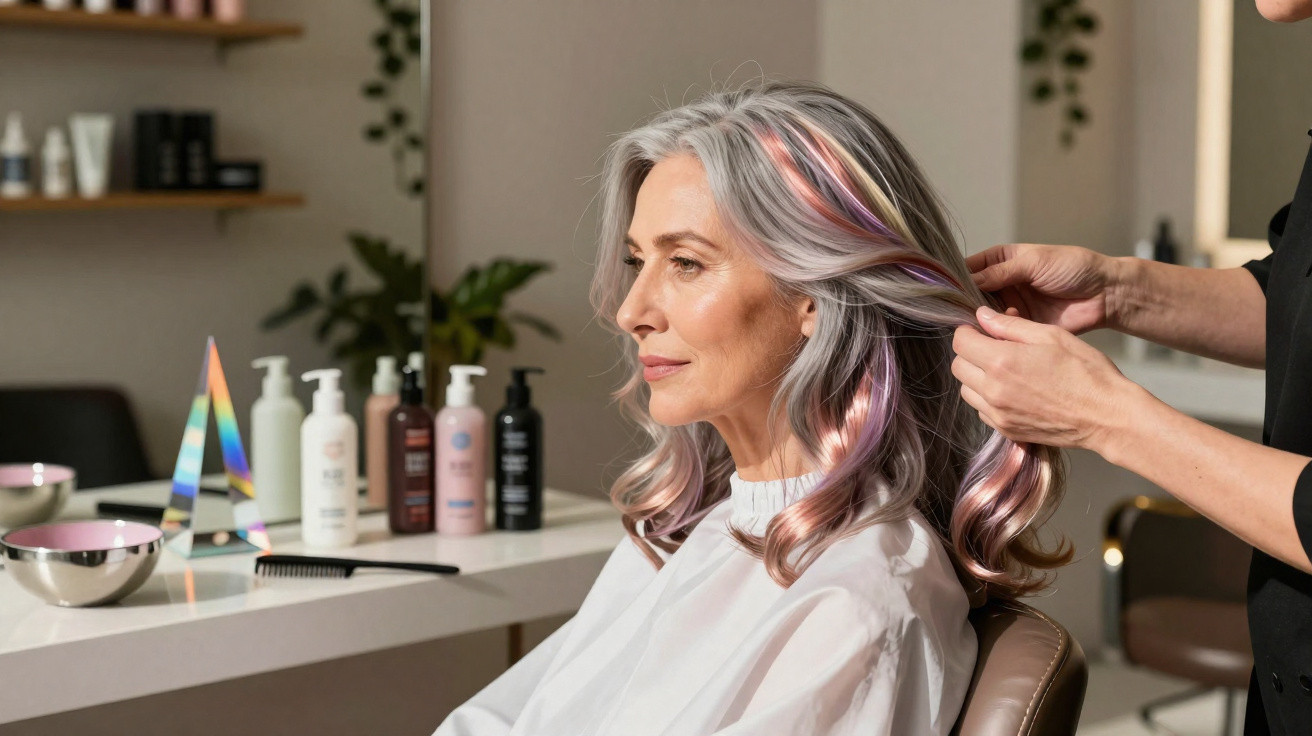
Colour specialists are increasingly recommending another route: working with grey rather than concealing every strand. “Salt and pepper” balayage is not one particular shade. Instead, it is a method of painting lighter and darker pieces through the existing hair to rebalance the changes that time has already brought.
Instead of covering grey, the colour focuses on softening harsh lines and making the mixed tones look deliberate.
Unlike traditional foil highlights, balayage is painted freehand over the surface of the hair. The colourist chooses the position of every stroke, making the method particularly suitable for uneven greying. For a person with 40–60% grey hair, it can turn a patchy blend into a flattering, well-blended gradient.
How the technique works on grey hair
For clients with newly appearing or well-established grey hair, stylists commonly use a combination of three approaches:
- Lightening certain darker strands to help them merge more naturally with the existing white hair.
- Adding depth to selected grey sections with lowlights, either around the face or through the lengths.
- Keeping a generous amount of natural grey uncoloured so that the style grows out gently.
The purpose is not to force complete uniformity, but to manage the level of contrast. As a result, regrowth lines are less obvious and appointments can be scheduled further apart.
A bespoke balayage, not a standard formula
Despite its fashionable name, “salt and pepper” is not something you can request and expect to receive as a fixed formula. The process should be tailored to the hair you have, including the concentration of grey, your natural base shade, skin tone and lifestyle.
The more personalised the placement of lights and darks, the more the hair looks like you woke up with it that way.
If you are mostly grey or white
For women whose hair has become predominantly grey or white, colourists often advise incorporating more dark lowlights than you might initially imagine. A small number of deeper pieces can:
- define the cut;
- frame the face more distinctly;
- lessen a “washed-out” appearance on fair skin;
- add contrast without going back to a severe block colour.
This method works well with short, shaped styles, bobs and long layers. The darker pieces are generally soft and translucent rather than dense and opaque like conventional permanent colour.
If your hair is still mostly dark
If naturally dark hair has grey strands scattered throughout it, they can resemble random flashes of sparkle. In this situation, stylists will generally add more light pieces than dark ones, lifting chosen sections towards a soft “salt” shade:
- the lighter pieces mirror the natural white strands;
- the original dark base remains visible as the “pepper”;
- the contrast between natural grey hair and coloured hair becomes gentler.
The finish is often brighter around the face, using deliberately positioned ribbons of light instead of bold, stripy highlights.
The benefits compared with full-coverage dye
For many people over 50, “salt and pepper” balayage has both visual and practical appeal.
| Full coverage dye | Salt and pepper balayage |
|---|---|
| Conceals all grey hair for a limited time | Blends grey hair into a balanced colour story |
| Produces a noticeable root line after a few weeks | Allows soft regrowth without a harsh line of demarcation |
| Requires regular touch-ups | Salon appointments may be less frequent |
| May appear flat and one-dimensional | Creates depth, light and natural movement |
| Can put fragile hair under stress when repeated | Focuses on particular strands, reducing overall damage |
How to brief your colourist without salon regret
As the technique is adaptable, discussing it clearly during your appointment is important. Bringing several photographs is useful, although what you say matters too. Colourists recommend covering three areas:
- The amount of grey you have and where it is most concentrated, such as the front, temples or crown.
- How frequently you can realistically return to the salon.
- Whether you would rather have a cooler silver shade or a slightly warmer beige finish.
Say clearly if your goal is to keep going lighter towards natural grey, or to stay roughly at your current depth.
If your hair is extremely dark but you want a bright silver head of hair, be prepared for several appointments spread over a number of months. Gradual lightening helps safeguard the hair fibre, particularly if it has become drier because of age or hormonal changes.
Care tips to keep “salt and pepper” looking polished
Grey hair has different characteristics from pigmented hair. It is often drier, coarser and more porous, all of which influence both shine and colour.
Products that support the look
A few straightforward changes to your home routine can make a noticeable difference:
- Hydrating shampoo and conditioner designed for coloured or mature hair to preserve softness.
- Purple or blue-toning shampoo once weekly if the lighter sections begin to look yellow.
- Light oils or creams to control frizz and boost light reflection on white and grey strands.
- Heat protection before using a hairdryer or styling irons to limit breakage.
UV protection is helpful too. Sunlight can make white hair turn brassy quickly, so wearing a hat or applying a UV spray while on holiday is sensible.
Who suits a “salt and pepper” balayage best?
This method can work across a wide range of hair types, although it is particularly beneficial for certain people:
- Women with 30–80% grey hair who are fed up with constantly chasing their roots.
- Anyone becoming aware of fine lines and looking for a softer frame around the face.
- Those who value flexibility and might later decide to go completely grey.
- People with layered haircuts that display the different shades effectively.
Curly and wavy hair can look especially striking with this method because the changing tones reflect light differently on every curl. Straight hair may require more considered positioning of light and dark pieces so that it does not appear flat.
Key terms you might hear in the salon
A colour consultation can seem like learning a different language. These are some common expressions used when discussing grey hair and “salt and pepper” effects:
- Balayage: colour painted freehand onto the hair, typically to create a softer, more grown-out result.
- Highlights: lighter strands, which may be hand-painted or placed in foils.
- Lowlights: darker strands introduced to add depth or tone down an overly pale effect.
- Transition plan: a staged colour approach for moving from dyed hair towards a largely natural grey finish.
Asking your stylist to create a “12–18 month transition” plan may prevent unwanted surprises, especially if you have had all-over colour for years.
What a one-year transition could look like
For a woman in her early 50s with around half of her hair now grey, a realistic schedule may look like this:
- Month 1: The first “salt and pepper” balayage, with lighter pieces and a few deep lowlights added.
- Month 4–5: A second appointment concentrating on blending new grey hair and softening any lines from previous dye.
- Month 8–9: A lighter refresh with fewer foils and greater attention around the face.
- Month 12: A review: at this stage, the overall shade will often look deliberately grey rather than “half-done”.
Over this time, the hair grows, old colour fades and the ratio of natural grey to coloured strands changes little by little. Balayage supports this progression instead of resisting it, offering many women over 50 a softer, lower-maintenance way to welcome changing hair.
















Comments
No comments yet. Be the first to comment!
Leave a Comment