You are looking at yourself in the mirror again. The curling iron gave it a go, the round brush had its turn, and your hands are covered in half-dried mousse - yet 20 minutes later, your hair resembles what you would have after standing at a windy bus stop. The ends turn out in every direction, the crown lies flat, and that “effortless” TikTok blowout? It has disappeared before lunchtime. Every hour, you check your reflection in your phone screen, hoping the waves have somehow lasted this time. They have not.
Some hair simply will not play along.
Then a stylist says one thing that changes the whole picture.
The low-maintenance cut stylists quietly swear by
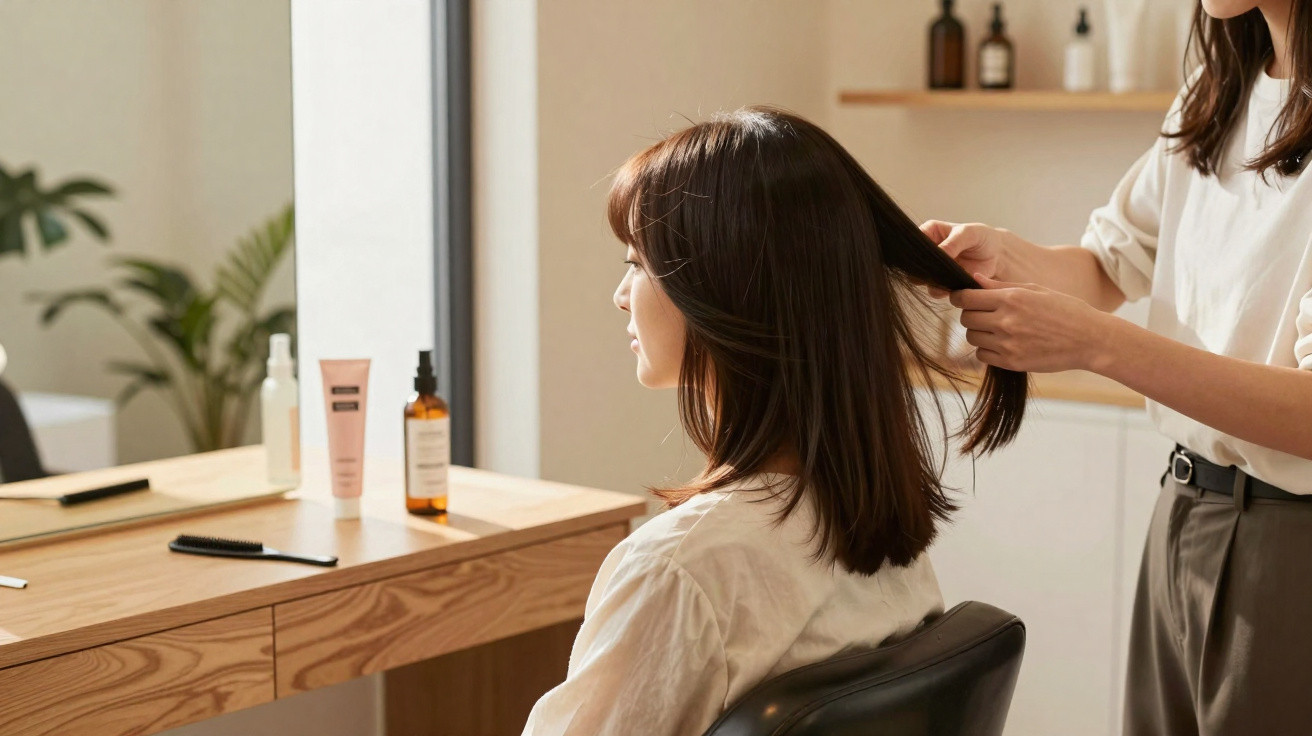
Ask several experienced stylists what they suggest for “impossible” hair, and a familiar recommendation soon comes up: a blunt, collarbone-length cut with soft internal layers. It is not an intricate shag or a head full of dramatic layers. Instead, it is a neat shape sitting slightly below the shoulders, allowing your hair to fall in the direction it naturally prefers.
It is long enough to retain a feminine feel, while being short enough not to be weighed down by itself.
Above all, it can look good without relying on a flawless blowout.
A London stylist once told me about Clara, a client with the familiar type of hair where “nothing holds”: fine, slippery and pin-straight. Every morning, she was damaging it with straighteners, only to find the ends flipping out unpredictably by 11 a.m. When her hair was cut bluntly at collarbone level, the difference was immediate.
When she returned the following month, she was almost irritated - because her hair simply… fell into place.
She could rough-dry it for five minutes, leave the house, and have strangers assume she had received a professional blowout.
There is a straightforward reason why this particular length and shape are so effective. At collarbone level, the hair carries enough weight to hang neatly, but not enough to pull the roots flat. A blunt baseline provides visible definition, making the hair appear “styled” even when little has been done to it. Gentle, concealed layers throughout the interior remove excess bulk and introduce movement, without creating obvious, choppy sections that turn out randomly.
You are not battling gravity or your natural texture any longer.
Instead, you allow them to do the styling work for you, quietly.
How to ask for - and live with - this haircut
The key begins with the way you explain the cut while you are in the salon chair. Rather than saying “do whatever you want,” take along a photo showing ends that form one clean line at the collarbone, with a slight wave or bend. Explain that you want a straight baseline with soft internal layers that are not visibly distinct, but create a sense of movement.
Make sure you mention that your hair struggles to retain either curls or volume.
A skilled stylist will cut it with the understanding that your “styled” result needs to last with almost no effort at all.
Many of us fall into the same trap: trying to solve the problem with styling products rather than improving the cut. If our hair will not keep a curl, we reach for firmer mousse, hotter tools and extra-strong hairspray. This often leaves hair stiff and a little sticky, only for it to fall by the middle of the day anyway. Let’s be honest: nobody really does this every single day.
With a supportive haircut, you can stop treating your hair harshly just to make it cooperate.
You may still reach for a brush or add a quick bend with an iron, but these steps become optional rather than essential.
“People come in asking for a haircut that holds a style,” says Paris-based hairstylist Léa Martin. “I tell them: the right haircut is the style. If your hair only looks good for one hour after blow-drying, the cut isn’t doing its job.”
- Length
Approximately collarbone length, grazing the collarbone or falling just beneath it, so it works with both straight hair and a soft bend. - Baseline
A blunt, crisp edge that creates structure, softened only very lightly at the outer corners. - Layers
Delicate internal layers that take out bulk and bring in movement, rather than visible “steps”. - Styling time
A maximum of 5–10 minutes: rough-dry, brush quickly, then add an optional bend using a straightener or curling iron. - Who it suits
Fine hair that lies flat, weighty hair that drops, or “slippery” hair that refuses to hold a curl.
Living with hair that finally behaves
After moving to a collarbone-length cut with a blunt base, an unexpected change takes place: you stop fixating on your hair. Naturally, the weather is still there, and humidity still has an effect. But your hair no longer falls apart at the first hint of drizzle. It softens slightly, shifts a little, then settles back into that uncomplicated, deliberate shape.
You begin to rely on it.
One day, you leave home with hair that is still a little damp and realise… an hour later, it still looks good.
| Key point | Detail | Value for the reader |
|---|---|---|
| Blunt collarbone length | Adds structure without excessive weight pulling styles down | Hair appears “done” even when you devote very little time to it |
| Soft internal layers | Creates hidden movement without choppy sections that flip out unpredictably | Lessens the struggle with natural texture and humidity |
| Low-effort routine | Rough-drying and a quick bend take the place of intensive styling | Saves time, protects hair and reduces everyday frustration |













Comments
No comments yet. Be the first to comment!
Leave a Comment