
One morning on the Underground, I spotted three people standing almost shoulder to shoulder. One was dressed entirely in black, another wore powder blue, and the third had on a light beige coat while holding a sand-coloured tote bag. None of them spoke, yet their colours seemed to communicate what they would never say aloud. The woman in black watched her reflection in the window, readjusting her collar every few seconds. The person in blue repeatedly smoothed her sleeves, as though apologising for occupying any space. And the woman in beige stood partly concealed by a pole, almost melting into the setting.
Psychology teams have examined this unspoken language for years.
Certain shades appear repeatedly when self-confidence begins to falter.
The three colours that quietly signal fragile confidence
Psychologists running group workshops have noticed an unusual tendency. When attendees are asked to “come as you are”, those who feel most uncertain about themselves often gravitate towards the same three colour groups: extremely plain black, sugary baby shades, and very neutral beige or greige. The issue is not whether these colours are liked or disliked. It is the possibility of using them as camouflage.
People seldom announce, “My self-esteem is shaky.”
Instead, they reach for familiar, low-risk shades: armour that does not look like armour.
Consider the standard head-to-toe black look. This is not the sharp, intentional black outfit with tailored lines and striking lipstick. It is the slightly oversized, washed-out black jumper, worn black jeans and trainers that were once dark but now appear faded. People who wear this combination every day often explain it to therapists in identical terms: “Black goes with everything, I don’t have to think.”
Yet the underlying message tends to be quite different.
“I don’t want to be noticed.”
“I’m scared of getting it wrong.”
“I feel safer if I disappear.”
Rather than becoming a statement to stand in, black becomes a shadow in which to hide.
Then come the baby shades: pale pink, powder blue and soft lilac in delicate, almost see-through versions. Research in environmental and consumer psychology suggests these pastel palettes are often selected by people who feel somewhat “too much” internally and use gentleness externally to seem more acceptable and less intimidating.
It can be like placing a filter over your own personality.
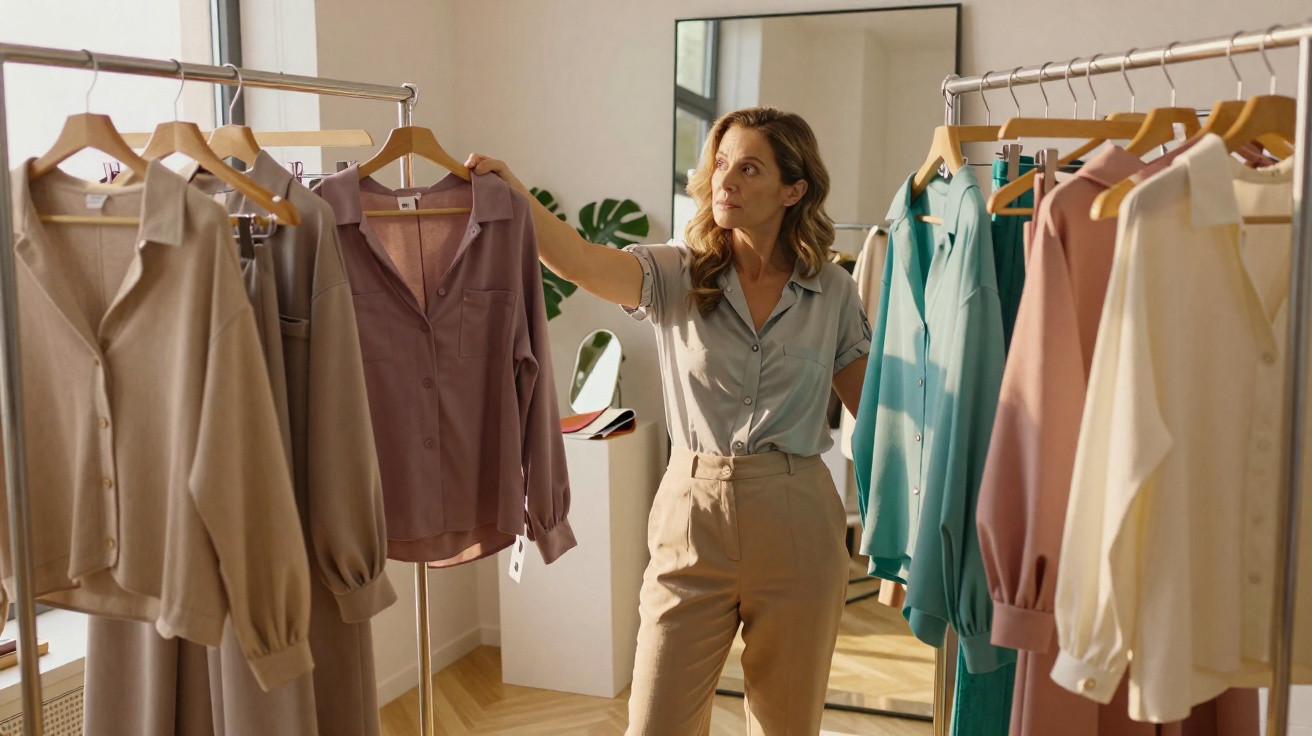
The third group is made up of the neutrals that say, “I’m part of the wall”: beige, light taupe, greige and pale sand. These colours often appeal to people who claim to “hate drama” but privately question whether they are entitled to stand out. There is nothing inherently wrong with these shades. The real question is whether you choose them with pleasure or from fear.
Why black, pastels and beige feel safe when confidence is low
When psychologists explore clothing choices during therapy or coaching, fashion is rarely the central topic. Instead, they discuss comfort, control and risk. Plain black, baby pastels and highly neutral beiges share a key quality: they make the stakes feel lower. These shades are unlikely to prompt remarks or disagreement. They lessen the odds of someone saying, “Wow, that’s… bold.”
For someone with fragile confidence, they can therefore function like soft cotton padding.
You enter a room feeling as though you have rounded off your own edges.
One therapist described a client to me: a 32-year-old engineer who wore nothing but beige and cream. She referred to it as her “peace treaty wardrobe.” During meetings, she disappeared into the chairs, the walls and even the PowerPoint background. Nobody ever criticised what she wore.
However, something unexpected occurred when her therapist asked her to wear a deep green scarf for one week. Her colleagues suddenly said, “You look fresh today,” “New scarf?” and “Wow, color!”
Those small observations unsettled her more than any performance review. It was not because they were unkind, but because she was not accustomed to being noticed. For years, beige had acted as her cloak of invisibility.
Psychology teams investigating colour and self-perception stress an important distinction: colours do not cause insecurity; they expose coping strategies. When you feel unsteady inside, you may instinctively reduce anything likely to attract attention. You repeatedly select the safest options.
Black can help erase the body. Pastels may soften your presence, as if you are continually murmuring, “Don’t worry, I’m harmless.” Beige and greige can blend you into the background.
The brain welcomes this because it appears to lower the chance of rejection. Yet it comes at a price. Gradually, you teach yourself that you only deserve to take up space when you are visually toned down. That’s how a simple T-shirt becomes a script you repeat every morning without even noticing.
How to use colour to rebuild confidence rather than conceal it
If these palettes feel familiar, the aim is not to discard half your wardrobe overnight. That would simply become another form of violence against yourself. A kinder approach is to make small agreements with your fear of standing out. Begin with tiny doses of stronger colour: a ring, socks, a phone case or a notebook on your desk.
Give your nervous system time to learn that being seen can still be safe.
Then, little by little, bring one more vivid shade nearer to your face: a scarf, a T-shirt beneath a neutral jacket, or lipstick worn for only an hour at home.
Before getting dressed, it can help to ask: “Am I choosing this to express myself, or to erase myself?” There is no correct or incorrect response, only honesty. On some days, you may genuinely need your black cocoon, and that is fine.
The problem arises when the choice becomes automatic.
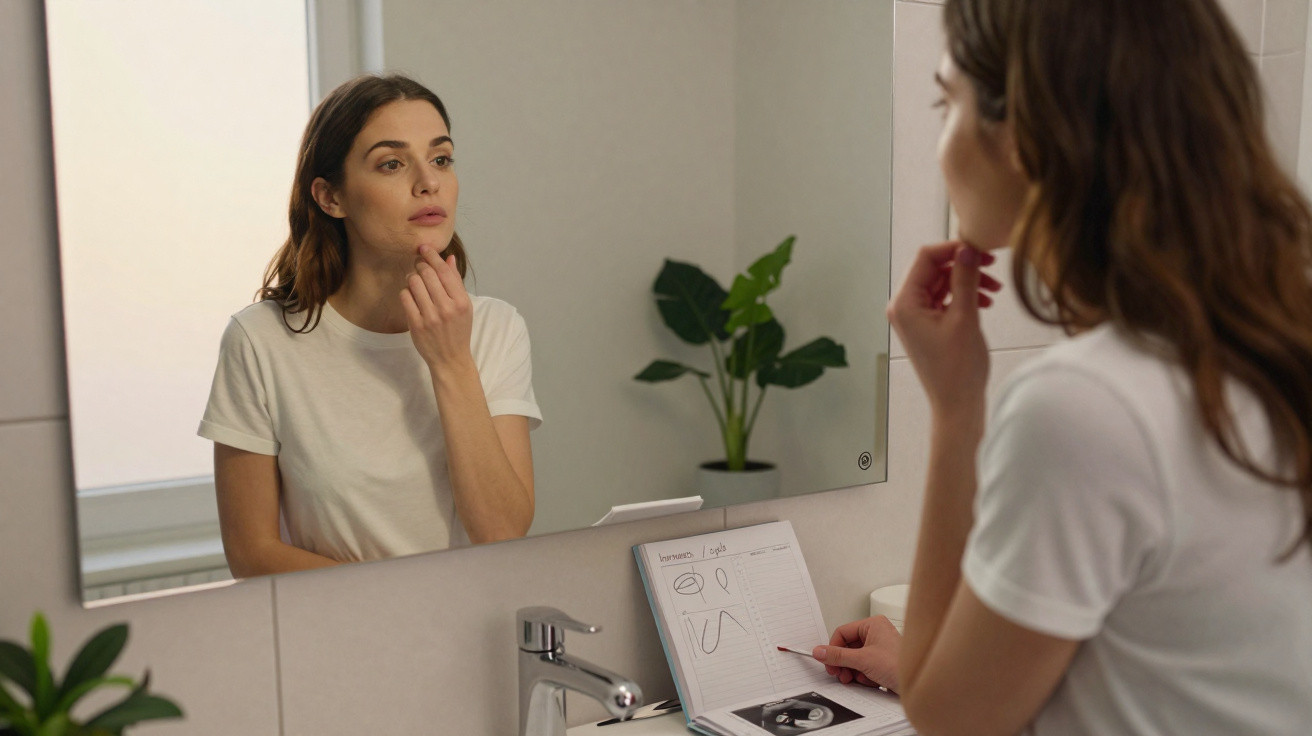
To be honest, nobody really does this every single day, but recording the colours you wear and how they make you feel for one week may uncover patterns you had not anticipated. Some people find that dark green makes them feel steadier than black, deep blue makes them feel more respected than pastel shades, or warm rust feels more alive than beige. Small changes can have a large internal effect.
Color psychologist Angela Wright once said, “We don’t just wear colors, we negotiate with them. Every shade we choose is a tiny vote for the version of ourselves we dare to show.”
- Colour audit for one week: Record the main colour of your outfit each day and rate your self-confidence from 1 to 10. Patterns will soon become clear.
- Safe experiment rule: Try unfamiliar colours first in smaller items, such as accessories, nails or headphones, before introducing them into major pieces.
- Anchor colours to feelings: Choose one shade for “calm power” and another for “playful courage”, so they are available when you need them.
- One-step bolder strategy: If beige is your usual choice, test camel or rust. If you live in black, try charcoal or navy. Move up only one step rather than attempting a complete makeover.
- Kind self-talk check: Whenever you dismiss a colour, pay attention to the thought behind it: is it about your taste, or your fear of being judged?
When your colour palette begins telling a different story
A subtle change takes place when colour stops being used solely as protection. Your wardrobe can begin to feel like a living diary rather than a permanent place to hide. Over time, a small cobalt-blue ring, a burgundy jumper or a forest-green jacket can communicate what your voice may still struggle to say: “I exist,” “I’m allowed to be here,” “I don’t have to be neutral to be accepted.”
The three “fragile” colour groups will probably remain part of your life. Black can be powerful, pastels can be tender and beige can be elegant. What matters is whether you wear them through habit or through freedom.
You may find that, on days when you feel a little stronger, you reach for more vivid shades without even thinking. On more difficult days, you might return to familiar safe choices, but with less panic and greater awareness.
That is the quiet change psychology teams like to observe: not a Pinterest-perfect wardrobe, but a person using colour as a conversation with themselves instead of a way to hide from the world.
| Key point | Detail | Value for the reader |
|---|---|---|
| Recurring “fragile” colours | Plain black, baby pastels and ultra-neutral beiges/greiges often appear when self-confidence is low | Helps you interpret your own wardrobe habits without guilt |
| Micro-experiments | Begin with small colourful items, then take one bolder step closer to the face | Allows confidence to be rebuilt gradually without feeling exposed |
| Intentional choice | Ask whether a colour is being used to express yourself or erase yourself | Makes getting dressed a practical daily exercise in self-esteem |
FAQ:
Question 1: Does liking black automatically mean I have low self-confidence?
No. Context matters. Wearing black because you enjoy its structure, contrast or range of styles is different from wearing it only to “hide your body” or “avoid comments.” The feeling driving the decision matters more than the colour itself.Question 2: Can pastels ever be a sign of strong confidence?
Yes. If someone wears pastels with playful cuts, bold accessories or clear, assertive body language, these soft shades may communicate ease and emotional openness rather than insecurity.Question 3: What if my job requires neutral colours like beige and navy?
Then focus on details: jewellery, bags, watches, glasses, nails, even your notebook or water bottle. These small areas of colour can still affect how you feel in your own skin.Question 4: Are there “best” colours to boost self-confidence scientifically?
Studies commonly associate deep blues with authority and trust, reds with energy and visibility, and greens with balance. However, personal history and culture can outweigh these broad patterns, so experimenting is more useful than following any universal rule.Question 5: How fast can changing colours really change how I feel?
For some people, the impact is immediate; for others, it resembles gradual reprogramming. Repeated experiences of “I wore this, I didn’t die of embarrassment, people were actually fine” can slowly ease old fears and alter how your brain interprets visibility.







Comments
No comments yet. Be the first to comment!
Leave a Comment