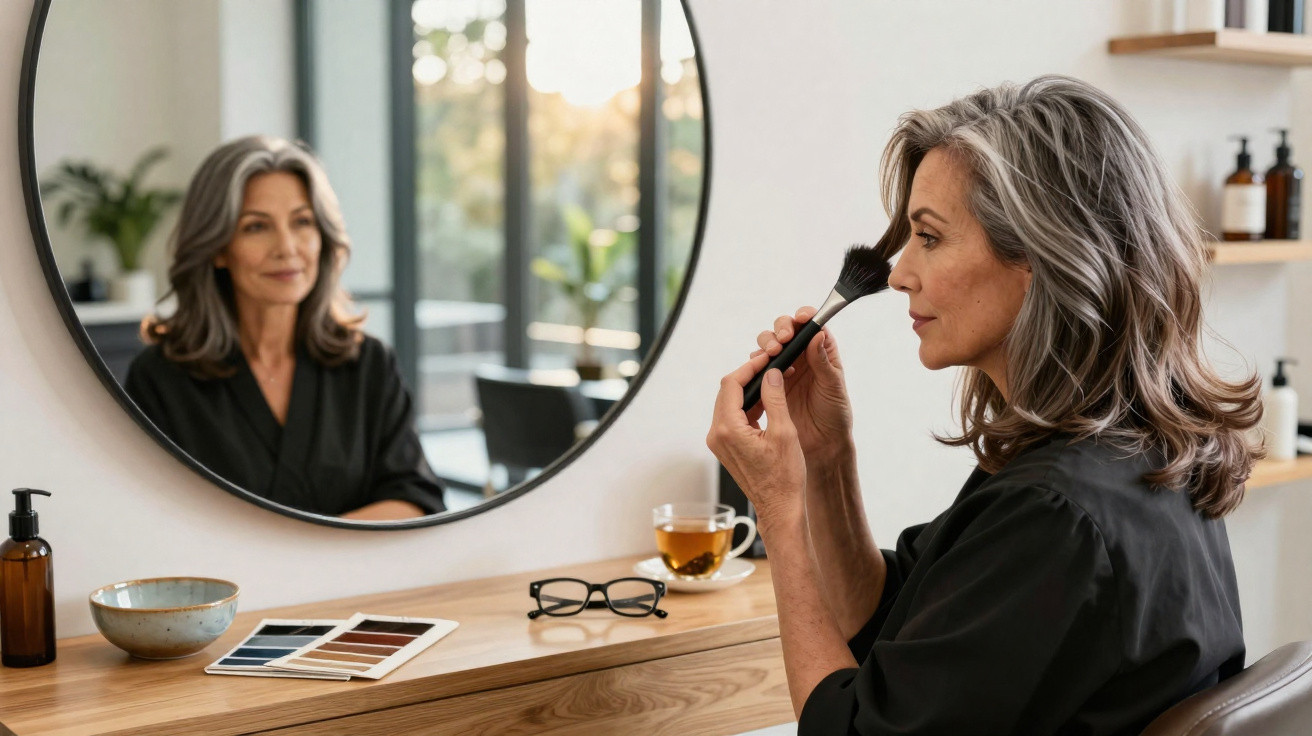
Past 50, more women are moving away from all-over colour and allowing silver roots to show, but one understated technique can make a dramatic difference.
As grey hairs become more widespread and natural colour fades inconsistently, many women feel caught between stark full-colour dye and going entirely natural. A gentler approach, borrowed from professional colourists, is becoming increasingly popular: lowlighting. This reverse balayage darkens carefully chosen strands, enhancing grey hair rather than trying to conceal it.
Grey hair is changing – and so are expectations
For generations, reaching 50 often meant arranging regular salon visits to disguise the first white hairs. That expectation is now shifting. Plenty of women are choosing to embrace grey, while still wanting shine, contrast and a polished finish. The difficult stage is often the period of transition.
Grey hair seldom arrives uniformly. The temples and hairline frequently lighten first, followed by individual streaks scattered throughout the hair. This can make hair appear uneven, finer and flatter than it once did. As the darker hair that naturally frames the face fades, skin tone may seem to change too.
Grey doesn’t only change colour – it changes texture, how light hits your face and the way your features read.
This is where lowlighting can help. Rather than covering grey with one solid shade, it strategically introduces darker colour, bringing back depth and dimension while leaving the salt-and-pepper effect visible.
What lowlighting actually is – and why colourists swear by it
Lowlighting is commonly seen as the reverse of traditional balayage. Standard balayage brightens sections of hair to produce sun-kissed highlights. With lowlighting, the process is inverted: a colourist paints slightly deeper shades through selected sections.
Rather than lifting colour, lowlighting gently darkens select strands to build shadows, thickness and a softer transition into grey.
For women over 50 with grey hair, this method has several benefits:
- Less commitment: Natural roots blend in more smoothly, making regrowth lines less noticeable.
- No harsh contrast: Salt-and-pepper hair is enhanced rather than covered up.
- Visual volume: Deeper strands can give the impression of thicker, more voluminous hair.
- Face framing: Colour placement can accentuate cheekbones and soften the look of lines.
Importantly, lowlights are generally applied without intensive bleaching, making the service gentler than many highlighting methods. This can be particularly valuable when hair has become drier or more fragile due to age and hormonal changes.
How lowlights flatter grey hair after 50
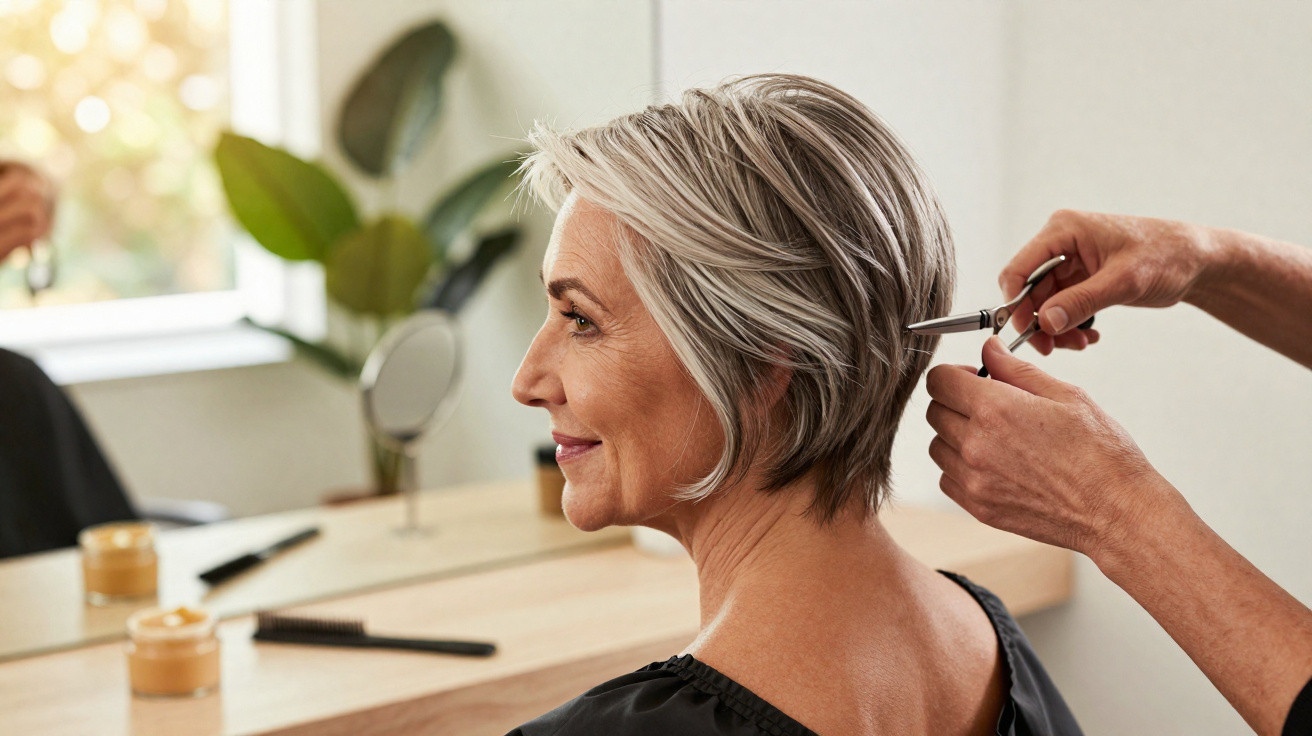
As grey becomes more dominant, areas of hair can start to look almost translucent. This may feel particularly noticeable at the parting and around the front. Lowlights add measured darkness back into the overall colour mix.
Colourists may use the technique to:
- Break up broad pale sections without disguising every grey hair
- Merge old permanent colour bands with fresh natural regrowth
- Offset silver temples with subtly deeper shades through the lengths
- Emphasise the eyes while drawing focus away from areas you would prefer not to accentuate
Strategically placed darker strands function like soft-focus filters, giving grey hair depth instead of leaving it flat and washed out.
The finished effect remains clearly grey, but looks considered and intentional rather than accidental.
Choosing the right lowlight shade for salt-and-pepper hair
Tone is the most important choice. Go even slightly too dark and the result may appear severe or streaky. Choose a shade too similar to your present colour, and the difference may be barely visible.
Begin with your natural colour
Colourists usually work from your original hair colour rather than the faded shade currently reflected in the mirror. If your hair was naturally medium brown, that becomes the starting point for the plan.
From there, lowlight colours are generally selected either:
- From the same family as your natural base, or
- One or two shades darker for gentle contrast
The goal is a soft gradient, not sharp stripes. Think shadow, not solid block.
Coordinate lowlights with your skin’s undertone
Your skin undertone is as significant as your hair history. An unsuitable shade can make the complexion appear sallow or overly red.
| Skin undertone | Lowlight direction |
|---|---|
| Warm (golden, peachy) | Soft caramel, warm mocha, golden browns |
| Cool (pink, rosy, bluish) | Ash brown, cool espresso, soft graphite tones |
| Neutral | Soft beige browns, muted chestnut, versatile taupes |
Going several shades deeper than your base is usually not recommended. Against grey hair, it can produce harsh blocks of colour that look unnatural and reveal regrowth within weeks.
What a lowlighting appointment looks like
Many people assume any colouring appointment involves hours in the salon and demanding maintenance. Lowlighting is often more forgiving than that.
A standard appointment may involve:
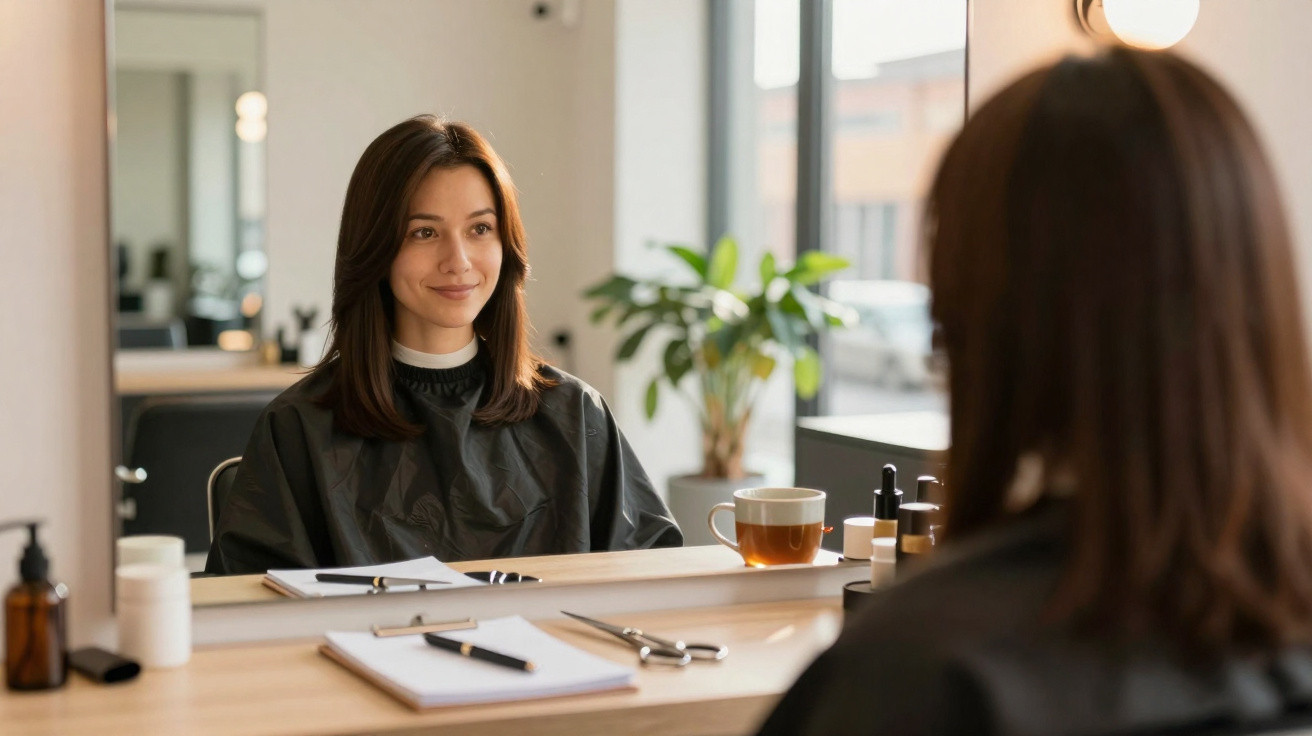
- A consultation covering your current colour, pictures of your pre-grey hair and your lifestyle
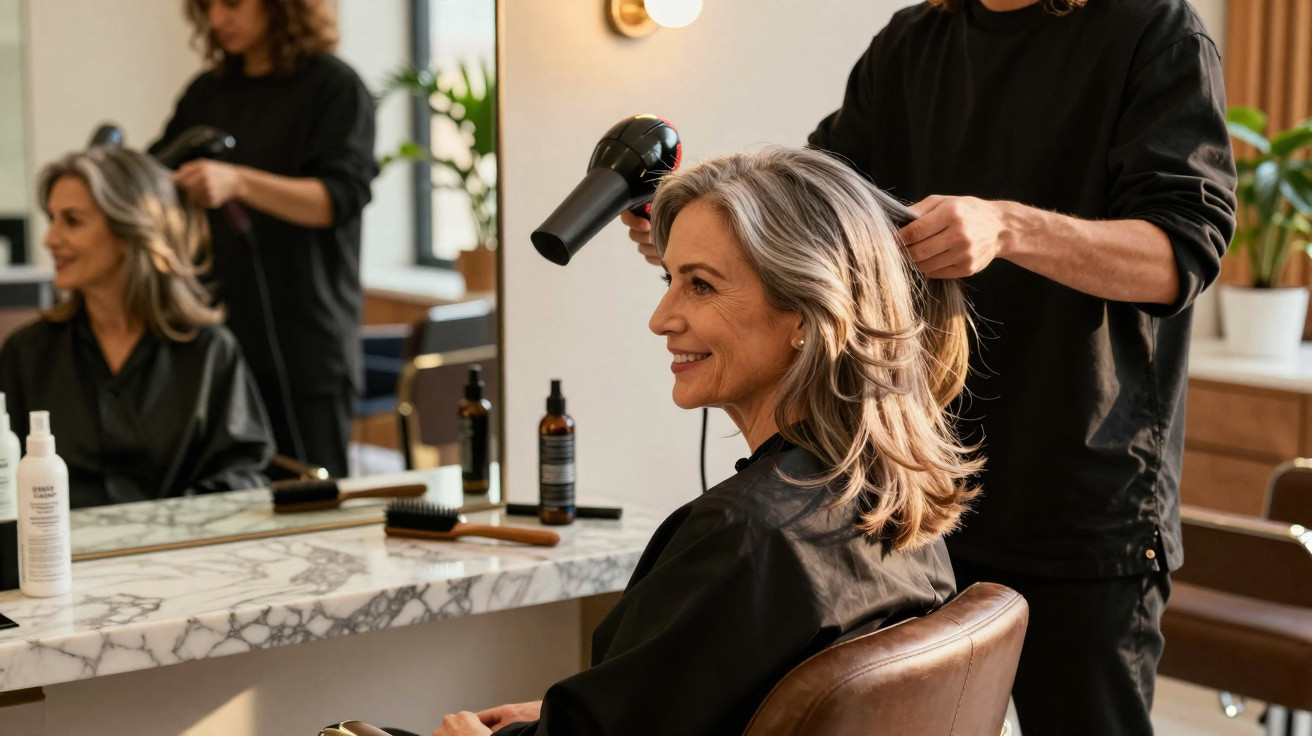
- Hair sectioning followed by hand-painted lowlights, focused where grey hair is most concentrated
- Development time, followed by a gentle shampoo and conditioning treatment
- An optional gloss or toner to even out the general shade and increase shine
Because the technique works with your natural pattern, it often grows out gracefully, making refresh appointments less urgent.
Looking after lowlights on grey hair
While lowlights require less upkeep than full-coverage dye, they still benefit from care to maintain their depth and richness.
Select colour-safe products
After colouring, replace your usual shampoo with one formulated for coloured hair. Choose products containing moisturising ingredients and antioxidants, which can help stop pigments from fading.
Use a nourishing conditioner with every wash as well. Grey hair is often coarser and drier, so extra hydration supports softness and shine while helping the colour last longer.
Manage brassiness in lighter sections
Even where the fresh colour is dark, untreated white or pale strands can develop yellow or copper tones, especially after sun exposure or heat styling.
Keeping a purple or blue shampoo in rotation can neutralise unwanted warmth in the lighter, natural parts of your hair.
There is no need to use it at every wash. Many colourists recommend alternating between a colour-care shampoo most of the time and a toning shampoo once weekly, or whenever yellow tones become noticeable.
Lowlighting vs. highlights and full coverage: which suits you?
Whether lowlights, highlights or all-over dye is most suitable depends on your starting colour and how much maintenance you are willing to manage.
- Full coverage dye is suitable if you want no visible grey, but it needs frequent root touch-ups and may create a flat finish.
- Traditional highlights lighten the hair and can brighten the face, though on already pale grey hair they may lead to an all-over white appearance more quickly.
- Lowlighting works with the greys, creates structure and keeps upkeep at a moderate level.
Some women combine methods, using lowlights through the back and mid-lengths alongside a handful of soft lighter pieces around the face to maintain brightness.
Useful terms and real-life scenarios
Salon terminology can seem unclear, so it helps to understand a few key expressions:
- Balayage: A hand-painting method that creates a soft, graduated result rather than uniform foil highlights.
- Lowlights: Darker sections applied to add depth.
- Toner/gloss: A semi-permanent finishing layer used after colouring to adjust the shade and enhance shine.
Picture a woman in her late 50s who stopped colouring her hair during lockdown. Her roots are now a clear silver, while her mid-lengths retain old, faded brown dye. A colourist could add lowlights close to her original brown shade through the mid-lengths and ends. This narrows the difference between the old colour and new silver, allowing the whole look to blend as it grows out.
Or consider someone whose hair is now mainly white on top but remains darker underneath. Adding a few lowlights around the parting, only one or two shades deeper than the white, can soften the strong contrast. The overall appearance stays light and contemporary, while the hair looks denser and feels easier to style.
Lowlighting doesn’t force a return to your twenties; it fine-tunes what you have now, making grey hair look intentional, healthy and modern.










Comments
No comments yet. Be the first to comment!
Leave a Comment