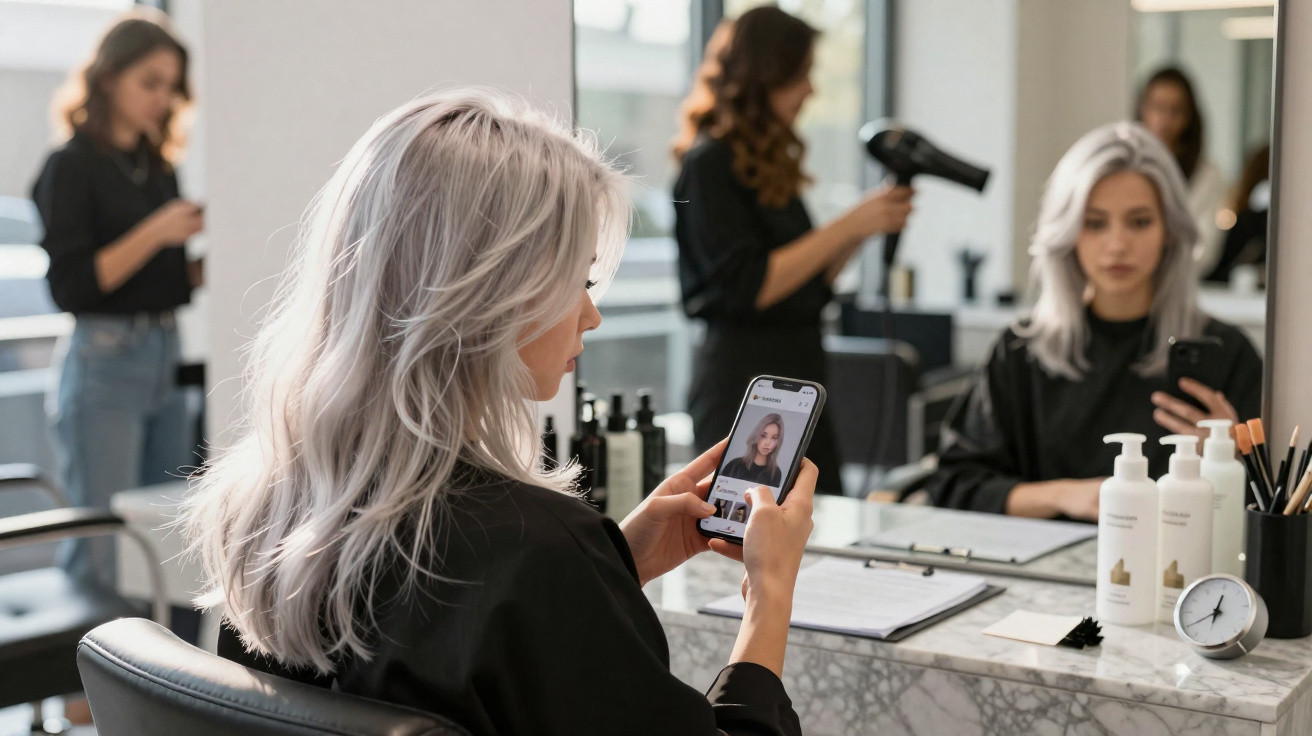
The salon waiting area was strangely hushed for a Thursday morning. A tidy row of silver-haired women leafed through magazines, glancing between celebrity fringes and their own reflections in the mirror opposite. At the back of the room, a woman in her late sixties nervously wound the ends of her thinning bob around her fingers, looking both apologetic and hopeful as her stylist came over wearing the familiar expression that said: “We need to talk.”
The divide between two very different looks was almost tangible: the reassuring, set-perm familiarity of “granny hair” on one side, and the sleek, swinging cuts on the magazine covers on the other.
Leaning closer and dropping her voice, the stylist said, almost as though sharing a secret: “That haircut is aging you by ten years.”
Then she said something that made three women immediately lower their phones.
The haircut stylists swear shaves years off after 60
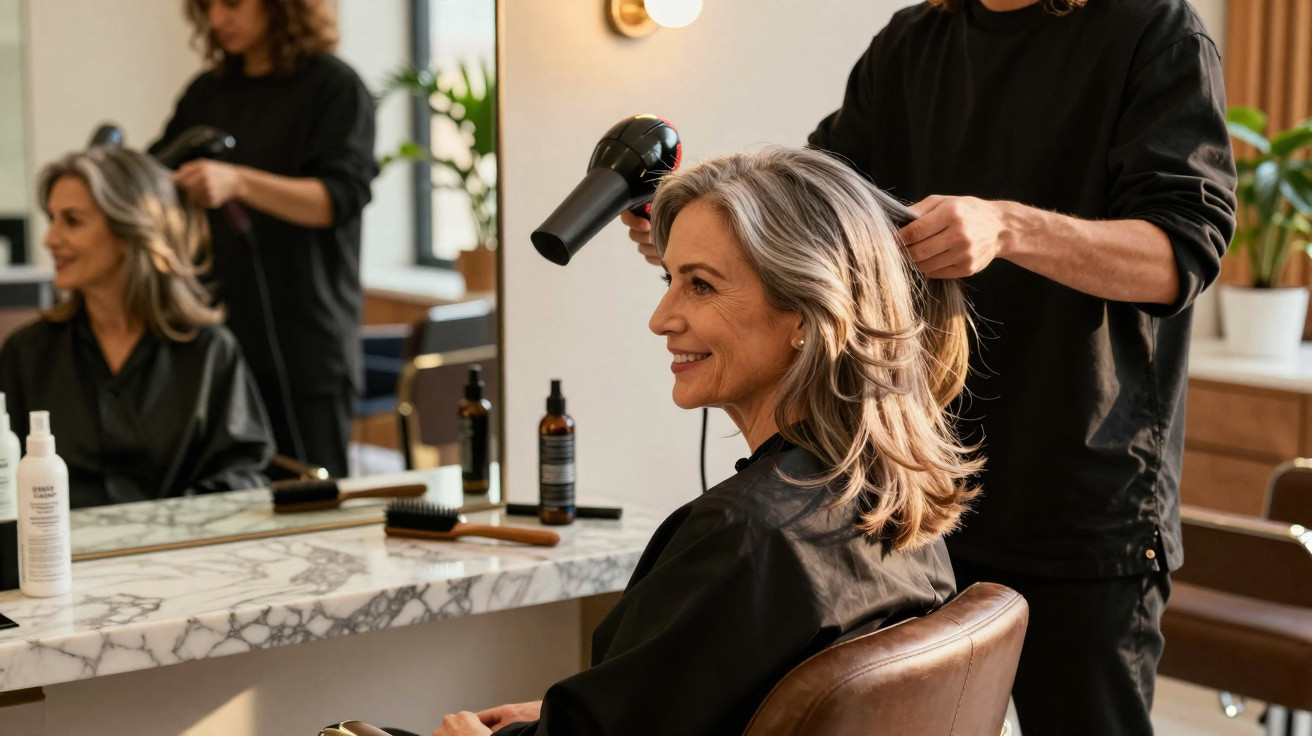
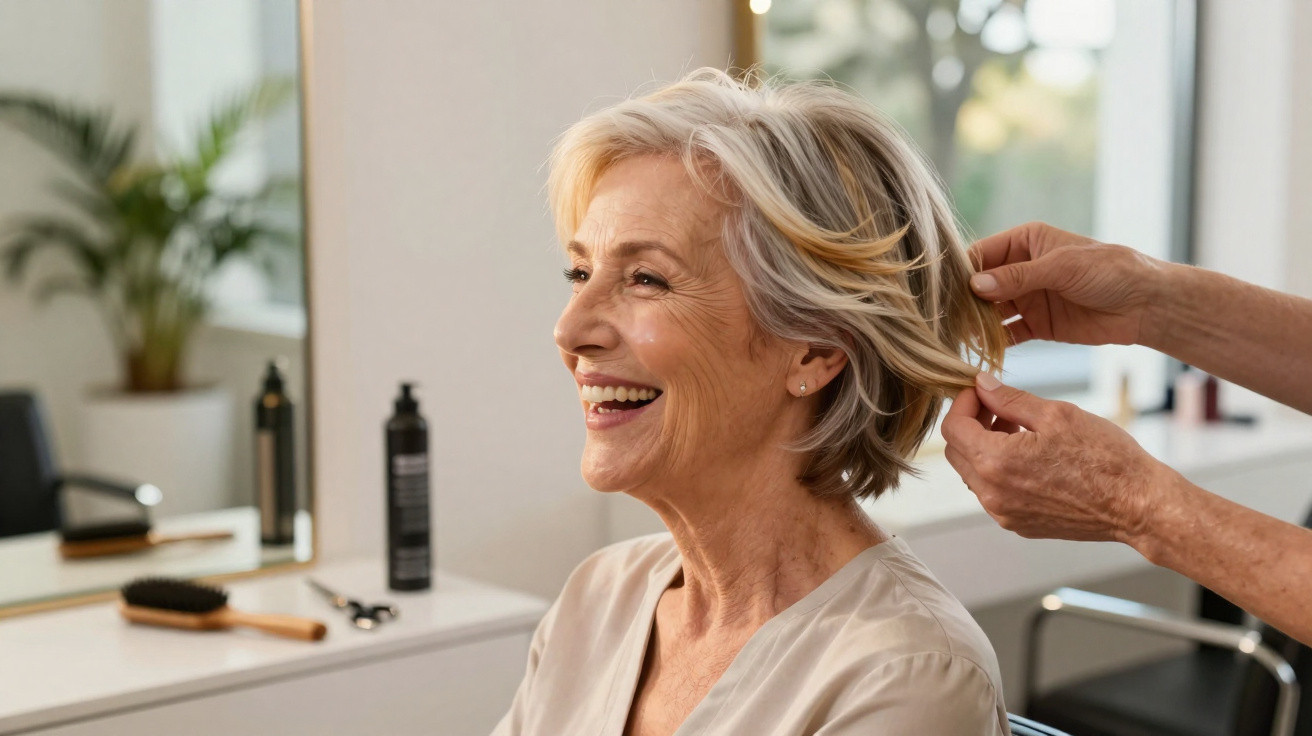
Hair professionals in London, New York and Paris are all making the same point: after 60, the cut that can take years from your appearance is not a rigid bob or a helmet-like perm. It is a softly layered style that falls from the jaw to the collarbone, with movement around the face. Neither long nor short, this modern mid-length cut allows hair to swing rather than simply sit in place.
Stylists say it works like an instant soft-focus filter. Layers brush over the jaw, soften the appearance of jowls and suggest lift around the cheekbones. Rather than being cut bluntly, the ends are lightly feathered, preventing the hair from creating a severe line across the neck. A fine fringe or face-framing sections shift attention towards the eyes rather than the forehead or lines around the mouth.
It does not announce that you are trying to look younger. It simply stops you appearing older than you feel.
Most seasoned stylists have seen a version of the same situation. A client in her early sixties sits down with the stiff, ear-length “safety bob” she has worn for two decades. Her hair is a single solid shape, coloured too dark, ending right at the jaw and visually dividing the face. She asks for “something fresh”, while stressing that she does not want anything “too young” or “drastic”.
The stylist then suggests a reset: extend the bob slightly to the collarbone and introduce gentle layers that shift as she turns her head. The colour is lifted by one or two shades, a few warm highlights are blended around the face, and the parting is softened. Fifteen minutes into the blow-dry, the client’s shoulders visibly relax. Suddenly, she can see her neck, jawline and the suggestion of her cheekbones again.
She arrived looking like a grandmother and leaves wondering, “who is that woman in the mirror?”.
There is a straightforward reason this particular shape is so effective after 60. Facial features alter over time: the lower face can become heavier, the jawline less defined and the skin may lose part of its natural radiance. Strong, abruptly cut hair lines tend to draw more attention to those changes. A hard bob or close crop can make a softer jaw appear looser, while long, straight hair can pull the whole face downwards.
A layered, mid-length haircut has the reverse effect. Instead of landing on one harsh edge, the eye follows the layers’ movement. Fine sections around the face interrupt areas of sagging and create the impression of lift without fillers or filters. Softer colour and subtle dimension bounce more light on to the skin, making wrinkles seem less noticeable straight away.
It is not magic; it is geometry, light and a little visual illusion working in your favour.
Why “granny hair” is social suicide, according to stylists
This is the part hairdressers tend to say quietly rather than loudly: the traditional “granny” look does more than make you seem older; it can communicate something you do not intend. That includes over-set curls, blue-tinged helmet hair, very short permed crops and rigid bobs that remain completely still as you walk.
That sort of hair can suggest: “I’ve given up updating anything.” It jars with today’s more easy-going wardrobes, trainers and natural-looking make-up. You may wear a leather jacket and stylish glasses, but if your hair is locked in 1987, that is what people notice first.
There can be a genuine social consequence. Before you have said a word, people may unconsciously place you in the “old-school” category. Once it takes hold, that label can follow you at work, while dating or even in the way your own children respond to your views.
A Manchester stylist shares a story that illustrates the point. A 64-year-old client who had recently divorced arrived determined to have her usual weekly wash and set. Her hair was short, tightly permed and fixed firmly in place with spray. “My kids say it’s my signature,” she laughed. Five minutes later, however, she confessed that her grown-up son had teased her: “Mum, you look like you’re going to Sunday bingo every day.”
The stylist carefully proposed growing out the perm and moving towards a softly layered, collarbone-skimming mid-length cut that was slightly longer at the front. Instead of weekly roller sets, the plan was for a gentle blow-dry and a little texturising spray.
Two months afterwards, the client returned beaming. At a friend’s birthday party, someone had asked whether she was the “younger sister.” Her face, wrinkles and clothes had not changed. Only her hair had been brought into the decade she was actually living in.
Stylists describe “granny hair” as social suicide not because grey or white hair is an issue. Grey hair can look spectacular. The problem is the mix of an outdated shape, inflexible styling and weighty products that cement every strand in position. Even if you use an iPad, stream Netflix and travel alone, that combination can say “I’m stuck in the past.”
The simple reality is that people make quick judgements from hair before they register fine lines. A soft grey lob with movement looks confident and current. A heavily sprayed, poodle-like perm can make you disappear into the background of group photographs.
Hair that does not move can imply that your life does not move either. That is not the message most women in their sixties want to give at this point in life.
How to ask for the “takes-years-off” cut at your next appointment
The positive news is that you do not need to copy a celebrity hairstyle exactly to achieve this effect. Stylists simply want you to request a mid-length cut falling somewhere from the jaw to the collarbone, with gentle blended layers and some brightness around the face. Make sure to use the phrases “movement” and “soft edges”.
If you feel apprehensive, explain that you want to retain the general length while removing the blocky shape. To begin cautiously, your stylist can place long layers only at the front. If you have always had a dramatic side parting, ask to see a softer one positioned slightly off-centre. Study the result in the mirror and notice how much that small adjustment can alter the way your features appear.
Think less “make me young” and more “make me look awake, lifted and alive.”
This is where many women over 60 make the same mistake. They hold on to the precise style they wore when they felt most attractive - perhaps at 35 or 42 - and continue requesting it years later. Their face changes, hair texture changes and the world changes, yet the cut remains fixed in time. It is like keeping the same size of jeans in the wardrobe as a form of psychological comfort.
Going too dark with colour to “cover everything” is another frequent error. Dense, flat brown or black against mature skin can leave it looking completely drained. A gentler shade with babylights or a subtle balayage around the face can be much more flattering than a stark block of dye.
Most of us know that moment of seeing an old photograph and recognising that our hair has not evolved since then. That uncomfortable realisation is often exactly what makes you ready to sit in the chair and try something new.
Stylists say a complete transformation is unnecessary; you only need a more considered approach. One London colourist explained it this way:
“After 60, your haircut shouldn’t fight your face. It should work like good lighting and a well-cut jacket – quiet, flattering, and a bit forgiving around the edges.”
She offers clients a straightforward checklist for leaving the “granny” zone behind and finding a modern, easy-to-manage and flattering middle ground:
- Select a length between the jaw and collarbone - not stuck to the ear, but not reaching halfway down your back.
- Request soft, blended layers rather than one blunt line cutting across the neck.
- Add brightness near the face with lighter sections, a softer fringe or wispy strands.
- Allow some natural texture to remain visible, instead of having perfectly set curls that cannot move.
- Choose flexible styling products, such as light mousses, creams or sprays, rather than dry, rock-hard lacquer.
Let your hair grow into the decade you’re living now
For some women, turning 60 finally brings the time, confidence and financial freedom they lacked in their thirties. Yet their hair may still be styled for school runs or an office job they left a decade ago. Moving to a face-framing, mid-length haircut is not about chasing youth; it is about refusing to be visually sidelined before you are ready.
There is no need to turn grey overnight or cut everything off at once. You can grow out old layers, adjust the length gradually, soften your fringe and lighten the colour in half-shade stages across several appointments. Your stylist should be a co-pilot rather than an opponent. Explain how you really live: whether you exercise, travel or dislike using styling tools. They can then create a cut that works on your actual mornings, not imagined ones.
Let us be realistic: hardly anyone gives themselves a full blow-dry every day. The ideal post-60 haircut should still make you look like “you, but fresher” when you have only roughly dried it and headed out.
The old instruction that said, “You hit 60, you go short and set” is rapidly falling apart. What is replacing it is based less on age and more on energy: hair with movement, colour with softness and a shape that lifts rather than drags.
Tell the stylist reflected in that mirror that you are not auditioning to be an extra in your own life. You are here for the leading role, with lines, laughter and silver strands included. Your haircut can communicate that quietly before you say anything at all.
| Key point | Detail | Value for the reader |
|---|---|---|
| Mid-length, layered cut | Falls between the jaw and collarbone, with soft layers and movement around the face | Gives an immediate sense of lift, softens the jawline and makes features appear fresher |
| Avoid rigid “granny” styling | No helmet hair, over-set perms or harsh, blocky bobs with no movement | Helps prevent others seeing you as outdated or older than you feel |
| Gentle colour and texture | Slightly lighter shades, subtle highlights and natural texture instead of stiff lacquer | Makes skin seem brighter, hair appear fuller and everyday styling easier |









Comments
No comments yet. Be the first to comment!
Leave a Comment