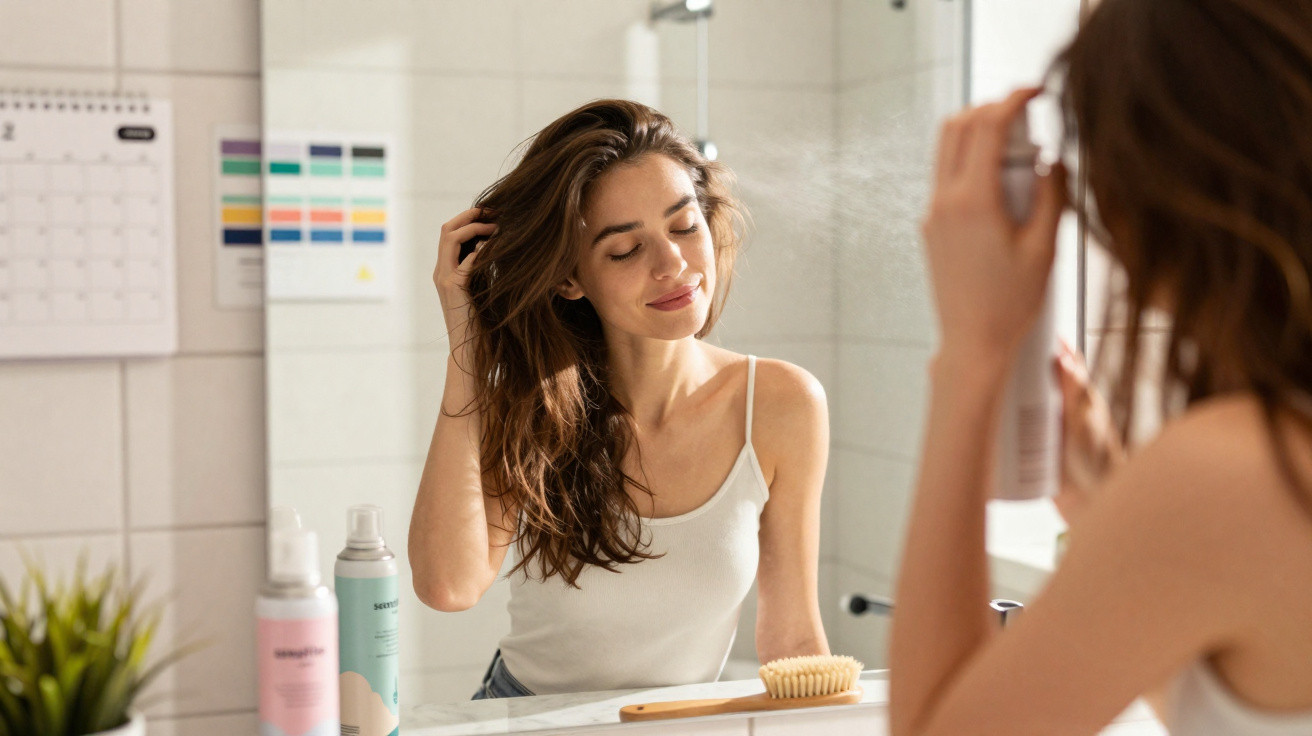
For many people, one task regularly gets pushed aside amid work, nursery pick-ups, commuting, exercise classes and completely unexpected appointments: washing their hair. Anyone who has stood exhausted in front of the mirror in the evening, wondering whether they really have the energy left to wash, blow-dry and style it, will know the feeling. This is exactly where a product that was underestimated for a long time comes into focus: dry shampoo – including a version designed with sensitive scalps in mind.
When the diary decides when you wash your hair
For many, everyday life feels like a non-stop race. Meetings, childcare, fitness sessions and shopping all need organising, while somehow still looking reasonably well groomed in between. Hair plays a bigger part in this than most people care to admit.
Washing hair is no longer simply a bathroom ritual; it can feel like a small project to schedule. When is there enough time to wash and blow-dry it? Can it be done before the video call? What about tomorrow's workout? And how long will curls hold before they start to drop?
For many people, the effort involved in having “fresh hair” has become part of the ongoing mental load – and this is precisely where modern dry shampoo comes in.
Anyone already dealing with stress, exhaustion or family responsibilities can quickly see conventional hair washing as another obstacle. A product that postpones that hurdle by a day or two can feel like a useful everyday lifeline.
Dry shampoo as an everyday helper – but kind to the scalp
For a long time, dry shampoo was viewed as an emergency option for festivals and travelling. It now sits in many bathrooms alongside hairspray and heat-protection spray, as an established part of the routine. Its purpose is to absorb oil and neutralise odour within seconds, without using water.
However, people with a sensitive scalp know the other side of the equation: itching, redness, flaking and a feeling of tightness. Those with psoriasis, eczema, keratoses or other skin concerns need to take particular care over what they put on their scalp.
This is where Batiste aims to help. The brand, regarded as the market leader in dry shampoo, has developed a dedicated range for sensitive scalps. It is intended to provide a quick refresh without causing unnecessary irritation.
Fresh hair in minutes with the new Batiste range
The range includes two versions, both based on a deliberately minimal and gentle approach:
- Scented version with aloe vera: Lightly fragranced and formulated with aloe vera to leave the scalp feeling soothed and soft.
- Fragrance-free version: Free from perfume and made with only a small number of ingredients, intended for people with very sensitive or easily irritated skin.
Both sprays have been dermatologically tested and carry Skin Health Alliance accreditation. This label indicates that the products are intended to be suitable for sensitive scalps.
Less friction, fewer washes and less stress for the skin – that is the idea behind dry shampoo for sensitive scalps.
What the spray actually does
It performs the same functions for which dry shampoo is known:
- Absorbing excess sebum at the roots
- Creating an immediate fresh feeling without water
- Making hair look cleaner and feel more manageable in a short time
- Adding lift at the roots when hair has gone flat
Washing conventionally less often means exposing the scalp less frequently to hot water, vigorous rubbing and potentially drying shampoos. This can noticeably ease an itchy or irritated scalp – provided the dry shampoo itself is well tolerated.
Fan figures: 94 per cent are convinced
Dry shampoo still divides opinion: some people swear by it, while others worry about clogged pores or dull-looking hair. That makes users' reactions to the Sensitive range particularly interesting.
In a consumer survey involving 158 participants, 94 per cent said these dry shampoos were suitable for sensitive scalps. This is a high level of agreement and suggests that the approach of using less irritating formulations is being well received.
94 per cent approval: for many, the spray moves from emergency product to a regular part of their care routine.
The products are designed to combine three features that may initially seem difficult to reconcile: saving time, convenience and consideration for sensitive skin. It is this combination that makes them so appealing to people with packed schedules.
How to use dry shampoo effectively
Despite all its benefits, dry shampoo remains a supplementary product. Used wisely, it can make hair care considerably less stressful. A few practical steps help achieve the best possible result.
Step-by-step application
- Brush hair thoroughly to loosen knots and remove styling residue.
- Shake the can well so the ingredients are evenly mixed.
- Work section by section to expose the roots.
- Spray directly onto the roots from around 20 centimetres away.
- Leave the product briefly, then massage it in using your fingertips.
- Brush carefully afterwards until no residue is visible.
The distance matters: spraying from too close can leave white patches or create a sticky feel. People with dark hair should check in daylight to make sure the product has been distributed properly.
How often is appropriate?
Dermatologists generally recommend limiting use. Some useful guidelines are:
- Use it no more than two to three times between washes
- Clean hair thoroughly with water and shampoo again after a few days at the latest
- Reduce use or stop altogether if the scalp becomes severely irritated
Anyone with a known skin condition should ask their dermatologist whether dry shampoo is suitable and how often it can be used.
Prices, versions and who may benefit from the product
Batiste's sensitive range is priced in the typical chemist-shop bracket. The 200-millilitre sprays, containing 120 grams, cost just under five euros.
The key question is who this product is particularly suited to. Experience suggests that three groups benefit especially strongly:
| Group | Challenge | Benefit of dry shampoo |
|---|---|---|
| Parents and working people | Very little time for involved hair care | Visibly fresher-looking hair in minutes |
| People with sensitive scalps | Itching, redness and easily irritated skin | Fewer wash days and a gentler burden |
| Active people | Frequent sweating and limited time between commitments | A quick refresh between two training sessions or meetings |
Risks, limitations and useful combinations
As practical as the spray may be, it is not entirely without risk. Using large amounts every day can place greater strain on scalp pores. In some cases, this can encourage flaking or inflammation. Allergic reactions to individual ingredients are also possible.
It makes sense to pair it with a calm, pared-back care routine: a mild shampoo, lukewarm water, minimal rubbing and thorough rinsing. A conditioning scalp lotion or soothing serum may then help stabilise the skin, particularly where sensitivity is already known.
Many users follow a mixed approach: one conventional wash day, followed by one or two “dry shampoo days”, then a thorough cleanse at the appropriate time. This maintains the convenience while preventing a lasting layer of product from building up on the hair and scalp.
Why a spray can noticeably reduce the mental load
At first glance, dry shampoo may look like little more than a cosmetic gimmick. On closer inspection, there is more to it. Knowing that oily roots do not automatically mean spending an entire evening in the bathroom can make busy weekly schedules feel more manageable.
Being able to move from “absolutely not” to “perfectly presentable” in a few minutes takes pressure off numerous situations: an impromptu meet-up after work, a last-minute video call, a parents' evening or an unplanned date. For people who already have plenty to organise, every saved intermediate step is a genuine advantage.
Anyone who reassesses their hair-care routine quickly notices how much it affects everyday life. A gentle, well-tolerated dry shampoo for sensitive scalps can make this area considerably easier – not as a replacement for water and shampoo, but as a Plan B tool that makes the to-do list a little lighter.
















Comments
No comments yet. Be the first to comment!
Leave a Comment