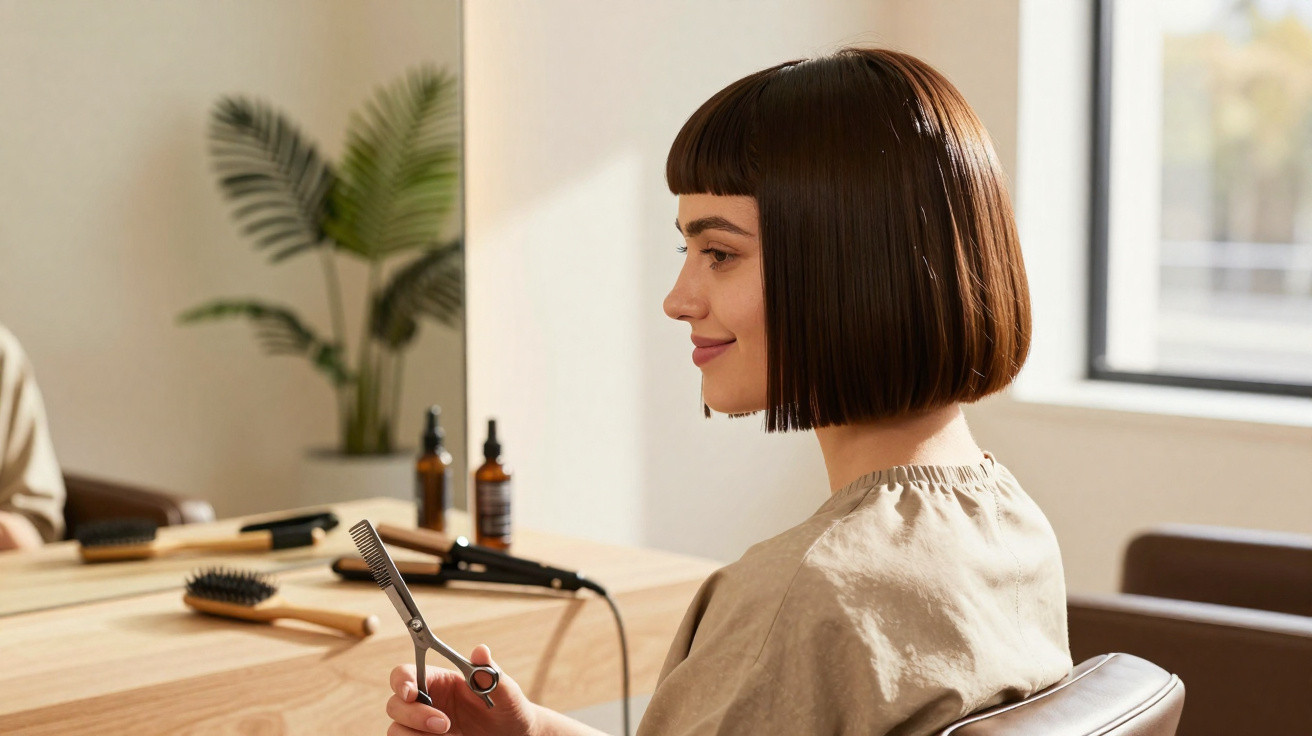
In Hollywood, actresses wear it; on catwalks, stylists do too; and in major cities, an increasing number of everyday women are choosing it: the blunt bob. This simple, precisely cut bob without layers is considered the most elegant short hairstyle for the coming season. It becomes especially interesting when adapted to your face shape, as this cut can make a surprisingly big difference.
What the blunt bob is really about
The blunt bob is all about a crisp edge. Hair is cut to one length, with no visible graduation or playful layers. The outline is graphic, almost architectural, which is precisely what gives the style its modern feel.
The central idea: a perfectly straight line around the head that deliberately frames and highlights the face.
International celebrity hairstylists describe the cut as:
- entirely free from layers
- one consistent length
- a defined, sharp outline around the head
- optionally worn with a centre parting or deep side parting
This strict concept may initially sound radical. In reality, though, the right length and texture make the blunt bob suitable for a remarkable range of women, from business-minded types to fashion fans.
Why this cut is becoming so popular
Fashion professionals celebrate the blunt bob for several reasons. It recalls the clean lines of the 1990s while looking timeless and exceptionally polished at the same time. It also transforms your overall appearance without requiring half an hour in front of the mirror every morning.
Another benefit is that the blunt bob is not limited to thick hair. Fine hair in particular can appear fuller thanks to its compact shape. As there are no layers, the weight remains at the ends, making the hair look noticeably stronger straight away.
Those with fine hair benefit particularly: the full edge gives hair the visual impression of weight and density.
With a good base cut, you can then experiment with texture, waves or shine. This is how a “simple” bob becomes a highly personal signature look.
Choosing the right blunt bob length for your face shape
Whether a blunt bob is genuinely flattering depends largely on its length. For this reason, stylists use clear rules of thumb for different face shapes.
Round face: an edge below the chin
For round faces, the aim is to create the impression of length. A sleek bob ending just below the chin or at mid-neck level is ideal. This produces a vertical effect, so facial contours appear narrower.
Square or broad face shape: shoulders as the reference point
Anyone with a pronounced jawline or broad face is well suited to a shoulder-length blunt bob. This length softens the hard jawline and makes the face appear longer overall. A slight curve at the ends can create an additional softening effect, provided the main line remains clear.
Oval face: bold graphic styling is welcome
Oval faces can handle more experimentation. A short, chin-length micro bob looks particularly modern here. With a strong graphic cut, ideally paired with a centre parting, it can have a very high-fashion effect. If you like, add subtle waves or wear it pin-straight.
Long face: volume at the sides
Long faces need balance through added width. A wavy blunt bob with volume at the sides achieves exactly that. Soft “S-waves” rather than beach waves are ideal: they create fullness around the sides without visibly disrupting the straight base line.
Heart-shaped face: draw attention to chin and cheeks
Heart-shaped faces generally have a broader forehead and narrower chin. A blunt bob with a side parting and ends gently turned inwards directs attention towards the cheeks and chin. The deep parting visually breaks up the forehead, while the inward-curved ends balance a narrow chin.
The “works-almost-everywhere” style
Many stylists swear by a slightly softer version: a sleek, clean base line with lightly tousled texture. This flowing, relaxed-looking bob flatters almost every face shape. The foundation remains precise, while the finish feels effortless-ideal for anyone who does not want a “hairdresser’s helmet hairstyle”.
Six blunt bob styles to show your hairdresser
For guidance, here are six versions that are easy to explain using photographs:
- A sleek blunt bob at mid-neck length for round faces
- A shoulder-length blunt bob for square or broad faces
- A chin-length micro bob for oval face shapes
- A wavy blunt bob with side volume for long faces
- A side-parted blunt bob with subtly inward-curved ends for heart-shaped faces
- A softly textured blunt bob with a relaxed finish that suits many types
If you are unsure, ask for two lengths to be marked: a cautious starting length and a bolder final length. If you like the result in the mirror, your hairdresser can shorten it again straight away.
Professional tips for your salon appointment
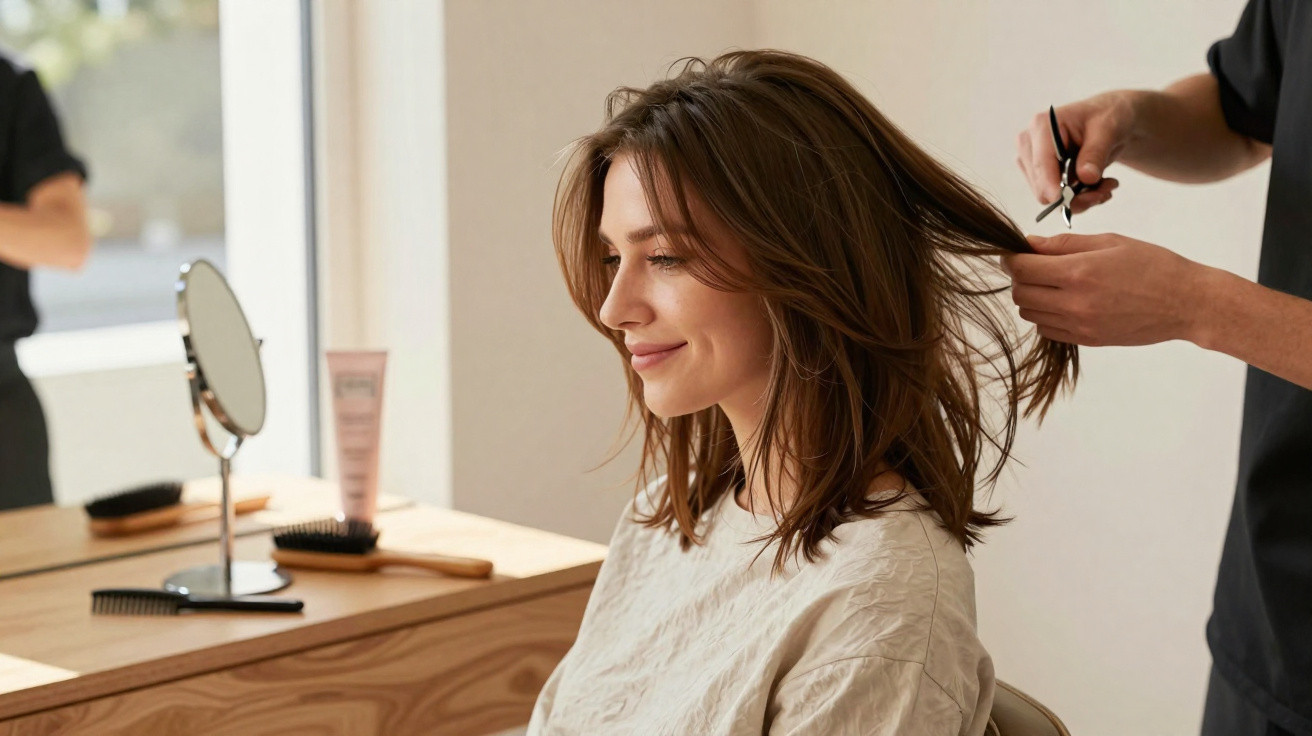
Before making the big cut, it is worth having a quick conversation with yourself: how much styling time is realistically available in everyday life? How quickly does your hair grow? What is your hair texture like? Your answers will help you communicate your expectations clearly in the salon.
Stylists recommend using specific inspiration pictures, for example of celebrity blunt-bob wearers with a similar hair texture. Length, parting and finish can all be agreed far more easily from a photograph than through words alone.
The more precisely the desired length and styling goal are described, the better the bob’s line can be planned.
During the cut itself, many professionals now favour a highly precise, almost “sculptural” approach. The hair is aligned exactly in several sections so that the line remains neat when dry and does not “spring away”.
Styling: from natural texture to glass hair
The blunt bob becomes especially versatile in day-to-day styling. There are three main approaches that cover almost every variation.
1. Air-drying and natural texture
Many hairdressers love this uncomplicated option: wash your hair, work in a light leave-in product and let it air-dry. Your natural texture can remain, while the clean edge still provides a chic frame. Run your fingers through once, adjust the parting, and you are done.
2. S-waves instead of beach waves
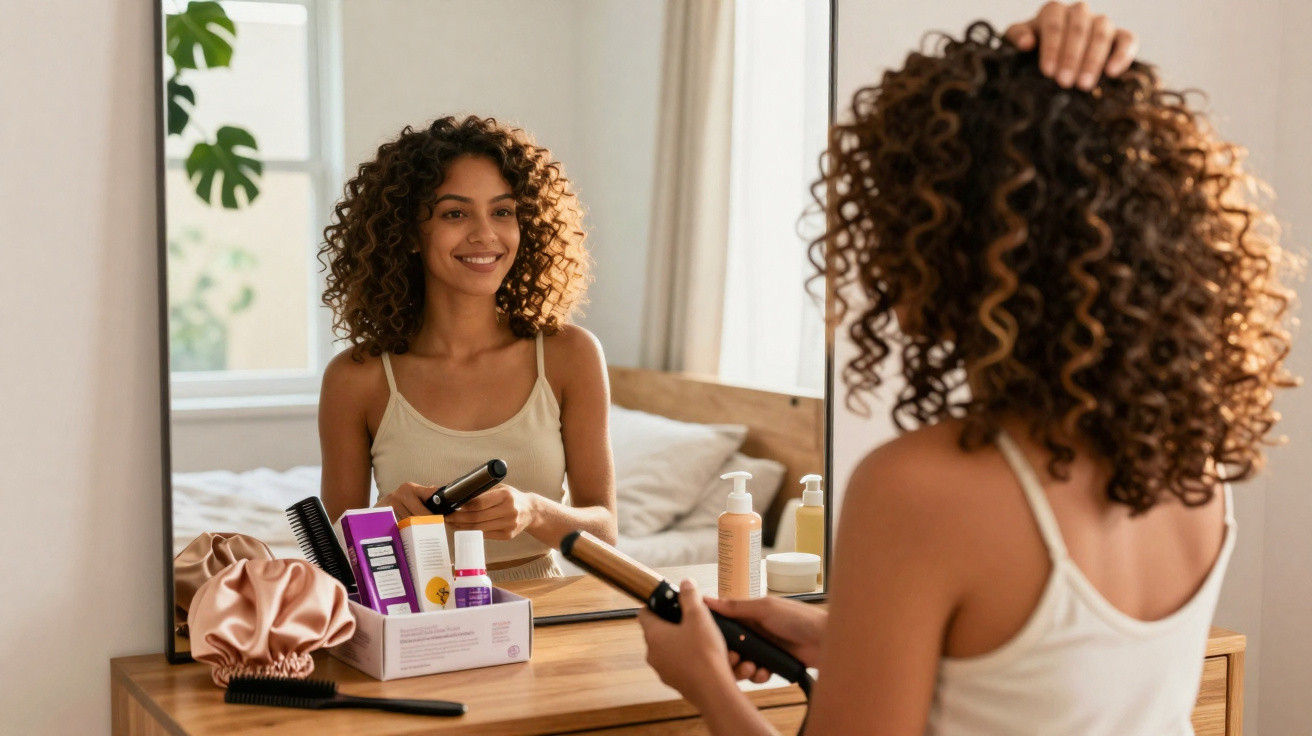
If you want waves, avoid styling away the cut’s base line. Rather than classic beach waves, which often create uneven zigzag textures, professionals recommend S-waves created with straighteners:
- Section the hair into medium-sized pieces
- Guide the straighteners in a gentle curve to form a soft “S”
- Keep the ends as straight as possible to preserve the line
This creates volume without losing the character of the cut.
3. The ultra-sleek glass-hair look
For occasions or office outfits, opt for an exceptionally smooth version with mirror-like shine. A light blow-dry lotion or cream helps here; choose one that smooths rather than adds bulk. Blow-dry with a round brush or paddle brush, then touch up selected sections with straighteners. Apply a drop of serum to the ends only, otherwise the roots can quickly look greasy.
How high-maintenance is the blunt bob really?
The good news is that everyday life with a blunt bob is usually simpler than with long hair. Drying time and styling effort are significantly reduced. Even so, the cut needs regular maintenance to prevent the straight line from becoming frayed.
| Aspect | Recommendation |
|---|---|
| Cutting interval | every 6–8 weeks |
| Everyday styling time | 5–15 minutes, depending on expectations |
| Suitable for fine hair | yes, it often looks considerably fuller |
| Suitable for thick hair | yes, it may need thinning slightly |
Fine hair benefits from volumising mousse at the roots, whereas thick hair responds better to smoothing, frizz-reducing products. In every case, heat protection is worthwhile if straighteners or a hairdryer are used regularly.
Other factors to consider before choosing the cut
Before the length comes off, it helps to take an honest look at your lifestyle and personal style. If you enjoy wearing your hair in a ponytail, remember that this becomes difficult with a very short micro bob. Shoulder-length versions, on the other hand, still allow a small nape ponytail or half-up styles.
Accessories also change the look considerably. Headbands, clips or one side tucked behind the ear can quickly turn this understated cut into an evening hairstyle. Because the line is so defined, even small changes have an immediate, more noticeable effect.
Anyone who has previously had heavily layered or very long hair often experiences a “fresh-start effect” after the cut. That can feel liberating, but it also comes with responsibility: the outline is always visible, and damaged ends or an overgrown cut show up more quickly.
For many women, that is exactly the appeal of the blunt bob: it demands a little poise-and rewards you with a look that appears polished and intentional even with jeans and a T-shirt.












Comments
No comments yet. Be the first to comment!
Leave a Comment