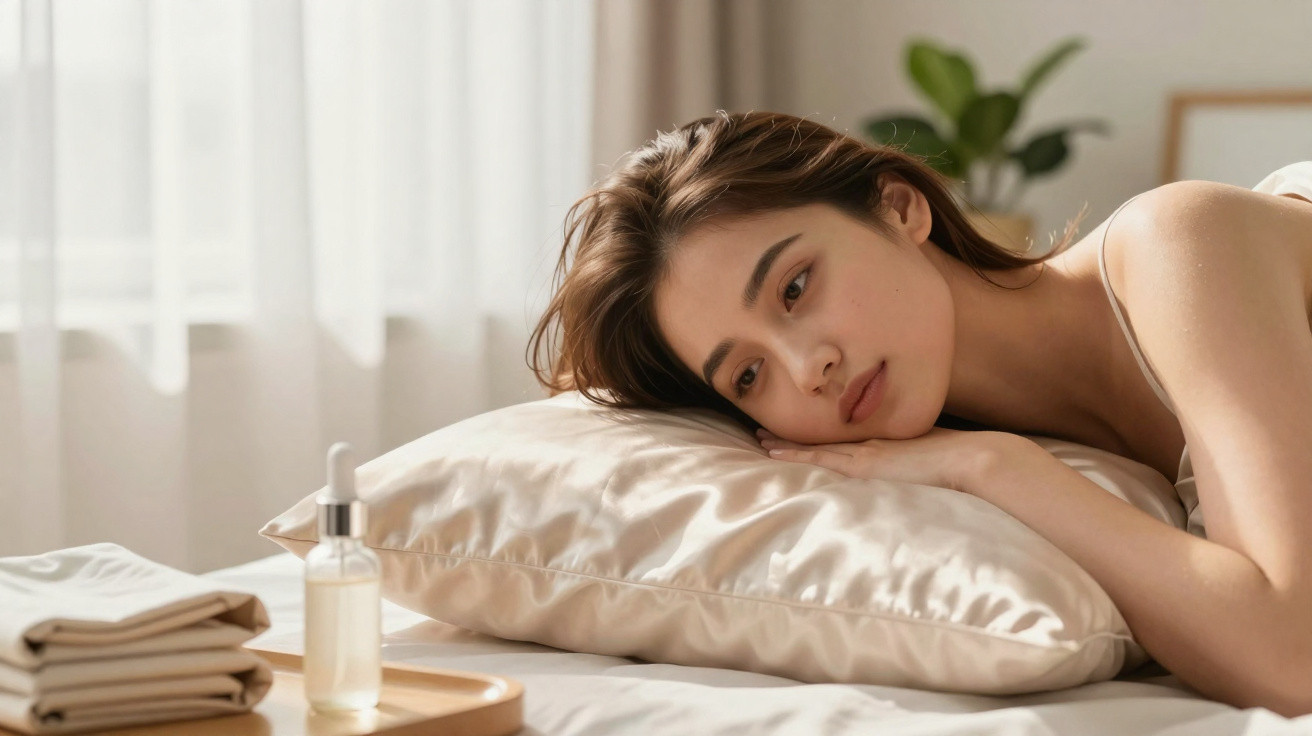
Sarah studied her face in the bathroom mirror, running a finger over the pronounced sleep marks on her left cheek. Every morning brought the same lines, plus a new patch of blemishes where her face had rested against her cotton pillowcase overnight. Her formerly springy, well-defined curls were limp and frizzy on one side - another consequence of spending eight hours rubbing against coarse material. We all know that realisation: your bedding may be undermining your beauty sleep. But what if the answer were easier than an expensive skincare regimen?
The Overlooked Problem in Your Bedroom
Conventional cotton pillowcases generate friction against fragile facial skin and individual hair strands all night long. That repeated contact can do more than cause short-lived imprints: it may speed up the development of lasting wrinkles and provoke inflammatory acne reactions. After all, your face is pressed against this material for around one-third of your life.
In 2019, Manhattan dermatologist Dr. Jennifer Walsh began identifying a recurring theme among her patients. The people most concerned about morning spots and damaged hair had one habit in common: they consistently slept on cotton pillowcases. “I began asking every patient about their bedding,” she recalls. “The correlation was impossible to ignore.”
Cotton's absorbency can be unhelpful during the night. It draws in your skin's natural oils and costly evening serums, while retaining bacteria and leftover product. This creates the perfect breeding ground for the very skin issues you’re trying to prevent. At the same time, its coarse fibres pull on the hair cuticle, leading to frizz and breakage.
Silk Pillowcases: A Different Approach to Sleep
Silk pillowcases create an entirely different overnight surface for both hair and skin. Rather than catching against your face, their smooth protein-based fibres allow it to glide. Recent textile research indicates that silk cuts friction by up to 43% compared with cotton. In as little as a few nights, your reflection in the morning can look noticeably different.
It is easy to assume that every type of silk offers the same quality, but the reality is more complicated. Synthetic fabrics marketed as “silk-like” do not provide identical advantages, while poor-quality silk may even feel coarser than good cotton. Realistically, few people want to decode momme weights and mulberry grades simply because they would like healthier-looking skin.
What matters is knowing the specific features dermatologists mean when they recommend silk bedding:
“I tell my patients to look for 100% mulberry silk with a momme weight between 19-25. This provides the perfect balance of durability and skin benefits without breaking the bank.” – Dr. Amanda Chen, Board-Certified Dermatologist
- Mulberry silk (the highest quality and smoothest-feeling option)
- 19-25 momme weight (the ideal thickness for contact with skin)
- Grade 6A rating (for reliably consistent fibre quality)
- Natural, undyed colours (to limit chemical exposure)
How Your Skin Changes Overnight
The effects go beyond appearance: they are biological too. Silk's inherent qualities provide conditions in which skin may repair itself more efficiently while you sleep. Less friction results in reduced mechanical irritation, and silk's lower absorbency helps skin keep more of its protective moisture barrier. Some people report fewer blemishes during the first week, although outcomes differ according to skin type and other influences.
| Key point | Detail | Value for the reader |
|---|---|---|
| Friction reduction | 43% less drag on skin and hair | Fewer sleep lines and reduced hair breakage |
| Moisture retention | Non-absorbent surface preserves skin oils | Better hydration and reduced acne triggers |
| Hypoallergenic properties | Natural resistance to dust mites and bacteria | Cleaner sleep environment for sensitive skin |














Comments
No comments yet. Be the first to comment!
Leave a Comment