
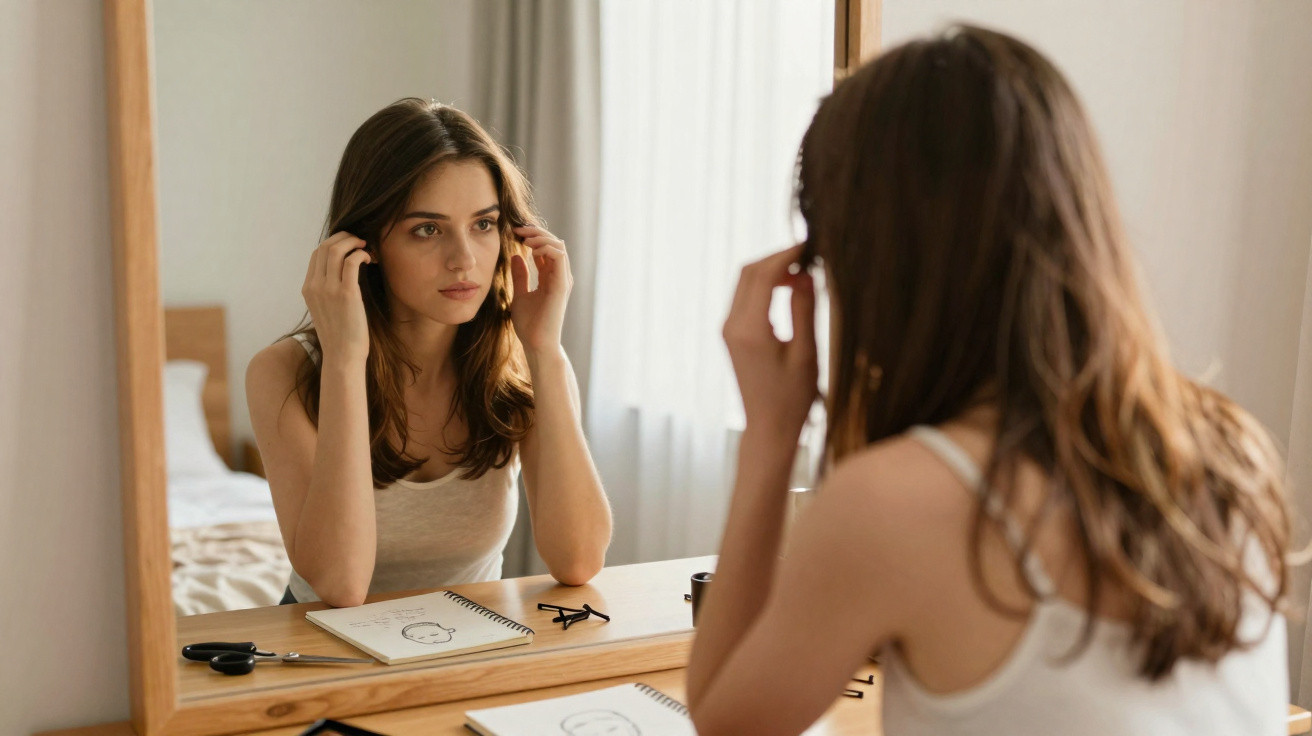
Her jaw is tight, her shoulders have crept up towards her ears, and her fingers keep twisting the same lock of hair. The city races by outside, while every part of her body is signalling “too much”.
Without thinking, she raises a hand to her head and begins making circles at her temples. The movements are small and unhurried. It is almost possible to see the exhale happen within her. Her gaze grows gentler, and her mouth loosens into what can only be relief. Nothing around her has altered, but her scalp has.
A scalp massage can seem insignificant: a few fingertips, light pressure and a discreet ritual in the middle of mayhem. Yet when your skull seems to gently separate from its helmet of tension, it can feel as though someone has lowered your stress by several levels. So, can you create that feeling at home whenever you need it?
Why a scalp massage appeals to your stressed brain
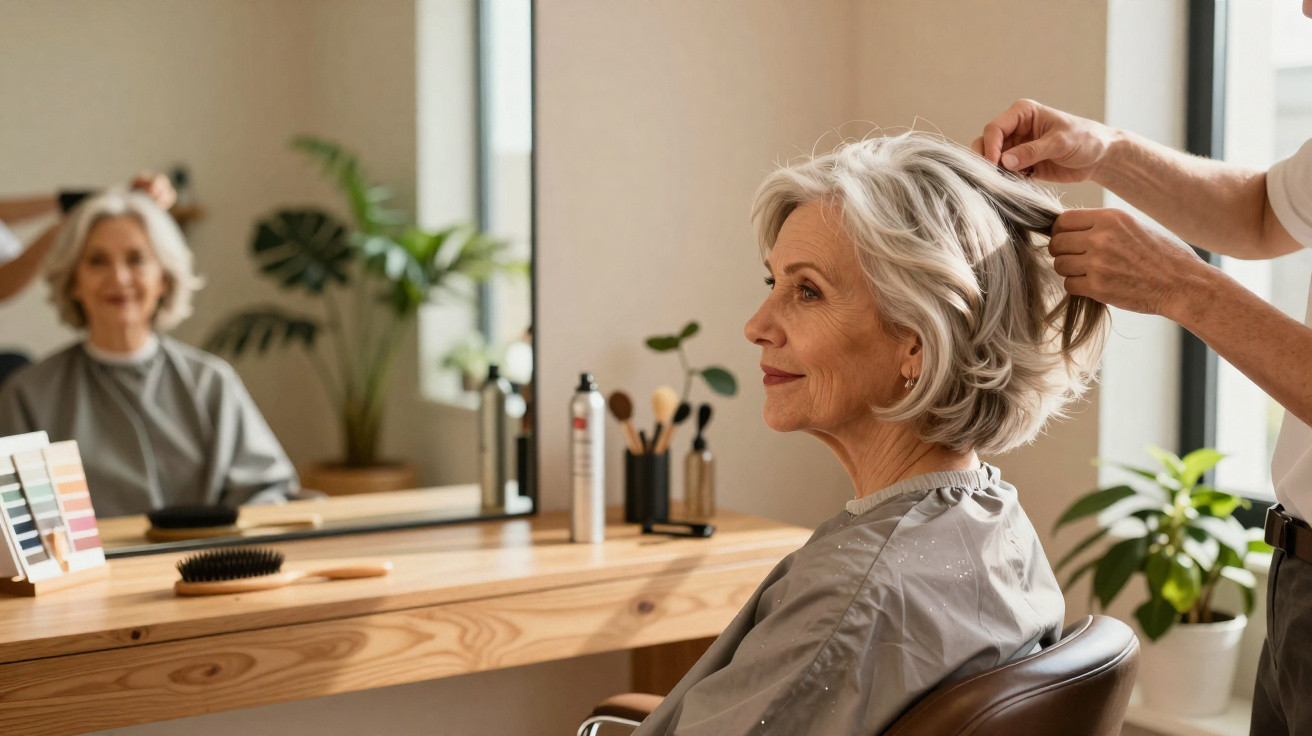
Stress is not confined to your thoughts; it settles in your head too. Hairdressers see it all the time. Speak to one and you will hear a familiar account: as soon as they massage a client’s scalp at the basin, the person softens. Some become less talkative. Others stop halfway through a sentence. Some fall entirely silent, close their eyes and let warm water and circular strokes reshape their day.
What may appear to be a “pampering extra” is actually a pause for your nervous system. Your scalp contains countless nerve endings and small muscles that tense repeatedly without your awareness. As fingertips press, glide and lightly lift the skin, they send a clear message to the brain: you can let your guard down, if only briefly.
A Japanese study into head massage found that just 15 minutes a day for a few weeks reduced stress hormones and even enhanced sleep quality. Participants said they felt “lighter” and more settled, both during the massage and hours later. They were not spa devotees with unlimited spare time, either; they were ordinary workers fitting the practice between emails and dinner.
We often imagine that reducing stress requires sweeping changes: a silent retreat, an extended holiday, or somewhere without Wi-Fi. It is an appealing idea, but hardly one that fits around school runs, household bills and late-night deadlines. A brief, purposeful scalp massage rejects that all-or-nothing approach. It fits into the life you already lead, and the body you are already carrying through it.
Biologically, mild pressure on the head encourages blood flow in the skin and upper muscle layers. Improved circulation brings oxygen and nutrients to where they are needed, while gently prompting the parasympathetic nervous system, often known as “rest and digest”. That is why your breathing becomes slower, your jaw releases and your thoughts feel less jagged. Massage does not remove your problems; it turns down their volume.
A simple anti-stress scalp self-massage for your sofa
Begin with clean or dry hair, wherever you happen to be: on the sofa, in bed or in the armchair where you scroll endlessly each evening. Set the pads of your fingers, rather than your nails, just above the hairline at your forehead. Position them from one temple to the other. Press softly into the scalp, then make little circles, as though slowly stirring thick honey across the surface of your head.
Gradually move your fingertips back a few centimetres at a time, maintaining those measured circles. Travel across the crown and towards the back of your head, ending at the soft dip where the neck meets the skull. Once there, use tiny upward lifts: catch the skin slightly, draw it gently away from the bone, then let go. This helps release the area where tension often gathers.
Repeat the route, this time paying attention to pressure points. At the temples, pause and hold pressure for three deep breaths. Place your thumbs behind your ears and press along the bony ridge millimetre by millimetre, as if lowering a row of tiny tension switches. To finish, cup the back of your head with both hands, fingers wide apart, and simply maintain the contact as you breathe slowly in through your nose and out through your mouth. Let it be imperfect and gentle. Your scalp will let you know when it has had enough.
Most people either scrub their scalp as though cleaning a pan or barely touch it at all. Neither approach tends to help, and both can leave you disappointed. Aim for pressure that is “firm but kind”: enough to shift the skin across the bone, but never so much that your body braces against your own hand. If your shoulders rise or your jaw begins to clench, your body is saying, “Too much.” Reduce the pressure.
Another common error is holding out for the “perfect” setting: candles, oil and a spare hour. Let’s be honest: hardly anyone genuinely does that every day. Think in terms of micro-rituals instead. Spend two minutes before cleaning your teeth, five minutes when you collapse on the bed and instinctively reach for your phone, or one minute in the shower while your conditioner works. These small stolen moments of touch quietly build up.
Take care with tools, too. Plastic claw massagers and vibrating helmets may be enjoyable, but pressing them until they hurt puts your nervous system into protective mode. Your hands are sufficient. They recognise where your head feels sore, where your skull seems strangely numb and where you need a little gentleness. That is the map that matters.
“A good scalp massage is less about perfect technique and more about attention,” says one London-based trichologist I spoke to. “You’re telling your nervous system: ‘I’m here, I’m listening.’ That’s what calms it down.”
To make this small ritual manageable on hectic days, treat it as something that slips into the gaps in your existing routine, rather than another task on your list. Oil is unnecessary, but if you like using it, choose a few drops of something uncomplicated: jojoba, grapeseed or a lightweight hair oil you already have. Rub it between your palms before applying it to the scalp rather than the lengths of your hair. The aim is sensation, not a glossy blow-dry.
- Keep it brief at first: 3–5 minutes is enough to notice a change.
- Breathe more slowly than normal as you massage.
- Explore tight areas with curiosity rather than criticism.
- Stop if you develop a headache or feel dizzy.
- Make it a small “offline moment”: no screens and no multitasking.
What a daily scalp massage ritual can change
There is something unusual about touching your own head deliberately: you begin to register its internal weather. You notice the sharp tension band that appears behind your ears at 4 p.m., the ache at your crown during weeks of poor sleep, and the numb patch by your temple after long stretches in front of a screen. That is not self-absorption; it is information.
With regular practice, scalp massage becomes less about seeking immediate relief and more about creating a habit of checking in with yourself. You may find yourself rubbing your temples before a difficult call, rather than only afterwards. Perhaps you take thirty seconds in the workplace bathroom to press your thumbs into the tender spot at the base of your skull and breathe. It is discreet, almost unnoticeable care, yet it changes how you get through the day.
There can be a wider effect as well. People who take up this kind of micro-ritual often sleep slightly more deeply, experience fewer tension headaches or simply become less snappy with those they care about. This is not because life has suddenly become easier, but because their nervous system is no longer stuck on permanent red alert. Scalp massage won’t fix a toxic job or a chaotic world. It can, however, make a small safe space beneath your fingertips, precisely where stress sits: across the surface of your skull, waiting to be moved with care.
| Key point | Detail | Benefit for the reader |
|---|---|---|
| Areas to target | Temples, crown, base of the skull and behind the ears | Know where to massage to feel less tension quickly |
| Ideal duration | 3 to 10 minutes, once or several times daily | Keep the practice realistic, even with a busy schedule |
| Quality of touch | Slow movements, firm but gentle pressure and calm breathing | Maximise relaxation without causing pain or discomfort |







Comments
No comments yet. Be the first to comment!
Leave a Comment