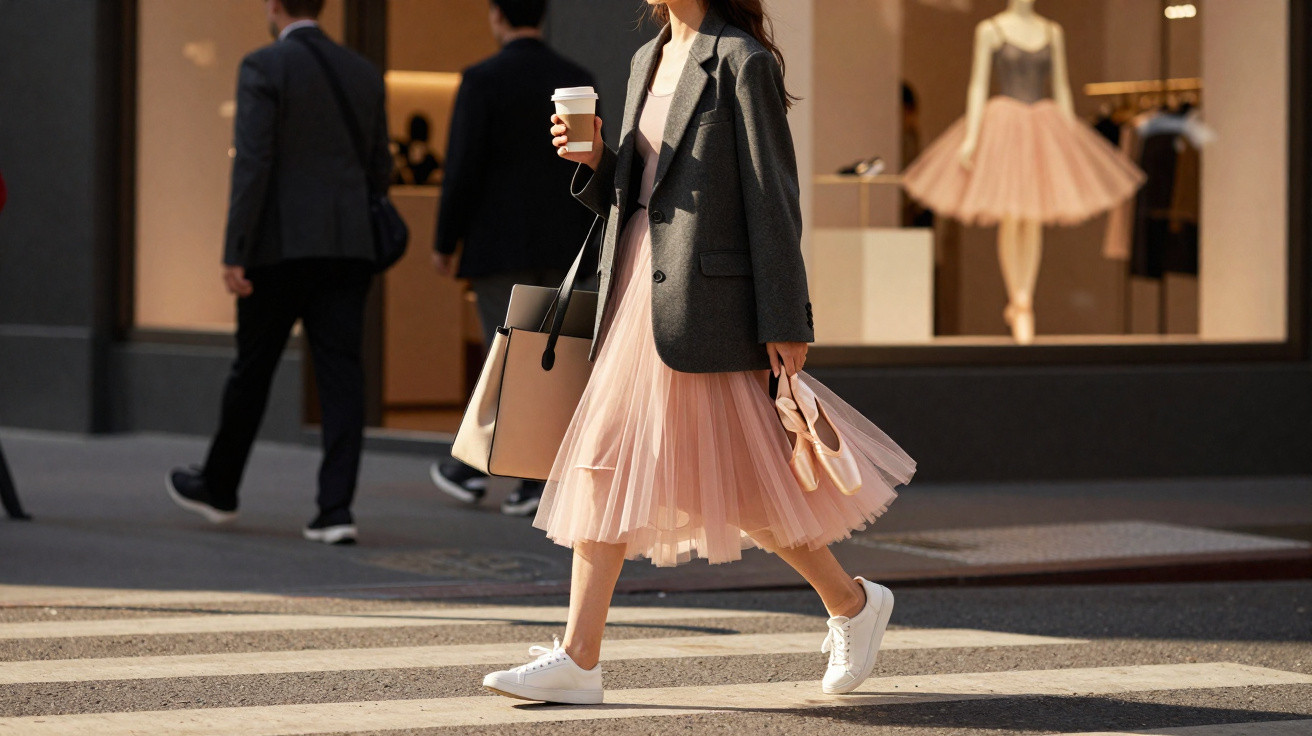
From luxury-label catwalks and pop stars on tour to everyday life: a classic piece of balletwear is stepping back into the spotlight.
All of a sudden, it is everywhere: voluminous tulle, layered skirts and a silhouette that calls to mind both the ballet studio and a music video. Designers are bringing the tutu back in a major way for 2026 – raising an obvious question: will this look remain a costume for performances and Fashion Week, or can the ballerina skirt genuinely make its way into ordinary wardrobes?
The tutu comeback: from Dior to the pop stage
Anyone following fashion shows this season or attending pop concerts is unlikely to miss one detail: the tutu skirt has returned. It floats down the catwalk at the major couture houses, while on pop stars’ tours it adds drama and movement. Across social media, looks pairing tulle skirts with trainers and hoodies are multiplying rapidly.
The tutu skirt is considered a symbol in 2026 of a renewed appetite for playfulness, volume and femininity – far removed from purely business-like silhouettes.
For years, the tutu skirt was dismissed as overly kitsch or simply “yesterday’s news”. Now, designers are using that very reputation to create contrast. In place of rigid business suits and minimalist lines, tulle billows across runways, flutters on stage and appears in street-style photographs. The industry is responding to a certain fatigue with sharply tailored suit looks.
Fashion history: why the tutu skirt never fully disappeared
In truth, the tutu skirt never really went away; it merely changed stages. From classical ballet to film and pop music, then on to iconic television characters, it has repeatedly reappeared whenever fashion has wanted to convey fun, provocation or girlish fantasy.
As early as the Nineties, pop figures such as Madonna wore tulle skirts in deliberate defiance of the rules, styling them with corsets, boots and leather jackets. Later, a television character such as Carrie Bradshaw turned the tutu skirt into an emblem of a woman who plays with fashion rather than allowing dress codes to intimidate her.
Its appeal lies in its versatility. A tutu can be stiff and sculptural, resembling an art object. It can also drape softly, almost like an ordinary pleated skirt. It may be mini, midi or floor-length. Each version tells a different story, from princess fantasy to knowingly playful street style.
How designers are interpreting the tutu trend in 2026
The 2026 catwalks demonstrate just how many ways this trend can be understood:
- Dior: short tulle skirts with long trains that reference both couture and ballet.
- Chloé: soft, long tulle skirts in colour – wearable, light and almost bohemian.
- Avant-garde labels: lavish tulle constructions, in some cases as complete dresses, that look almost like stage costumes.
All these looks have one thing in common: tulle remains the leading player. At times it has a delicate shimmer; at others it appears almost architectural. Anyone drawn to high-impact fashion imagery will find plenty of inspiration here – even if not every couture idea translates directly to the street.
Ballerina aesthetics meet the business suit
The current trend occupies an intriguing tension between two opposing moods. On one side, blazers, trouser suits and tuxedo cuts have dominated for years. Everything is clean, angular and efficient. On the other, there is a growing desire for lightness, playfulness and a touch of theatre in everyday dressing.
The tutu skirt acts as a counterpoint to the strict lines of blazers and tuxedos – a statement against taking the wardrobe too seriously.
At the same time, the look draws on elements of ballet aesthetics: wrap cardigans, tights, bodysuits and soft knitwear. Under the label “ballet-inspired look”, more and more outfits are combining sportiness with romance. The tutu skirt is its most striking element, but not its only one.
How can a tutu skirt be worn day to day?
For fashion fans, the central question is this: how do you wear the piece without looking as though you are about to step on stage? Stylists offer several clear guidelines.
Rule number one: contrast, not costume
To make a tutu skirt suitable for everyday wear, an outfit needs contrasting elements. In practical terms, that means:
- No head-to-toe ballet look: avoid wearing a tulle skirt, pointe shoes, a glittery bodysuit and a bun all at once.
- Pair it with everyday basics: a T-shirt, plain blouse, hoodie, denim jacket or leather jacket.
- Choose flat footwear: trainers, loafers, ballet flats or sturdy boots – anything that tones down the glamour slightly.
A soft tulle skirt that is not overly stiff can look almost like a standard pleated skirt in daily life. The difference is in its volume and movement. Those who prefer a more understated first attempt should choose muted shades such as black, navy or beige, and style them with simple knitwear.
Which length works for which occasion?
| Length | Effect | Suitable occasions |
|---|---|---|
| Mini | Playful, quickly becomes very eye-catching | Party, concert, festival |
| Midi (around the knee) | Balanced, fashionable, easy to combine | Date, dinner, office with a relaxed dress code |
| Maxi | Dramatic, almost like an evening gown | Events, weddings, galas, red carpets |
For many people, a midi length is likely to be the best place to start. It sways as you walk without revealing too much bare leg, and works particularly well with trainers or flat sandals.
Who is the tutu trend suited to?
The good news is that tulle skirts can work for many different body types, provided the cut and styling are right. A few useful pointers:
- Want more volume at the hips? Multi-layered tulle, perhaps with a petticoat, highlights curves and creates an hourglass silhouette.
- Want less volume? Choose softly draping tulle, avoid excessive layers and opt for darker colours.
- Petite height? Shorter or knee-length styles are preferable, paired with shoes that do not create harsh horizontal breaks.
- Tall height? Floor-length tulle skirts can work beautifully too, ideally with some weight in the fabric so that they do not stand out too much.
Anyone unsure can begin with a simple black tulle skirt, worn with a white T-shirt, denim jacket and trainers. This makes the skirt feel less like a costume and more like a fashionable accent.
How sustainable is a tulle skirt, really?
Amid all the fashion excitement, one point should not be overlooked: tulle is usually made from synthetic fibres such as polyester or polyamide. These fabrics are durable, but they release microplastics and are difficult to recycle.
Those who want to embrace the trend more responsibly have several options:
- Buy second-hand tulle skirts or vintage pieces.
- Look for styles made from recycled fibres.
- Choose a skirt that works with several outfits rather than for one occasion only.
That way, the tutu skirt stays in the wardrobe for longer instead of becoming a short-lived social-media prop.
Styling ideas: from the office to a concert
A tulle skirt can do far more than simply say “princess” – it can be used in surprisingly varied ways:
- Office, relaxed dress code: navy midi tulle skirt with a fine roll-neck jumper, blazer and loafers.
- City break: knee-length tulle skirt, logo T-shirt, denim jacket, white trainers and a crossbody bag.
- Dinner: black tulle skirt, satin top, knitted cardigan, delicate jewellery and simple ballet flats.
- Concert: short tulle skirt, band T-shirt, leather jacket and chunky boots.
The look becomes particularly interesting when materials collide: chunky knitwear with fine tulle, trainers with a “princess silhouette”, or a business blazer with a swaying skirt. The less perfect and costume-like the overall result appears, the more contemporary the trend looks.
Why the tutu skirt is more than a fashion gimmick
There is more behind the hype than nostalgia. Tulle skirts represent a kind of fashion that expresses feelings: romance, exaggeration and self-irony. Wearing one signals, to some extent, that clothes can still be playful despite packed schedules, deadlines and dress codes.
At the same time, the trend demonstrates how closely pop culture and high fashion are intertwined. When designers, television characters and pop stars all promote the same look, it often makes its way on to the street. The tutu skirt is a prime example: born in ballet, elevated by couture, made famous through music videos and television series, and now reworked for street style.
Those who take the step soon notice that a tulle skirt changes more than an outfit; it also changes the wearer’s posture. You move differently, occupy more space and play more consciously with your appearance. That very feeling makes the trend so appealing – and could ensure that the ballerina skirt is not merely making a brief appearance in our wardrobes in 2026.











Comments
No comments yet. Be the first to comment!
Leave a Comment