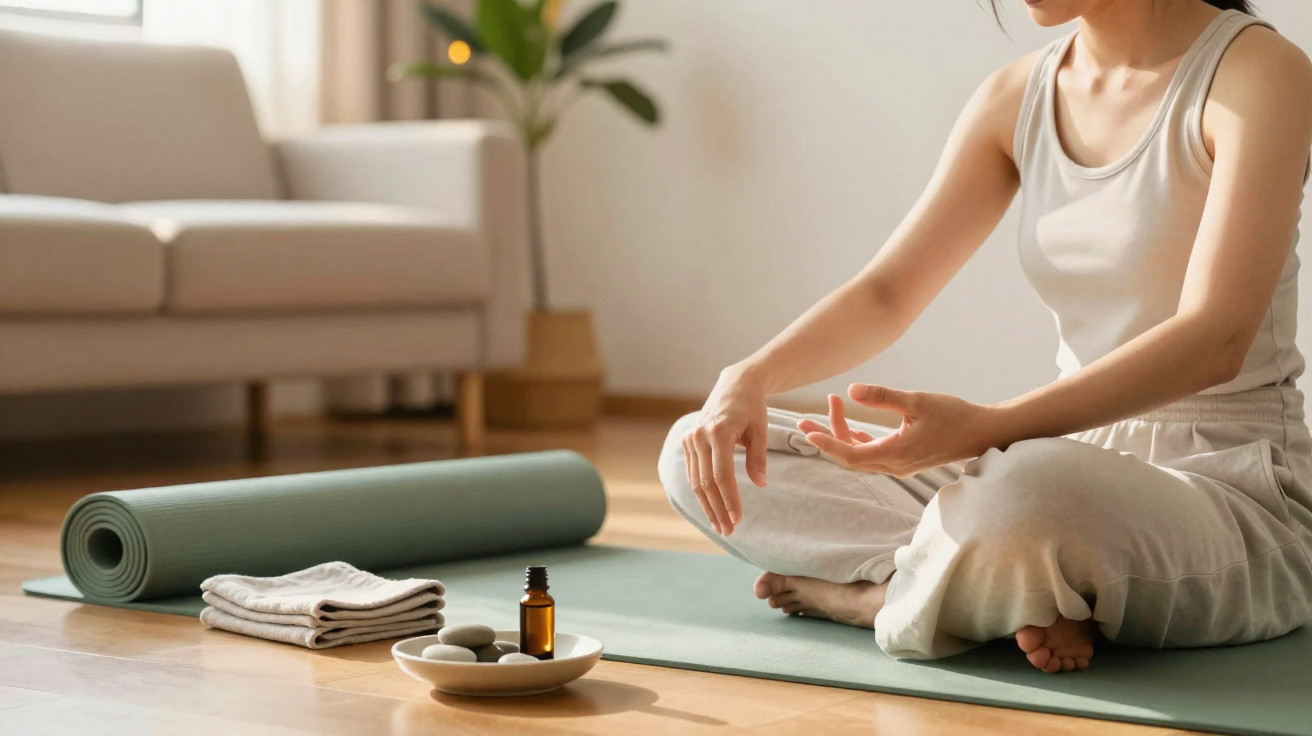
Managing anxiety naturally with approaches including acupressure, yoga and breath work can be very effective. If you are a practising Yoga teacher, you may wish to incorporate acupressure into your class themes. Alternatively, create a self care routine of your own that combines acupressure points, yoga poses and breathing techniques.
Natural approaches may help regulate the nervous system, encourage relaxation and strengthen resilience. Combining breath work, movement, acupressure and lifestyle habits can support emotional balance.
Using light pressure on particular points of the body may calm the mind and lower stress. Movement releases endorphins, which can ease muscular tension and settle the mind. Some breathing techniques trigger the parasympathetic state (rest and digest), which may help relieve anxiety.
Bonus lifestyle adjustments, including cutting down on stimulants, maintaining a consistent sleep routine and moving regularly, can also be helpful for managing anxiety levels. Have you explored self care rituals such as herbal tea before bed, warm baths, journalling or aromatherapy treatments?
Try this guided routine combining acupressure, yoga, and breath work to support anxiety management. It can be used as a morning practice, a midday reset or an evening wind-down.
Total Time: approximately 20–30 minutes
Opening breath work and acupressure for relaxation
1. Opening Breath-work (3–5 min)
Begin in a comfortable seated position. Close your eyes and take three deep breaths, letting tension go with every exhale as you sigh out through your mouth.
4 Part or Square Breathing:
- Breathe deeply in through your nose for 4 seconds.
- Hold for 4 seconds.
- Slowly exhale for 4 seconds, then hold your breath again for 4 seconds.
- Continue for 5–7 rounds.
2. Acupressure for Relaxation (5 min)
While breathing deeply, lightly press or tap each of the following points for 1–2 minutes.
- Yintang (Third Eye Point) – Using your index finger, apply pressure between the eyebrows. It calms the shen and clears the mind.
- Pericardium 6 (Nei Guan) – Locate this point two finger-widths below the wrist crease. It can ease emotional tension and calm the shen.
- Heart 7 (Shen Men) – Press the wrist crease in line with the little finger. This soothes the nervous system and may be helpful if you experience insomnia.
- Kidney 1 (Yong Quan) – Press the middle of the sole of the foot, beneath the second and third toes, where the skin colour changes from red to white. It grounds energy and eases overthinking.
Tip: Why not use these points while lying down? Try massaging them gently for deeper relaxation.
Yoga poses and breathing techniques for anxiety release
3. Suggested Yoga poses for Anxiety Release (10–15 min)
1. Child’s Pose (Balasana) – 2 min
- Keep your knees wide and big toes touching, with the arms extended forwards.
- Place your forehead on the mat.
- Take deep breaths into the lower belly.
2. Cat Stretch – 1 min
- Come onto hands and knees; inhale to arch your back and look upwards (Cow).
- Exhale to round the spine and tuck the chin (Cat).
- Move slowly, connecting each movement with your breath.
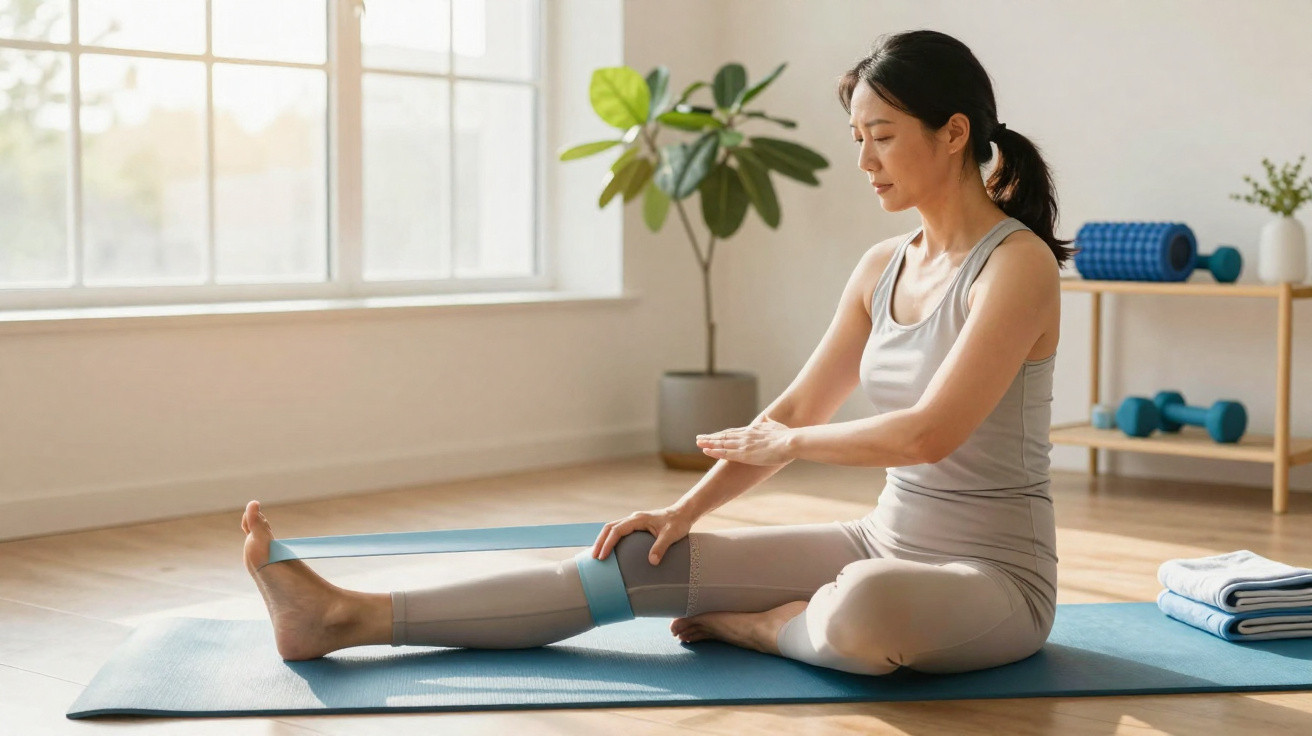
3. Seated Forward Fold (Paschimottanasana) – 2 min
- Sit with your legs outstretched, hinge from the hips and fold forwards.
- Soften the knees if necessary.
- Allow your head to relax.
4. Legs-Up-The-Wall (Viparita Karani) – 5 min
- Lie on your back with your legs supported against a wall.
- Rest your hands on your belly or by your sides.
- Breathe in a slow, deep way.
4. Closing Breath work & Relaxation (3–5 min)
Alternate Nostril Breathing (Nadi Shodhana)
- Close the right nostril and inhale through the left.
- Close the left nostril and exhale through the right.
- Inhale through the right, then exhale through the left.
- Repeat for 5 rounds.
This balances emotions and clears the mind.
Lie down in Savasana (Corpse Pose) for 2–3 minutes.
- Release any remaining tension.
- Notice your breath, body and mind becoming still.
When you are ready, gently open your eyes. Pause to feel gratitude-for your breath, your body and this peaceful moment.
Join me online every Monday at 5pm for a Vinyasa yoga practice; the booking link is available through the website. To receive weekly Yin Yoga class recordings, please contact me directly.



Comments
No comments yet. Be the first to comment!
Leave a Comment