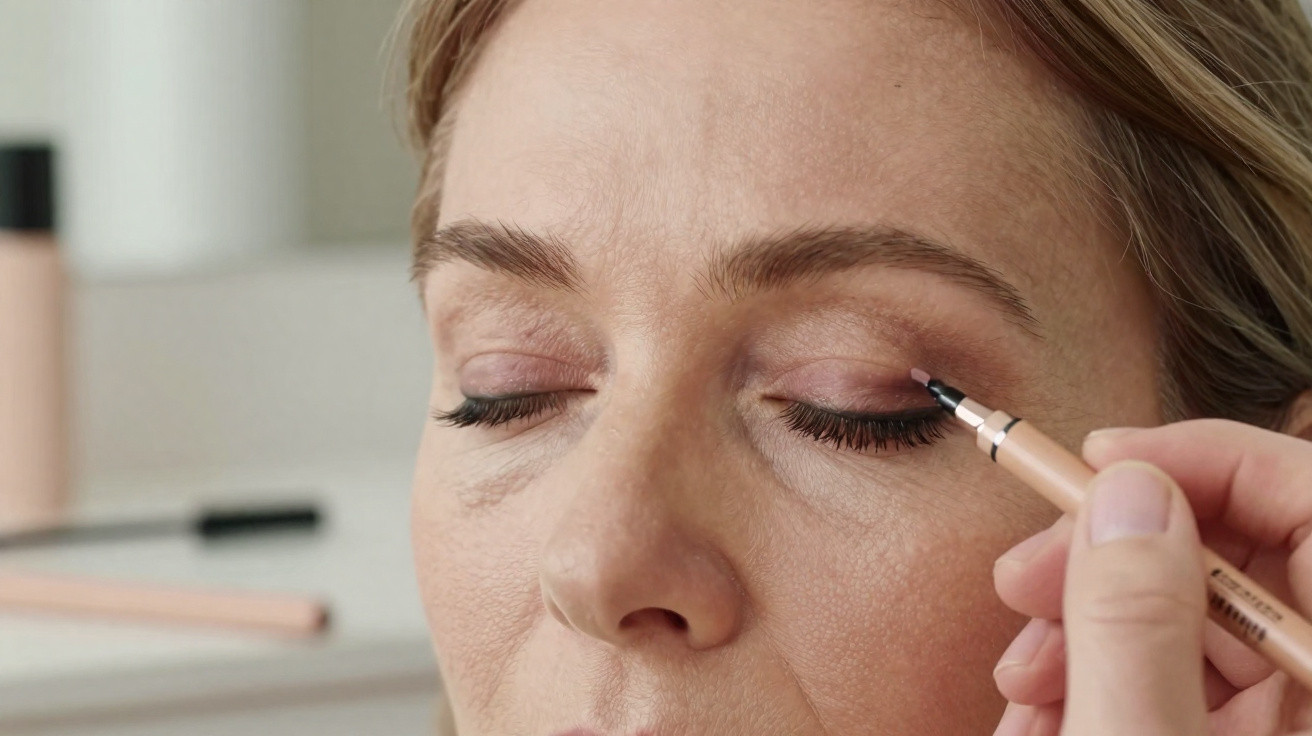
Tired-looking eyes can be one of the most frustrating things to tackle with make-up. Concealer may settle into fine lines, a once-reliable black liner can suddenly feel severe, and adding more product often makes the whole area look heavier.
A useful alternative is to change the placement rather than pile on coverage. A soft nude pencil on the lower waterline, a light wash of shadow and separated lashes can create a brighter, more open-looking eye without the starkness of white liner.
Why eye make-up can feel different over time
Skin and facial features change naturally with age. Lids may appear less smooth, lashes can become finer or lighter, and the eye area may look drier or more shadowed after a poor night’s sleep.
That does not mean eyeliner, mascara or shimmer are off limits. It simply means texture, colour and placement can make more of a difference than they once did.
A very dark line taken all the way around the eye can sometimes make the eye area appear smaller or draw attention to dryness and texture. This is particularly noticeable when dark pencil is applied heavily along the lower waterline.
Softer tones offer a different effect. They bring gentle contrast around the eye while keeping the overall result lighter and less sharply outlined.
The goal is not to hide natural features. It is to make the eyes look clear, comfortable and recognisably yours.
The nude-pencil trick explained
The waterline is the narrow inner rim beside the lower lashes. A beige, cream or nude pencil applied there can make the visible area of the eye look a little more open.
A white pencil can create a similar effect, but may look obvious in daylight. A nude shade is usually easier to wear because it softens the contrast rather than creating a bright white line.
Choose a tone that suits your colouring rather than automatically reaching for the palest option:
- Fair skin: pale neutral beige or soft ivory-beige often looks more natural than pure white.
- Medium or olive skin: warm nude, biscuit and peach-beige shades can blend in well.
- Deep skin: caramel, tan-nude and richer peach tones may give brightness without looking ashy.
- Dry or sensitive-feeling eyes: choose a smooth pencil designed for the eye area and avoid obvious glitter close to the lashes.
The best colour is the one that makes the eye area look fresher from a normal conversational distance, not the one that appears brightest in a magnifying mirror.
How to apply it gently
Use only a product labelled as suitable for use around the eyes. A clean, freshly sharpened pencil and a light touch matter more than perfect symmetry.
1. Let skincare settle
Apply eye cream well before doing your make-up, allowing it to absorb fully. If you wear concealer, use a small amount where there is shadow rather than layering it right up to the lower lashes.
If your eyes are watering, gently blot beneath the lashes with a clean tissue before applying any make-up.
2. Position your mirror well
Work in good light and sit or stand steadily. Tip your chin down slightly and look upwards into the mirror. If needed, use a clean finger to lower the skin beneath the eye very gently; do not tug or stretch it.
Never apply eye pencil in a moving vehicle or while walking.
3. Apply with minimal pressure
Glide the pencil along the lower waterline in one light pass. Begin at the outer third if a full line feels too noticeable, then extend it only if you like the effect.
Avoid repeated rubbing. Applying make-up directly to the waterline can irritate some eyes and may not suit everyone, especially if you have dry eyes or wear contact lenses.
4. Step back and assess
Check the result at arm’s length and, ideally, in daylight. The pencil should be subtle enough that you notice brighter-looking eyes before you notice the line itself.
Light on the lid, gentle definition at the lashes and a believable nude tone can be more effective than a strong outline.
Add soft light on the lid
A nude waterline usually looks most natural when the rest of the eye make-up is understated. You do not need a complicated eyeshadow look: one or two carefully placed shades are enough.
Matte or satin shadows in taupe, muted rose, warm beige, gentle bronze and light mocha are practical everyday options. Keep the centre of the lid lighter, with a little more depth at the outer corner or through the crease if you want definition.
Cream shadows can be convenient for a quick routine, but allow them to set before blinking normally. A sheer wash of colour is often easier to wear than layers of sparkle, which can emphasise texture if it settles into creases.
For a little extra brightness, tap a subtle satin shade at the inner corner. Skip it if your eyes water easily or if shimmer tends to migrate during the day.
Use lashes to frame the eye
Once the lower waterline is lightened, defined lashes provide balance. The aim is separation and lift, rather than maximum volume.
If you use a lash curler, make sure it is clean and its rubber pad is intact. Curl bare lashes only: using one after mascara has dried can cause lashes to stick, bend or break.
For mascara, these small adjustments can help:
- Try brown-black, soft black or dark brown if jet black feels too stark.
- Wipe excess product from the wand before applying it.
- Concentrate mascara at the roots and outer upper lashes for a subtly lifted shape.
- Use a narrow wand on lower lashes, or leave them bare if mascara tends to smudge.
- Separate clumps carefully with a clean spoolie while mascara is still slightly wet.
If your lashes are sparse, a soft brown or charcoal pencil pressed close to the upper lash roots can add definition. Keep the line thin rather than drawing a heavy stripe across the lid.
A five-minute version for everyday wear
For mornings when you want to look more refreshed rather than fully made up, try this simple order:
- Apply a small amount of concealer only where there is noticeable shadow.
- Sweep a soft beige or taupe shadow across the lid.
- Apply nude pencil to the lower waterline if it feels comfortable for your eyes.
- Curl lashes if desired.
- Add one careful coat of mascara to the upper lashes.
- Finish with cream blush or a lip colour that gives the face a little warmth.
This can be especially handy on a grey winter morning, after a restless night or before a video call, when heavy coverage is unlikely to give the fresh effect you want.
Common mistakes that can spoil the effect
The technique is simple, but a few habits can make it look less natural or feel less comfortable.
- Using a chalky white pencil: this can create a sharp line rather than a soft brightening effect.
- Choosing a shade that is too pale: a warmer or deeper nude may look much more convincing.
- Applying dark liner all around the eye: this can work against the open effect of a lighter lower waterline.
- Using too much under-eye concealer: thick product close to the lashes can crease and look heavy.
- Overloading mascara: several thick coats can create clumps and transfer to the lid.
- Persisting through irritation: stinging, redness or persistent watering are reasons to remove the product rather than trying to make it work.
Eye safety and hygiene
Use eye products only as directed and follow the period-after-opening symbol on the packaging. Do not share mascara, eyeliner or lash curlers, and replace anything that smells unusual, has changed texture or has been used during an eye infection.
Sharpen wooden pencils before use where possible, and keep lids firmly closed between applications. Avoid putting make-up on the waterline if you have an active eye infection, irritation, recent eye surgery or a condition affecting the eye surface. If you are unsure, ask an optician, pharmacist or healthcare professional for advice.
Remove eye make-up gently at the end of the day. Do not use household products, craft pigments or lip products near the eyes, and never mix cleaning products near your cosmetics storage area.
Make the idea suit you
There is no age at which black liner, bold mascara or shimmer becomes forbidden. The most flattering routine is one that feels comfortable, wears well and reflects your own style.
But if your familiar eye make-up has begun to feel heavier than you would like, a nude waterline pencil is a simple place to experiment. Try it in daylight with softly defined lashes and a light wash of shadow. The finished look should not seem dramatic; it should simply make you look a little more awake.















Comments
No comments yet. Be the first to comment!
Leave a Comment