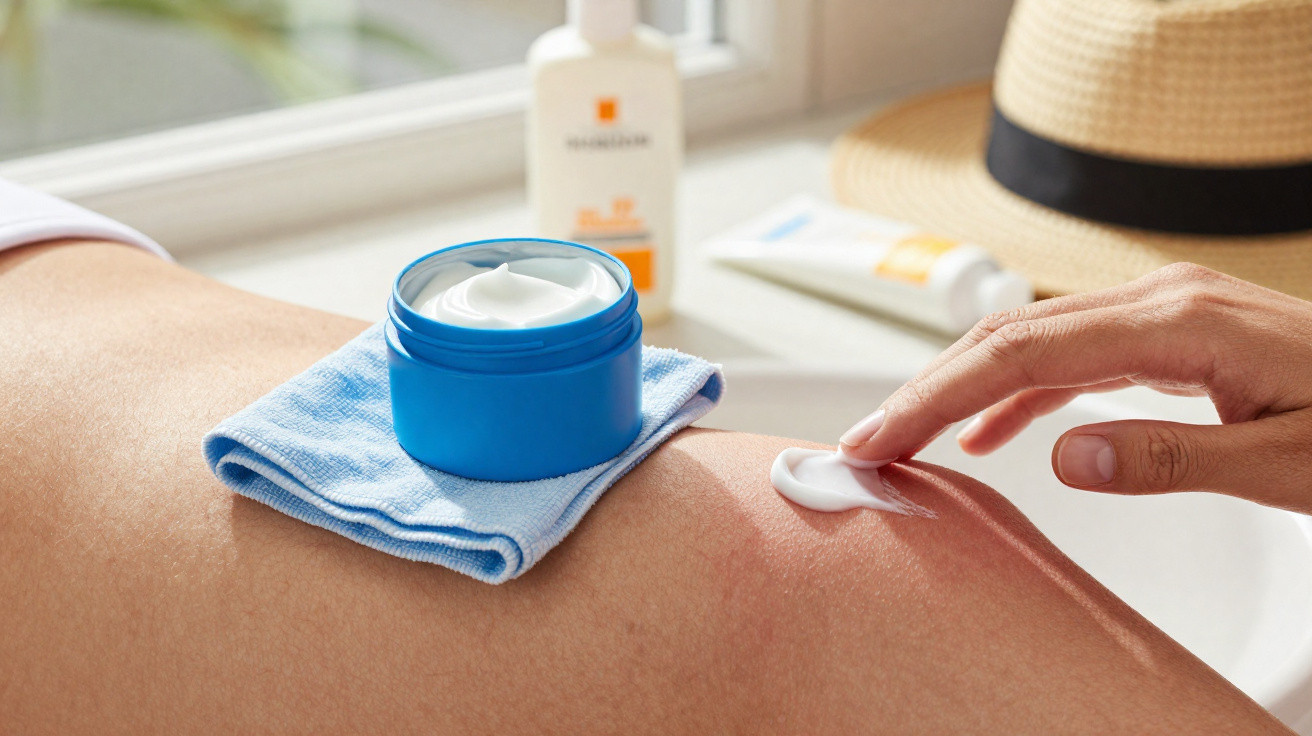
The familiar blue tin is a staple of many bathroom cabinets, so it is understandable to reach for it when your shoulders feel tight after a sunny afternoon. The important point is to tell dry skin apart from sunburn: a moisturiser can make dry, intact skin feel more comfortable, but it cannot treat UV damage or replace proper sunburn care.
If skin is hot, red, painful or blistered, cooling it and keeping it out of further sun should come first. A rich cream may be useful later for calm, unbroken skin that feels dry, but it is not a repair treatment for a burn.
Why skin can feel dry after being outdoors
A day outside can leave skin feeling rough or taut even without sunburn. Heat, wind, sea water, swimming-pool chlorine and extra showering can all affect the skin’s surface.
Moisturisers help by softening the outer layer of skin and reducing water loss. Ingredients such as glycerine draw water into the upper layers of skin, while richer ingredients help hold that moisture in.
That makes moisturiser a reasonable comfort measure for skin that is dry but otherwise settled. It does not reverse the effects of ultraviolet radiation, however, and it cannot prevent peeling or other signs of sunburn once damage has occurred.
A moisturiser can relieve dryness after time outdoors, but it is not sun protection and it does not treat a burn.
What a rich cream can - and cannot - do
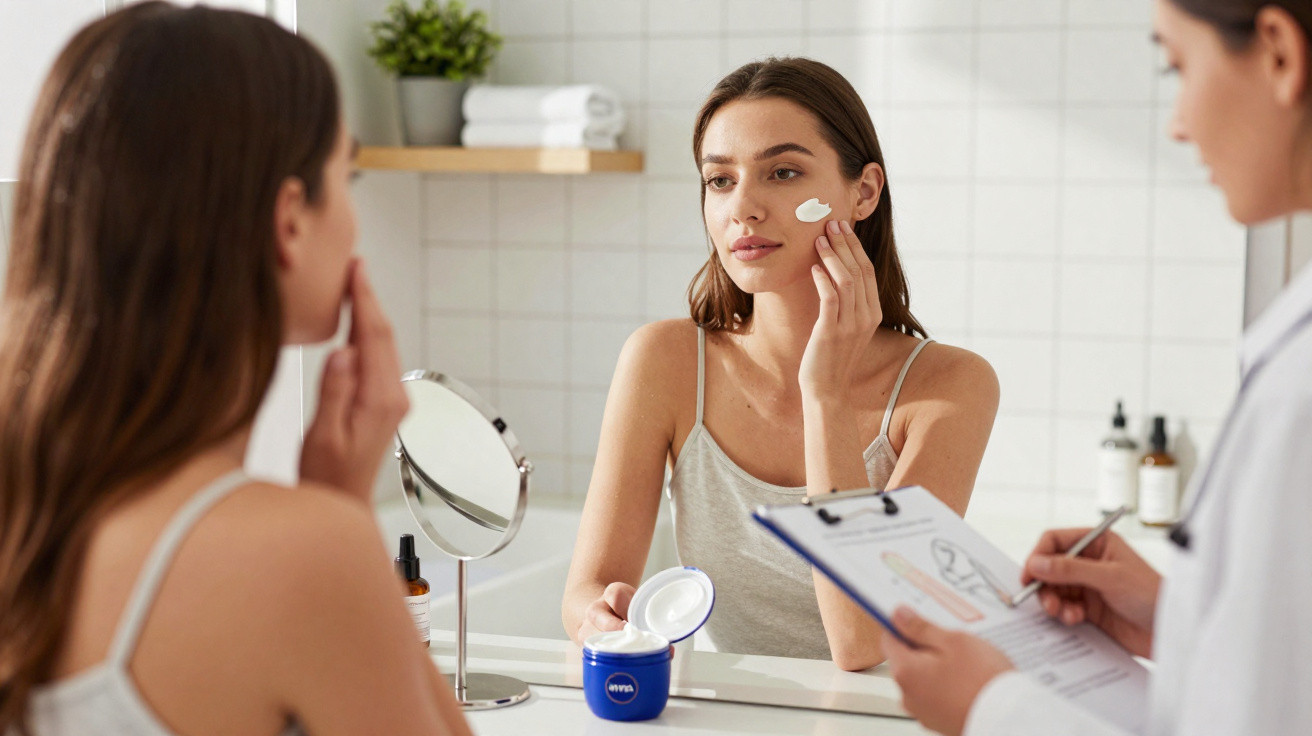
Nivea Creme has a dense, protective texture, which some people find useful on dry areas such as hands, elbows, shins and feet. Used sparingly after washing, it can leave unbroken skin feeling softer and less tight.
Its limitations are just as important:
- It is not sunscreen and does not provide dependable UVA or UVB protection.
- It cannot undo sun damage or make sunburn heal faster.
- A thick cream can feel unpleasant on skin that is still hot.
- Fragrance can sting or irritate sensitive or inflamed skin.
- Ingredients and formulations can change, so check the pack if you have known sensitivities.
If your skin is dry but not red, painful or unusually warm, applying a small amount after a cool shower is generally a sensible option. If it feels too heavy, choose a lighter, fragrance-free cream or lotion instead.
How to tell dryness from sunburn
The useful question is not whether you own a particular cream, but what your skin is doing.
1. Signs of simple dryness
It is more likely to be dryness if the skin is:
- slightly rough, dull or flaky;
- mildly tight after showering or swimming;
- intact and not sore to touch;
- not especially red or hot;
- free from swelling or blisters.
Once the skin has cooled, a gentle moisturiser can help. There is no need to apply a thick layer; a little is usually enough.
2. Signs of sunburn
Treat it as sunburn if you notice:
- redness that was not there before;
- heat, tenderness or pain when skin is touched;
- swelling, marked sensitivity or itching;
- peeling in the following days;
- blisters.
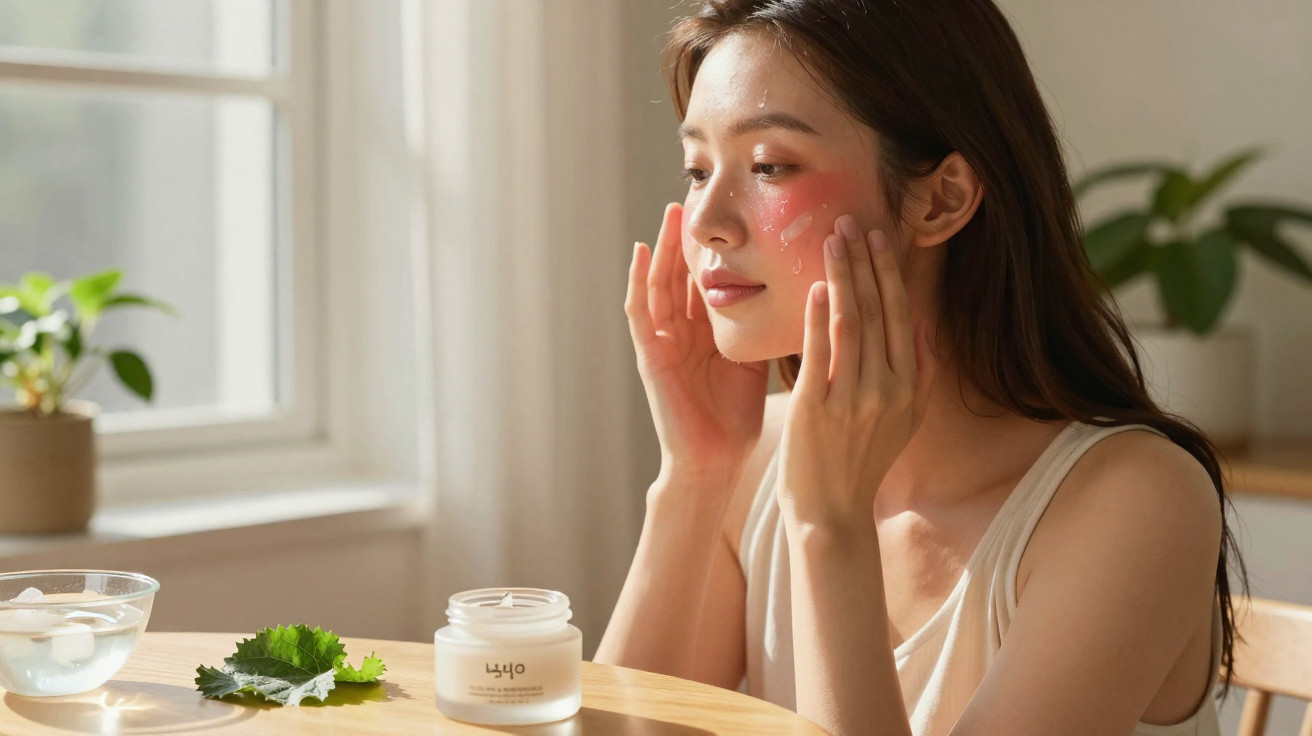
Sunburn is an inflammatory injury, not simply dry skin. Avoid rubbing in heavily fragranced or very rich products while the area is hot and sore, particularly if they sting.
What to do for mild sunburn
Get out of direct sunlight straightaway. Cover the affected skin with loose clothing and avoid exposing it again until it has recovered.
The NHS advises cooling sunburned skin with a cool shower, bath or damp towel. Do not put ice or ice packs directly on the skin, as extreme cold can cause further irritation.
A simple routine at home
- Cool the area gently. Use a cool shower or a clean, damp cloth for short periods.
- Pat the skin dry. Rubbing can make tender skin feel worse.
- Moisturise lightly if it is comfortable. A plain, fragrance-free moisturiser or soothing after-sun product may be better tolerated on intact skin than a rich scented cream.
- Drink fluids regularly. Time in hot weather can contribute to dehydration.
- Keep out of the sun. Wear loose clothing that covers the area when you need to go outdoors.
For pain, a pharmacist can advise on suitable over-the-counter options. Always follow the packet instructions, and ask before using pain relief if you are pregnant, managing a health condition, taking regular medicines or treating a child.
Cooling comes before moisturising. If skin is still radiating heat, adding a heavy layer of cream is unlikely to feel soothing.
When to avoid a rich cream
Do not rub cosmetic creams over broken skin, open blisters or skin that appears infected. Do not burst blisters: they provide a protective layer over the skin beneath.
Stop using any product that causes burning, worsening redness, itching or a rash. Fragranced products can be a particular problem for sensitive skin, so a simple fragrance-free option is usually the safer choice when moisturising is appropriate.
Avoid scrubs, exfoliating acids, retinoids and perfumed body oils until the skin has settled. They may sting and can make already irritated skin feel more sensitive.
When to seek medical advice
Contact NHS 111, a GP or another appropriate healthcare service if sunburn is severe, widespread or blistered, or if the person feels unwell.
Seek advice promptly if there is:
- fever, chills, dizziness, nausea or headache;
- faintness, confusion or signs of dehydration;
- extensive blistering or severe pain;
- increasing swelling, weeping, pus or worsening redness;
- sunburn in a baby or young child.
Do not rely on creams or home remedies if someone is unwell after heat or sun exposure. They may need assessment for more than a skin problem.
Common mistakes after a sunny day
Using moisturiser instead of sun protection
A moisturiser is not SPF. For time outdoors, use a broad-spectrum sunscreen with at least SPF 30 and good UVA protection, such as a four- or five-star UVA rating where shown. Apply generously before going outside and reapply according to the label, especially after swimming, sweating or towelling dry.
Applying cream while the skin is still hot
The instinct to cover sore shoulders immediately is understandable. Cool the skin first, then use a light moisturiser only if it feels comfortable.
Treating blisters like ordinary peeling
Blisters suggest more significant sunburn. Do not pick, scrub or pop them, and get advice if they are extensive, painful or affecting a large area.
Scrubbing away peeling skin
Peeling can look untidy, but exfoliating gloves and body scrubs will not speed recovery. Let skin shed naturally and moisturise gently only where the skin is intact.
Trying harsh home remedies
Avoid applying household products, essential oils or strongly scented treatments to sunburned skin. Household cleaning products should never be used on skin; they can cause serious irritation or chemical burns.
A practical post-sun routine in the UK
British weather can be misleading. Even on a breezy or cloudy day, UV levels can be high enough to burn, particularly from spring to early autumn and around water or pale sand.
Make prevention part of the plan: check the UV forecast, seek shade when practical, wear a hat and sunglasses, and keep sunscreen in your bag or by the front door. This matters for a garden afternoon, a long walk or a day at the coast just as much as it does on holiday.
Afterwards, rinse off salt, chlorine and sunscreen gently. Cool overheated skin, then choose moisturiser according to how it looks and feels. The blue tin can be useful for comfortable, dry and intact skin, but it should not be expected to deal with sunburn.
The simplest rule is this: sunscreen helps prevent damage, cooling care is the priority for a burn, and moisturiser is for dryness once the skin is calm and unbroken.













Comments
No comments yet. Be the first to comment!
Leave a Comment