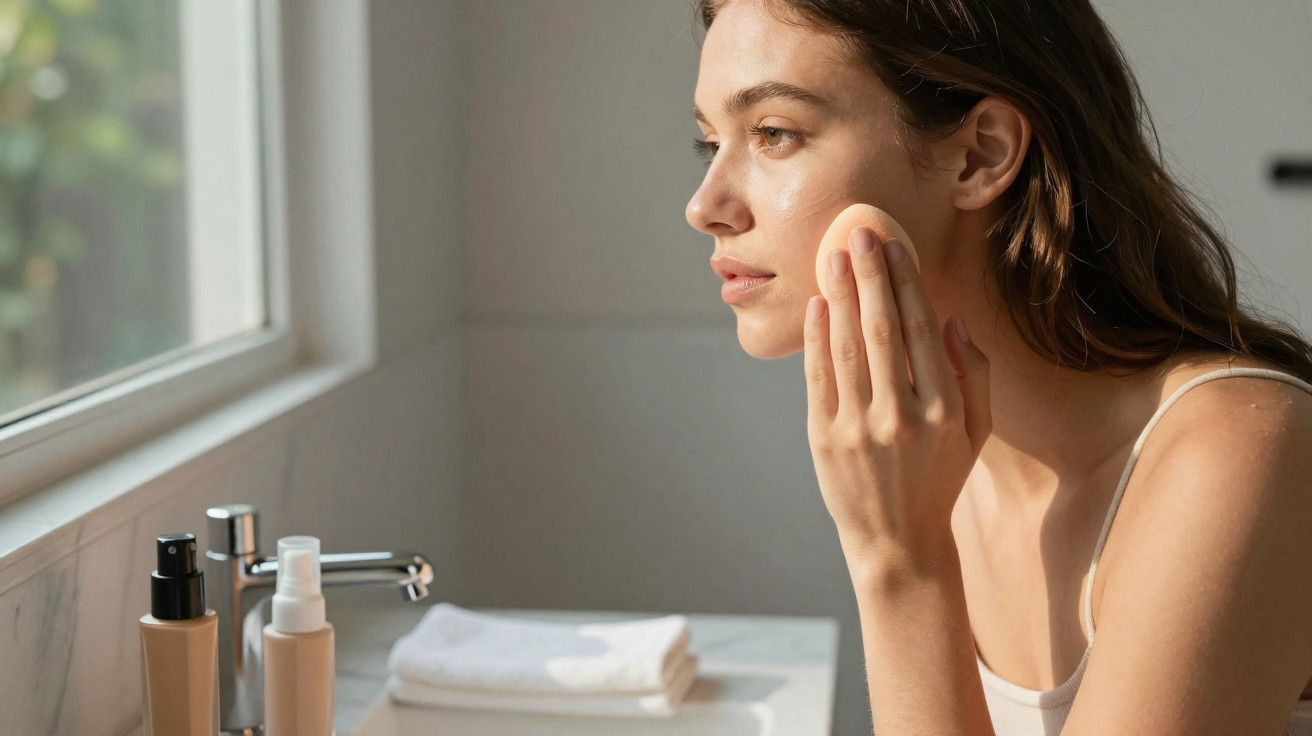
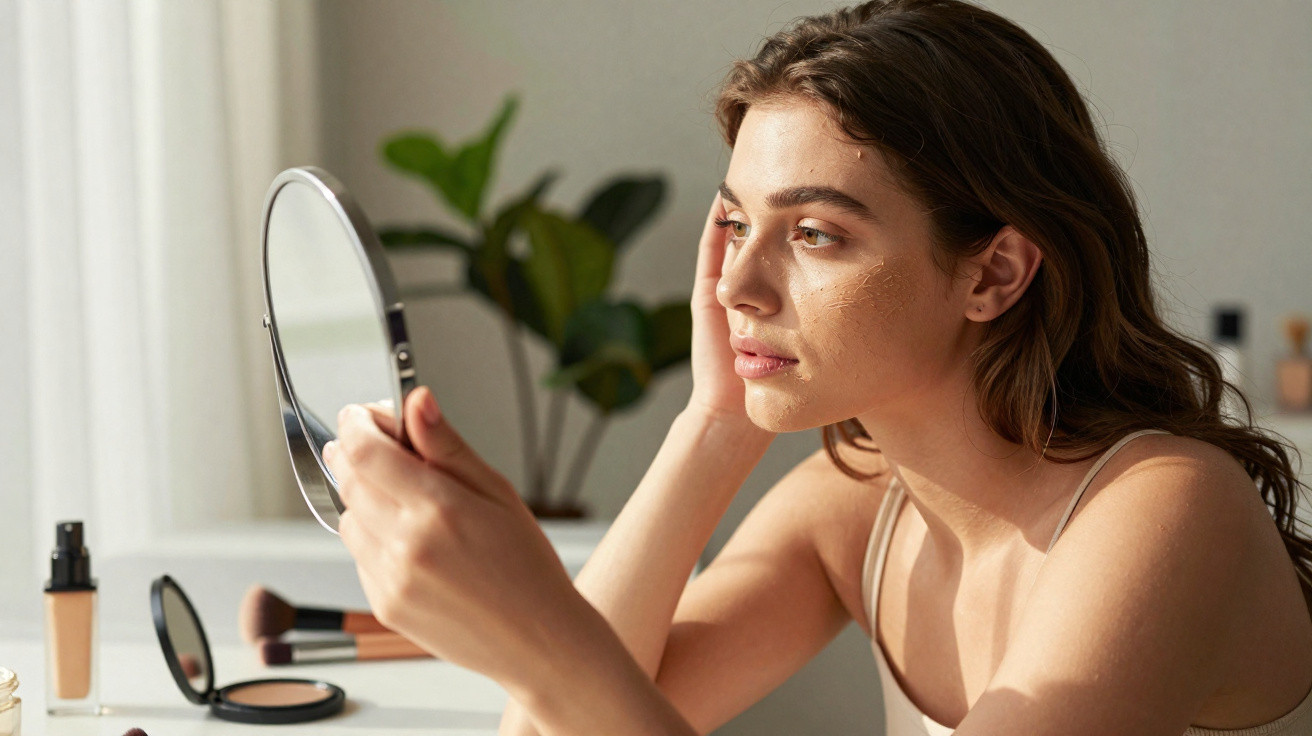
The mirror is brutally honest this morning. Your foundation is sitting rather… patchily. It has gathered on your forehead, looks uneven around your nose, and your cheeks suddenly seem drier than they ever did in any skin analysis. You lean closer, pat at it with your fingers and furrow your brow. Naturally, that only makes it worse. So you put on a beauty influencer’s video, try trick number 27, and still get nowhere. Inside, you wonder: is it me, is it my skin, or is there one tiny thing I am doing wrong?
Why your foundation often looks patchy – even when you are “doing everything right”
We all know that moment: you have taken your time, moisturised carefully, dampened your beauty sponge and used a good-quality foundation. Yet the finish still looks uneven. Fine lines become more noticeable, foundation settles around the mouth, and some areas of skin seem almost “bare”. It can feel a little unfair, as though your skin is saying: “Nice try, but no.”
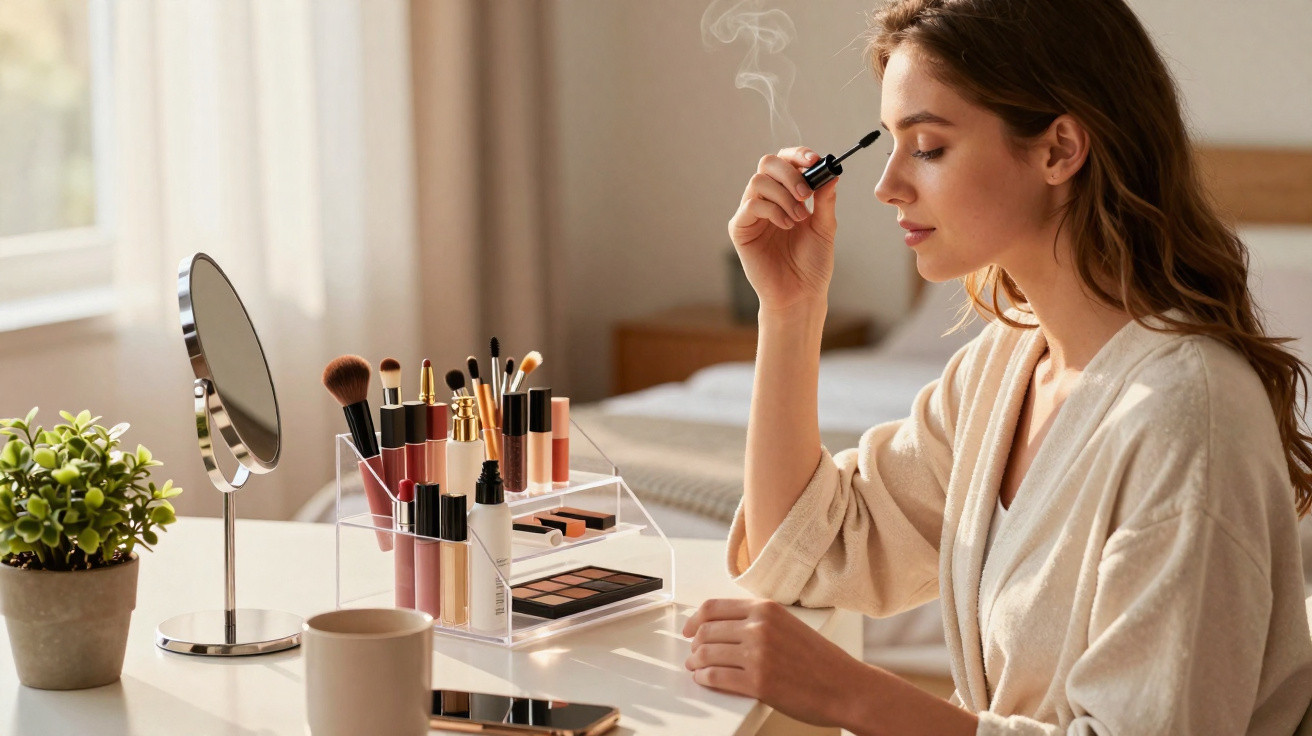
A friend of mine who works as a make-up artist in a studio once told me how often clients slump into her chair, frustrated by exactly this issue. They insist they have followed the supposedly perfect routine: primer, foundation, powder, setting spray. The complete package. Then she shows me their before photos: foundation applied straight after skincare, without a pause, with slight brush streaks. Two hours later, the product wears away like a poorly painted manicure. The women then assume they need fuller coverage – which only makes the patchiness worse.
When foundation looks uneven, the problem is usually not the products themselves but the transitions between them. Damp skincare, sunscreen that has only partly absorbed, or too much pressure during application all play a part. The textures genuinely slide over one another instead of blending together. Your complexion becomes a kind of slippery surface made up of cream, serum and pigments. The sober truth is that make-up always follows physics – and physics is rarely romantic. The good news is that one small adjustment to your technique can turn that slippery surface into a smooth base.
The small technique that changes everything: press rather than swipe
The real game changer is unglamorous and almost too simple to believe: press your foundation into the skin rather than spreading it across it. Do not rub, work in circles or push it back and forth. Instead, press, stamp and gently pat. It does not matter whether you use your fingers, a sponge or a brush. The movement stays the same: tap from the outside in, rather than “painting” over the skin. This helps the product bond with skincare that is still slightly fresh, rather than sitting on top as a separate layer.
Many professionals call this “stippling” or “Press & Roll”. In everyday terms, it simply means working in small sections: one cheek first, then the other, followed by the forehead, chin and nose. Put one pump of foundation on the back of your hand, pick up a tiny amount and work it in with gentle pressure. You will notice that the product almost becomes one with your skin instead of leaving traces behind. Suddenly, even medium coverage can look like a naturally good skin day rather than a mask trying desperately to conceal everything.
Let us be honest: no one really has 20 minutes and complete calm in the bathroom every day. The good news is that you do not need either. This pressing technique may take only 60 seconds longer than your usual swiping method, but the difference in the mirror is considerable. You need less product, it settles less, and your complexion looks far more even up close. Particularly with fuller-coverage formulas or mature skin, this tiny change makes the difference between “you can tell you are wearing foundation” and “wow, your skin looks really good today”.
How to use the press technique every day – without buying new products
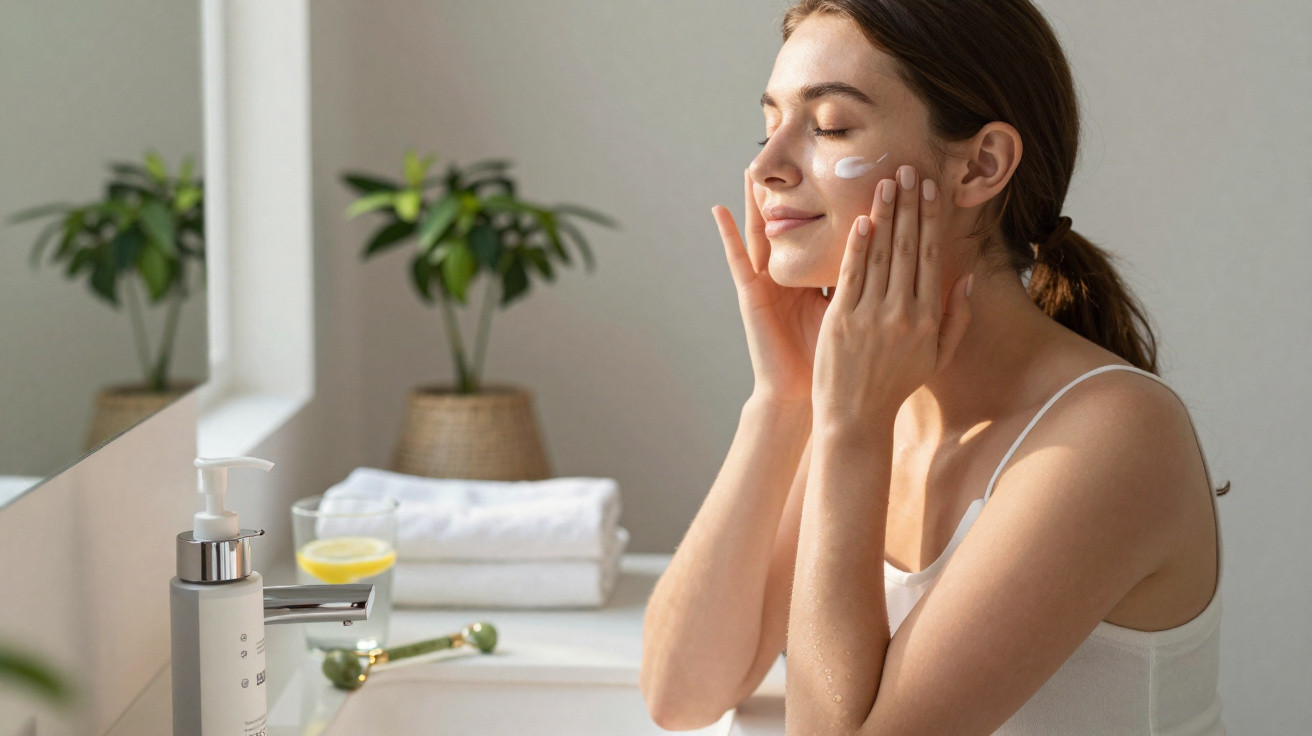
The routine is straightforward: skincare, a short wait, then pressing. After your usual daytime moisturiser and sunscreen, wait two to five minutes until the skin no longer looks visibly shiny and simply feels soft. Next, take a small amount of foundation – less than you think you need – and roughly place it with your fingers or a brush on the areas requiring more coverage. This is where the actual technique begins: using a damp sponge or clean fingers, press the foundation into your skin as though you are gently “sealing” it in.
Rather than sweeping across the face, use small patting motions. At the edges – along the neck, around the ears and near the hairline – work only with the remaining product. Do not pick up more; just blend. This allows harsh lines to disappear almost by themselves. If you like, lightly press a thin tissue over the face at the end to lift away excess product. This micro-blotting makes foundation appear more even and lighter without taking away its coverage.
Many of us tend to apply too much foundation at once in everyday life because we worry that every shadow will otherwise show. This is particularly unforgiving on dry patches, in the nasolabial folds and on the forehead. If foundation gathers in these areas, it often signals too much product and too little pressing. Rather than adding more, go back over those areas with a clean, product-free sponge and press the foundation into place again. The patchiness will smooth out without wiping everything away. At first, this may feel unfamiliar – almost as if you are doing “too little”. Your reflection will prove otherwise.
“Most people think they need a new concealer when all they really need is 30 more seconds of pressing time,” a make-up artist once said to me with a laugh while creating perfectly even-looking skin with minimal product.
- Less product, more technique: Work in thin layers and gently press in every layer.
- Damp textures need time: Allow skincare and sunscreen to absorb briefly before applying foundation.
- One tool is enough: fingers, a brush or a sponge – the pressure matters, not the gadget.
- Tackle problem areas last: Use leftover product on the sides of the nose, chin and forehead, rather than applying a full amount.
- Blot rather than build up: Control shine and patchiness with a tissue or sponge instead of adding a third layer.
When foundation suddenly looks like skin – not a mask
There is something freeing about realising that it was not you or your skin, but one small movement in the bathroom. Looking in the mirror becomes more relaxed when you no longer have to keep adjusting your foundation. You get that quiet, effortless-looking effect, even though you have actually worked very deliberately moments before. That is the point at which make-up stops feeling like armour and becomes more like a filter you can switch on or off as you please.
It is interesting what this small technique can do mentally, too. When you stop pushing foundation across your face and start pressing it in, you automatically become more attentive to your skin. You notice its texture, feel where it is drier or smoother, and perhaps where there is a breakout. At the same time, that familiar pressing motion becomes a kind of mini massage that can change how the day begins: less rushed, less like a battle with your own reflection.
Perhaps you will mention it to a friend over coffee the next time she says, half in despair, that her foundation has “gone patchy again”. No grand lesson and no lecturing. Just one sentence: “Try pressing it in instead of blending it out.” Small techniques spread quickly when they truly work. And this one has the makings of a quiet beauty secret people enjoy passing on, because it does not demand perfection – it simply makes everyday life a little easier.
| Key point | Detail | Benefit for the reader |
|---|---|---|
| Press technique rather than swiping | Gently press foundation into the skin instead of rubbing or moving it around | A more even complexion, less patchiness and less of a mask effect |
| Work in thin layers | Use little product, apply it section by section, and blend edges with the remaining product | A more natural finish, better wear and less product used |
| Pause between skincare and make-up | Wait 2–5 minutes for skincare to absorb | Prevents slipping and improves the bond between skin and foundation |
FAQ:
Question 1: Does the press technique work with very light, fluid foundation?
Yes. Lightweight textures especially benefit from pressing because they bond more effectively with the skin and sit less “on” the surface. You get better staying power and more even coverage.Question 2: Which is better: a sponge, fingers or a brush?
The tool is secondary. Many people find a lightly damp sponge easiest because it naturally encourages patting. Fingers warm up the product, while brushes require a little more practice when pressing.Question 3: Can I build more coverage with this technique?
Yes. After the first layer, press in a second thin layer only where you want more coverage, such as over redness. This keeps even full coverage looking relatively natural.Question 4: Do I need to change my primer if my foundation looks patchy?
Not necessarily. Often, it is enough to let the primer and foundation “set” briefly, then use pressing motions. If the product still pills or flakes, the textures or ingredients may not work well together.Question 5: Does the technique help with dry, flaky skin?
It helps prevent foundation from collecting as noticeably on dry areas. For genuinely flaky skin, you will also need good skincare and gentle exfoliation – the press technique then stops you from emphasising loose skin further.








Comments
No comments yet. Be the first to comment!
Leave a Comment