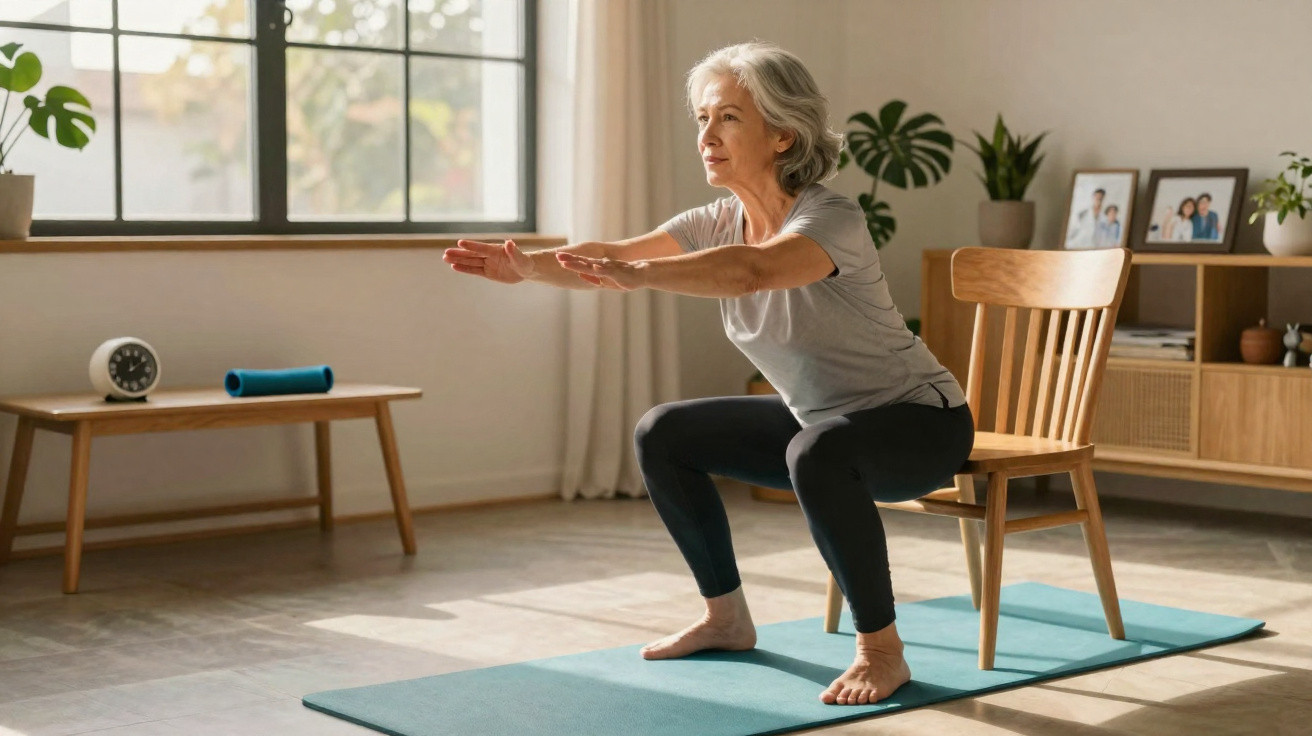
The physiotherapy room carried a faint smell of rubber flooring and coffee. Anna, 46, pulled up her leggings and perched on the treatment table, expecting the familiar advice: “Try swimming, try Pilates, avoid impact.” For months, her knees had felt hot and painful whenever she climbed stairs. She had faithfully worked through clamshells, bridges and slow wall squats, but nothing had really improved.
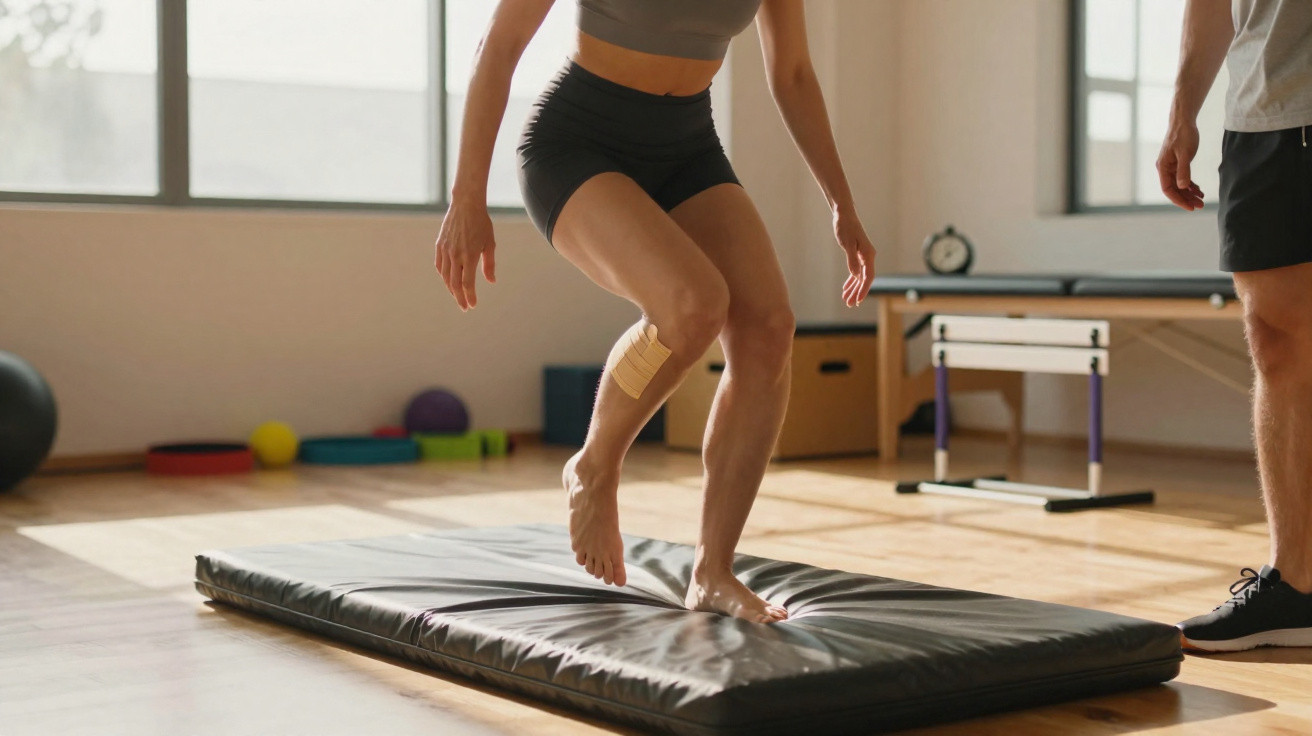
This appointment was different. Her therapist seemed unusually enthusiastic. “We’re going to try something different,” he said as he brought over… a small trampoline. Anna laughed, before immediately grimacing. Jumping? On that? Her GP had clearly told her, “No jumping, ever again.”
Ten minutes later, sweaty and smiling, she stepped down from the mini-trampoline. Somehow, her knees felt freer and lighter.
The controversy began when she mentioned the session to her other physiotherapist.
When “no impact” isn’t the magic answer for sore knees
The same advice crops up in waiting rooms and online communities: “Got knee pain? Swim. Try Pilates. Avoid jumping.” It appears sensible, cautious and safe. But an increasing number of therapists are taking an approach that can look almost irresponsible from the outside.
They are getting people with painful knees back on their feet, occasionally using trampolines or gentle hopping exercises, well before patients believe they are “ready”. That one change regularly provokes debate at professional conferences and in private Facebook groups for physiotherapists.
If your knee hurts while using the stairs, the last recommendation you expect is: “We need to teach it to bounce again.”
Consider Mark, a 52-year-old office worker who cycles at weekends. One spring, his right knee became agonising after a brief run. The response came quickly: “Stop running, stick to the bike, do Pilates for your core.” He followed that guidance for a year.
On paper, he became stronger and more flexible. He could complete planks and bridges with ease. Yet every time he attempted a short jog to catch a bus, the familiar sharp pain returned beneath his kneecap. His knee seemed fragile, almost unable to tolerate ordinary life.
A new physiotherapist then assessed him differently: brief hops on the spot, rapid step-ups and mild pogo jumps on a forgiving surface. After eight weeks, he trusted his knee more than he had during the previous twelve months of “safe” exercise.
This is the point at which the profession divides. One group continues to favour low-impact exercise such as swimming and traditional Pilates, with an emphasis on alignment, mobility and cautious strengthening. The other argues that the knee is not a porcelain ornament: it is a spring.
They believe that spring needs load, speed and some bounce to function properly. This does not mean reckless leaps from high boxes; it means intelligently graded impact that retrains the tissues to absorb shock.
The disagreement is not over whether gentle exercise is beneficial. It centres on one uncomfortable proposition: your knee pain might not fully resolve until your knee learns to handle impact again.
Low-level plyometrics: the “forbidden” activity for sore knees
The exercise currently splitting professional opinion is low-level plyometrics: small, controlled jumping and landing movements, performed either on a mini-trampoline or on the floor. In this approach, they are introduced early rather than saved as a final “bonus”, becoming a core element of rehabilitation.
A standard session may begin with relaxed two-legged bouncing, with the feet barely leaving the surface. This can progress to light, fast mini-hops, side-to-side weight transfers, and gentle step-and-bounce movements. These sessions are brief and purposeful, nothing like an Instagram-style “beast mode” workout.
It can look almost childlike. It can also alarm anyone who has spent years hearing that impact is the enemy of the knees. Still, many people who continue with it describe the same unexpected result: reduced pain on stairs, greater assurance on uneven ground and a feeling that the joint is “alive” again.
When people attempt this on their own, mistakes can happen quickly. They may jump too forcefully, too early, believing they must “push through”. Or they bounce for only a week, become alarmed by the first niggle and stop altogether.
The ideal approach is decidedly unexciting: keep it very gentle. Think of it as helping your knee learn a new language, one quiet syllable at a time. Use short sessions, take frequent breaks and concentrate on soft landings, as though you are trying not to wake a sleeping baby in the next room.
In reality, almost nobody manages this every day. Life intervenes. Knees become grumpy after a long working day. You forget, miss sessions and begin again. Improvement is seldom linear, and that is where much of the frustration arises.
Professionals are as emotionally split on this issue as patients are. Some regard these bouncing sessions as a breakthrough, while others still recoil at asking a painful joint to take in any shock at all. The tension is evident in the discreetly heated conversations in conference corridors.
“Impact isn’t the villain,” argues Laura James, a sports physiotherapist in London. “Chaotic impact is. When you reintroduce controlled bouncing in a safe way, the body often responds with less pain, not more. The problem is, our old education drilled ‘avoid impact’ into us for years.”
Advocates of ultra-low-impact exercise argue that any type of jumping can lead down a slippery slope, particularly for older or heavier patients. They would instead add more cycling, more reformer Pilates and more stretching.
- Gentle bouncing and mini-hops can retrain how your knee absorbs shock.
- Swimming and Pilates help, but rarely teach your knee to handle real-life impact.
- Disagreement between physios often reflects different training eras, not just the science.
- Progress with plyometrics should be slow, soft, and carefully monitored.
- Many patients report feeling more “stable” when impact is reintroduced, not avoided.
So… should you really be bouncing on a sore knee?
No single plan suits every knee. Some joints are too inflamed, some operations are too recent, and some medical histories are too complicated for jumping to begin immediately. Any therapist claiming there is one perfect protocol for everyone is overselling it.
At its heart, this argument reveals a more fundamental fear: fear of movement that seems dangerous. Patients fear another injury, while many physiotherapists fear being the person who “pushed too hard.” Together, those concerns steer people towards safety-only choices such as the pool or exercise mat.
But everyday life contains countless tiny jumps: stepping down from a kerb, running for a green light, or slightly stumbling and regaining your balance. Eventually, your knees will encounter impact again.
| Key point | Detail | Value for the reader |
|---|---|---|
| Impact isn’t always harmful | Controlled, light plyometrics can soothe and strengthen knees when introduced gradually. | Gives you an alternative if swimming and Pilates alone haven’t changed your pain. |
| Physios genuinely disagree | Different training backgrounds lead to opposite advice about jumping and knee rehab. | Helps you understand why one professional bans impact while another recommends it. |
| You can ask for “bounce” in your rehab | Request a graded impact plan: mini-hops, soft landings, and progression rules. | Lets you take an active role instead of passively doing exercises that feel too safe. |












Comments
No comments yet. Be the first to comment!
Leave a Comment