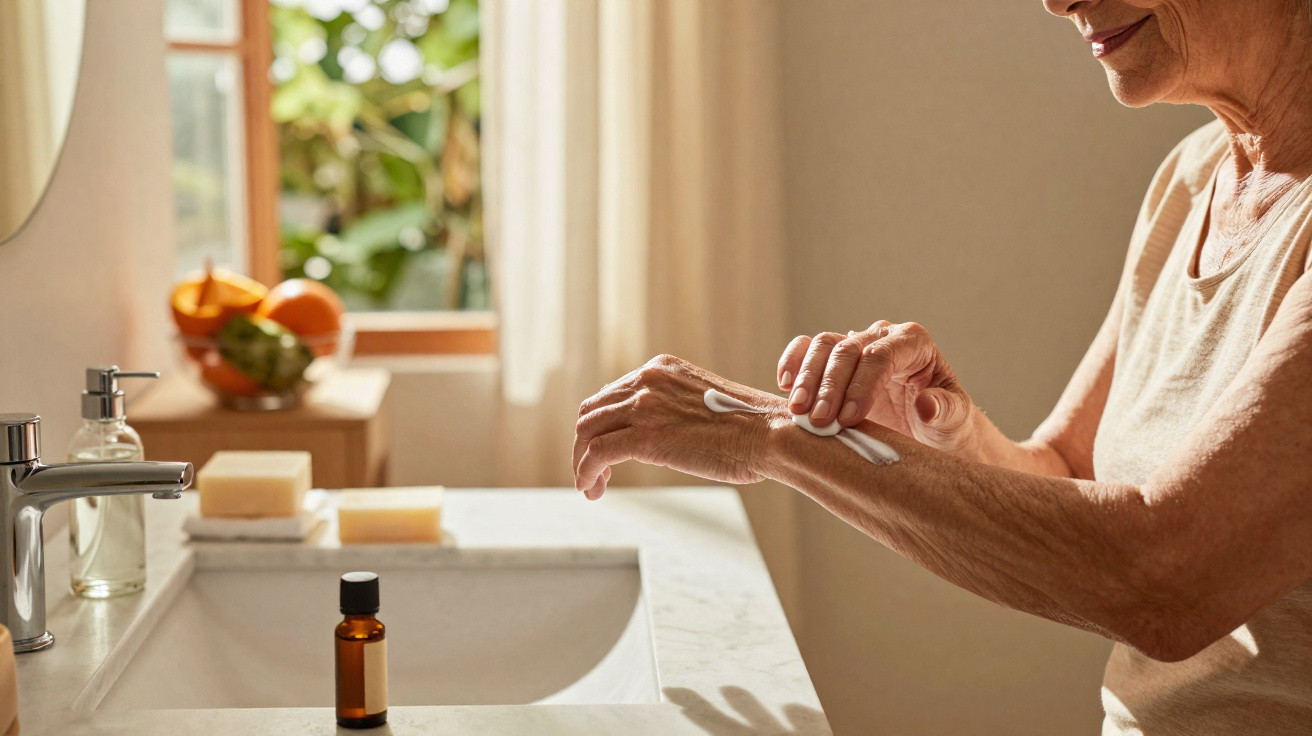
Scientists have identified a straightforward chemical reason for the distinctive odour often associated with ageing. It can occur even in people who wash every day, put on freshly laundered clothes and look after their personal care meticulously.
What “old person smell” really is
Enter a flat occupied by an older person for many years and you might detect a recognisable scent. It is often assumed to be evidence of poor hygiene, but research indicates a very different cause.
The scent commonly linked to ageing is driven by changes in skin chemistry, not by soap, sweat or a lack of washing.
At roughly 40 years of age, the body begins producing a substance known as 2‑nonenal. Scientists describe its odour as mildly oily and grassy, with hints of old paper or cardboard. Skin in younger people produces very little of it.
2‑nonenal is created as particular fats on the surface of the skin deteriorate. These omega‑7 fatty acids occur naturally in sebum, the oil that helps keep skin soft and flexible. With age, skin commonly generates more of these fats but becomes less effective at removing them.
When air oxygen reaches these fats, they oxidise and break down, creating 2‑nonenal. The compound subsequently collects on the skin and hair, as well as on nearby materials such as pyjamas, bed linen and armchair covers.
Why additional showers do not remove 2‑nonenal
If this compound sits on the skin, it may seem logical that a hot shower would eliminate it. Chemistry explains why that is not the case.
2‑nonenal is lipophilic, meaning it prefers oil rather than water, so basic soap and water do not fully remove it.
Standard shower gels are made to wash away sweat, some skin oil and everyday surface grime. They are effective for routine hygiene. However, 2‑nonenal holds firmly to the skin’s oils and to the deeper parts of the outer protective skin barrier.
As a result, fully washing it away is very difficult. Even after someone leaves the shower completely clean, their skin continues producing sebum. Once this new oil oxidises, further 2‑nonenal can form within a few hours.
This explains why an immaculately kept home, fresh bed linen and careful personal grooming may still be accompanied by a slight age-related odour. It is not a matter of washing “better” or “more often”. Instead, it is an ongoing biological process occurring in the background.
Four reasons the scent can persist
- 2‑nonenal mixes with skin oils rather than dissolving readily in water or ordinary soap.
- Skin keeps producing it, meaning it can return soon after washing.
- Some of the compound develops in deeper layers of the epidermis.
- It gradually gathers in clothing, bedding and upholstered furnishings.
Does ageing produce the same smell in everyone?
No. Certain older adults have barely any detectable odour, whereas it is more noticeable in others. Its strength is shaped by a combination of genetics, lifestyle and health.
Genetic variation influences how much sebum the skin produces, the speed at which it oxidises and how efficiently the body removes particular compounds. This alone may create a substantial difference between people of identical ages.
Food choices matter too. Diets containing high levels of damaged or oxidised fats, including repeatedly heated oils, may raise oxidative stress in the body. Conversely, antioxidant-rich foods such as fruit, vegetables, nuts and whole grains may lessen some of the chemical reactions involved in making 2‑nonenal, although they cannot prevent them completely.
Smoking and excessive alcohol consumption can also have an effect. Tobacco smoke accelerates oxidation in the skin and changes its lipid composition. Drinking too much alcohol may interfere with liver function and raise inflammation, again promoting oxidative activity.
Older adults who smoke or drink heavily tend to have a stronger age‑related odour than those who stay hydrated, active and eat a varied diet.
Factors that may affect the strength of age-related odour
| Factor | Likely effect |
|---|---|
| Genetics | Some individuals naturally make more 2‑nonenal than others. |
| Diet high in fresh produce | May modestly reduce oxidative processes within the skin. |
| Smoking | Frequently intensifies odour by increasing the oxidation of skin fats. |
| Heavy alcohol use | May aggravate body odour, including age-linked notes. |
| Hydration and exercise | Help support healthier skin and may make the overall scent less pronounced. |
What can genuinely reduce the odour
The aim is not total elimination, which is unrealistic, but a milder and less lingering scent. Several practical measures may make a noticeable difference.
Cleansers formulated to target oil, rather than simply surface dirt, may be useful. Soaps and body washes containing charcoal, clay or other absorbent ingredients can bind lipophilic compounds more effectively. They cannot completely remove 2‑nonenal, but they often lift more of it than conventional shower gel.
Fabrics require attention as well. 2‑nonenal readily transfers into pillowcases, pyjamas, cushions and blankets. After settling there, it may remain even where a room otherwise appears clean.
- Replace bed linen and towels more often than you might for younger adults.
- Launder clothing and bedding at warm or hot temperatures whenever the fabric care instructions permit.
- Air duvets, pillows and mattresses by open windows on dry days.
- Ventilate rooms well to prevent the odour from accumulating indoors.
Focusing on fabrics and airflow can cut the perceived odour far more than simply insisting on more showers.
Why the science matters for stigma and shame
Many older adults feel ashamed when somebody suggests that their home “has a smell”. They might react by washing excessively or relying too heavily on strong cleaning products, sometimes causing skin irritation as a result.
Knowing the science of 2‑nonenal provides a more compassionate explanation. This odour is neither a moral shortcoming nor an error in cleaning. It is a consequence of living long enough for the body’s chemistry to alter.
Family members and carers who understand this are often able to raise the matter more sensitively. Rather than saying, “You need to wash better,” they can discuss changing laundry habits or increasing ventilation. This minor change in wording can prevent considerable distress.
How to discuss it without causing offence
Mentioning body odour to a parent or grandparent may feel uncomfortable. However, it can be approached in ways that maintain their dignity.
- Attribute it to the building or textiles: “This room doesn’t air out well, let’s open the windows and change the bedding more often.”
- Give practical support: “How about I set a regular laundry day so we stay on top of sheets and towels?”
- Do not present it as a personal failure or a sign of uncleanliness.
Terms and situations that clarify age-related odour
Research into age-related odour frequently refers to two important concepts: oxidation and lipophilic compounds. Oxidation is a chemical process that occurs when substances encounter oxygen. As skin oils oxidise, they split into new molecules, including 2‑nonenal.
Lipophilic compounds are molecules that prefer combining with fats and oils instead of water. This is why they can remain stubbornly on oily skin and within fabrics while resisting normal washing. More powerful detergents or higher temperatures are generally required to dislodge them.
Consider two neighbours living in the same block of flats. Each is in their seventies and lives alone. One smokes, seldom opens the windows and wears the same cardigan again for weeks. The other is a non-smoker, takes a daily walk, eats a varied diet and follows a regular laundry routine.
Both people’s bodies produce 2‑nonenal because both are ageing. Nevertheless, a visitor may only notice a pronounced odour in the first flat, where the compound has been able to build up in curtains, upholstery and clothing within an enclosed, smoky environment. The second home, with better air circulation and fresher fabrics, will commonly have a much gentler smell despite similar underlying biology.
Age-related scent lies where chemistry, lifestyle and surroundings meet. With this understanding, families and carers can address the factors they are able to alter while accepting the element that naturally accompanies growing older.













Comments
No comments yet. Be the first to comment!
Leave a Comment