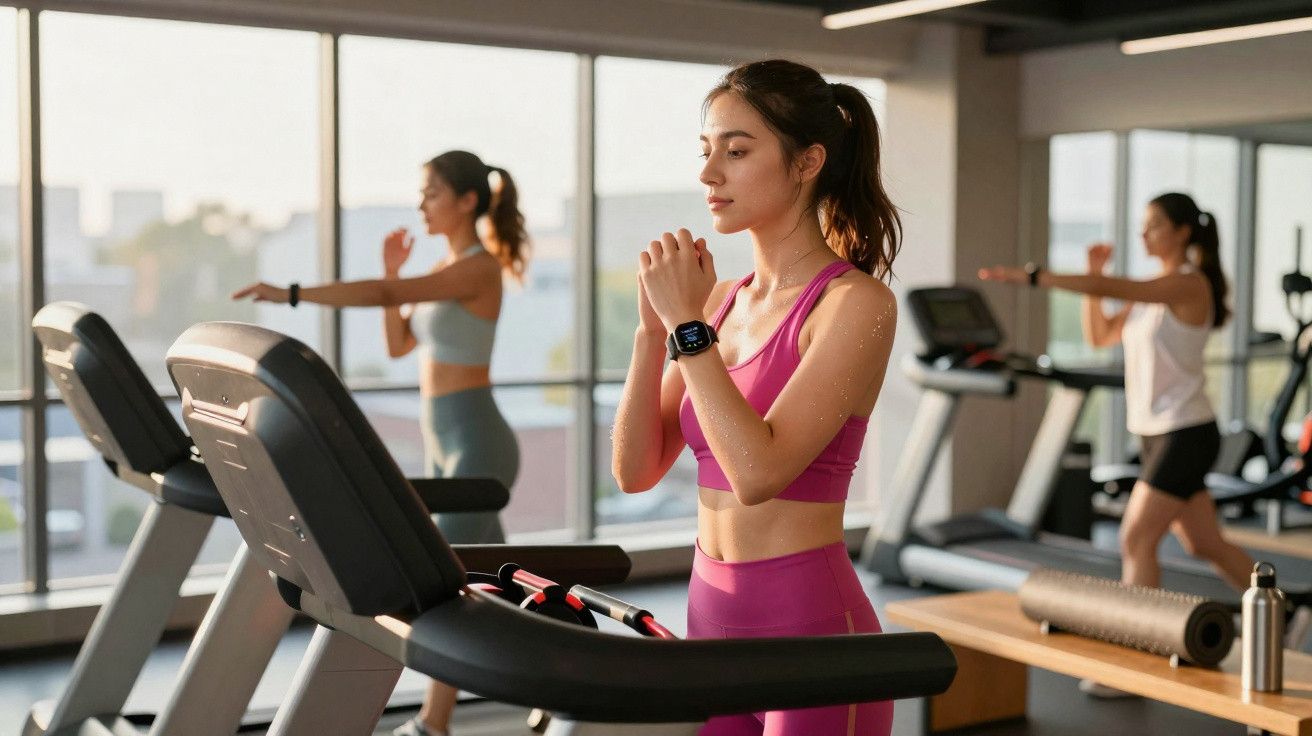
The class is over, the music has stopped, and most people reach for their towel – then stop moving. Some drop to the floor and start tapping at their phones again. Only two or three people keep slowly circling the room, swinging their arms and breathing deeply. It can look almost silly, the way they jog along so casually while everyone else is “done”. Yet they somehow seem… wiser. Less worn out. More centred. Perhaps this inconspicuous moment after the final set is exactly when recovery really starts.
What happens in your body when you do not simply stop after exercise
We all know the impulse: final repetition, final sprint, timer beeps – stop. Finished. Over. Your body is burning, your lungs are working hard, your legs are trembling, and every part of you is crying out for a break. This is where many people take a wrong turn. Rather than taking a few easy steps, gently bouncing or gradually jogging it out, they immediately take a standing break. But the effects of the workout are still raging inside: your heart rate is elevated, your blood pressure is high, and lactate is circulating. In this turmoil, a few minutes of gentle movement can make a remarkable difference, even if it looks boring from the outside.
A fitness trainer once described an experiment at his gym. Two groups followed the same plan, at the same level of difficulty, for six weeks. One group was asked to walk gently on the treadmill or spin easily on a bike for five minutes after every session, while the other group could head straight to the shower. After a month, noticeably more people in the “shower group” reported heavy legs, stiff shoulders and the feeling of being “still exhausted from Monday”. The “walking group” did not claim any miracle cure, but they did report a tangible difference: less muscle soreness, a better mood after training and greater enthusiasm for the next session. It was not a major study, more everyday research – but that is precisely why it feels so relatable.
Physiologically, it is fairly straightforward: during exercise, your heart pumps a substantial amount of blood into your muscles. If you end the effort abruptly, blood can pool slightly, metabolic by-products circulate away more slowly, and your cardiovascular system suddenly has to switch from “full speed” to “parked”. Gentle movement works like a smooth exit lane from a motorway. Your pulse falls, but in a controlled way. The muscle pump in your legs remains active, your muscles continue receiving oxygen, and they can clear waste products more effectively. Recovery does not begin on the sofa; it begins in these unremarkable transition minutes. Let us be honest: hardly anyone manages it every single day. But that is where the quiet opportunity lies.
How to build active recovery after sport into your daily routine
Think of your workout ending not with a full stop, but with an exclamation mark followed by a quiet comma. In practical terms, set aside 5 to 10 minutes for a light cool-down. After a run, reduce your pace significantly, switch to walking, let your arms swing freely and deliberately slow your breathing. After strength training, take one or two easy laps around the gym, gently shake out the worked muscles and perhaps do a few very mild mobility movements for your joints. There is no drill and no ambition involved; it is more of a small ritual: “I am letting my body settle.” At first, those few minutes may seem unnecessary. After a few weeks, you will not want to do without them.
For many people, the problem is not a lack of willingness but impatience. The session has already taken longer than intended, the children are waiting and so are the emails in your mind. The cool-down is then treated as an optional extra to cut when time is tight. A classic mistake. Another popular version of a “cool-down” is lying on the floor, picking up your phone and staying there. Your circulation drops like a stone, and so does your focus; the system shuts down abruptly. Anyone who often complains about dizziness on standing, leaden fatigue after exercise or headaches is experiencing exactly this sharp edge. Gentle movement at the end is not a punishment, but a very simple way to soften that edge. And yes, even two minutes are better than none.
A sports physician once put it this way:
“Many people invest 60 minutes in their workout, then cut back on the very five minutes that determine how they feel afterwards.”
Once you put together a small, clear set of habits, theory quickly becomes practice:
- After every run: walk briskly for 3 minutes, then walk very slowly for 2 minutes before stopping.
- After strength training: walk once around the gym, shake out your muscles, take 3 deep breaths while standing, and only then get changed.
- At home: after a home workout, do 20 light bodyweight squats, roll your shoulders, then drink a glass of water while standing.
- In a sports club: introduce a shared “jog-out lap” rather than trudging straight to the bench.
- In everyday life: after a stressful day, walk for 5 minutes before collapsing on the sofa – the same mechanism in a different setting.
Why recovery is about more than simply “no muscle soreness”
When we think about recovery, muscle soreness immediately comes to mind. That ambivalent ache in your thighs, and the stairs the following day that feel like a small mountain. Gentle movement after sport does target that sensation too, but its real scope is broader. It is about the quality of your recovery and the transition from being “charged up” to returning to everyday life. Those who make that transition smoother create a routine in which training is not experienced as an attack on the body, but as a dialogue. You present a challenge, your body responds – and you listen.
Many people returning to exercise, or coming back after a longer break, underestimate this very point. Their sessions are often ambitious, while their mind wants to make up for what was “missed”. If every workout ends with a hard stop, stress quietly accumulates: sleep becomes more restless, joints feel “old”, and the desire for the next session fades. Gentle movement afterwards acts like a small promise to your body: “I ask a lot of you, but I will help you come back down.” It may sound dramatic, but after living this way for a few weeks, it feels surprisingly matter-of-fact. Many things become easier without losing effectiveness.
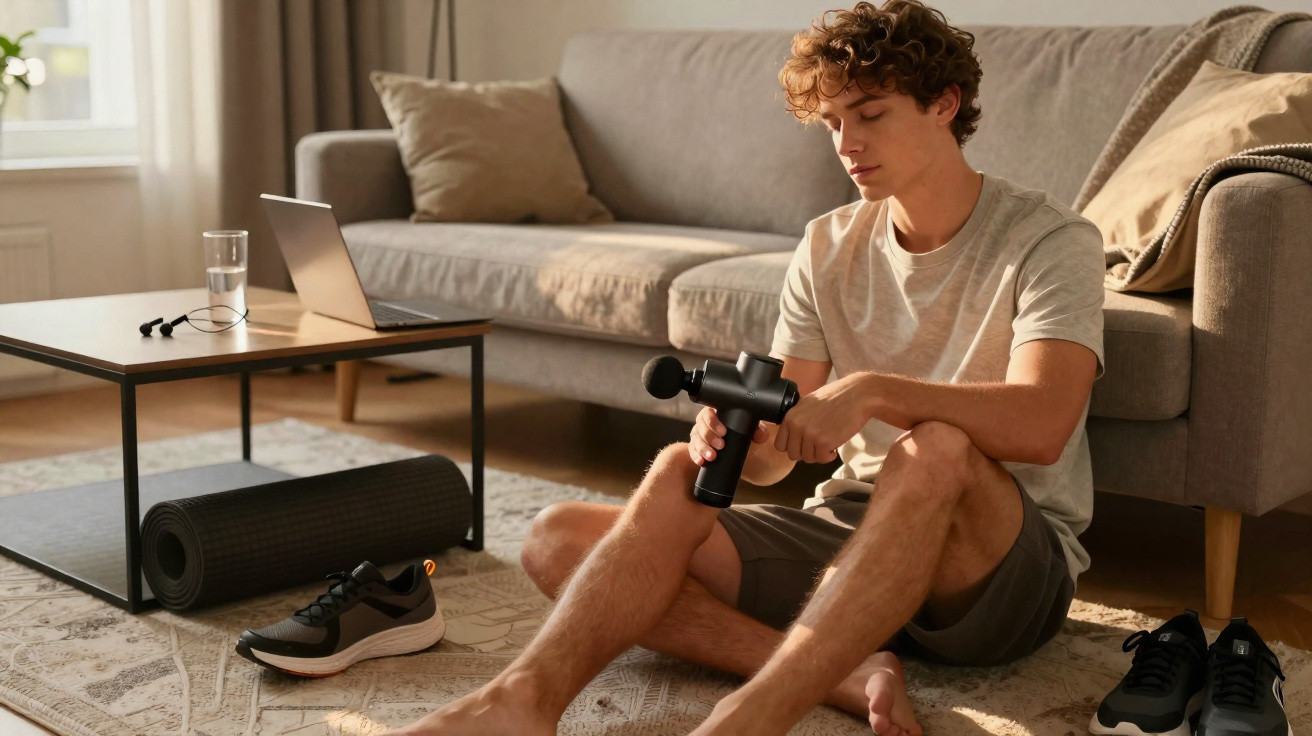
Ultimately, recovery is the status of the relationship between you and your body. It does not happen only through ice baths, high-tech leggings or massage guns, but above all through simple, repeated gestures. A slow walk to the car after training. A brief stroll after an intense interval run before going indoors. A few relaxed steps through the park after exercising outside. Small bridges between exertion and rest that you build for yourself. Walk across them often enough and, eventually, you will realise that it is not exercise that exhausts you – but the way we finish it.
| Key point | Detail | Benefit for the reader |
|---|---|---|
| Gentle movement lowers the pulse in a controlled way | Cool-down phases keep the muscles active and help the cardiovascular system slow down | Less dizziness and more stable wellbeing after exercise |
| Active recovery supports the removal of metabolic by-products | Mild muscle work aids circulation without creating additional strain | Muscle soreness and feelings of heaviness may be eased |
| Post-workout rituals strengthen the exercise routine | Short, fixed cool-down habits make it easier to establish regular exercise | More motivation, fewer drop-offs and more sustainable results |
FAQ:
- Question 1 How long should gentle movement after sport last? Ideally, spend 5 to 10 minutes significantly reducing the intensity and gradually returning to rest.
- Question 2 Is stretching alone after exercise enough? Static stretching does not replace gentle movement, but the two can complement each other well if you jog or walk out first and then stretch gently.
- Question 3 What counts as “gentle movement”? Easy walking, very relaxed cycling, calmly shaking out your muscles or very slow gymnastic movements all count – without pressure or becoming out of breath.
- Question 4 Does active recovery also help with muscle soreness? It can noticeably reduce the intensity and duration of muscle soreness, though it cannot completely make a strong training stimulus disappear.
- Question 5 Is gentle movement after sport suitable for beginners? Beginners particularly benefit because it is easier on the cardiovascular system and teaches the body to settle calmly and steadily after exertion.








Comments
No comments yet. Be the first to comment!
Leave a Comment