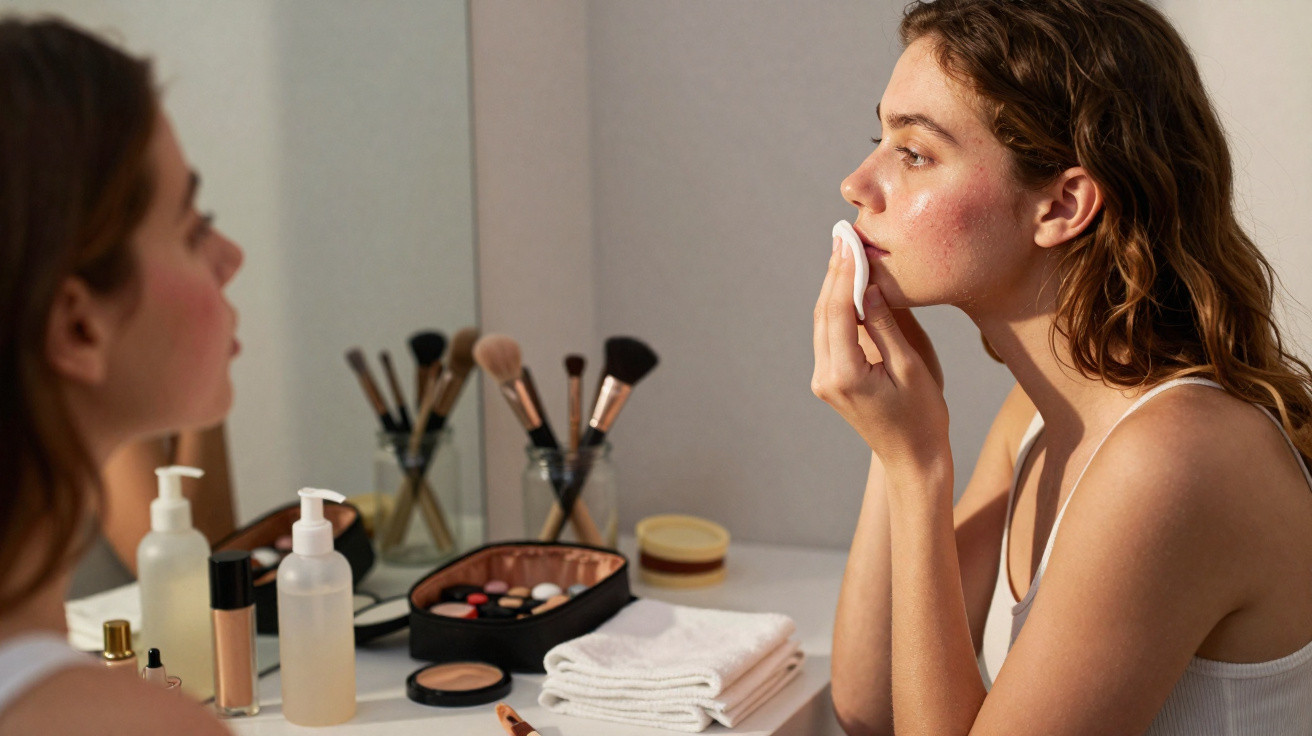
For many people, reaching for foundation, concealer and powder is as routine as brushing their teeth. It can make you look fresher, more awake and more ‘put together’. But dermatologists are sounding the alarm: covering your skin completely every day may cause long-term damage – even if the products are expensive, ‘clean’ or claimed to be especially gentle.
Why daily make-up is more than a beauty issue
Skin is not a blank surface on which unlimited layers of colour can simply be applied. It works around the clock: protecting the body, regulating temperature and moisture, and continually renewing itself. It also produces sebum, sheds dead cells and maintains its own balance in this way.
Daily full-coverage make-up interferes with precisely this system, particularly where several products are layered together: primer, foundation, concealer, powder and setting spray. What looks like a ‘perfect complexion’ on the outside can create genuine stress beneath the surface.
“The more layers there are on the skin, the harder it can be for it to breathe, cleanse itself and regulate itself.”
Occlusive film: when foundation effectively seals the pores
Many make-up products have what is known as an occlusive effect, meaning that they form a film across the skin’s surface. Long-wearing, high-coverage foundations and mattifying formulas designed to stay firmly in place all day are particularly likely to do this.
This film has two effects:
- Sebum cannot flow away as easily and builds up inside the pores.
- It creates a warm, moist environment in which bacteria can thrive.
Dermatologists see the results of this every day in their clinics: sudden blemishes, persistent inflamed spots, blocked pores and an overall more uneven complexion – including in people who previously had hardly any issues with acne.
Many then use even more make-up to conceal these new blemishes. This only keeps the cycle going.
Gradual irritation: when skin reacts to ingredients unnoticed
A second, frequently overlooked factor is the ingredient list. Not every reaction appears immediately as itching or a rash. Irritation often develops quietly in the background.
Potentially problematic ingredients include:
- Fragrances in foundation, powder or setting sprays
- Preservatives in liquid products
- Certain colour pigments or glitter particles
The result can be gradual irritation. Skin may become more sensitive, react to changes in temperature, redden more quickly or feel continually stressed and tight. What makes this especially tricky is that many people read these signs as ‘dry skin’ and apply another layer of skincare or make-up, rather than questioning the actual cause.
“The more sensitive the skin becomes, the stronger the urge often is to conceal it – and that is where the real vicious circle begins.”
Removing make-up: the often neglected rescue step
One central problem comes at the end of the day, as many people do not take make-up removal seriously enough. A quick wipe with a cleansing wipe, a splash of water, and then straight to bed: for skin, this is a nightmare.
When make-up residue, dirt, sweat and oxidised sebum remain on the skin, it cannot regenerate properly overnight. Its nightly renewal slows down, pores stay blocked and inflammation continues to flare.
The long-term consequences are clear:
- More blackheads and spots
- A grey, dull complexion
- More pronounced fine lines caused by chronic inflammation
- Skin that generally looks more tired
“Anyone who goes to bed wearing make-up takes away every chance for their skin to recover and repair itself overnight.”
How to use make-up without tormenting your skin every day
Nobody has to give up make-up altogether. What matters is using it mindfully, starting with the products you choose.
Lighter textures rather than a mask-like effect
Dermatologists recommend products labelled non-comedogenic. These are formulated to block pores as little as possible. Lightweight liquid formulas, tinted moisturisers and BB creams are often kinder to skin than high-coverage ‘full-coverage’ foundations.
It is also important not to use everything at once. Combining primer, a thick foundation, several layers of concealer and powder greatly increases the occlusive effect. Fewer layers generally mean less risk.
Plan make-up-free days
One of the most effective ways to support healthier skin is to take regular breaks. Even one or two make-up-free days each week can make a difference. During this time, skin can regulate itself more effectively, reduce excess sebum and stabilise its natural protective barrier.
These days work best when you have no important appointments or events, such as at the weekend or when working from home. If being completely ‘bare-faced’ makes you uncomfortable, you could use clear mascara, a little brow gel or lip balm instead. The key is to keep your complexion as free from products as possible.
Hygiene: the overlooked factor with brushes, sponges and more
Another area of risk is not the product itself, but the tools used to apply it. Foundation brushes, beauty sponges and powder puffs are all ideal places for bacteria, sebum and dead skin cells to collect.
If these tools are cleaned only rarely, every application presses a small package of bacteria back onto the skin. This can make matters worse, especially when blemishes are already present.
Dermatologists therefore recommend:
- Thoroughly cleaning liquid-foundation brushes and sponges at least once a week
- Washing powder brushes every one to two weeks
- Cleaning them even more often if you have active acne or inflammation
A mild shampoo or dedicated brush cleanser is usually sufficient. The important thing is to allow brushes to dry completely before putting them back in a drawer.
The emotional pressure: when you feel ‘not presentable’ without make-up
The physical effects are one side of the issue. The psychological aspect can carry just as much weight. Many people feel incomplete, ‘not properly dressed’ or even ‘unattractive’ without make-up. Social media, with its filtered and softened faces, intensifies this pressure further.
Dermatologists often observe that those affected can barely tolerate seeing their natural, make-up-free complexion. Every pore and slight redness is viewed as a flaw. Make-up is no longer used as a playful styling tool, but as permanent armour.
“The healthiest foundation is skin that does not need to be hidden every day – because it feels stable and real.”
How to gradually wean your skin off daily make-up
If you have worn make-up every day for years, stepping away from it will not happen overnight. A gradual approach makes more sense:
- Leave out one product: for instance, use concealer only on specific areas instead of applying full foundation.
- Reduce coverage: switch from full coverage to a lighter, more sheer texture.
- Introduce make-up-free areas: leave your forehead or cheeks without make-up, for example.
- Schedule fixed break days: go entirely without complexion products every Sunday, for instance.
At the same time, it is worth reviewing your skincare routine. Gentle cleansing, well-matched moisturising care and targeted ingredients such as niacinamide or mild exfoliants can improve the appearance of your skin – and reduce the inner pressure to cover everything up.
What terms such as ‘non-comedogenic’ and ‘occlusive’ really mean
Many advertising claims sound reassuring at first, but remain vague. ‘Non-comedogenic’, for example, means that a product is intended to be formulated so that it does not promote blackheads where possible. It does not guarantee protection from every spot, but it is a useful indication, particularly for oily or acne-prone skin.
‘Occlusive’ describes substances that sit on the skin like a barrier. In skincare, this can even be helpful, such as for very dry or damaged skin, because it prevents moisture from evaporating. However, when combined with full-coverage make-up and sebum production, this barrier can quickly become a problem – especially when it remains on the skin for hours, day after day.
Understanding these terms and shopping more consciously protects your skin twice over: through wiser product choices and more realistic expectations of what make-up can do – and what it demands from your skin.













Comments
No comments yet. Be the first to comment!
Leave a Comment