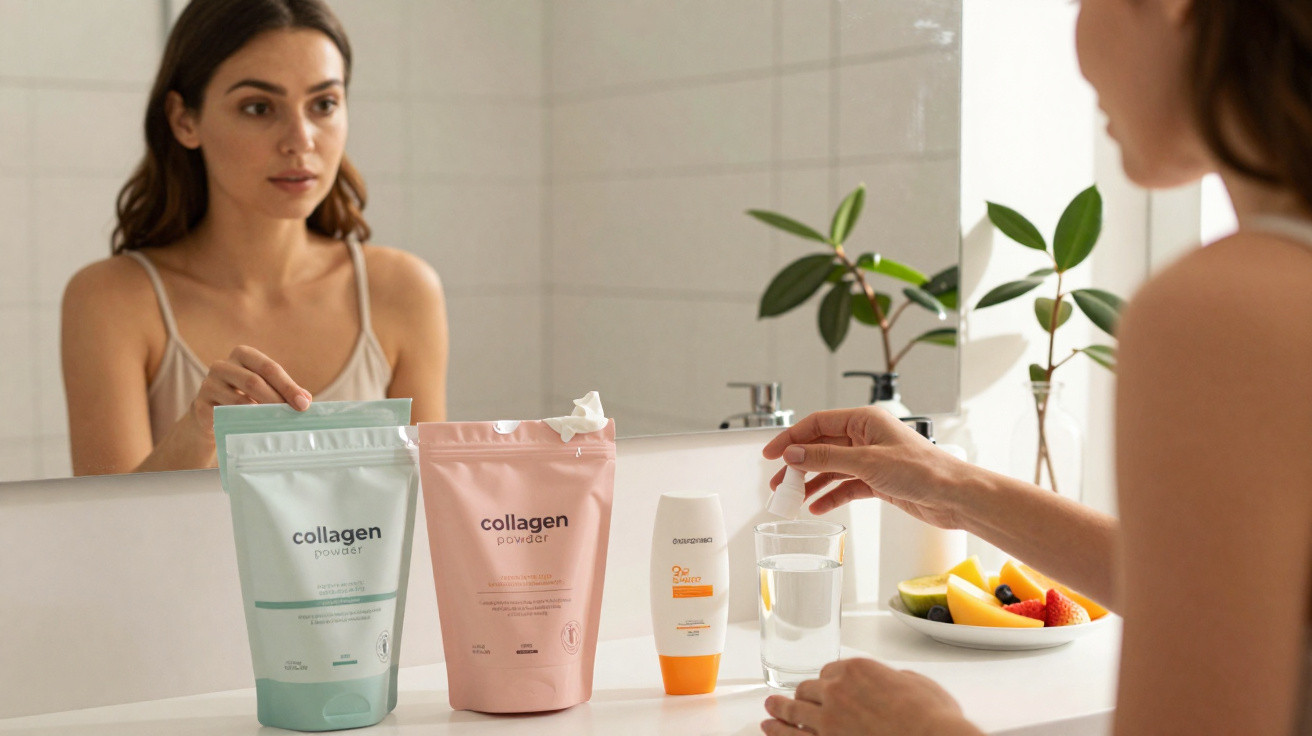
But what do these expensive products actually deliver – apart from emptier wallets?
Shelves packed with tubs, drinks and jars, influencers raving about them in Reels, and manufacturers promising smooth, firm skin: collagen is promoted as the beauty industry’s secret weapon against wrinkles. Take the advertising at face value and it is easy to feel as though your skin will practically “deteriorate” without extra collagen. Yet a closer look reveals that remarkably little remains of the miracle-product image, particularly when it comes to visible results.
What collagen really does in the body
Collagen is not merely a fashionable buzzword; it is a vital structural protein in the human body. It accounts for around one third of all proteins and forms a supportive framework for a range of tissues.
- Skin: provides elasticity and firmness
- Bones: helps make their hard structure resilient
- Tendons and ligaments: support strength under load and tension
- Cartilage: cushions impacts within joints
The body produces this protein itself. It breaks down dietary protein into amino acids, then uses them to create new collagen fibres. Glycine, lysine and proline are particularly important building blocks. When the diet supplies enough protein, vitamins and minerals, basic requirements are usually covered – without any “beauty boost” from a tub.
From 25 onwards, production declines – but not as quickly as advertising suggests
A number of things begin to change in the mid-twenties, including collagen production, which gradually becomes less active. This is a natural process rather than an emergency. Its effects generally become noticeable only years later, through finer lines, reduced firmness and slower wound healing.
This is precisely where marketing claims take hold. Anyone spotting wrinkles is encouraged to reach for collagen cream, powder or capsules, supposedly turning back the clock in the process. The central message is simple: replace externally what is missing. It may work well in advertising clips, but it does not reflect biology particularly well.
“The body cannot be treated like an empty tank that can simply be ‘topped up’ with collagen – tissue formation does not work that simply.”
Why collagen creams barely reach the deeper layers
Many products claim that collagen can penetrate the skin from the outside and “plump up” wrinkles from within. Specialists view this sceptically. The explanation is straightforward: collagen molecules are too large to pass easily through the skin barrier.
In most cases, this is what happens with creams:
- The collagen components largely remain on the skin’s surface.
- They can form a light, conditioning film there.
- Skin may temporarily look smoother and feel softer, much as it does after using a good moisturiser.
This surface-level effect is not entirely without value, but it does not amount to genuine collagen production in the deeper layers of the skin. Anyone expecting it to permanently and substantially alter the structure of their wrinkles is expecting too much.
Oral collagen: a hyped product with many unanswered questions
Drinking shots, powders and capsules are promoted even more heavily than creams. They are said to raise collagen levels from within, sometimes accompanied by aggressive “anti-ageing” claims. So far, however, scientific evidence provides only very limited support for this effect.
This is what occurs in the digestive system:
- Consumed collagen is broken down into smaller components in the gastrointestinal tract.
- These building blocks enter the bloodstream alongside every other protein component obtained from food.
- The body uses them wherever they are needed at that moment: for muscles, organs and enzymes, or potentially for skin and joints.
It remains unclear whether the supplied collagen fragments are specifically incorporated into the skin. Studies claiming dramatic wrinkle reduction are often small, short in duration or partly funded by manufacturers. Large, independent studies with robust data are largely lacking.
“Simply because a product contains collagen does not automatically mean it reaches the right place in the body – or produces visibly noticeable results.”
Does the body need more collagen at all?
Healthy people who eat a reasonably balanced diet do not generally have a “collagen deficiency”. The body is remarkably capable of using protein and regulating where each building material is required.
Additional supplements may be needed in certain medical circumstances, such as after serious injuries or operations, but this should always take place as part of medical treatment. For everyday use solely aimed at reducing wrinkles, most products appear to be marketing rather than medicine.
Risks and side effects are often played down
Many advertising messages present collagen products as harmless. They are not entirely risk-free, particularly when high-dose powders and drinks are involved, as unwanted effects can occur.
- Potential allergies: Most products come from animal sources, such as bovine or fish tissue. People with allergies may be at risk of a reaction.
- Skin reactions: Some preparations include additives such as nicotinic acid, which can cause redness or sensations of heat.
- Digestive complaints: Nausea, bloating and diarrhoea are repeatedly mentioned in user reports.
Expert bodies advise consuming no more than around five grams of collagen per day from supplements. Anyone combining several products can quickly exceed this amount.
Big market, small effects: what tests reveal about collagen powders
Despite the limited evidence, collagen powders sell extremely well. Countless brands compete in chemists and online shops using superlatives. Consumer tests have examined several bestsellers more closely, with sobering findings.
| Assessment point | Typical concerns |
|---|---|
| Collagen source | Origin is often unclear (cattle, pig, fish), with insufficient transparency |
| Collagen types | Products advertise “multiple types” without explaining what this is meant to signify |
| Purity | Details are imprecise, and few independent checks are publicly accessible |
| Dosage | Considerable variation, sometimes with very high daily portions for questionable effects |
| Price | Wide price range, from low-cost powders to luxury drinks with similarly questionable benefits |
| Transparency | Some products are open, while others omit important details about production and ingredients |
The overall picture is clear: labelling and prices differ significantly, while the advertised effect remains vague. Buyers are chiefly paying for marketing, packaging and the feeling of “doing something for their skin”.
What genuinely helps skin – without the collagen hype
For anyone wanting to prevent or soften wrinkles, there are options with far stronger evidence than collagen products. Dermatologists especially point to the following:
- Consistent UV protection: Sun exposure is one of the biggest drivers of premature skin ageing.
- Not smoking: Nicotine damages blood vessels and collagen structures, causing skin to look dull and crinkled more quickly.
- Enough sleep: Many repair processes operate at full speed overnight.
- A diet rich in protein and vegetables: This provides collagen building blocks as well as vitamins such as C, A and E.
- Gentle skincare: Mild cleansing, moisturiser and, where needed, active ingredients such as retinol or niacinamide.
These measures do not produce spectacular results overnight, but over the long term they offer more than costly powders supported by unclear evidence.
Why belief in miracle products persists
The idea of a quick drink to tackle wrinkles strikes a chord. It saves time, suggests control over the ageing process and fits perfectly into a beauty culture that demands continual optimisation. That makes collagen an ideal product for influencer marketing and social media.
In addition, small subjective changes – plumper-looking skin from increased fluid intake, or a generally more conscious approach to caring for the body – can easily be attributed to the powder. This is a classic placebo effect, amplified by glossy images and persuasive promises.
How to distinguish credible products from empty promises
Anyone who still wishes to try supplements should take a more critical look. A few questions can help put products into context:
- Are there independent studies on the specific formulation, rather than only general statements about collagen?
- Are the source and collagen type clearly stated, including the animal species and processing method?
- Do the claims sound realistic, or do they promise near-medical miracles?
- What is the daily dose, and does it fit within the recommended limits?
Once a powder supposedly claims to smooth wrinkles, heal joints, build muscle and “detox” digestion all at the same time, a healthy dose of scepticism is warranted.
Ultimately, the calculation is simple: spending money on sunscreen, good basic skincare, a healthy diet and stress reduction will generally have a greater effect on the skin than expensive collagen powder whose benefits are barely supported by evidence. Collagen remains an important structural protein made by the body – it is simply not a magical beauty potion from a tub.
















Comments
No comments yet. Be the first to comment!
Leave a Comment