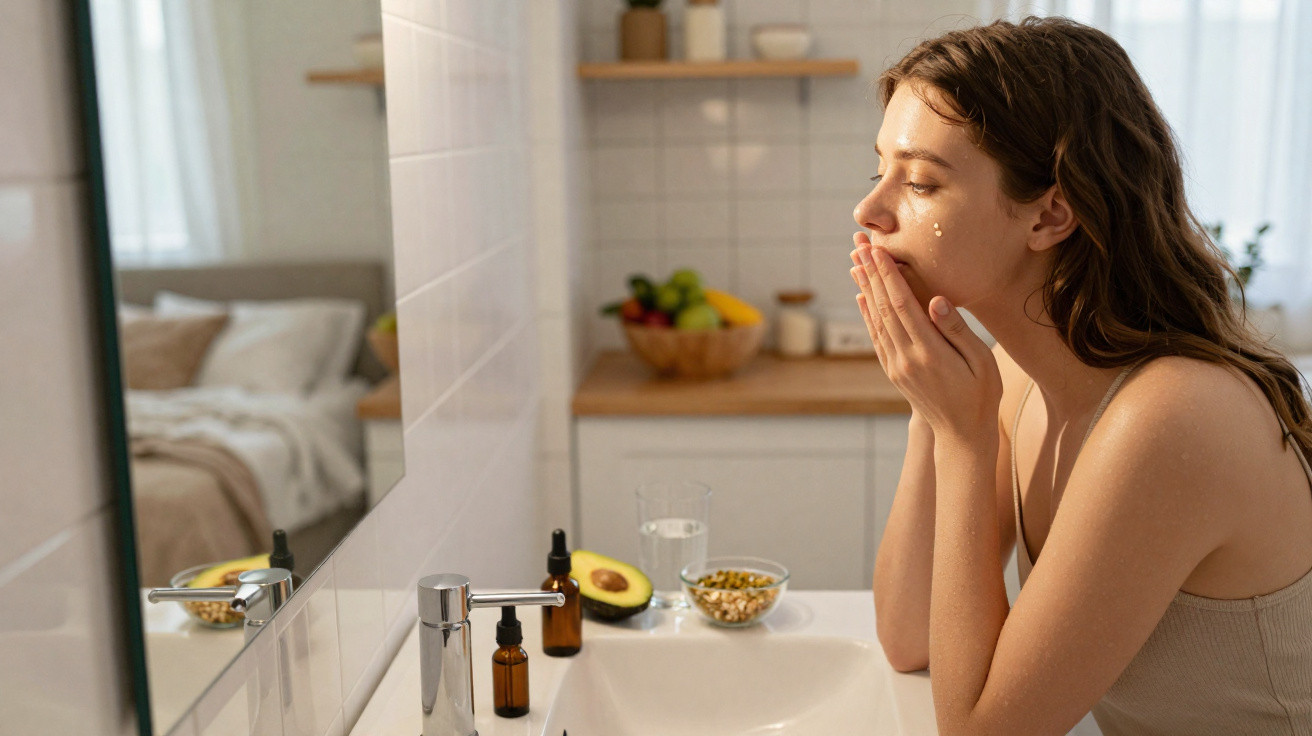
No luxury serum and no high-tech cream – just a surprisingly simple blend.
What happens when you leave every jar and tube untouched and start trusting your skin again? At first, the story of this homemade mixture sounds like skincare heresy, yet it becomes a small-scale experiment against cosmetic overload. It also offers a useful illustration of how much the skin can achieve by itself when it is not constantly covered in products.
The mirror moment that changed everything
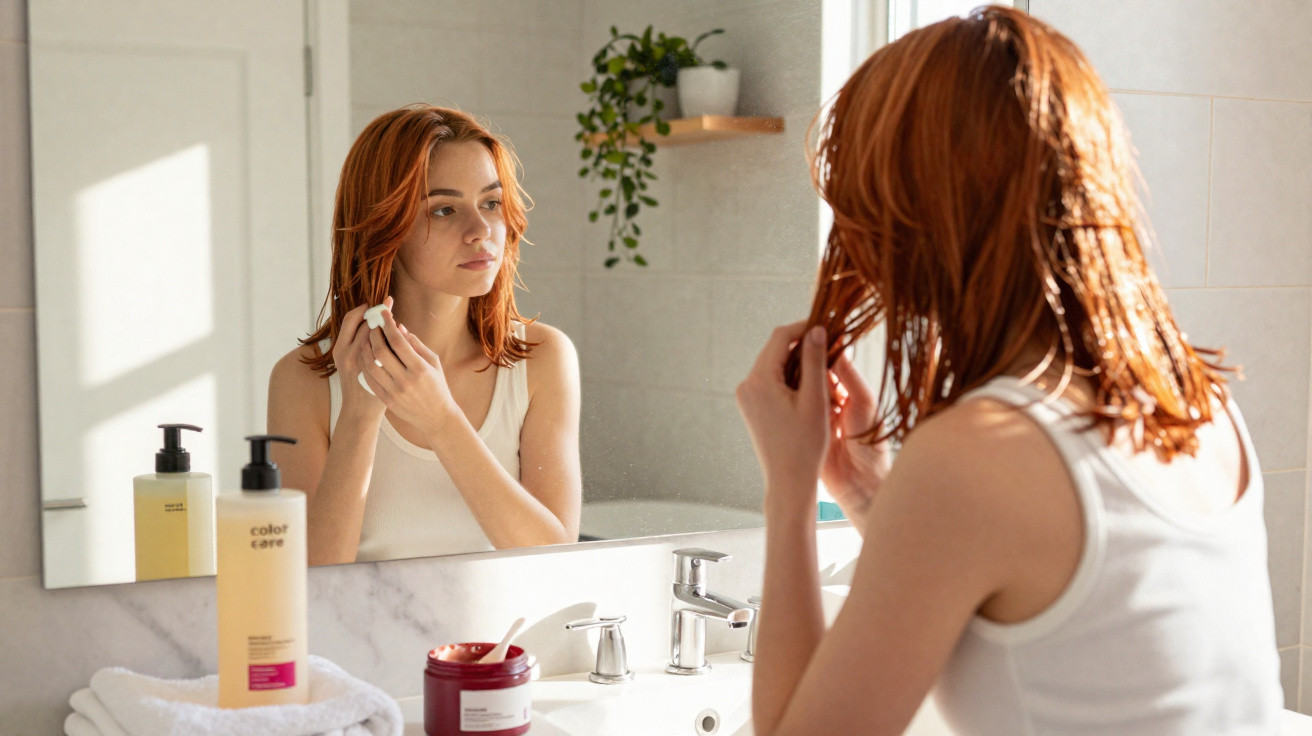
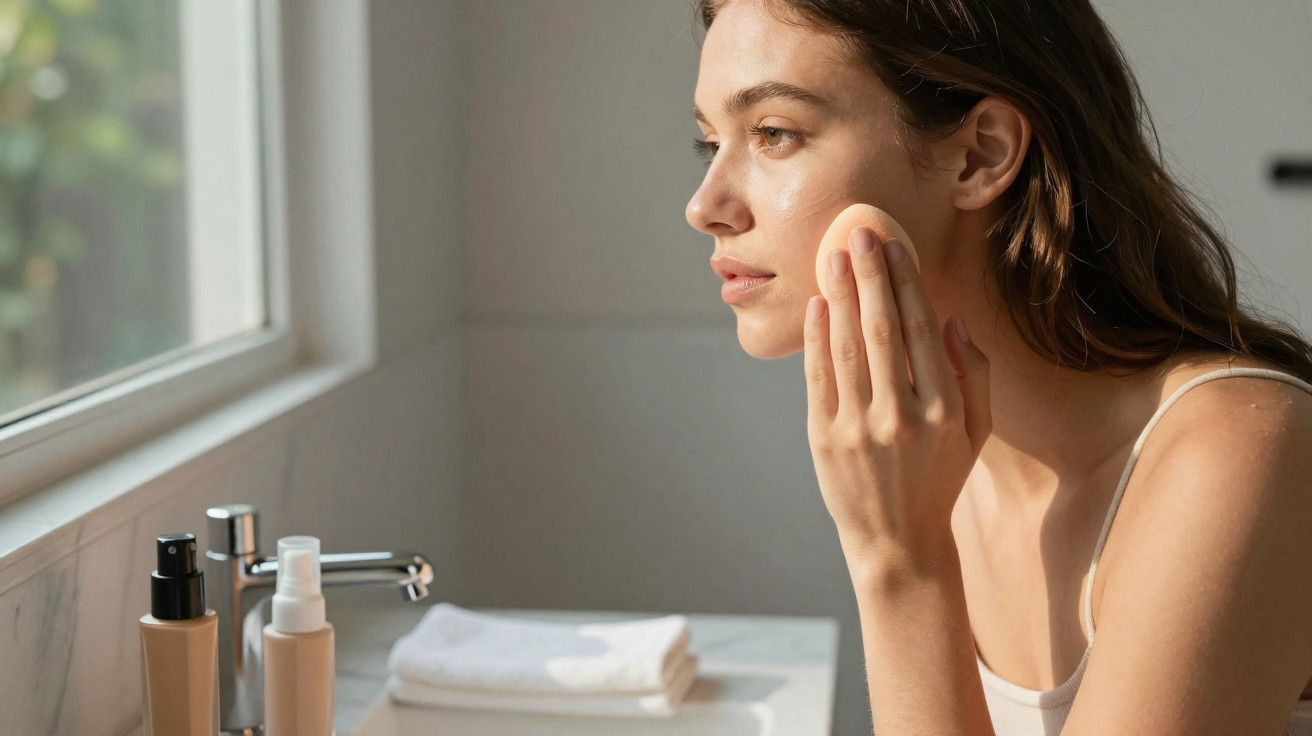
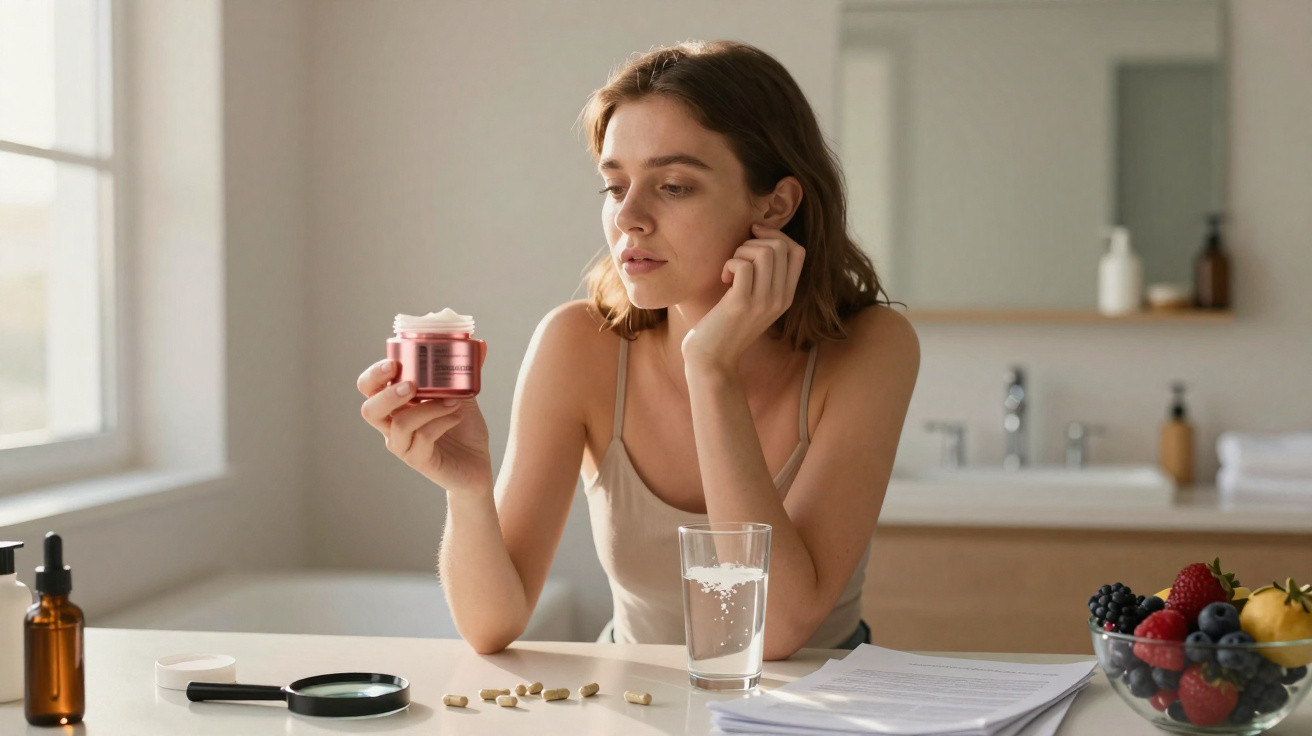
This did not begin with a dramatic medical appointment, but with an entirely ordinary morning in the bathroom. In front of the mirror sat a whole army of pots, fluids and serums. Her skin was shiny in places, tight in others and looked tired, despite the “Anti-Ageing”, “Glow Complex” and “Hydra Boost” claims.
At some point, her mood shifted. Her hands no longer reached automatically for the day cream. One question became impossible to ignore: was her skin actually improving, or simply becoming more dependent?
The realisation: the problem was not the “wrong” cream, but too many products at once.
Anyone who has tried to finish reading the tiny print on the back of a cream will recognise this: silicones, preservatives and fragrancing ingredients with invented-sounding names. None of these is inherently harmful, but the total combination can feel unsettling. That was the point at which she decided to end the endless cycle of replacing creams and begin again with radically reduced skincare.
Why skin needs far less than advertising suggests
For decades, the cosmetics industry has repeated one message: without a day cream, night cream, serum and targeted treatment, skin is helpless. Images of flawless faces imply that being “bare” means being neglected. People who use no products can quickly appear as though they do not care for themselves.
Earlier generations suggest another picture. Many grandmothers managed with a gentle bar of soap, some water and, occasionally, a few drops of plant oil. There was no ten-step routine, toner or booster, and yet their complexions often looked remarkably fresh.
There is a straightforward mechanism behind this. Skin has its own protective system, known as the hydrolipid film. This extremely fine blend of sebum, sweat and water keeps the surface supple, helps prevent moisture loss and wards off germs. Constant disruption of this layer through harsh cleansing and heavy creams can upset its natural balance.
What the homemade skincare mixture can actually do
The woman at the centre of this story did not choose to use “nothing at all”. Instead, she opted for a small, manageable mixture made from only a few ingredients. There was no perfume and no complex emulsifier – only substances that skin recognises and generally tolerates.
Typical minimal recipes of this kind may include:
- a gentle plant-oil base, such as jojoba or almond oil
- a splash of hydrolat or boiled, cooled water
- optionally, a little glycerine or aloe vera for moisture
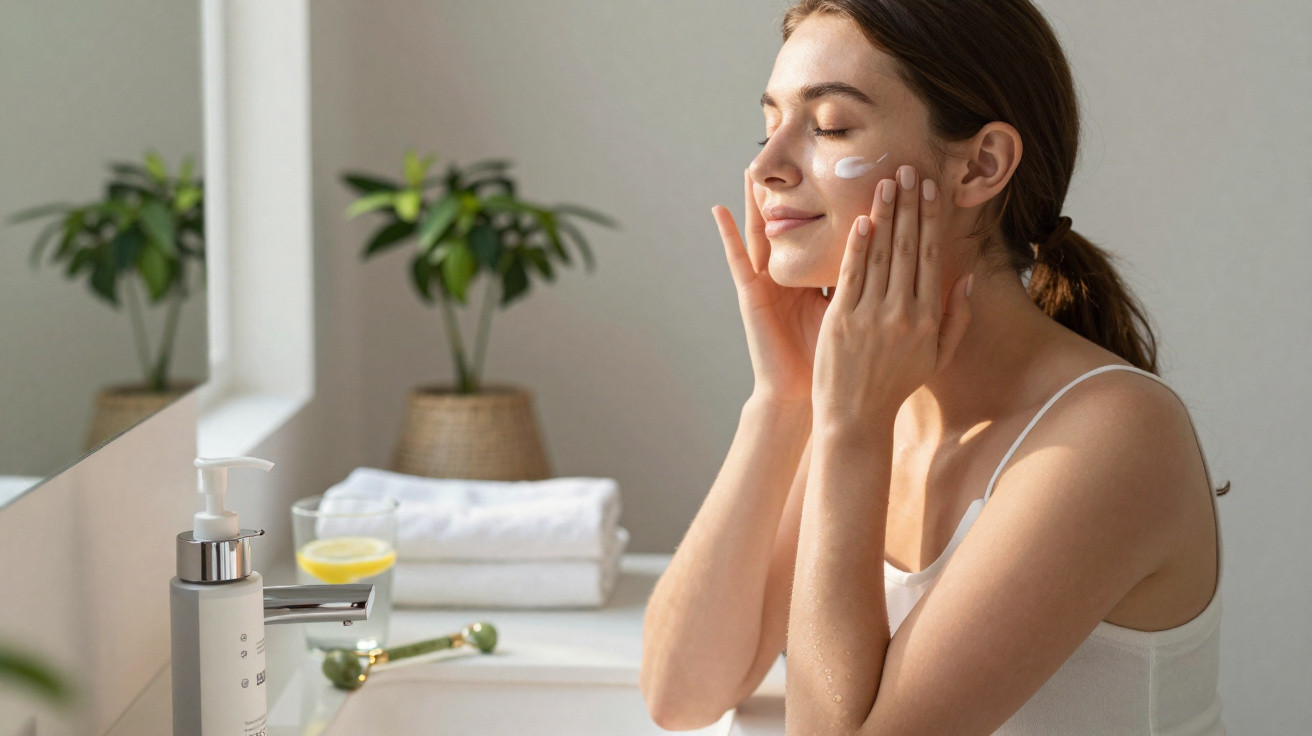
Before use, the mixture is shaken gently and applied sparingly to skin that is still slightly damp. There is no layering and no five-minute massage. The aim is to support the skin rather than take over all of its work.
After only a few weeks, she reported a smoother surface, less tightness and noticeably less redness – while using less product overall.
The withdrawal phase: when skin initially looks worse
Switching from an extensive skincare routine to minimalism often brings an initial setback. Skin can become irritated as it loses its familiar sources of oil and moisture. Common signs during the first days and weeks include:
- a feeling of dryness, especially after washing
- small blemishes or blocked pores beneath the surface
- redness around the cheeks and nose
This is exactly the stage at which many people give in and return to their old cream. Those who continue often reach a turning point: the sebaceous glands begin to regulate themselves again, the skin produces more of its own protective film, and the feeling of tightness eases.
How long does the adjustment take?
The timescale differs from person to person, but these broad patterns are often observed:
| Period | Common observations |
|---|---|
| Week 1 | Increased dryness, sometimes itchy patches |
| Weeks 2–3 | Skin appears unsettled, with combination-skin areas becoming more pronounced |
| From week 4 | Texture becomes calmer, shiny areas reduce and the complexion looks more refined |
The woman in this example said that, after around three to four weeks, her reflection looked “completely transformed”: less dull, less shiny and more even overall. This is also plausible from a dermatological perspective, as the regeneration cycle of the uppermost skin layer takes roughly 28 days.
The new routine: it could hardly be simpler
Instead of ten steps, the start of the day is reduced to a few simple actions:
- Rinse the face with lukewarm water in the morning, without vigorous rubbing.
- If needed, use a very gentle, pH-skin-neutral cleanser – but not every day.
- Apply one or two drops of the homemade mixture to skin that is still slightly damp.
- Cleanse in the evening only when make-up or sun cream has been worn.
One important point remains: this mixture is not a substitute for sun cream. UV protection is still necessary, particularly in summer or during intense sun exposure. A suitable product remains essential here, as skin can protect itself from radiation only to a limited extent.
Beauty starts in the kitchen and bedroom
One unexpected consequence of giving up creams is that attention shifts away from jars and towards everyday habits. Sleep quality, stress levels and diet suddenly move into focus.
The following factors, for example, contribute to a resilient skin barrier:
- enough sleep, ideally seven to eight hours
- a diet containing high-quality fats, including olive oil, nuts and oily fish
- sufficient fluids spread across the day
- physical activity outdoors
- stress management, such as breathing exercises or relaxation techniques
Anyone who spends less time in front of the bathroom mirror suddenly has more room for things that benefit skin far more in the long term than any luxury skincare product.
Opportunities and risks: who minimal skincare suits – and who it does not
The idea of removing all conventional creams is appealing to many people, but it will not work equally well for every skin type. Anyone with very dry skin or a damaged skin barrier – for example, due to eczema or rosacea – should never make drastic reductions without consulting a professional. Incorrect self-treatment can worsen the condition.
For relatively stable skin without a chronic condition, however, moving towards minimalism may be an interesting option. Anyone unsure should begin gradually: replace harsh cleansers first, then slowly reduce the number of products rather than abandoning everything overnight.
What lies behind the feeling of “real” radiance
The homemade mixture and pared-back routine can also have an interesting psychological effect. People who notice their skin again rather than covering it up often develop greater trust in their own body. Small imperfections are no longer immediately seen as flaws, but as normal reactions from a living organ.
That is the appeal of this story. No single magical ingredient changed the face; what changed was the perspective. It moved from “I need to put something on” to “I will look at what my skin actually needs”.
Anyone who takes that idea seriously soon notices how many other areas of life are involved: consumer habits, environmental awareness and self-image. The result is not just a tidier bathroom shelf, but often a clearer view of one’s own reflection – and that can look more convincing in photographs than any glow filter.






Comments
No comments yet. Be the first to comment!
Leave a Comment